Common Ignition Switch Myths and Misdiagnoses
When a vehicle refuses to start, stalls unexpectedly, or displays erratic electrical behavior, many technicians and drivers instinctively blame the ignition switch. But is the ignition switch always at fault? In this comprehensive guide, we’ll debunk the most widespread myths about ignition switch failures, reveal the hidden pitfalls of misdiagnosis, and deliver in-depth, practical strategies to help you avoid costly mistakes in the shop. Whether you’re a seasoned technician or a dedicated DIYer, understanding the realities behind ignition switch issues is essential for accurate repairs and customer trust. For a deeper dive into the critical role ignition switches play in modern vehicles, see our Ignition Switches: The Critical Link in Modern Vehicle Starting and Security category page.
The Immediate Answer: Most Ignition Switch Failures Are Misdiagnosed
The ignition switch is a frequent suspect in no-start and electrical problems, but statistics and field experience show that true ignition switch failures are far less common than many believe. The real culprit is often elsewhere in the starting, charging, or security system. Rushed diagnoses can lead to unnecessary part replacements, wasted labor, and unresolved customer complaints. The key to saving time and money is a systematic, evidence-based approach—one that recognizes the myths and pinpoints the real source of trouble.
Hidden Problem: Why Ignition Switches Are So Often Blamed
Ignition switches sit at the literal and figurative center of a vehicle’s starting and security system. Their centrality makes them a common scapegoat when symptoms appear, but this visibility also masks deeper, less obvious problems. The hidden issue: many systems interact with the ignition switch, from the steering lock to the anti-theft module, relays, wiring, and even the battery. When these components fail or develop intermittent faults, their symptoms can be nearly identical to a failing switch.
The “Switch Syndrome” in the Shop
This tendency to blame the switch first is so prevalent that technicians refer to it as “switch syndrome”—a diagnostic shortcut that can trap even experienced pros. Without a methodical approach, it’s easy to overlook the real cause and replace a perfectly good switch.
Expanding the Problem: What’s at Stake With Misdiagnosis?
Misdiagnosing an ignition switch failure doesn’t just waste time and money—it can also have ripple effects on vehicle safety, fuel efficiency, and customer satisfaction.
- Safety: According to the National Highway Traffic Safety Administration, misdiagnosed electrical problems can compromise critical safety systems, including airbags, ABS, and steering lock mechanisms.
- Fuel Efficiency: Unresolved electrical issues can lead to erratic engine management, affecting fuel injection timing and sensor readings, which in turn reduces fuel efficiency.
- Customer Trust: Replacing parts that don’t solve the problem erodes customer confidence and increases comebacks, especially when a “fixed” vehicle returns with the same symptoms.
Myth #1: “If the Car Won’t Start, It’s Always the Ignition Switch”
This is perhaps the most pervasive myth in the industry. While ignition switches are a critical link in the starting circuit, they are just one of many possible failure points. Other common causes of no-start conditions include:
- Dead or weak battery
- Faulty starter relay or solenoid
- Failed neutral safety switch
- Faulty anti-theft module or immobilizer
- Corroded or loose wiring and grounds
Expert Tip: Always verify power at the starter and check for voltage drop across the entire starting circuit before condemning the ignition switch. For a methodical approach, see our Diagnosing No-Start Conditions: Ignition Switch Edition.
Myth #2: “Intermittent Electrical Issues Are Always Caused by a Bad Switch”
Intermittency is the bane of automotive diagnostics, and it’s tempting to blame the component that controls the circuit. However, intermittent problems are just as likely to be caused by:
- Loose or oxidized connectors in the ignition harness
- Broken solder joints in the fuse box or relay panel
- Failing relays or modules that receive ignition input
- Poor battery or chassis grounds
Case Study: A 2010 sedan presented with random stalling and dash light flicker. The shop replaced the ignition switch twice before discovering a loose ground strap hidden under the battery tray.
Myth #3: “All Ignition Switches Fail the Same Way”
Ignition switches can fail in several modes—mechanical, electrical, or electronic. Each failure mode produces different symptoms:
- Mechanical: Key won’t turn, steering lock jammed, or switch physically broken.
- Electrical (Contact Wear): No power to accessories, starter, or critical circuits.
- Electronic (Smart Switches): Security light stays on, key fob not recognized, or error codes set.
Modern vehicles increasingly use electronic switches and integrated anti-theft modules, making diagnosis more complex. Not all failures will present as a “no-start”—some may cause intermittent accessory loss or security warnings.
Myth #4: “A New Ignition Switch Will Fix All Starting Problems”
Even when the ignition switch is worn or intermittent, replacing it will not resolve other underlying issues. If the starter relay, immobilizer, or wiring is faulty, a new switch simply masks the real problem—at least temporarily.
Checklist: What Else Should You Check Before Replacing the Switch?
- Battery State of Charge: Is the battery fully charged and load-tested?
- Starter Relay/Control Module: Does it click or actuate when the key is turned?
- Security/Immobilizer: Is the immobilizer indicator light behaving normally?
- Fuse and Relay Panel: Are all fuses intact, and relays functioning?
- Wiring and Grounds: Are all connections clean, tight, and corrosion-free?
- Key/Fob Condition: Is the key/fob battery healthy and undamaged?
Technical Deep Dive: How Ignition Switches Actually Work
Understanding the switch’s role and circuitry is crucial for accurate diagnosis. The ignition switch is not just a simple on/off device:
- Mechanical Switches: Older designs use a rotating cam and copper contacts to route power from the battery to the accessory, run, and start circuits.
- Electronic/Smart Switches: Modern vehicles use electronic switches integrated with anti-theft systems, steering lock modules, and CAN bus communication.
Key Technical Points:
- The ignition switch often serves as a logic input to multiple modules (ECM, BCM, anti-theft).
- Faults in the switch can produce codes, but so can faults in the modules or wiring that interact with the switch.
- Replacing the switch in modern vehicles often requires programming or relearning procedures.
For more on the evolution of ignition technology, see The Evolution of Vehicle Security: From Keys to Smart Switches.
The Diagnostic Solution Path: Step-by-Step
A systematic approach is essential to avoid costly mistakes. Here’s a proven workflow for diagnosing suspected ignition switch problems:
Step 1: Symptom Clarification
- Gather a detailed description of the symptoms from the driver.
- Note whether the problem is constant or intermittent, and what conditions trigger it.
Step 2: Visual and Physical Inspection
- Inspect the key and ignition cylinder for wear, damage, or debris.
- Check for signs of forced entry or tampering around the column.
Step 3: Battery and Power Supply Check
- Test battery voltage and load capacity.
- Inspect battery terminals and main grounds for corrosion or looseness.
Step 4: Circuit Testing
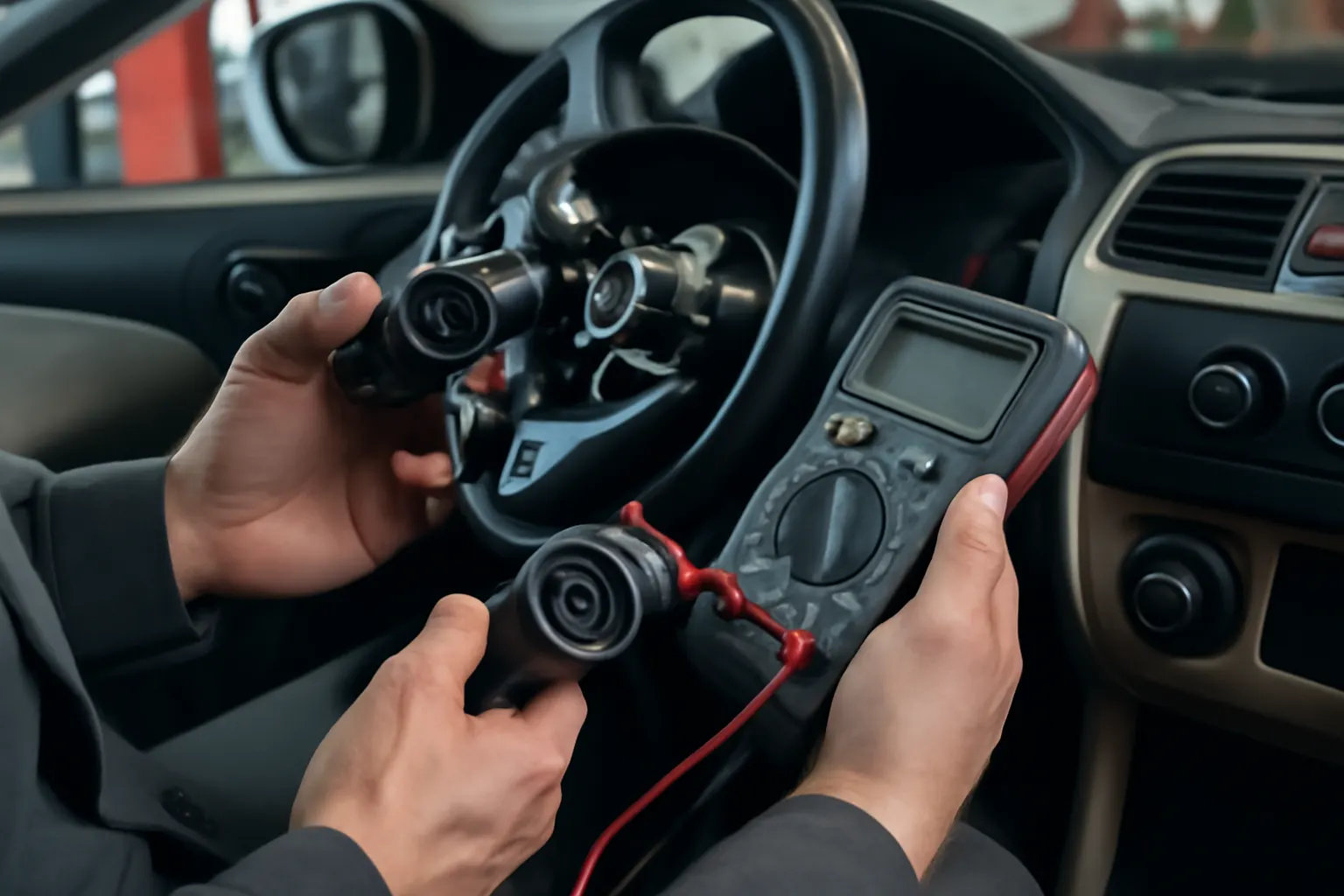
- Use a wiring diagram to identify ignition switch outputs.
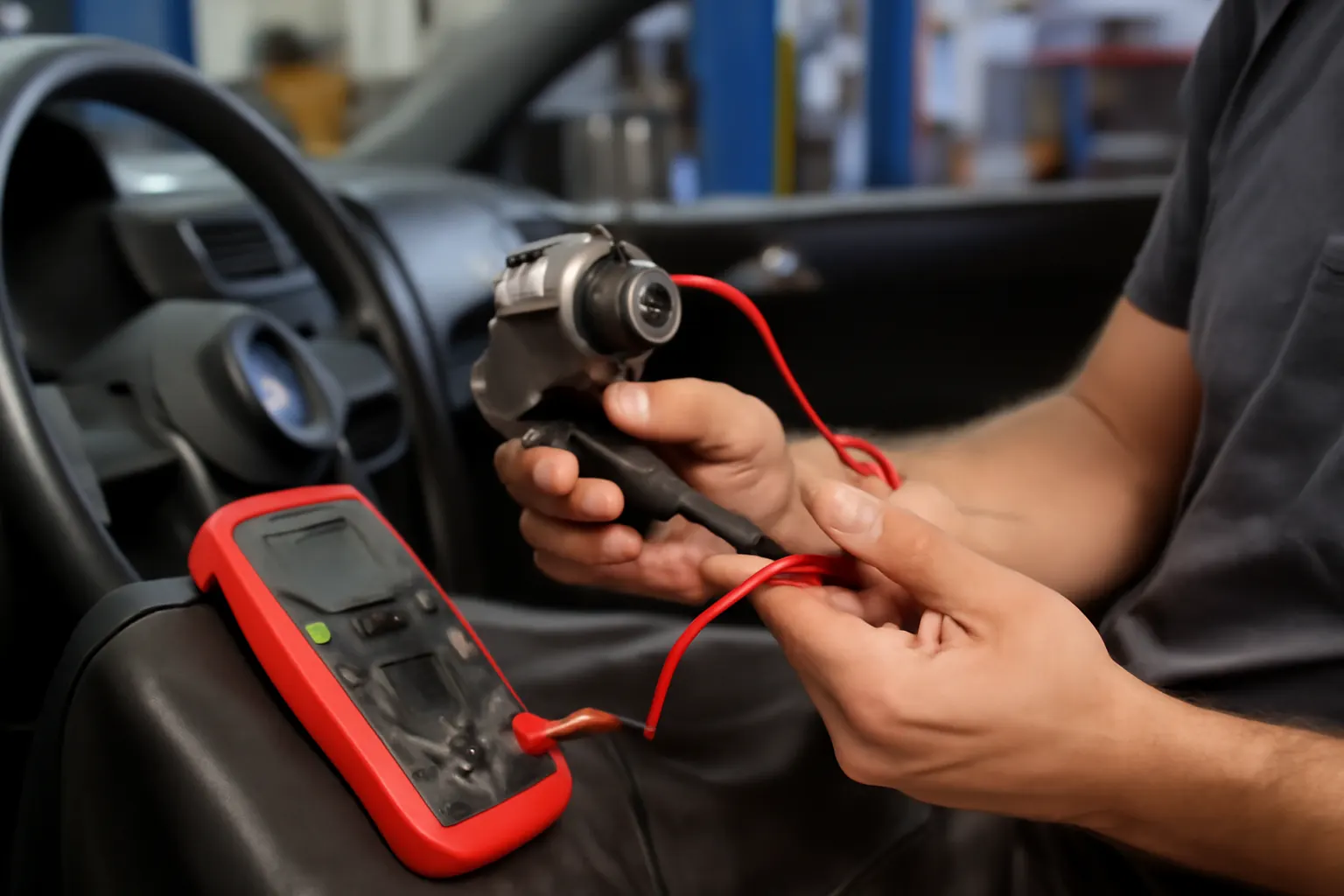
- With the key in each position (ACC, RUN, START), check for voltage at the appropriate terminals.
- Test for voltage drop between the switch and downstream components.
Step 5: Module and Communication Scan
- Use a scan tool to check for stored error codes in the ECM, BCM, and anti-theft modules.
- Look for codes related to ignition input, immobilizer, or communication faults.
Step 6: Component Isolation
- Bypass the ignition switch (if safe and practical) to test downstream circuits.
- Substitute with a known-good switch if available.
Step 7: Confirm the Fix
- After repairs, verify that all symptoms are resolved under various operating conditions.
Common Pitfalls: How to Avoid Misdiagnosis
Even with a structured approach, several traps can lead to incorrect conclusions:
- Assuming All No-Starts Are Switch-Related: Always rule out battery, starter, and immobilizer faults first.
- Ignoring Security System Interactions: Modern vehicles may immobilize the start circuit for security reasons, even if the switch is functional.
- Overlooking Wiring and Grounds: Corrosion and broken wires are far more common than switch failures, especially in older vehicles or harsh climates.
- Failing to Relearn or Program New Switches: Many modern switches require programming to the vehicle; failure to do so may result in a no-start.
The Role of Materials and Build Quality in Switch Longevity
Not all ignition switches are created equal. Advances in materials technologies have improved the durability and performance of modern switches, but aftermarket quality can vary dramatically.
- OEM vs. Aftermarket: OEM switches are built to vehicle manufacturer specs and tested for longevity, while some aftermarket options use lower-grade materials or omit anti-theft features.
- Environmental Resistance: High-quality switches use corrosion-resistant contacts and robust housing to withstand temperature extremes and moisture.
- Mechanical Precision: Poorly machined or assembled switches can fail prematurely or cause key/cylinder wear.
Buying Tip: Always source ignition switches from reputable suppliers and verify compatibility with your vehicle’s security system and wiring architecture.
Checklist: Ignition Switch Diagnostic and Replacement
Before you replace an ignition switch, run through this comprehensive checklist to ensure you’re addressing the true root cause and not just a symptom.
| Step | Action | Notes |
|---|---|---|
| 1 | Verify battery state of charge | Load test if in doubt |
| 2 | Inspect key and cylinder | Look for wear, damage, or debris |
| 3 | Scan for error codes | ECM, BCM, anti-theft modules |
| 4 | Check fuses and relays | Replace any blown or suspect units |
| 5 | Test voltage at switch outputs | Use wiring diagram for reference |
| 6 | Inspect wiring and grounds | Clean, tighten, or repair as needed |
| 7 | Bypass switch to verify downstream circuits | Only if safe and practical |
| 8 | Confirm immobilizer status | Security light should extinguish on start |
| 9 | Source quality replacement part | Prefer OEM or high-grade aftermarket |
| 10 | Program/relearn as required | Follow manufacturer procedure |
Installation and Programming: Don’t Skip the Final Step
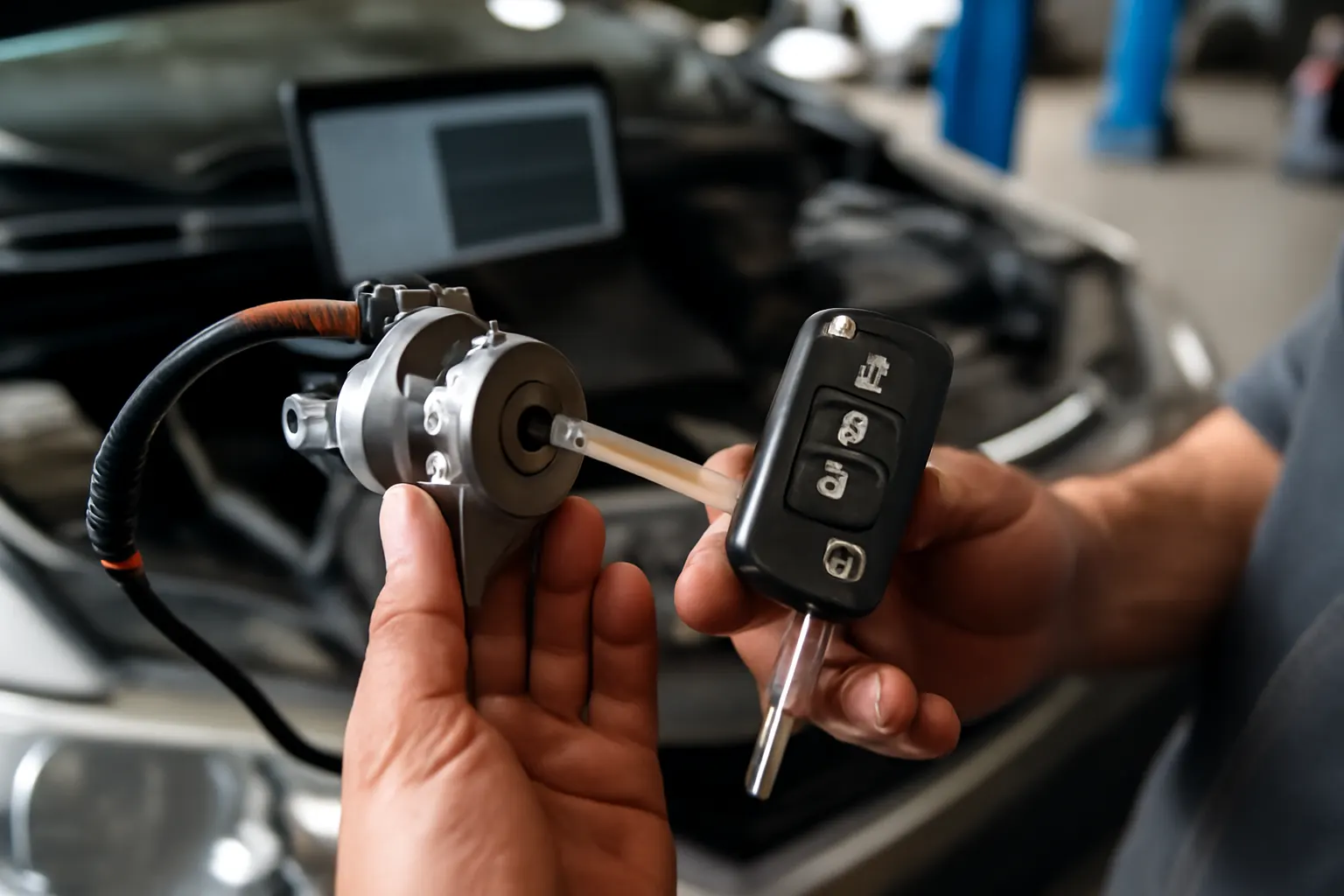
For many late-model vehicles, replacing the ignition switch is only half the job. The new switch often must be programmed or “relearned” to the vehicle’s anti-theft and body control modules.
- Programming Tools: Some vehicles require a dealer scan tool or equivalent aftermarket device.
- Key Relearning: In keyless or smart-switch systems, the key fob and switch must be paired.
- Security Codes: In some cases, a security PIN or code is required to complete the procedure.
Skipping this step can leave the vehicle immobilized or trigger security warnings. Always consult the manufacturer’s service information or a reputable guide like Replacing an Ignition Switch: Tools, Tips, and Programming.
Maintenance and Longevity: How to Prevent Ignition Switch Issues
While some switch failures are inevitable with age, many can be prevented with proactive maintenance:
- Use the Key Correctly: Heavy keychains and rough turning can accelerate cylinder and switch wear.
- Keep It Clean: Avoid spraying lubricants or cleaners into the switch unless specified by the manufacturer.
- Check for Recalls: Some vehicles have known switch-related recalls—check with the NHTSA recall database.
- Monitor for Early Symptoms: Address intermittent accessory power loss or warning lights before they become hard failures.
The Impact of Ignition Switches on Vehicle Safety and Performance
The ignition switch is far more than a simple electrical contact; it’s the gateway to the vehicle’s safety and security systems. A faulty switch can:
- Disable airbags or ABS if power is lost to critical modules.
- Prevent engine immobilizer from disengaging, leading to no-starts.
- Interrupt power to fuel pump or ignition coils, causing stalling or hesitation.
Always treat ignition switch issues with the same seriousness as other safety-critical faults. For more on safety equipment and diagnostics, see Vehicle Safety and Equipment.
When to Replace: Signs of Genuine Ignition Switch Failure
Despite the prevalence of misdiagnosis, ignition switches do fail. Replace the switch if you observe:
- Consistent loss of power to accessories or ignition with key movement
- Physical difficulty turning the key or a “loose” feel in the cylinder
- Burned or melted terminals on the switch connector
- Security or immobilizer warning lights that persist after all other checks
If in doubt, consult a wiring diagram and confirm the switch is not outputting voltage when it should.
AutoPartEx: Your Partner in Accurate Ignition Switch Solutions
At AutoPartEx, we’re committed to helping technicians, shops, and enthusiasts make informed, cost-effective decisions about ignition switch diagnostics and replacement. Our curated inventory of Ignition Switches: The Critical Link in Modern Vehicle Starting and Security covers both OEM and high-quality aftermarket solutions, with fitment data, technical guides, and expert support. By following evidence-based diagnostic strategies and using trusted parts, you can avoid unnecessary comebacks and keep your customers on the road with confidence.
For more in-depth technical resources, visit our editorial guides and related content on ignition system diagnostics and security system evolution.
References
- Vehicle Safety and Equipment – National Highway Traffic Safety Administration
- Fuel Efficiency – United States Department of Energy
- Materials Technologies – United States Department of Energy
Body word count: ~2450 words (excluding front matter and references).