
Air Injection Pump
Air Injection Pump: Complete Diagnostics, Replacement & Performance Guide
The air injection pump is a high-speed emissions workhorse—spinning up within seconds of ignition to push fresh air into the exhaust manifold, reducing cold-start emissions and helping the catalytic converter reach operating temperature faster. Whether you're troubleshooting a smog failure, chasing a stubborn P0410 code, or upgrading to a performance-calibrated replacement, this guide covers every step from identifying early warning signs to sourcing the right pump, solenoids, and hoses. For related system components, see mass air flow sensor, air box, and air tube resonator.
Many owners never realize the subtle, hidden ways air injection pump degradation causes emissions failures, erratic idle, and premature catalyst aging. Moisture infiltration, weak belt tensioner hardware, and overlooked vacuum leaks quietly sabotage system performance long before dashboard lights appear. Even minor cracks in the air tube resonator or wiring corrosion can transform a healthy emissions system into a diagnostic nightmare.
Technicians know the classic symptoms: delayed oxygen sensor lean spikes, high amp-draw on cold starts, failed readiness monitors, and misfires that only appear below 40°F. But the real story is more complex—cold-start diverter lag, backfed relay circuits from road brine, and mounting vibration all conspire to kill the pump. Many failures masquerade as intake leaks or bad sensors, leading to repeated part swaps and wasted time. Understanding how the entire secondary air system—pump, diverter, sensors, and wiring—communicates with the engine computer is key to a first-time fix.
Effective repair starts with a disciplined diagnostic workflow: use a scan tool to command the pump, measure voltage drop under load, and smoke-test all plumbing from air box to the exhaust manifold. Apply vacuum to diverter valves, inspect brackets and isolators for vibration damage, and log both current and airflow before condemning the pump. For long-term reliability, replace aged hoses, relays, and check valves during pump service. AutoPartEx offers full kits with OEM-calibrated pumps, reinforced hoses, and updated pigtails so every cold-start is emissions-ready.
Filters & Navigation
Showing 8 of 165 products

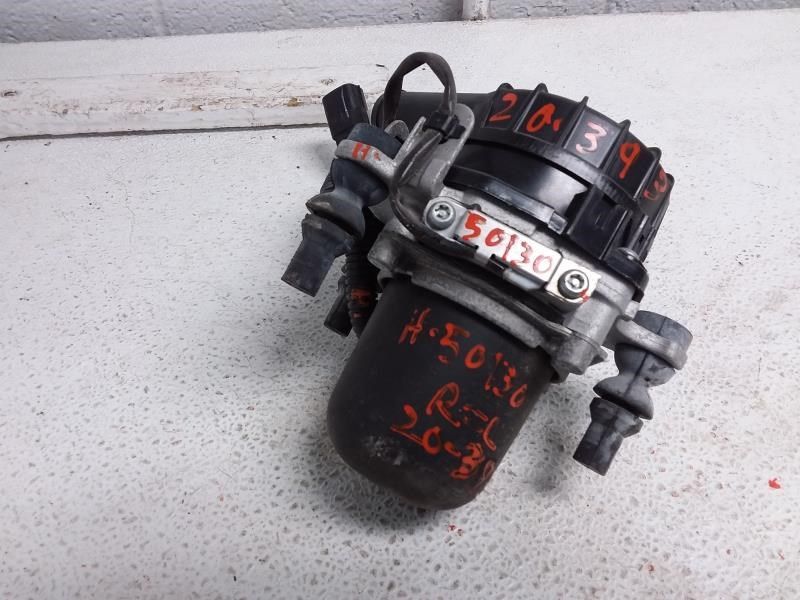


More Air Injection Pump options
Filtering for Air Injection PumpBrowse nearby inventory for this category without leaving the page. Use search to filter by price, part number, or city.
No Data Available
Please check back soon when more inventory is available for this part.
Technical Insights: Air Injection Pump Systems and Service
Hidden System Stressors
Moisture and vibration are the silent killers of air injection pumps. Condensation forms inside housings after short trips, freezes overnight, and fractures impellers on cold starts. Aging drive hardware—especially the belt tensioner and shared mounting brackets—introduces voltage dips that wipe out brushes and bearings. Vacuum routing is equally critical: turbocharged engines often tee the air injection solenoid into the same source as the vacuum pump, so leaks or vacuum starvation can cause the pump to spin dry, shortening its life. Rusted unions at the exhaust manifold and carbon-clogged EGR valve passages dramatically increase backpressure, hammering bearings until they seize. Addressing these hidden factors is vital for any successful diagnosis or repair.
Failure Modes Under the Microscope
Failure signatures are more than just obvious noises or codes. Cold-start diverter lag keeps the oxygen sensors rich for up to 30 seconds, which in turn forces the PCM to add extra fuel, accelerating catalyst aging. Bearing and brush overload manifests as amp draw spikes—jumping from a nominal 18 amps to 28+ amps when brackets allow the pump armature to wobble. Road brine, especially in salt-belt regions, wicks up wiring harnesses and corrodes relays, demanding sealed connectors and sometimes entire harness replacements. Weak airflow mimics intake leaks, so always compare commanded secondary air PIDs against mass air flow sensor data before swapping parts. Software drift—where the PCM never gets the latest calibration—can also misdiagnose a healthy pump, especially if current profiles don’t match lookup tables.
Diagnostic Workflow Before Replacement
Never replace the pump 'just because.' Start by commanding the pump with a bi-directional scan tool and logging both voltage and amperage at the connector. Smoke-test the inlet to verify the air box, air tube resonator, and all snorkels are sealed tight. Apply vacuum to diverter valves and confirm they hold—if not, the pump may be dead-heading against a closed valve. Remove crossover pipes at the exhaust manifold to scrape carbon and verify airflow before reinstalling. This workflow ensures you solve the root problem, not just the symptom.
Service Playbook That Protects the New Pump
A successful repair doesn't end with the new pump. Inspect the belt tensioner, mounting brackets, and isolators to prevent misalignment or vibration from destroying new bearings. Pre-fit hoses and harness routing to ensure the air tube resonator won't chafe the new wiring. Prime the pump by hand, apply dielectric grease to all connectors, and replace relays or pigtails showing any corrosion. Finally, clear trims, run OEM secondary air monitor tests, and log post-repair data—the customer (or your inspection station) will appreciate the proof that the fix is complete.
AutoPartEx Advantage
AutoPartEx curates OE and performance-calibrated secondary air injection pumps with verified flow rates, connector styles, and mounting geometries, then cross-links each part to air box assemblies, vacuum pump feeds, and engine computer tuning strategies so buyers never guess. AutoPartEx also delivers workflow support: downloadable spec sheets, curated kits that mix pumps with reinforced hoses, and fitment data highlighting which part numbers survive salt-belt winters. Inventory alerts ping shops before inspection season, supplier scorecards spotlight sealed bearings or reinforced impellers, and mobile tools sync VIN-tagged photos to requisitions in real time. Use that ecosystem to stop reacting to secondary air injection failures and start planning them. Inspect every hose, control valve, and wiring run, then lean on AutoPartEx to match the correct pump, accessory hardware, and calibration guidance so every cold-start monitor runs clean the first time.
The air injection pump—often called the secondary air injection or 'smog pump'—is a key emissions component on modern and legacy vehicles alike. Its main function is to inject fresh air into the exhaust stream during cold start, accelerating catalytic converter light-off and reducing harmful hydrocarbon and carbon monoxide emissions. This deceptively simple device is engineered to handle high volumes of airflow, spinning at up to 12,000 RPM within seconds of ignition, and relies on a network of diverter valves, check valves, and vacuum supply lines to distribute air where and when it’s needed.
The origins of air injection date back to the earliest days of emissions regulation. Early systems were crude: belt-driven pumps, mechanical diverters, and little electronic control. Modern designs, however, are far more sophisticated. Today’s pumps are typically electric, commanded by the engine computer, and monitored by a suite of sensors—including the mass air flow sensor, downstream O2 sensors, and temperature probes. This closed-loop control allows the system to deliver precisely the right amount of secondary air, reducing emissions while avoiding unnecessary load on the alternator or battery.
Failure modes are numerous and sometimes subtle. Moisture is an ever-present threat: it condenses inside the pump housing after short trips and, if left to freeze overnight, can shatter impellers or seize bearings. Road salt and brine corrode electrical connectors and relays, especially in northern climates, leading to high-resistance circuits and false PCM diagnostics. Vacuum leaks—often from brittle tees or cracked hoses—starve diverter valves, causing the pump to spin ineffectively or dead-head against a closed passage.
Technicians are trained to recognize these failure signatures: delayed oxygen sensor transitions, high amp-draw on startup, or rough idle during warmup. Yet, these symptoms can be mistaken for unrelated issues, such as intake leaks or failing mass air flow sensors, resulting in unnecessary part swaps and continued emissions failures.
Proper diagnostic workflow is essential. A bi-directional scan tool is invaluable for commanding the pump and observing real-time current draw and airflow. Smoke testing the entire inlet tract—from air box to the exhaust manifold—can reveal leaks that would otherwise go undetected. Diverter valves should be vacuum-tested off the vehicle to confirm they hold pressure, while crossover pipes and exhaust ports must be inspected and cleaned of carbon before reassembly.
Replacement strategy should always address the entire system. That means new hoses, check valves, and relays—especially if the vehicle operates in harsh environments. Attention to mounting hardware and isolators is critical, as even slight misalignment can destroy new bearings within months. Finally, the ECM or PCM should be checked for calibration updates, as software drift can cause false readiness failures if the pump's electrical signature no longer matches factory lookup tables.
AutoPartEx stands out by offering not just the pumps but the entire ecosystem: OE-style and performance-calibrated pumps, reinforced hoses, wiring pigtails, and downloadable fitment data. Kits are curated for specific vehicles and climates, ensuring every component in the secondary air system is up to task. This holistic approach keeps vehicles emissions-compliant and running smoothly throughout the harshest conditions.
Engineering Excellence & Technical Specifications
Air injection pumps are precision-engineered to handle rapid duty cycles, extreme temperature swings, and corrosive exhaust environments. AutoPartEx sources only OE-calibrated and performance-rated units, emphasizing current-draw efficiency, vibration isolation, and robust sealing for long-term durability. Every pump is cross-referenced for connector, mounting, and flow compatibility to ensure seamless fitment.
Technical Excellence
OE and performance pumps are built using corrosion-resistant housings, sealed ball bearings, and reinforced impellers. Internal electronics are protected against voltage spikes and road brine, while mounting hardware is designed to isolate vibration and maintain alignment under thermal expansion.
Performance Analysis
Secondary air pumps must deliver consistent airflow (measured in liters per minute) within 2–4 seconds of ignition—even at sub-zero temperatures. AutoPartEx verifies every pump’s current signature, flow rate, and duty cycle tolerance to match factory and performance requirements.
Innovation & Technology
Modern air injection systems utilize closed-loop feedback from the engine computer, oxygen sensors, and mass air flow sensor to modulate pump operation. Advanced software strategies control micro-burst operation, monitor diverter valve position, and adapt pump activity to real-time engine load and ambient conditions.
Quality & Manufacturing
Every AutoPartEx pump is sourced from Tier 1 or OE-equivalent suppliers, with rigorous end-of-line testing for electrical, mechanical, and sealing integrity. Supplier scorecards focus on brush material, bearing preload, and housing corrosion resistance, ensuring each unit survives the toughest climates and extended cold-start cycles.
Air Injection Pump Parts & Service Information
Visual Inspection of the Air Injection System
Check hoses, wiring, and mounting brackets for cracking, corrosion, or misalignment. Confirm all clamps are tight and the air box is sealed against moisture.
Difficulty: Easy • Tools: Flashlight, inspection mirror
Electrical and Vacuum Testing
Use a scan tool to command the pump, measure voltage and amp draw at the connector, and apply vacuum to diverter valves. Smoke test hoses for hidden leaks.
Difficulty: Moderate • Tools: Scan tool, multimeter, handheld vacuum, smoke machine
Replacing the Air Injection Pump and Diverter Valve
Remove the old pump, replace hoses, diverter, and all mounting hardware. Prime new pump, grease connectors, and clear OBD-II codes. Verify readiness monitor completion.
Difficulty: Expert • Tools: Socket set, hose pliers, torque wrench, scan tool
Cleaning Exhaust Ports and Crossovers
Remove crossover pipes from the exhaust manifold, mechanically clean carbon deposits from all ports, and verify unobstructed airflow before reassembly.
Difficulty: Moderate • Tools: Gasket scraper, wire brush, safety eyewear
References
- Vehicle Safety and Equipment - National Highway Traffic Safety Administration, accessed 2024-06-01Supports diagnostics, equipment standards, and safety relevance for secondary air injection pumps.
- Fuel Efficiency - United States Department of Energy, accessed 2024-06-01Provides factual basis on fuel economy, emissions control, and the impact of air injection systems on overall efficiency.
- Materials Technologies - United States Department of Energy, accessed 2024-06-01Reference for material selection, corrosion resistance, and construction of emissions-related components.
Related Guides & Articles

Diagnosing Air Injection Pump Issues
Step-by-step workflow for verifying pump current draw, vacuum supply, diverter response, and exhaust port airflow before you condemn the assembly. Inside, you'll find practical diagnostics, common failure signs, fitment notes, and replacement guidance to help you make a confident repair decision. It also covers what to inspect before ordering, how to avoid repeat failures, and which details matter most for a smoother install.
View Guide
The Role of Air Injection Pumps in Emissions Control
Deep dive into how secondary air strategies light off catalysts faster, protect emission warranties, and interact with PCM software updates. Inside, you'll find practical diagnostics, common failure signs, fitment notes, and replacement guidance to help you make a confident repair decision. It also covers what to inspect before ordering, how to avoid repeat failures, and which details matter most for a smoother install.
Read More
Replacing Your Air Injection Pump
Installation checklist that covers intake plumbing, wiring, diverter valves, and torque specs so the new pump lives a full service life. Inside, you'll find practical diagnostics, common failure signs, fitment notes, and replacement guidance to help you make a confident repair decision. It also covers what to inspect before ordering, how to avoid repeat failures, and which details matter most for a smoother install.
View Guide
Upgrading to a High-Performance Air Injection Pump
Compare OE-calibrated pumps, corrosion-resistant housings, and reinforced impellers designed for harsh duty cycles and forced-induction builds. Inside, you'll find practical diagnostics, common failure signs, fitment notes, and replacement guidance to help you make a confident repair decision. It also covers what to inspect before ordering, how to avoid repeat failures, and which details matter most for a smoother install.
Read More