Spotting Counterfeit Acura Parts: A Technician’s Perspective
Counterfeit Acura parts are an escalating threat to vehicle safety, reliability, and your bottom line. From brake pads that crumble under pressure to sensors that fail at the worst possible moment, fakes can look deceptively similar to genuine parts. Technicians in the field have developed a disciplined, step-by-step approach to identifying counterfeit Acura components—methods that every Acura owner, parts buyer, and service adviser should understand. In this technical reference, we’ll share those frontline experiences, provide actionable diagnostic checklists, and give you the tools to protect your Acura and your reputation.
If you’re searching for authentic, guaranteed-fit Acura components, explore our Acura OEM Parts: Technical Reference, Authenticity & Sourcing guide for sourcing, technical standards, and fitment resources.
Why Counterfeit Acura Parts Are a Serious Threat
Counterfeit auto parts are not just a nuisance; they are a direct risk to vehicle safety, performance, and long-term reliability. The National Highway Traffic Safety Administration (NHTSA) has repeatedly warned that fake parts can result in catastrophic failures, from compromised braking systems to electrical fires and loss of critical safety functions like airbags and ADAS (Advanced Driver Assistance Systems) calibrations [NHTSA Vehicle Safety and Equipment].
For Acura owners, this risk is compounded by the brand’s emphasis on precision engineering. Acura vehicles rely on tightly specified components—whether it’s a VTEC solenoid, a multi-layer head gasket, or a radar sensor for adaptive cruise control. Counterfeit parts rarely meet these specifications, leading to unpredictable performance and, in some cases, voided manufacturer recalls or service campaigns.
Hidden Problem: The Proliferation of Counterfeits in the Acura Aftermarket
The scope of the counterfeit parts problem has expanded rapidly over the last decade. Online marketplaces, auction sites, and even some brick-and-mortar suppliers have been infiltrated by sophisticated counterfeiters who can mimic packaging, part numbers, and even manufacturer holograms. Technicians report that some fakes are indistinguishable from genuine parts at first glance, requiring a trained eye and methodical inspection to detect.
What’s often overlooked is that counterfeiters target not just high-value or high-turnover parts like brake pads and filters, but also critical electronic modules, airbag components, and even body structure fasteners. These “hidden” fakes can compromise crashworthiness, fuel efficiency, and emissions compliance—problems that may not be immediately obvious until a failure occurs.
The Real-World Impact: Field Stories from Acura Technicians
Field technicians have documented numerous cases where counterfeit Acura parts led to severe safety hazards or costly diagnostic headaches. Consider these examples:
- Brake Failure in a 2018 Acura TLX: A customer reported a soft brake pedal and extended stopping distances after a recent brake job. Inspection revealed counterfeit brake pads with substandard friction material, causing rapid wear and rotor scoring.
- Persistent Check Engine Light in an MDX: An aftermarket oxygen sensor, purchased online as “OEM,” failed to communicate with the ECU. The sensor’s wiring and housing appeared correct, but internal resistance and response times were out of spec.
- Airbag Warning in an RDX: A replacement airbag module, installed after a minor collision, triggered a persistent SRS warning. The module was visually identical to OEM but lacked proper internal shielding and failed NHTSA-mandated diagnostics.
These cases underscore that even experienced technicians can be challenged by sophisticated counterfeits. The stakes are high: faulty parts can lead to accidents, failed inspections, and reputation damage for shops and owners alike.
The Technician’s Checklist: How to Identify Counterfeit Acura Parts
Years of field experience have led Acura specialists to develop a systematic approach for identifying fake parts. Below is a comprehensive checklist that technicians use during intake, inspection, and installation:
Visual Inspection
- Packaging Quality: Genuine Acura parts feature high-quality, tamper-evident packaging with crisp printing, accurate logos, and consistent font usage.
- Labels and Barcodes: Check for clear, scannable barcodes and correct Honda/Acura part numbers. Counterfeits may use generic or poorly printed labels.
- Holograms and Security Seals: Look for OEM holograms or security seals. Fakes often use stickers that are easily removed or lack microtext.
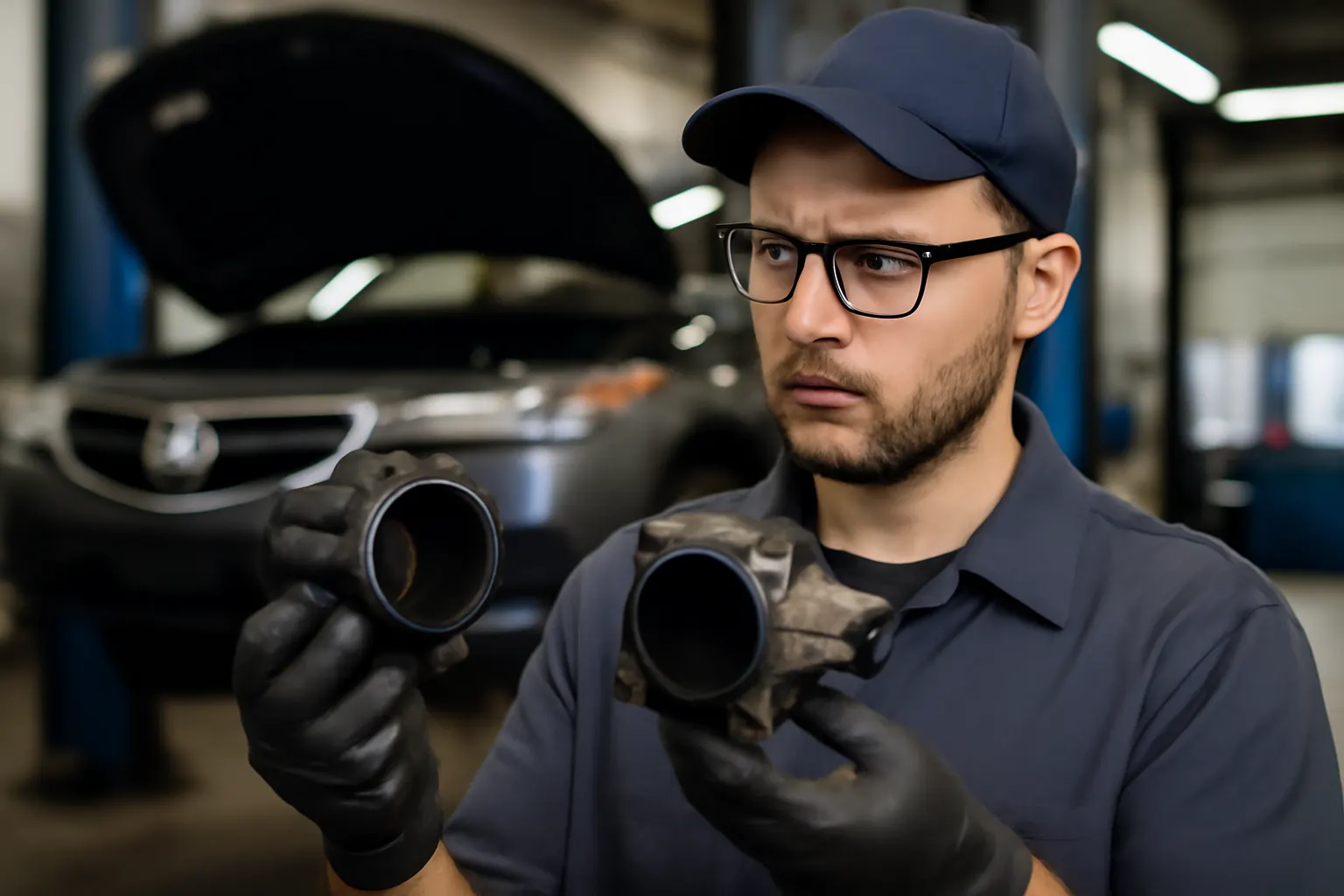
- Finish and Materials: Genuine parts use specific alloys, plastics, and coatings. Counterfeits may show rough casting, uneven paint, or mismatched colors.
Dimensional and Physical Checks
- Weight and Feel: Compare with a known genuine part if possible. Fakes may be lighter or heavier due to incorrect materials.
- Fit and Tolerances: Test fit the part before full installation. Genuine parts should fit precisely, with no forcing or gaps.
Functional Testing
- Electrical Resistance/Continuity: For sensors and modules, compare resistance values to OEM specifications.
- Connector Quality: Inspect pins for correct alignment, plating, and retention force.
Documentation and Traceability
- Acura/Honda Documentation: Genuine parts often include installation guides, warranty cards, or QR codes linking to official resources.
- Supplier Verification: Confirm sourcing through authorized Acura dealerships or recognized distributors.
The Technical Differences: Why Counterfeit Parts Fail
Counterfeiters cut corners in ways that can’t always be seen without disassembly or laboratory testing. Here’s what sets real Acura parts apart from fakes:
Materials and Manufacturing
Acura engineers specify advanced materials for critical components—such as heat-resistant ceramics for brake pads, multi-layer steel for head gaskets, or specific alloys for suspension arms. Counterfeits often substitute cheaper, lower-grade materials that can’t withstand thermal cycling, corrosion, or impact loads [DOE Materials Technologies].
Precision and Tolerances
Genuine Acura parts are manufactured to tight tolerances, often verified by SAE or Honda internal standards. Counterfeit parts may exhibit out-of-round bores, misaligned mounting holes, or inconsistent surface finishes, leading to premature wear or outright failure [SAE Standards].
Electronics and Sensors
Modern Acura vehicles rely on sophisticated sensors (e.g., wheel speed, oxygen, radar, LiDAR). Counterfeit sensors may use incorrect chipsets, lack EMI shielding, or have improper response curves, leading to false readings, check engine lights, or non-functional ADAS features.
Diagnostic Steps: Verifying Suspect Parts in the Shop
When a technician suspects a part might be counterfeit, a multi-step diagnostic process is employed:
- Initial Visual and Physical Inspection: Use the checklist above to look for obvious signs of counterfeiting.
- Cross-Reference Part Numbers: Use Honda/Acura EPC (Electronic Parts Catalog) to verify the part number, supersessions, and correct application.
- Compare to Known Genuine Part: If available, cross-compare dimensions, weight, and markings.
- Functional Bench Testing: For sensors, actuators, or modules, test resistance, signal output, and response time against OEM specs.
- Trace Source and Documentation: Contact the supplier for proof of authenticity. Genuine Acura dealers can often verify batch numbers and distribution channels.
If a part fails any of these checks, it should not be installed. Document findings and inform the customer or management to prevent future sourcing from the same supplier.
Installation Red Flags: What to Watch for During Fitment
Even if a part passes initial inspection, installation can reveal subtle clues that it isn’t genuine:
- Excessive Force Required: Genuine parts should install smoothly. If excessive force is needed, tolerances may be off.
- Mounting Hardware Doesn’t Align: Misaligned bolt holes or brackets are a hallmark of poor-quality knockoffs.
- Electrical Connectors Don’t “Click” Securely: Genuine connectors have positive engagement and tactile feedback.
- Calibration or Programming Fails: For modules or sensors requiring initialization, repeated failures or error codes may indicate non-OEM firmware or hardware.
Document any installation anomalies—these can be valuable evidence for supplier disputes or warranty claims.
The Hidden Costs: Safety, Performance, and Fuel Efficiency
Counterfeit parts aren’t just a short-term problem—they have long-term consequences for Acura owners:
- Safety Hazards: Subpar brake, suspension, or airbag components can lead to accidents or failed crash protection [NHTSA Equipment].
- Reduced Fuel Efficiency: Engine and drivetrain components that don’t meet OEM friction or material specs can reduce MPG, as highlighted by the U.S. Department of Energy [DOE Fuel Efficiency].
- Diagnostic Headaches: Persistent warning lights, emissions failures, or intermittent faults can often be traced back to counterfeit sensors or modules.
- Resale and Recall Issues: Vehicles with counterfeit parts may be ineligible for manufacturer recalls or service campaigns, impacting resale value and legal compliance.
Sourcing Guidance: Where to Buy Genuine Acura Parts
To avoid counterfeits, source parts through:
- Authorized Acura Dealerships: These channels guarantee OEM parts with full traceability and warranty support.
- Recognized Distributors: Use only suppliers with a track record of OEM sourcing and transparent documentation.
- Direct Manufacturer Channels: For certain components, Acura or Honda may offer direct sales options through official websites or certified service centers.
Avoid online marketplaces or auction sites unless the seller is an authorized Acura dealer. When in doubt, request proof of authenticity and verify with Acura’s parts division.
For detailed fitment and sourcing guidance, see our Acura Model Fitment Guide: VIN & Trim Specifics.
Maintenance Implications: The Ripple Effect of Counterfeit Parts
Installing a single counterfeit component can have a cascading effect on maintenance schedules and future repairs:
- Accelerated Wear: Substandard materials can cause premature wear on adjacent OEM components, such as rotors damaged by fake brake pads.
- Incorrect Service Intervals: Non-genuine filters or fluids may not last as long as OEM, requiring more frequent changes.
- Compromised Diagnostics: Non-OEM sensors can send inaccurate data, leading to misdiagnosis and unnecessary repairs.
For Acura-specific maintenance intervals and bulletins, refer to our Acura Maintenance Intervals & Service Bulletins.
Counterfeit Detection in Advanced Driver Assistance Systems (ADAS)
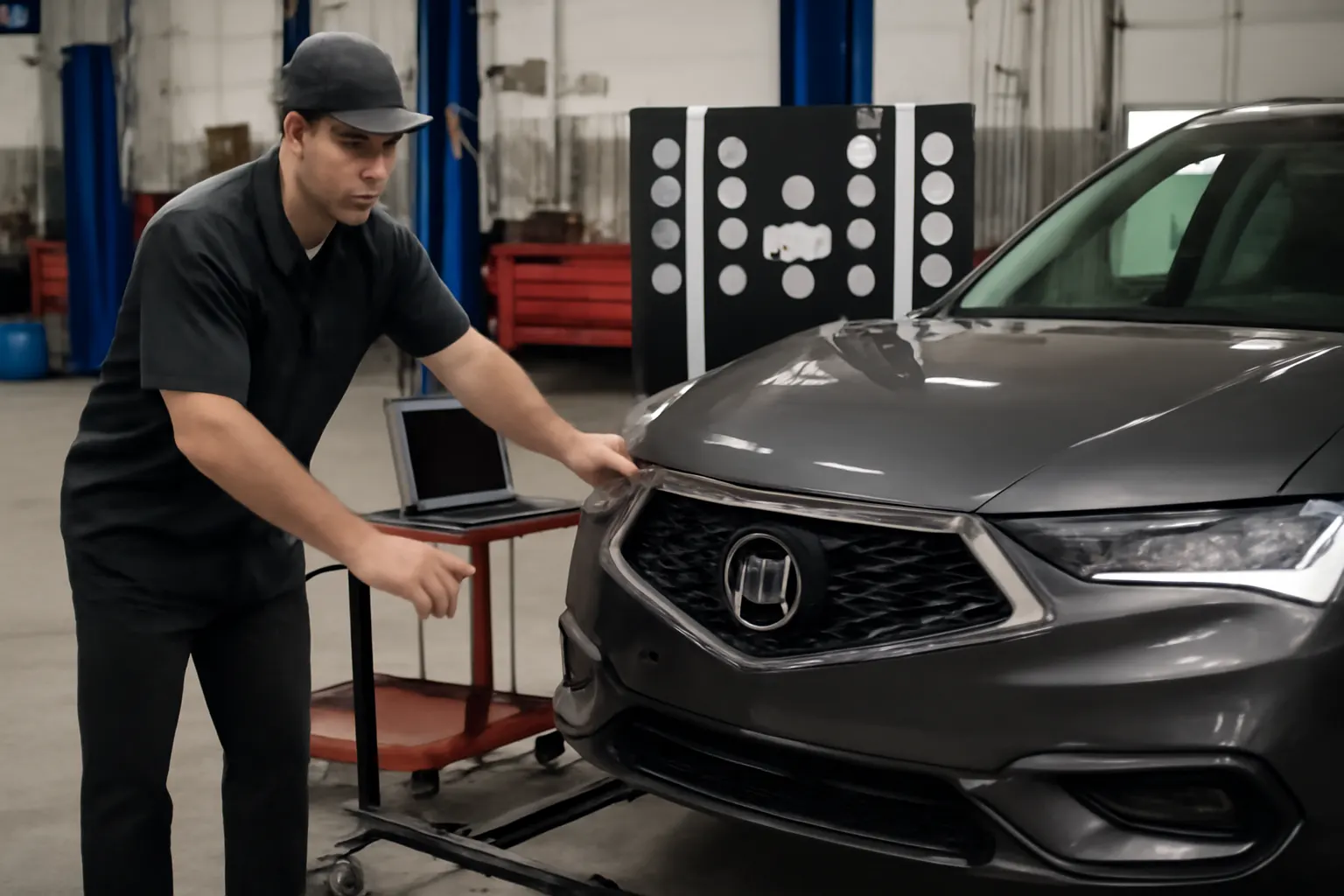
Acura’s latest models feature sophisticated ADAS systems, including lane keeping, adaptive cruise, and collision mitigation. These systems rely on highly precise sensors and modules, which are a growing target for counterfeiters.
Technician’s ADAS Counterfeit Detection Steps:
- Visual Markings: Genuine radar and camera modules have etched serials and tamper-proof seals.
- Calibration Compatibility: Non-OEM modules often fail to calibrate using factory scan tools.
- Software Updates: Genuine parts accept Honda/Acura software updates; fakes may reject or corrupt updates.
- Diagnostic Codes: Persistent or unusual DTCs post-installation may indicate a non-genuine part.
For more on real-world ADAS calibration and counterfeit part impacts, review our Real-World Acura ADAS Calibrations: Shop Case Studies.
The Role of Standards and Regulations
Genuine Acura parts are designed and tested to meet stringent industry standards, including those set by SAE International and NHTSA. These standards govern everything from crashworthiness to materials composition and electronic compatibility [SAE Standards].
Counterfeit parts rarely, if ever, meet these standards. Their lack of certification can mean unpredictable behavior in critical situations, especially in crash events or under extreme operating conditions.
What to Do If You Suspect a Counterfeit Part
If you believe you’ve received or installed a counterfeit Acura part:
- Stop Installation Immediately: Do not install or use the part.
- Document Everything: Take photos, record batch numbers, and save all packaging.
- Contact the Seller: Request proof of authenticity and initiate a return if possible.
- Report to Authorities: File a report with NHTSA or your local consumer protection agency.
- Inform the Customer: If you’re a shop, be transparent with the vehicle owner about the risks and next steps.
For serious safety-related counterfeits, use the NHTSA recall and complaint portal to help authorities track and remove dangerous products from the market.
AutoPartEx: Your Partner in Genuine Acura Part Sourcing
At AutoPartEx, we are committed to technical accuracy, safety, and authenticity. Our Acura OEM Parts: Technical Reference, Authenticity & Sourcing hub connects you with verified sourcing channels, technical fitment guides, and up-to-date standards. We work directly with recognized distributors and OEM channels to ensure every part meets Acura’s rigorous requirements.
Our editorial and technical teams continuously monitor the evolving counterfeit landscape, equipping technicians, shop owners, and Acura enthusiasts with actionable intelligence and diagnostic tools. Trust AutoPartEx for the expertise and resources you need to keep your Acura performing at its best.
References
- Vehicle Safety and Equipment – National Highway Traffic Safety Administration
- Fuel Efficiency – United States Department of Energy
- Materials Technologies – United States Department of Energy
- SAE Standards – SAE International
- Vehicle, Car Seat, Tire, and Equipment Recalls – National Highway Traffic Safety Administration