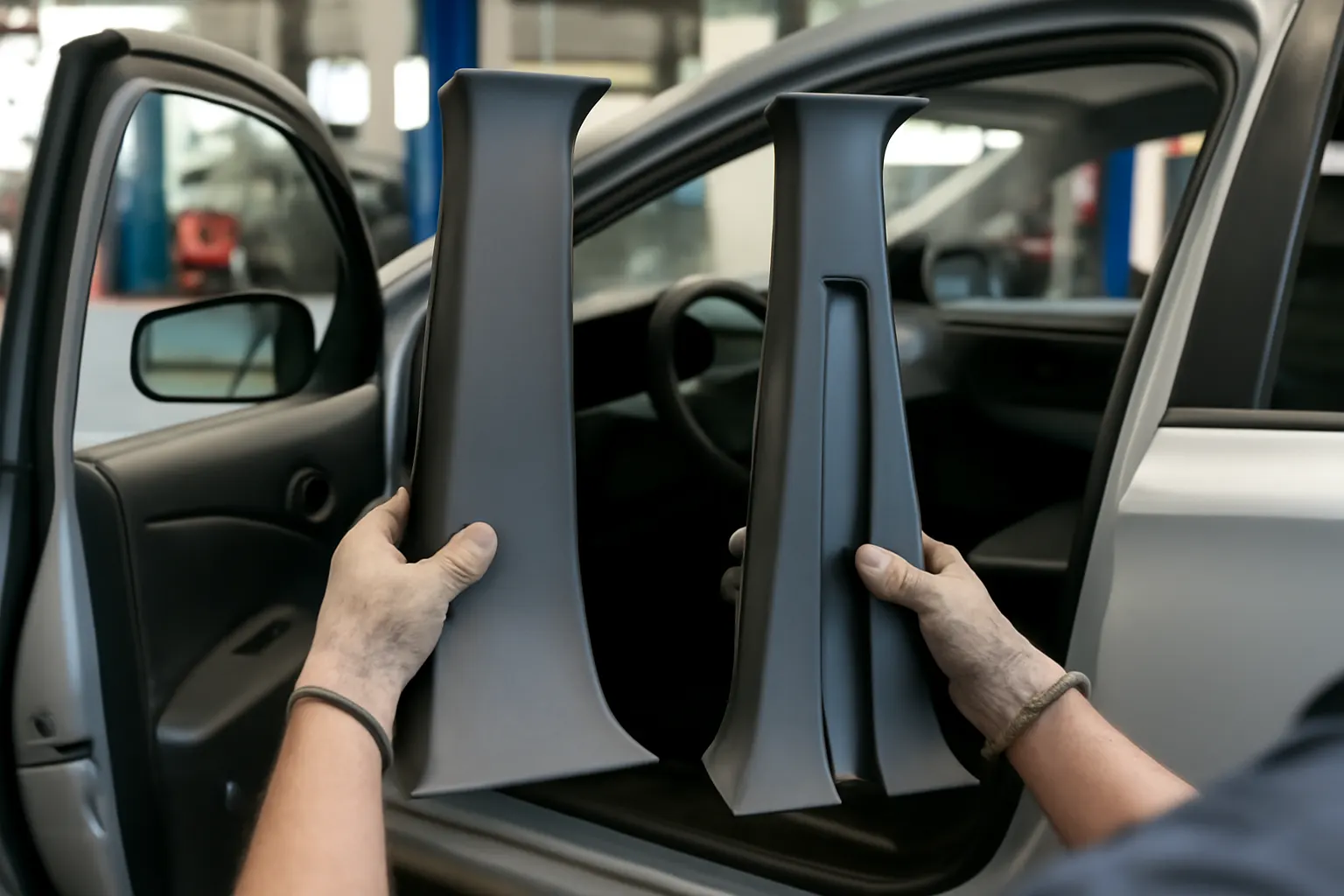
OEM vs. Aftermarket Center Pillars: What You Need to Know
When it comes to replacing or repairing your vehicle’s center pillar (also known as the B-pillar), one of the most critical decisions you’ll face is whether to choose an OEM (Original Equipment Manufacturer) or an aftermarket part. The center pillar is a structural lynchpin in vehicle safety, directly influencing crash performance, door alignment, and overall body integrity. This guide delivers a clear, technical comparison of OEM and aftermarket center pillars—covering fitment, material quality, safety, and long-term considerations—so you can make a confident, informed choice for your vehicle’s structure and your passengers’ safety.
If you’re seeking a deeper dive into center pillar construction, crash safety, and service, see our Center Pillar (B-Pillar) Technical Guide: Structure, Safety, and Service for foundational context.
Why the Center Pillar Matters: Immediate Safety and Structural Concerns
The B-pillar is not just another piece of sheet metal—it’s a primary load path in side impacts, roof crush, and rollover events. It anchors the front and rear doors, supports the roof, and houses critical safety components such as seatbelt anchors and side curtain airbags. Choosing a replacement pillar that matches the original’s structural properties is essential for preserving the vehicle’s crashworthiness and occupant protection.
OEM center pillars are engineered to meet stringent automaker specifications for material strength, geometry, and weld locations. Aftermarket options, while often less expensive, may differ in subtle but significant ways that can impact performance in real-world collisions. Your choice directly affects not just aesthetics, but the fundamental safety of your vehicle.
Hidden Problem: Not All Center Pillars Are Created Equal
While many aftermarket parts visually resemble their OEM counterparts, beneath the surface lie potential differences in steel grade, reinforcement thickness, corrosion protection, and dimensional tolerances. These variations can lead to:
- Misalignment with adjoining body panels or doors
- Reduced side-impact or rollover resistance
- Compatibility issues with airbag sensors or seatbelt mounts
- Increased risk of premature corrosion or fatigue
The hidden problem is that these issues often remain undetected until the vehicle is subjected to a collision or years of environmental exposure. By the time problems surface, repair costs and safety implications may be far greater than the initial savings from choosing an inferior part.
The Technical Anatomy of a Center Pillar
To appreciate the importance of part selection, it’s vital to understand what goes into a center pillar:
- Materials: Most modern B-pillars are made from advanced high-strength steel (AHSS), ultra-high-strength steel (UHSS), or tailored blanks with variable thickness. These materials are selected for their energy absorption and weight optimization, as highlighted by the U.S. Department of Energy’s Materials Technologies research.
- Geometry: The pillar’s cross-section is engineered to deform in a controlled way during side impacts, absorbing energy and protecting occupants.
- Integration: The B-pillar interfaces with roof rails, rocker panels, door latches, and side airbags. Precise alignment and weld integrity are essential for crash sensor timing and restraint deployment.
Any deviation in these technical specifications—whether due to material substitution, shortcut manufacturing, or imprecise forming—can compromise safety and vehicle integrity.
OEM Center Pillars: What Sets Them Apart
Engineering and Crash Testing
OEM center pillars are designed and validated as part of the vehicle’s original structure. Automakers invest heavily in crash simulations, physical testing, and material selection to ensure the pillar meets or exceeds regulatory standards (such as those outlined by the National Highway Traffic Safety Administration). This means:
- The steel composition, thickness, and reinforcement match the original body-in-white design.
- Weld locations and attachment points are engineered for optimal load transfer in a crash.
- Corrosion protection (e.g., galvanization, e-coating) is applied to OEM standards, ensuring long-term durability.
Fitment and Integration
OEM pillars are manufactured using the same dies, jigs, and fixtures as the original production line. This ensures:
- Exact dimensional match to the vehicle body
- Seamless integration with door latches, weather seals, and interior trim
- Reliable alignment with safety features like seatbelt anchors and side airbags
Regulatory Compliance and Traceability
OEM parts are subject to recall tracking and quality audits through the automaker’s supply chain. Any defect or design change is documented and communicated, as seen in NHTSA recall records.
Aftermarket Center Pillars: The Pros, Cons, and Caveats
Cost and Availability
Aftermarket center pillars are generally less expensive and may be more readily available, especially for older or discontinued models. They can be a practical option when OEM parts are on backorder or cost-prohibitive.
Variability in Quality
However, the aftermarket sector is diverse. Some manufacturers closely replicate OEM specs, while others may cut corners on:
- Material quality (using standard steel instead of AHSS/UHSS)
- Forming accuracy (looser tolerances leading to fitment issues)
- Corrosion protection (minimal or absent coatings)
- Weld nut or bracket placement (affecting seatbelt and airbag integration)
Certification and Testing
Unlike OEM parts, not all aftermarket center pillars are crash-tested as part of a complete vehicle structure. Some reputable aftermarket suppliers voluntarily adhere to standards set by organizations like SAE International, but this is not universal. Always verify whether the part carries any third-party certification or meets relevant standards.
Fitment: Why Millimeter Differences Matter
Even a 1–2 mm deviation in pillar geometry can lead to:
- Door misalignment or improper closure
- Wind noise and water leaks
- Increased risk of intrusion in a side impact
- Compromised sensor calibration for side airbags
When evaluating an aftermarket pillar, check for:
- Precise match to OEM part number and model year
- Pre-drilled holes and brackets in the correct locations
- Consistent weld flange dimensions
A professional body shop will often perform a “dry fit” before final welding to confirm alignment with adjacent panels and door hinges.
Safety Implications: Beyond the Crash Test
Structural Performance
The center pillar’s function is to channel crash forces away from the passenger compartment. If the steel grade or thickness is substandard, the pillar may deform excessively or fail prematurely—endangering occupants.
Airbag and Seatbelt Integration
Modern vehicles often route side curtain airbags or seatbelt mechanisms through the B-pillar. Even slight misplacement of mounting points or brackets can delay airbag deployment or cause seatbelt pretensioners to malfunction, directly affecting crash outcomes.
Regulatory Oversight
While OEM parts are covered under federal safety regulations, the oversight of aftermarket structural parts is less comprehensive. The NHTSA recommends that critical replacement components meet or exceed OEM specifications, but enforcement varies.
Corrosion and Longevity: The Hidden Cost of Compromise
A properly manufactured center pillar is protected against corrosion through galvanization, e-coating, or wax injection. Inadequate protection can lead to:
- Rust perforation at weld seams or mounting points
- Reduced structural strength over time
- Costly repairs or repeat replacements
For a detailed look at preserving your pillar’s integrity, review our Corrosion Prevention for Structural Pillars guide.
Diagnostic and Installation Checklist: Ensuring the Right Fit and Function
Whether you’re a DIY enthusiast or working with a professional shop, use this checklist to assess any center pillar before installation:
Center Pillar Replacement Checklist
| Step | What to Check | OEM Expectation | Aftermarket Consideration |
|---|---|---|---|
| 1 | Part Number Match | Exact OEM part number | Confirm compatibility by model/year |
| 2 | Material Grade | AHSS/UHSS as per OEM | Verify steel grade; request specs |
| 3 | Dimensions | Millimeter-accurate | Dry fit before welding |
| 4 | Weld Flange Location | Matches body-in-white | Check all weld points |
| 5 | Corrosion Protection | Galvanized/e-coated | Inspect for coatings |
| 6 | Brackets/Mounts | Precise for seatbelts/airbags | Confirm all attachment points |
| 7 | Certification | OEM/automaker label | Look for SAE or third-party certs |
| 8 | Recalls/Defects | Traceable via VIN | Research supplier reputation |
| 9 | Warranty | OEM-backed | Review aftermarket warranty terms |
| 10 | Professional Installation | Strongly recommended | Essential for structural parts |
Sourcing the Right Center Pillar: OEM, Aftermarket, or Certified Alternative?
OEM Sources
- Dealerships or authorized parts distributors
- Salvage yards (ensure undamaged, rust-free parts)
- Online OEM parts catalogs
Aftermarket Sources
- Reputable body parts suppliers with clear quality documentation
- Parts carrying SAE or equivalent certification
- Vendors with strong customer reviews and technical support
Certified Alternatives
Some third-party manufacturers offer “certified” parts that are independently tested to meet or exceed OEM standards. These can be a viable option when OEM parts are unavailable, but always request documentation of crash test or materials validation.
Installation Best Practices: DIY vs. Professional
DIY Considerations
Replacing a center pillar is a complex structural repair. It involves:
- Sectioning and welding high-strength steel
- Reintegrating seatbelt and airbag components
- Ensuring precise panel alignment
Unless you have advanced metalworking and welding experience, this job is best left to a professional collision repair facility.
Professional Installation
A certified body shop will:
- Use factory-approved sectioning and welding techniques
- Perform structural measurements to ensure alignment
- Recalibrate safety systems (airbags, sensors)
- Apply OEM-grade corrosion protection
Always request documentation of repair procedures and, if possible, before/after alignment measurements.
Maintenance and Inspection: Keeping the Center Pillar Safe for the Long Haul
Even after a quality installation, regular inspection is essential:
- Check for signs of corrosion at weld seams and mounting points
- Inspect door alignment and closure
- Listen for new wind noise or water leaks (could indicate pillar movement)
- Ensure seatbelt and airbag systems remain functional (diagnostic scan)
If you suspect any issues—or after a side impact—have the pillar inspected by a qualified technician. For a step-by-step guide, see How to Inspect and Replace a Center Pillar.
Common Scenarios: When Aftermarket May Be Acceptable
While OEM is always preferable for critical structural components, there are scenarios where a high-quality aftermarket pillar may be acceptable:
- Older vehicles where OEM parts are discontinued or cost-prohibitive
- Non-structural cosmetic repairs (e.g., outer skin replacement only)
- Certified aftermarket parts with documented crash testing
In all cases, prioritize parts from reputable suppliers, confirm material and dimensional specifications, and insist on professional installation.
Frequently Overlooked Factors in Center Pillar Replacement
Insurance and Liability
Some insurance policies may specify OEM parts for structural repairs or require documentation when using aftermarket components. Always check with your insurer and retain all receipts and certifications.
Impact on Resale Value
Vehicles repaired with OEM parts generally retain higher resale value and are less likely to raise red flags in pre-purchase inspections. Aftermarket parts—especially if poorly installed—can affect vehicle history reports and buyer confidence.
Recalls and Updates
OEM parts are covered by manufacturer recalls for safety defects. With aftermarket parts, you are responsible for tracking supplier notices or field reports. Always register your purchase with the supplier if possible.
AutoPartEx Positioning: Your Trusted Source for Structural Integrity
At AutoPartEx, we understand that the center pillar is not just a body panel—it’s a vital part of your vehicle’s safety architecture. That’s why we offer a curated selection of OEM and certified aftermarket center pillars, complete with technical specifications, fitment guides, and expert support. Our resources, such as the Center Pillar (B-Pillar) Technical Guide: Structure, Safety, and Service and The Role of the B-Pillar in Modern Crash Safety, are designed to help you make informed, confident decisions about every structural repair.
The Bottom Line: Make Safety Your First Priority
When it comes to replacing your vehicle’s center pillar, the stakes are high. An OEM pillar offers guaranteed fitment, material quality, and crash-tested safety. High-quality aftermarket options can be viable when properly vetted, but beware of shortcuts that could compromise structural integrity. Always prioritize:
- Verified material and dimensional specs
- Certified manufacturing processes
- Professional installation and inspection
Your choice today can make the difference in a critical moment tomorrow. For questions about sourcing, fitment, or installation, consult with AutoPartEx or a certified collision repair professional.