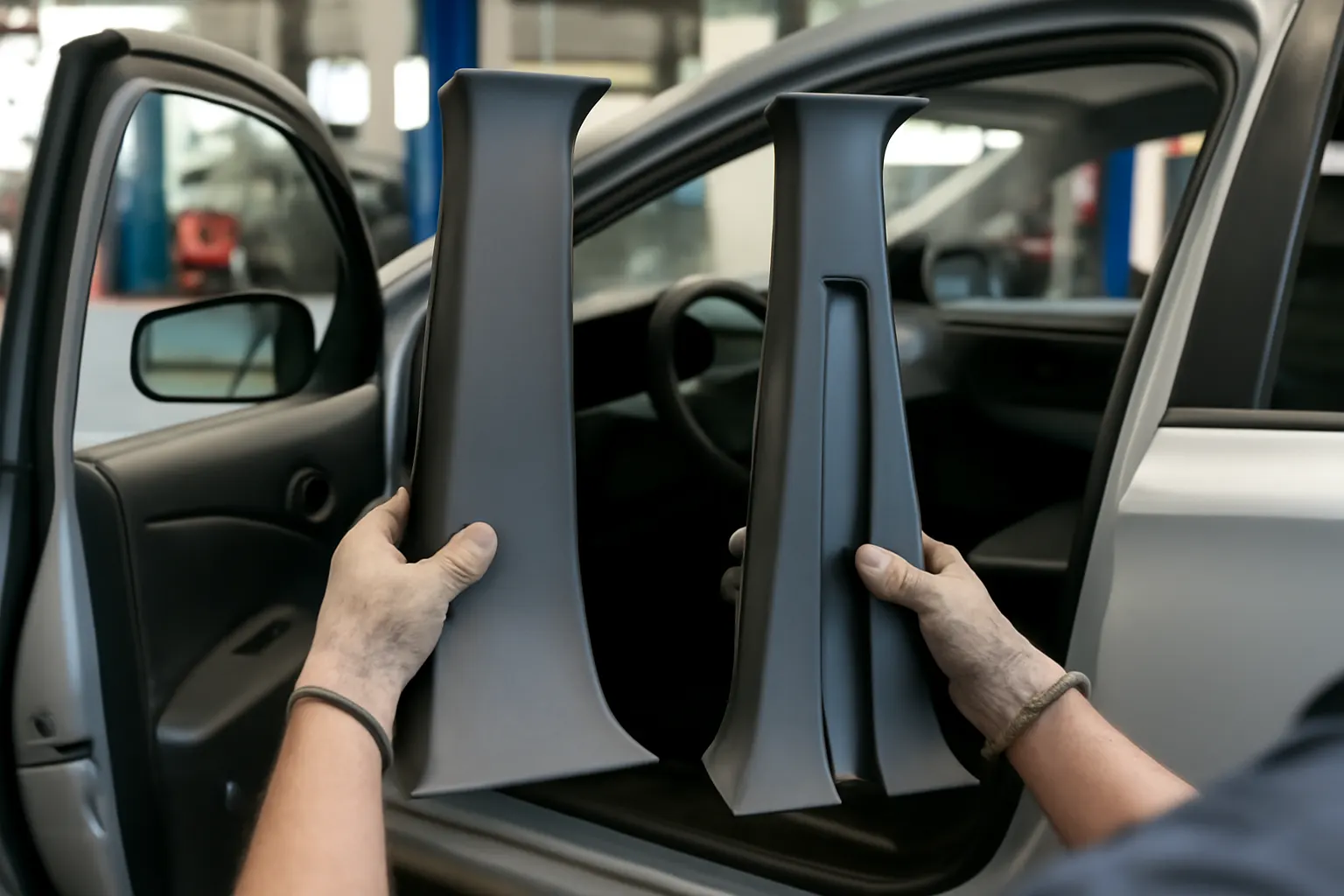
The Role of the B-Pillar in Modern Crash Safety
The B-pillar, also known as the center pillar, is a critical structural component in every modern vehicle, forming the backbone of side-impact and rollover protection systems. Advances in B-pillar engineering have dramatically improved occupant safety, reducing injuries and fatalities in collisions. This article explores how innovations in center pillar design, materials, and integration have transformed crash safety, what hidden vulnerabilities remain, and how you can ensure your vehicle’s B-pillar is up to the task. For a deeper dive into center pillar structure and service, visit our Center Pillar (B-Pillar) Technical Guide: Structure, Safety, and Service.
Why the B-Pillar is the Unsung Hero of Crash Safety
When discussing automotive safety, features like airbags and seat belts often take center stage. Yet, the B-pillar is the silent guardian, providing essential structural integrity during side impacts and rollovers. It serves as the anchor point for seat belts and the roof, channeling crash forces away from passengers. Without a robust B-pillar, even the most advanced restraint systems cannot perform effectively.
Immediate Impact: Occupant Protection in Side Collisions
Side-impact crashes account for a significant proportion of serious injuries and fatalities. The B-pillar’s primary function is to absorb and distribute impact energy, preventing the intrusion of external objects into the passenger compartment. Its strength is fundamental to the survival space that keeps occupants safe.
Integration with Safety Systems
Modern vehicles integrate the B-pillar with side airbags, seat belt pre-tensioners, and even sensors for advanced restraint deployment. Its placement and rigidity are pivotal for these systems to function as intended. As vehicle safety regulations evolve, so too does the design of this critical component.
The Hidden Problem: Not All B-Pillars Are Created Equal
Despite its importance, the B-pillar is often overlooked by vehicle owners and even some repair professionals. Variations in design, material quality, and manufacturing standards can lead to significant disparities in crash performance. Aftermarket repairs, corrosion, and improper modifications can all compromise its integrity.
Variability Across Makes and Models
Different manufacturers employ various materials and construction methods, leading to a wide range of B-pillar strengths and weaknesses. Some older vehicles or lower-cost models may lack the advanced reinforcements found in newer designs.
Undetected Damage and Repair Risks
The B-pillar is rarely visible or accessible. Minor accidents, previous repairs, or rust can weaken it without obvious external signs. Even seemingly minor side impacts can result in hairline fractures or internal damage, which may go unnoticed until a more severe crash occurs.
Digging Deeper: The Technical Anatomy of the B-Pillar
To appreciate the B-pillar’s role in crash safety, it’s essential to understand its structure, materials, and engineering evolution.
Structural Role in the Vehicle Body
The B-pillar is the vertical support located between the front and rear doors (in four-door vehicles). It connects the vehicle’s roof to the floor pan, forming a rigid frame that resists deformation during a crash. This pillar is typically welded to the rocker panel at the base and the roof rail at the top, providing a continuous load path.
Material Evolution: From Mild Steel to Advanced High-Strength Alloys
Early automotive B-pillars were constructed from mild steel, sufficient for the vehicle weights and crash standards of the time. Today, the drive for both safety and fuel efficiency has led to the adoption of advanced high-strength steels (AHSS), boron steel, and even composite materials in some applications. These materials offer superior strength-to-weight ratios, allowing for thinner pillars that maintain or exceed previous safety standards while reducing overall vehicle weight United States Department of Energy, Materials Technologies.
Engineering for Energy Absorption
Modern B-pillars are designed with crumple zones and reinforcement layers. Strategic use of spot welds, laser welding, and tailored blanks (sections of varying thickness) allow the pillar to deform in a controlled manner during a collision, absorbing energy while maintaining cabin integrity.
Engineering Advances: How Modern B-Pillars Outperform the Past
The last two decades have seen a revolution in B-pillar design, driven by stricter crash safety regulations and the need for lighter, more fuel-efficient vehicles.
Multi-Phase Steel and Hot-Stamping
Many automakers now use hot-stamped, ultra-high-strength steel for B-pillars, which can achieve tensile strengths above 1,500 MPa. This allows for complex shapes and thinner sections without sacrificing strength, a key factor in both crash performance and weight reduction.
Integration with Safety Electronics
Modern B-pillars often house wiring and sensors for side airbags and seat belt pre-tensioners. Their geometry is optimized using computer-aided engineering (CAE) simulations to ensure predictable deformation and proper timing of restraint system deployment.
Regulatory Influence
Standards set by organizations like the National Highway Traffic Safety Administration (NHTSA) and SAE International have pushed manufacturers to continually improve side-impact and rollover protection. B-pillar design is directly influenced by these evolving requirements NHTSA, Vehicle Safety and Equipment.
The B-Pillar in Side Impact and Rollover Scenarios
Crash tests and real-world data highlight the B-pillar’s pivotal role in two of the most dangerous crash types: side impacts and rollovers.
Side-Impact Crash Performance
In a typical side-impact crash, the B-pillar is the first line of defense against intrusion. Its ability to resist bending and buckling is crucial in maintaining the survival space for occupants. Advanced B-pillar designs can reduce cabin intrusion by several centimeters, which can be the difference between minor and life-threatening injuries.
Rollover Protection
During a rollover, the roof structure is subjected to enormous forces. The B-pillar, as part of the roof support system, helps prevent collapse. Vehicles with reinforced B-pillars demonstrate significantly lower rates of roof crush and occupant ejection in rollover tests.
Safety Test Protocols
Modern crash test protocols, such as the IIHS side-impact test and NHTSA’s New Car Assessment Program (NCAP), specifically assess B-pillar performance. Vehicles that excel in these tests often feature advanced B-pillar engineering, with reinforced cross-sections and optimized load paths.
Recognizing B-Pillar Weaknesses and Failure Modes
Despite advances, the B-pillar is not immune to failure. Understanding potential weaknesses is key to both vehicle selection and maintenance.
Corrosion and Environmental Degradation
Exposure to moisture, road salts, and temperature variations can lead to corrosion, especially at weld seams and internal cavities. Over time, this can significantly reduce the pillar’s structural integrity.
Poor Quality Repairs
Improper welding, use of substandard replacement parts, or incomplete rust treatment during repairs can undermine the B-pillar’s crashworthiness. For more on this topic, see OEM vs. Aftermarket Center Pillars: What You Need to Know.
Hidden Damage After Minor Collisions
Even if a vehicle appears undamaged after a minor side impact, the B-pillar may have absorbed forces beyond its design limits. Micro-cracks or internal deformations may not be visible but can compromise future performance.
Inspection and Diagnostic Checklist: Is Your B-Pillar Safe?
Ensuring the integrity of your vehicle’s B-pillar requires periodic inspection, especially after any collision or bodywork. Here’s a diagnostic checklist to follow:
| Inspection Step | What to Look For | Action Required |
|---|---|---|
| Visual Inspection | Check for visible dents, cracks, or paint bubbles | Schedule body shop evaluation |
| Interior Trim Removal | Remove trim panels to inspect weld seams | Look for rust, cracks, or gaps |
| Corrosion Check | Inspect at base, roof rail, and door jambs | Treat corrosion immediately |
| Weld Quality Assessment | Look for uniform welds, no burn-through | Re-weld or repair as needed |
| Previous Repair Evidence | Signs of filler, mismatched paint, or patches | Verify repair quality |
| Alignment Check | Door alignment and closure smoothness | Adjust or repair misalignments |
| Professional Evaluation | After any side impact or rollover | Request structural assessment |
For a step-by-step guide on inspection and replacement, refer to How to Inspect and Replace a Center Pillar.
Sourcing, Fitment, and Replacement: What Every Owner Should Know
If your B-pillar is damaged or corroded, replacement or reinforcement may be necessary. Here’s what to consider:
OEM vs. Aftermarket Parts
Original Equipment Manufacturer (OEM) parts are engineered to meet strict safety standards and are typically recommended for structural repairs. Aftermarket options may be less expensive but can vary widely in fitment and quality. Always verify that any replacement part meets or exceeds the original safety specifications.
Professional Installation
Replacing a B-pillar is a complex procedure involving cutting, welding, and often re-aligning the vehicle body. This is not a DIY job—always use a certified collision repair facility with experience in structural work.
Fitment Verification
Before installation, ensure the replacement B-pillar matches your vehicle’s make, model, and year. Even slight variations can affect crash performance and door alignment. Many manufacturers provide fitment guides or part numbers; use these to confirm compatibility.
Maintenance and Corrosion Prevention: Extending B-Pillar Life
Regular maintenance can significantly extend the life and performance of your B-pillar.
Preventing Corrosion
- Keep Drain Holes Clear: Ensure that any drainage channels at the base of the pillar are free of debris.
- Apply Rust Inhibitor: Treat weld seams and exposed metal with a quality rust inhibitor.
- Wash Regularly: Remove road salt and grime from door jambs and rocker panels.
For more tips, see our guide on Corrosion Prevention for Structural Pillars.
Inspect After Accidents
After any side impact, even a minor one, have the B-pillar inspected by a professional. Early detection of damage can prevent more costly repairs and ensure continued safety.
The B-Pillar’s Role in Fuel Efficiency and Vehicle Dynamics
It’s easy to focus solely on crash safety, but the B-pillar also plays a role in vehicle dynamics and efficiency.
Weight Reduction and Structural Optimization
Using advanced materials in the B-pillar allows manufacturers to reduce vehicle weight without compromising safety. This contributes to improved fuel economy and handling, as a lighter, stiffer structure responds better to driver inputs DOE, Fuel Efficiency.
NVH (Noise, Vibration, Harshness) Control
A well-designed B-pillar reduces cabin noise and vibration by acting as a stiffening member. This improves ride comfort and long-term durability.
Choosing a Safe Vehicle: What to Look for in B-Pillar Design
If you’re shopping for a new or used vehicle, understanding B-pillar construction can inform your decision.
Safety Ratings and Crash Test Results
Consult NHTSA and IIHS crash test results, focusing on side-impact and rollover scores. Vehicles with high ratings often feature advanced B-pillar engineering.
Manufacturer Specifications
Look for vehicles that highlight the use of ultra-high-strength steel or other advanced materials in their marketing or technical literature. These vehicles are more likely to offer superior crash protection.
Visual Cues
While not always visible, thicker door frames and solid-feeling door closures can indicate robust B-pillar construction.
What Happens When the B-Pillar Fails?
Failure of the B-pillar during a crash can have catastrophic consequences.
Increased Intrusion
A compromised B-pillar allows more of the crash force to penetrate the passenger compartment, increasing the risk of injury.
Malfunctioning Safety Systems
Seat belts and airbags rely on the B-pillar for anchorage and timing. If the pillar fails, these systems may not deploy correctly or provide the intended protection.
Structural Collapse in Rollovers
Without a strong B-pillar, the roof is more likely to collapse during a rollover, leading to a higher risk of ejection or life-threatening injury.
Professional Guidance: When to Seek Expert Help
Given the complexity and importance of the B-pillar, professional assessment is vital in the following scenarios:
- After Any Side-Impact Accident: Even if there’s no visible damage, have the pillar inspected.
- If You Notice Rust or Corrosion: Early intervention can prevent structural failure.
- When Buying a Used Vehicle: Request a structural inspection, especially if the vehicle has a history of accidents.
- If Doors Do Not Align Properly: Misalignment may indicate underlying B-pillar damage.
AutoPartEx: Your Partner in Structural Safety
At AutoPartEx, we understand that true vehicle safety starts with the integrity of your core components. Our curated selection of center pillars and related parts are sourced to meet or exceed OEM standards, ensuring you never compromise on crash protection. Whether you’re a professional technician or a safety-focused owner, our technical guides and fitment resources empower you to make informed decisions about your vehicle’s structure.
For more information on center pillar service, visit our Center Pillar (B-Pillar) Technical Guide: Structure, Safety, and Service. If you need step-by-step repair instructions, see How to Inspect and Replace a Center Pillar.
Conclusion: The B-Pillar’s Lasting Impact on Safety
The B-pillar may not be the most glamorous part of your vehicle, but it is one of the most vital. Advances in engineering and materials have made modern B-pillars incredibly effective at protecting occupants in side-impact and rollover crashes. However, hidden vulnerabilities—from corrosion to poor-quality repairs—can undermine its performance. Regular inspection, prompt attention to damage, and the use of quality replacement parts are essential for maintaining your vehicle’s crashworthiness. Stay informed, prioritize structural integrity, and let AutoPartEx be your guide to safer driving.