Identifying Genuine Alfa Parts: Packaging & Markings
When maintaining or restoring an Alfa Romeo, ensuring the use of genuine Alfa parts is critical for reliability, safety, and performance. The fastest way to spot authentic Alfa Romeo parts is by examining packaging cues, holographic security labels, and supplier documentation. Genuine Alfa parts come in branded packaging, feature specific hologram stickers, and are accompanied by supplier documentation that matches Alfa Romeo’s official records. This guide will show you exactly how to identify these features and avoid costly mistakes.
For a comprehensive selection of authentic Alfa Romeo components, including OEM, OE-equivalent, and classic spares, visit our Alfa Auto Parts: Genuine Alfa Romeo Parts, Fitment & Engineering | AutoPartEx section. Here, you’ll find not only parts but also engineering insights and fitment resources designed for Alfa enthusiasts and professionals.
Why Genuine Alfa Parts Matter
Choosing genuine Alfa Romeo parts is about more than brand loyalty—it’s a matter of engineering integrity, safety, and long-term value. Alfa Romeo engineers parts to strict standards, using proprietary materials and manufacturing processes that ensure optimal fit and function. Non-genuine or counterfeit parts may look similar but often lack the precision, durability, and compatibility required for safe and efficient operation.
Safety and Regulatory Compliance
Genuine Alfa parts are tested and certified according to industry standards set by organizations like SAE International and regulatory bodies such as the National Highway Traffic Safety Administration (NHTSA). These standards cover everything from mechanical fitment to crash safety and emissions. Using counterfeit or substandard parts can compromise vehicle safety, void manufacturer recommendations, and may not meet regulatory requirements (NHTSA Equipment, SAE Standards).
Protecting Performance and Value
Genuine parts preserve your Alfa’s performance, fuel efficiency, and resale value. According to the United States Department of Energy, properly engineered components directly impact fuel economy and drivetrain efficiency (DOE Fuel Efficiency). Non-genuine parts can deteriorate these benefits, leading to increased wear and the risk of additional repairs.
The Hidden Problem: Proliferation of Counterfeit Alfa Parts
The global automotive aftermarket is flooded with counterfeit parts, many of which are visually deceptive. Sophisticated forgeries mimic Alfa Romeo’s logos, packaging, and even supplier documentation, making it difficult for enthusiasts and workshops to distinguish genuine parts from fakes. The proliferation of online marketplaces and grey-market imports has only accelerated the problem.
Risks of Counterfeit Alfa Parts
- Mechanical Failure: Inferior materials and poor manufacturing can lead to premature part failure.
- Safety Hazards: Non-genuine parts may not meet crash or emissions standards, endangering occupants and voiding compliance.
- Fitment Issues: Even small deviations in dimensions can cause installation difficulties or system malfunctions.
- Long-Term Costs: Frequent replacements and collateral damage from bad parts quickly outweigh any initial savings.
Understanding Alfa Romeo Packaging: The First Line of Defense
The packaging is your first clue in identifying authentic Alfa Romeo parts. Alfa Romeo and its parent company, Stellantis, use uniform packaging designs and security features across their genuine parts range.
Standard Features of Genuine Alfa Packaging
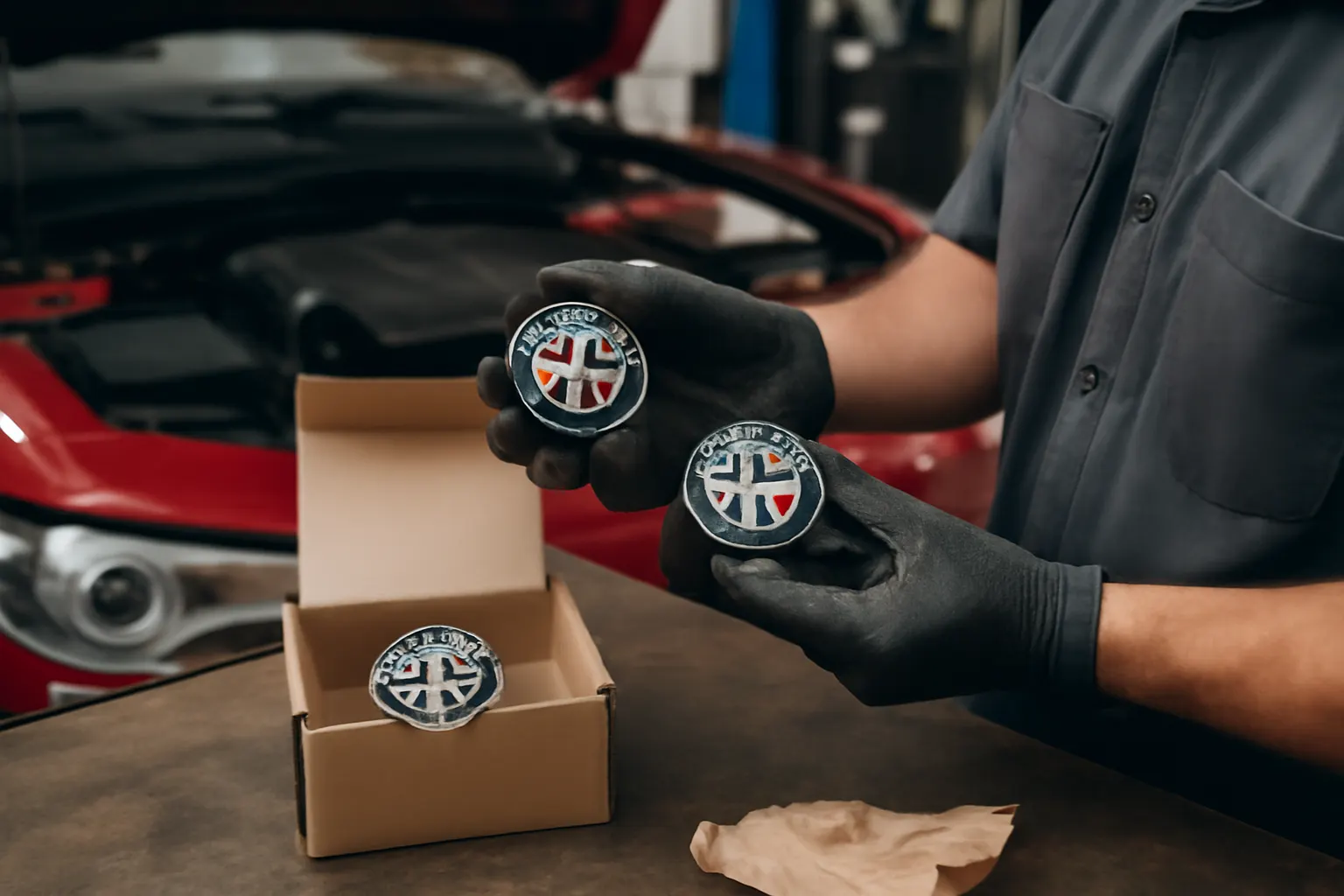
- Branded Boxes: Genuine Alfa parts are supplied in boxes or bags with the Alfa Romeo logo, often accompanied by Stellantis or Mopar branding for North American models.
- Consistent Color Schemes: Packaging typically features a specific color palette—white, grey, and red are most common—with diagonal striping or repeating logos.
- Printed Part Numbers: The Alfa Romeo part number is always printed, never hand-written or stickered over. The font and spacing are consistent across batches.
- Language and Legal Notices: Packaging includes multilingual safety and authenticity notices, along with country-of-origin labeling.
Alfa Packaging Checklist
| Feature | Genuine Alfa Parts | Counterfeit Warning Signs |
|---|---|---|
| Logo & Branding | Crisp, correct | Blurred, outdated, or missing |
| Part Number | Printed, precise | Stickered, hand-written, or off |
| Color Scheme | Consistent, clear | Faded, mismatched, or generic |
| Security Label/Hologram | Present, intact | Missing, damaged, or generic |
| Supplier Documentation | Included, matches | Missing, poor translation |
Holograms and Security Labels: Your Authentication Toolkit
Modern Alfa Romeo packaging incorporates advanced security features to deter counterfeiting. The most reliable is the holographic security label, which is difficult to reproduce and unique to genuine Alfa parts.
How to Inspect Holographic Labels
- Location: The hologram is typically affixed over the box flap, sealing the package.
- Appearance: Genuine labels display a shifting color effect and include microtext or serial numbers visible under magnification.
- Tamper Evidence: Removing the label destroys it, preventing reuse. If the label peels off cleanly or looks re-applied, be suspicious.
- Verification Codes: Some recent Alfa parts include QR codes or alphanumeric verification codes that can be checked on the official Alfa Romeo or Stellantis parts authentication portal.
Common Counterfeit Tactics
- Fake Holograms: Flat stickers with printed hologram-like graphics, lacking depth or shifting colors.
- Misplaced Labels: Holograms placed in non-standard locations, or covering up other defects.
- Reused Packaging: Genuine boxes with replaced or tampered labels—always check for evidence of resealing or prior opening.
Supplier Documentation: The Paper Trail
Every genuine Alfa Romeo part is accompanied by supplier documentation, which can include:
- Packing Slips: Detailing the part number, description, and supplier/distributor information.
- Certificate of Authenticity: For high-value or safety-critical components.
- Installation Instructions: Multilingual, with Alfa Romeo branding and part-specific diagrams.
What to Look For
- Matching Part Numbers: All paperwork should match the part and packaging exactly.
- Official Distributor Details: The supplier should be listed in Alfa Romeo’s authorized distributor network.
- Correct Language and Terminology: Poor translations or mismatched technical terms are red flags for counterfeits.
Part Markings and Stamps: Beyond the Box
Genuine Alfa Romeo parts are marked with identifiers that persist even after installation. These markings are your assurance of authenticity once the packaging is discarded.
Typical Alfa Markings
- Cast or Stamped Logos: The Alfa Romeo emblem, or the “Alfa Romeo” text, is cast, stamped, or laser-etched into the part.
- Part Numbers: Permanent part numbers match those on the packaging and documentation.
- Supplier Codes: Some components include a manufacturer or supplier code, traceable through Alfa Romeo’s network.
- Date Codes: Indicate the production date, essential for recalls or technical service bulletins.
Markings to Be Wary Of
- Missing or Inconsistent Markings: Parts with no markings or with obviously altered numbers.
- Poor Quality Stamping: Fuzzy, shallow, or off-center markings suggest counterfeiting.
- Incorrect Fonts or Spacing: Alfa Romeo uses specific typefaces and layouts.
Sourcing Genuine Alfa Parts: Where and How
Knowing how to identify genuine parts is only useful if you’re sourcing from reputable suppliers. The risk of ending up with counterfeits increases dramatically when purchasing from unknown online sellers or non-authorized distributors.
Best Practices for Sourcing
- Use Authorized Dealers: Purchase directly from Alfa Romeo dealerships or their official online parts portals.
- Select Trusted Aftermarket Specialists: For classic or hard-to-find items, established Alfa Romeo specialists with a track record of authenticity are preferable.
- Request Documentation: Always ask for supplier documentation and keep it for your records.
- Check for Recalls and Updates: Use the NHTSA Recalls database to ensure the part is not subject to a safety recall.
Online Marketplaces: Proceed with Caution
While online marketplaces may offer attractive prices, they are also a hotbed for counterfeit goods. Look for sellers with high ratings, detailed product photos showing packaging and markings, and a clear return policy.
International Sourcing
If importing parts, verify that the supplier is recognized by Alfa Romeo or Stellantis in their region. Be wary of parts that lack proper customs documentation or are shipped without original packaging.
Diagnosing Counterfeit Parts After Purchase
Sometimes, counterfeit parts slip through even the most careful vetting process. Diagnosing a fake after purchase is critical to prevent installation errors or safety issues.
Post-Purchase Inspection Checklist
- Compare to Known Genuine Part: If possible, compare the suspect part side-by-side with a confirmed genuine item.
- Check Fit and Finish: Genuine parts have precise machining, smooth surfaces, and consistent color/texture.
- Test Installation: If the part does not fit perfectly or requires force, it may be counterfeit or poorly made.
- Review Performance: Unusual noises, poor function, or rapid wear after installation are warning signs.
- Contact Alfa Romeo Support: If in doubt, contact Alfa Romeo customer service or an authorized dealer for verification.
Installation and Fitment: Ensuring Compatibility
Even with genuine parts, proper installation and fitment are crucial for safety and performance. Alfa Romeo publishes detailed fitment guides and part compatibility charts. For modern and classic models alike, always consult:
- The vehicle’s service manual.
- The Alfa Romeo Fitment Guide for model-specific compatibility.
- VIN decoding resources such as Alfa Romeo VIN Decoding & Part Compatibility to ensure part numbers match your vehicle’s build.
Common Fitment Pitfalls
- Superseded Part Numbers: Alfa Romeo may update part numbers over time; ensure you’re using the latest version compatible with your car.
- Model Year Changes: Small changes between model years can affect compatibility, especially for electrical and trim parts.
- Aftermarket Modifications: Prior modifications may affect fitment—always inspect your vehicle before ordering.
Maintenance and Record-Keeping with Genuine Parts
Maintaining a thorough record of genuine part installations is invaluable for long-term ownership and resale. Document every purchase, including part numbers, supplier details, and installation dates.
Benefits of Record-Keeping
- Resale Value: Buyers value documented proof of genuine parts.
- Warranty Support: Some Alfa Romeo warranties require evidence of genuine part usage for claims.
- Recall and Service Campaigns: Accurate records make it easy to check if your parts are affected.
Classic Alfa Romeo Parts: Special Considerations
For classic Alfa Romeos, sourcing genuine or OE-equivalent parts can be more challenging. Many original parts are discontinued, and the market is rife with reproductions of varying quality.
Strategies for Classic Owners
- Join Alfa Romeo Clubs: Club forums and events are excellent sources for authentic parts and advice.
- Use Trusted Specialists: Seek out classic Alfa Romeo parts specialists with established reputations.
- Verify Provenance: For rare or high-value parts, request photos of markings, documentation, and provenance.
For a deep dive into sourcing discontinued and classic parts, see our Classic Alfa Maintenance: Sourcing Discontinued Parts editorial.
AutoPartEx: Your Partner in Genuine Alfa Parts
At AutoPartEx, we are committed to providing Alfa Romeo owners, restorers, and workshops with only genuine and OE-equivalent parts. Our Alfa Auto Parts: Genuine Alfa Romeo Parts, Fitment & Engineering category is curated for authenticity, technical accuracy, and fitment reliability. Our technical team verifies sourcing, markings, and documentation for every part we list.
We also provide fitment guides, VIN decoding, and engineering resources to help you make informed decisions—whether you’re maintaining a modern Giulia or restoring a classic Spider.
Expert Action: What You Should Do Next
- Inspect Packaging and Markings: Always check packaging, holograms, and documentation before installation.
- Source Wisely: Purchase from authorized dealers or trusted specialists—never compromise on provenance.
- Consult Fitment Guides: Use AutoPartEx and Alfa Romeo resources to verify compatibility by model and VIN.
- Keep Records: Maintain documentation for all genuine part purchases and installations.
- Stay Informed: Monitor technical service bulletins, recalls, and updates to ensure ongoing safety and compliance.
For Alfa Romeo owners who demand authenticity and engineering integrity, vigilance in identifying genuine parts is non-negotiable. With the right knowledge and resources, you can protect your investment, safety, and driving enjoyment—mile after mile.