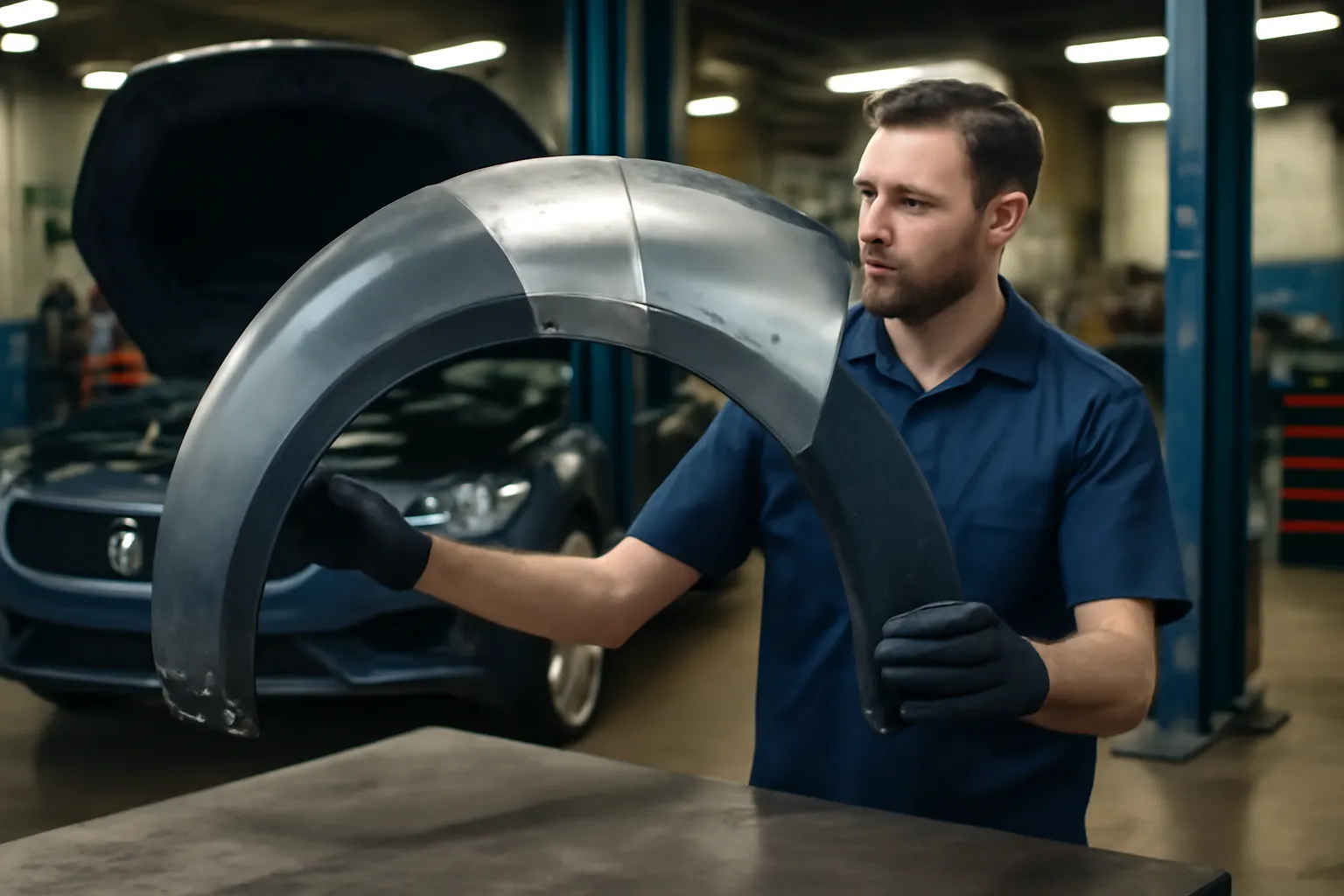
How Fender Damage Can Affect Vehicle Safety
Fender damage is often dismissed as a purely cosmetic concern, but the reality is far more complex—and potentially dangerous. Even seemingly minor dents, cracks, or misalignments in your vehicle’s fender can compromise essential safety systems, disrupt crumple zones, and interfere with advanced driver-assistance sensors. In this comprehensive guide, AutoPartEx explains why fender integrity matters, how damage can undermine your vehicle’s safety, and what you can do to address the problem before it leads to greater risks or costly repairs.
For a deeper look at fender construction and protection, see our Fender Replacement & Technical Guide: Protecting Your Vehicle’s Structure and Style.
The Immediate Answer: Why Fender Damage Is a Safety Issue
At first glance, a damaged fender might seem like a minor inconvenience—perhaps a small dent from a parking lot mishap or a scratch from road debris. However, fenders are not simply aesthetic panels; they are integral to your vehicle’s safety architecture. Their role in energy absorption, structural alignment, and housing of critical sensors means that any compromise can have a direct impact on occupant protection and accident avoidance.
Key safety risks of fender damage include:
- Reduced effectiveness of crumple zones, increasing injury risk in a collision
- Impaired function of sensors for airbags, lane-keeping, and collision avoidance
- Potential for tire or suspension interference, leading to unpredictable handling
Ignoring fender damage can therefore mean more than just a blemished exterior—it can directly affect how your vehicle behaves in an emergency.
The Hidden Problem: Unseen Dangers Lurking Beneath Fender Damage
While visible dents or cracks are easy to spot, the true extent of fender-related safety issues often remains hidden. Even minor fender impacts can result in:
- Misalignment of the fender with adjacent body panels, weakening the structural “shell”
- Micro-cracks in mounting points or hidden brackets, leading to progressive failure
- Dislodged or damaged wiring harnesses, especially for sensor-equipped modern vehicles
These hidden issues can go undetected until a critical moment—such as during a collision or evasive maneuver—when the compromised fender fails to perform its protective function. In some cases, fender damage may also void compliance with manufacturer safety standards, putting drivers at risk and potentially impacting insurance claims.
Fender Structure and Its Role in Vehicle Safety
To understand the safety implications of fender damage, it’s essential to examine the engineering behind modern fenders. Fenders are designed as part of a vehicle’s exterior body structure, typically fabricated from steel, aluminum, or advanced composites. According to the United States Department of Energy, material selection for fenders balances weight, strength, and energy absorption.
Key structural functions of fenders:
- Energy Management: Fenders help absorb and redirect impact forces away from the passenger compartment during a collision.
- Crumple Zone Integration: Many vehicles use fenders as part of engineered crumple zones, which are designed to deform in a controlled manner to protect occupants.
- Mounting Points: Fenders serve as attachment points for headlights, bumpers, wheel liners, and advanced sensors.
Any distortion or weakening of the fender can disrupt these functions, undermining the vehicle’s ability to protect its occupants.
Crumple Zones: How Fender Damage Compromises Impact Protection
Crumple zones are engineered areas of a vehicle designed to absorb and dissipate energy during a crash. Fenders are a critical part of this system, especially in frontal and side impacts. When a fender is bent, cracked, or weakened, it may:
- Fail to deform as designed, transmitting more force to the cabin
- Cause uneven energy distribution, increasing the risk of injury
- Lead to unpredictable deformation paths, affecting other safety systems
The National Highway Traffic Safety Administration (NHTSA) emphasizes the importance of maintaining the integrity of all crash management structures, including fenders, to ensure optimal performance of safety systems.
Sensor Functionality: The Overlooked Tech Vulnerability
Many modern vehicles integrate advanced driver-assistance systems (ADAS) such as blind-spot monitoring, lane-departure warning, and collision avoidance. Fenders often house or align with sensors, cameras, and wiring harnesses supporting these features.
Fender damage can result in:
- Misalignment of radar or ultrasonic sensors, leading to false warnings or missed hazards
- Disconnection or damage to wiring, causing intermittent or total sensor failure
- Obstruction of camera views, reducing system accuracy
A fender that is even slightly out of position can disrupt sensor calibration, making systems unreliable or inoperative. The consequences can range from annoying dashboard alerts to critical loss of safety features in real-world driving situations.
Tire Clearance and Suspension: Handling Hazards from Fender Deformation
A bent or misaligned fender can intrude into the wheel well, reducing tire clearance and potentially interfering with suspension movement. This can lead to:
- Rubbing or contact between the tire and fender, causing tire damage or blowouts
- Restricted suspension travel, affecting ride quality and stability
- Increased risk of debris accumulation, which can accelerate rust and corrosion
These hazards are particularly acute at highway speeds or during sudden maneuvers, where compromised clearance can lead to unpredictable vehicle behavior.
Diagnostic Checklist: Identifying Safety-Critical Fender Damage
Not all fender damage is immediately obvious or equally dangerous. Use this checklist to assess whether your fender damage could be compromising safety:
Fender Damage Safety Checklist
| Symptom | Potential Safety Issue | Action Recommended |
|---|---|---|
| Visible cracks or deep dents | Structural weakness, crumple zone risk | Inspect/replace fender |
| Gaps between fender and hood/door | Misalignment, sensor disruption | Realign or repair mountings |
| Unusual tire/fender clearance | Possible tire rub, suspension impact | Inspect wheel well |
| Warning lights for ADAS systems | Sensor misalignment or wiring damage | Professional diagnostics |
| Loose or rattling fender | Broken mounts, further detachment risk | Secure or replace hardware |
| Rust or corrosion at mounting pts | Weakening of structure over time | Rust treatment, reinforcement |
If you identify any of these symptoms, prompt inspection and repair are critical to restore safety.
How Fender Damage Can Affect Airbag and Safety System Deployment
Modern vehicles rely on a network of sensors and structural cues to determine when and how to deploy airbags and other restraint systems. Fender deformation can:
- Interfere with crash sensors mounted near or within the fender
- Delay or prevent airbag deployment in side or offset impacts
- Cause airbags to deploy inappropriately due to false sensor inputs
According to NHTSA guidelines, any damage that affects sensor alignment or wiring integrity can compromise airbag effectiveness (NHTSA Vehicle Safety and Equipment). This is particularly relevant for vehicles manufactured in the past decade, where sensor density and integration are at their highest.
Advanced Materials: Why Modern Fenders Are More Than Just Metal
Fender materials have evolved from simple stamped steel to include high-strength steel, aluminum, and composites. Each material offers unique advantages and challenges for safety:
- High-Strength Steel: Excellent for energy absorption but prone to rust if damaged
- Aluminum: Lightweight and corrosion-resistant, but more difficult to repair properly
- Composites: Offer superior dent resistance and flexibility but may hide internal cracks
As highlighted by the U.S. Department of Energy, advanced materials are chosen to optimize both safety and efficiency. However, improper repair or neglect of damaged materials can lead to unexpected failures—especially if repairs do not match original material specifications.
For a deeper dive into fender material pros and cons, see our Fender Materials: Steel vs. Aluminum vs. Composite.
Regulatory and Recall Considerations: When Fender Damage Becomes a Legal Issue
Fender integrity is not only a matter of personal safety but also of legal compliance. Vehicles with damaged or improperly repaired fenders may:
- Fail to meet federal safety standards for crashworthiness
- Be subject to manufacturer recalls if fender-related defects are discovered
- Face inspection failure in jurisdictions with strict safety checks
The NHTSA Recall Database tracks safety-related equipment defects, including fender and body panel issues. Unaddressed fender damage could expose you to liability in the event of an accident, especially if it is found to have contributed to injury or loss of control.
Repair vs. Replacement: Choosing the Right Solution for Damaged Fenders
Not all fender damage requires full replacement—some minor dents or scratches can be repaired with bodywork. However, safety-critical damage demands a more thorough approach.
Repair or Replace? Key Decision Factors:
- Extent of Structural Damage: Deep dents, cracks, or tears generally require replacement.
- Material Type: Aluminum and composite fenders may need specialized repair techniques.
- Sensor Integration: If sensors are involved, recalibration is mandatory after repair or replacement.
- Rust or Corrosion: Advanced rust may necessitate panel replacement to restore strength.
For a step-by-step guide to safe fender replacement, see our How to Replace a Damaged Fender: Step-by-Step Guide.
Maintenance and Prevention: Protecting Your Fenders and Safety
Preventing fender damage is the best way to maintain vehicle safety. Regular inspection and proactive care can catch problems before they escalate.
Fender Maintenance Tips:
- Wash fenders regularly to remove corrosive road salt and debris
- Inspect for dents, cracks, or rust after minor impacts or storms
- Treat chips or scratches promptly to prevent rust
- Check sensor housings and wiring for secure attachment
For guidance on rust prevention and fender care, visit our Preventing Rust on Your Vehicle’s Fenders.
Sourcing Quality Fender Replacements: What to Look For
When replacement is necessary, sourcing the right fender is critical for both fit and safety. Consider the following:
- OEM vs. Aftermarket: OEM (Original Equipment Manufacturer) fenders guarantee fit and material match but may cost more. High-quality aftermarket fenders can be a cost-effective alternative if they meet or exceed SAE standards (SAE Standards).
- Material Compatibility: Ensure the replacement matches the original in material and thickness to maintain crash performance.
- Sensor Provisions: For sensor-equipped vehicles, replacement fenders must accommodate all mounting points and wiring harnesses.
- Finish and Corrosion Protection: Look for factory-applied coatings or primers to prevent premature rust.
AutoPartEx provides a comprehensive inventory of quality-assured fenders for all major makes and models. Our technical team can help you identify the correct part for your vehicle and ensure compliance with safety standards.
Installation and Calibration: Getting It Right the First Time
Proper installation is as important as the quality of the replacement fender itself. Incorrectly mounted fenders can:
- Cause misalignment with doors, hood, and bumpers, affecting crash performance
- Leave sensors out of calibration, leading to false alerts or system failures
- Result in rattles, vibrations, or premature wear
Installation Steps:
- Remove the damaged fender according to manufacturer guidelines, taking care not to damage adjacent panels or wiring.
- Inspect mounting points for hidden damage or rust; repair as necessary.
- Test-fit the new fender to ensure proper alignment with all body lines and adjacent panels.
- Transfer all sensors and wiring carefully, ensuring secure connections and correct routing.
- Tighten all fasteners to factory torque specifications.
- Calibrate any affected sensors using OEM diagnostic tools.
- Test all safety systems before returning the vehicle to service.
Professional installation is strongly recommended for modern vehicles with advanced sensor integration.
AutoPartEx: Your Partner in Fender Safety and Replacement
Fender integrity is not an area to compromise. At AutoPartEx, we combine industry expertise with a vast selection of quality parts to help you keep your vehicle safe, reliable, and looking its best. Our technical guides, such as the Fender Replacement & Technical Guide: Protecting Your Vehicle’s Structure and Style, are designed to empower both DIYers and professionals with the knowledge needed to make informed decisions about fender repair and replacement.
Whether you are sourcing a factory-correct fender for an Acura, need advice on sensor calibration, or want to learn more about modern materials, AutoPartEx is your trusted resource for all things automotive bodywork.
Expert Action: Don’t Wait—Address Fender Damage Before It Becomes a Safety Risk
If your vehicle has suffered fender damage—no matter how minor—don’t delay inspection and repair. What appears to be a cosmetic issue can have serious consequences for crash protection, sensor function, and overall road safety. Use the diagnostic checklist above to assess your situation, and consult with an automotive professional or trusted supplier like AutoPartEx for the best course of action.
Maintaining your fenders in top condition is an investment in your safety, your vehicle’s performance, and its long-term value.