How Exhaust Pipe Diameter Affects Engine Performance
Choosing the right exhaust pipe diameter is fundamental to maximizing engine performance, fuel efficiency, and overall vehicle drivability. The diameter of your exhaust pipe directly influences backpressure, affects horsepower and torque curves, and can either unlock or restrict your engine’s true potential. Whether you’re seeking optimal factory performance or considering aftermarket upgrades, understanding the relationship between exhaust pipe sizing and engine dynamics is essential for any automotive enthusiast or technician. This comprehensive guide from the AutoPartEx Technical Editorial Team will arm you with the technical knowledge and practical steps needed to make informed decisions about exhaust pipe sizing. For a broader technical context, see our Exhaust Pipe Systems: Technical Guide to Performance, Replacement, and Diagnostics.
Immediate Answer: Why Exhaust Pipe Diameter Matters
The diameter of your vehicle’s exhaust pipe is not just a matter of fitment—it’s a critical factor in determining engine performance characteristics. Here’s the core principle: Too small a pipe increases backpressure, choking the engine and reducing power. Too large a pipe decreases exhaust gas velocity, resulting in poor low-end torque and sluggish throttle response. The optimal diameter balances these effects, supporting efficient scavenging of exhaust gases while maintaining the right amount of backpressure for your engine’s specific output and application.
Key Takeaways
- Smaller diameter: Increases backpressure, better for low-end torque but restricts high-RPM power.
- Larger diameter: Reduces backpressure, supports higher horsepower at high RPMs but may hurt low-end performance.
- Engine displacement, intended use, and modifications all dictate the ideal exhaust pipe diameter.
Hidden Problem: The Risks of Incorrect Exhaust Pipe Sizing
While it’s tempting to assume “bigger is better,” oversizing or undersizing your exhaust pipe can introduce significant performance and reliability issues. This is especially true for modern engines designed with precise airflow requirements. Many drivers and even some installers overlook the nuanced relationship between exhaust flow dynamics and engine tuning, leading to:
- Loss of torque or horsepower in daily driving conditions.
- Reduced fuel efficiency due to poor exhaust gas evacuation.
- Increased risk of engine overheating or component failure from excessive backpressure.
- Noise and vibration issues stemming from resonance mismatches.
The consequences can be particularly pronounced when upgrading aftermarket exhaust systems without considering the engine’s volumetric efficiency and operational RPM range. These hidden pitfalls underscore why a technical understanding of exhaust pipe sizing is essential.
Technical Deep Dive: How Exhaust Pipe Diameter Affects Backpressure and Scavenging
Understanding Backpressure
Backpressure refers to the resistance exhaust gases face as they exit the engine’s combustion chambers and flow through the exhaust system. Some backpressure is beneficial, especially for naturally aspirated engines at low RPMs, as it helps maintain exhaust gas velocity and supports the scavenging process—where outgoing gases help pull in fresh air-fuel mixture for the next combustion cycle.
- Excessive backpressure (from undersized pipes) forces the engine to work harder to expel exhaust, reducing efficiency and power.
- Insufficient backpressure (from oversized pipes) leads to slow-moving exhaust gases, poor scavenging, and a drop in torque, particularly at lower engine speeds.
The Role of Exhaust Gas Velocity
Exhaust gas velocity is crucial for effective scavenging. The correct pipe diameter ensures that at typical engine speeds, exhaust gases move quickly enough to create a low-pressure pulse behind the exhaust valve, aiding cylinder evacuation. If the pipe is too large, velocity drops, scavenging weakens, and performance suffers.
Relationship to Engine Displacement and Power Output
The ideal exhaust diameter is directly proportional to engine displacement and expected power output. High-revving, high-output engines (like those in race or performance cars) benefit from larger pipes, while smaller or less aggressive engines require narrower pipes to maintain velocity.
Exhaust Pipe Diameter and Horsepower: The Science
Calculating Optimal Diameter
A commonly used rule of thumb for single exhaust systems is:
Pipe Diameter (inches) ≈ √(Horsepower ÷ 100) × 1.25
For dual exhausts, reduce the diameter by about 15-20%.
Example:
A 300-horsepower engine:
√(300 ÷ 100) × 1.25 = √3 × 1.25 ≈ 2.16 inches
So, a 2.25-inch pipe is appropriate for a single exhaust. For duals, 1.75–2.00 inches each.
The Impact on Horsepower and Torque Curves
- Undersized pipes: Torque may be strong at low RPM, but horsepower plateaus or drops off quickly as RPM increases.
- Oversized pipes: Horsepower may peak at high RPM, but low- and mid-range torque suffer, making the vehicle feel sluggish in normal driving.
Real-World Example
Many factory exhaust systems are deliberately undersized to reduce noise and cost, which can limit peak horsepower. Aftermarket systems often increase diameter, but going too far can make the car less enjoyable to drive daily due to lost torque.
Exhaust Pipe Sizing and Fuel Efficiency
According to the United States Department of Energy, exhaust system design—including pipe diameter—has a measurable effect on fuel efficiency. An exhaust system that is too restrictive (undersized) forces the engine to expend more energy pushing out exhaust gases, reducing overall efficiency. Conversely, an oversized system can also hurt efficiency by reducing low-end power and forcing the driver to use more throttle.
Optimized exhaust sizing leads to:
- Improved thermal efficiency.
- Reduced pumping losses.
- Enhanced combustion stability.
Fuel efficiency gains from proper sizing are particularly relevant for vehicles with modern engine management and emissions controls, as these systems rely on consistent exhaust flow for optimal operation.
Material Considerations: Diameter and Structural Performance
The choice of exhaust pipe material interacts with diameter selection. Thinner-walled, high-strength materials (like certain stainless steels) allow for larger diameters without excessive weight or vibration issues. The Department of Energy’s Materials Technologies research highlights the importance of lightweight, durable materials for maximizing performance without compromising safety or longevity.
Material selection tips:
- Mild steel: Economical but heavier and prone to corrosion.
- Aluminized steel: Better corrosion resistance, moderate cost.
- Stainless steel: Superior corrosion resistance, allows thinner walls, supports larger diameters with less weight penalty.
Choosing the right material can enable safe increases in diameter for performance gains without introducing excessive mass or resonance problems.
OEM vs. Aftermarket Exhaust Pipe Sizing
Factory (OEM) Exhaust Systems
OEM exhaust systems are designed to satisfy a balance of cost, noise, emissions, and performance. Factory pipe diameters are often conservative, prioritizing quiet operation and regulatory compliance over peak power.
Aftermarket Systems
Aftermarket exhausts are available in a range of diameters, often larger than stock. However, not all aftermarket options are optimized for your engine’s needs. Some are designed for appearance or sound rather than true performance gains.
Key differences:
- OEM: Focus on noise, emissions, and cost.
- Aftermarket: Focus on performance, sound, and sometimes aesthetics.
Caution: Not all aftermarket “performance” systems deliver real gains—improper sizing can actually degrade performance.
Diagnosing Exhaust Performance Issues Related to Pipe Sizing
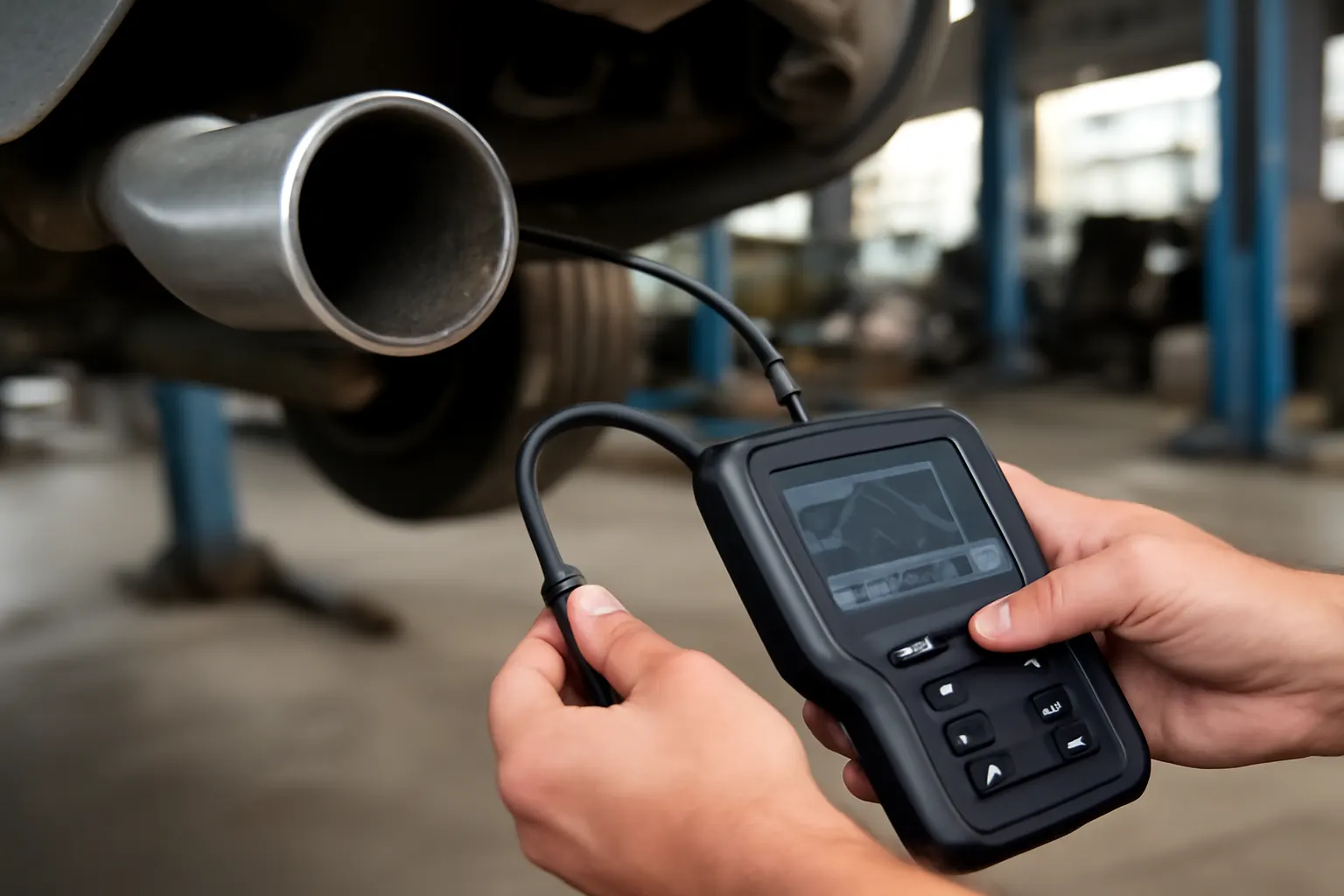
If you suspect your vehicle’s exhaust pipe diameter is affecting performance, look for these symptoms:
- Loss of low-end torque: Vehicle feels sluggish off the line.
- Weak top-end power: Engine “runs out of breath” at high RPM.
- Poor throttle response: Delayed or inconsistent acceleration.
- Excessive exhaust noise or drone: Particularly at highway speeds.
- Reduced fuel economy: Noticeable drop in miles per gallon.
Diagnostic Checklist
Use this checklist to diagnose exhaust pipe sizing issues:
| Symptom | Potential Cause | Diagnostic Step |
|---|---|---|
| Sluggish acceleration | Oversized exhaust pipe | Check pipe diameter vs. OEM spec |
| High RPM power drop-off | Undersized exhaust pipe | Inspect for restrictions or kinks |
| Loud exhaust/drone | Resonance from large diameter | Examine for missing resonators/mufflers |
| Poor fuel economy | Excessive backpressure or velocity | Scan for exhaust leaks/restrictions |
| Engine overheating | Severe backpressure | Check for collapsed or blocked pipes |
For a more in-depth approach, refer to our Diagnosing Exhaust Leaks: Step-by-Step Guide.
Selecting the Right Exhaust Pipe Diameter for Your Vehicle
Steps to Determine Correct Sizing
-
Identify engine displacement and power output.
Larger engines and those with performance modifications require larger pipes. -
Determine intended use.
- Daily driving: Prioritize low-end and mid-range torque.
- Racing/highway: Prioritize high-RPM horsepower.
-
Consult manufacturer or expert recommendations.
Use established formulas or application charts. -
Consider future modifications.
Forced induction or major engine upgrades may require upsizing. -
Balance with noise and emissions requirements.
Larger pipes typically increase exhaust noise and may affect emissions system performance.
Example Sizing Guide Table
| Engine Displacement | Expected HP | Recommended Diameter (Single) | Recommended Diameter (Dual) |
|---|---|---|---|
| 1.5–2.0L | 100–150 | 1.5–1.75" | 1.25–1.5" |
| 2.0–3.0L | 150–250 | 2.0–2.25" | 1.75–2.0" |
| 3.0–5.0L | 250–400 | 2.5–3.0" | 2.0–2.5" |
| 5.0L+ | 400+ | 3.0–3.5" | 2.5–3.0" |
Always verify fitment and compatibility with your specific vehicle and intended modifications.
Installation Considerations: Fitment and Fabrication
Proper installation is as important as diameter selection. A poorly installed exhaust system can negate the benefits of optimal sizing.
Installation Best Practices
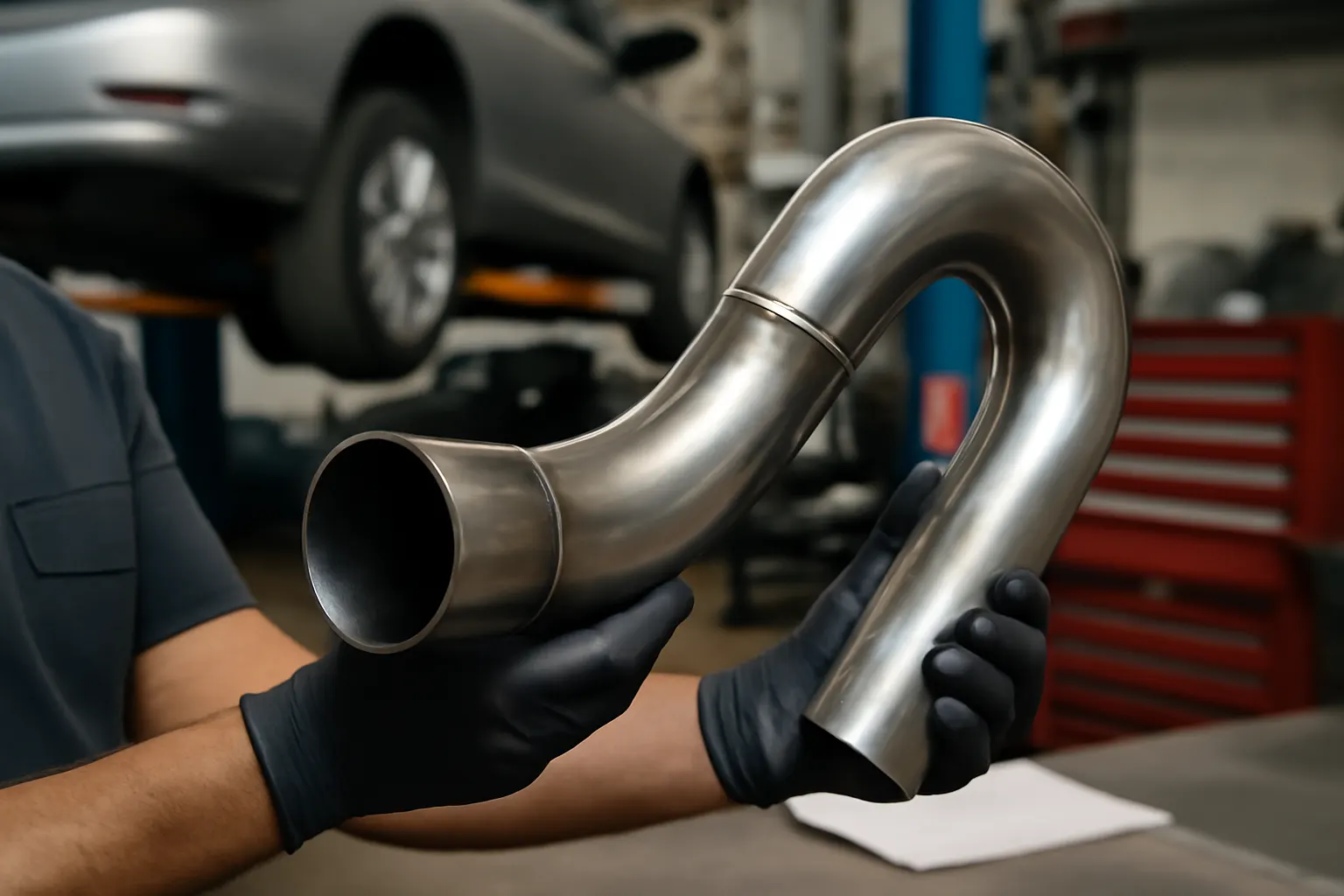
- Mandrel bending: Preserves internal diameter through bends, maintaining consistent flow.
- Crush bending: Reduces diameter at bends, increasing backpressure.
- Sealing: Ensure all joints are leak-free to prevent performance loss.
- Hanger placement: Secure pipes to avoid vibration and premature wear.
- Clearance: Maintain safe distance from fuel lines, brake lines, and the vehicle body.
For a deeper dive into pipe bending methods, read Performance Upgrades: Mandrel-Bent vs. Crush-Bent Exhaust Pipes.
Maintenance and Longevity: Protecting Your Exhaust Investment
Regardless of diameter, regular maintenance extends the life and performance of your exhaust system:
- Inspect for leaks and corrosion every oil change.
- Check hangers and supports for wear or damage.
- Clean and treat stainless or aluminized pipes to prevent rust.
- Monitor for changes in sound or performance—these can indicate problems with pipe sizing or system integrity.
Proactive maintenance prevents minor issues from developing into costly repairs or performance losses.
Common Pitfalls: Avoiding Sizing Mistakes
Oversizing
- Reduces exhaust velocity.
- Causes power loss at low and mid RPM.
- Increases drone and resonance issues.
Undersizing
- Creates excessive backpressure.
- Restricts high-RPM power.
- Can cause overheating and potential engine damage.
Ignoring Material and Wall Thickness
- Heavy, thick-walled pipes add unnecessary weight.
- Thin, low-quality pipes may crack or corrode prematurely.
Overlooking Emissions and Inspection Requirements
- Larger pipes may interfere with oxygen sensors or catalytic converter placement.
- Check local regulations before modifying exhaust diameter.
Integrating Exhaust Pipe Sizing with Other Performance Upgrades
Optimal exhaust pipe diameter is only one piece of the performance puzzle. Ensure compatibility and synergy with:
- Air intake systems (Air Box/Air Cleaner) for balanced airflow.
- Engine tuning: Adjust fuel and ignition maps after major exhaust changes.
- Forced induction: Turbocharged or supercharged engines have unique exhaust flow requirements.
- Catalytic converters and mufflers: These components should be matched to the selected pipe diameter for best results.
A holistic approach maximizes gains and prevents bottlenecks elsewhere in the system.
Expert Solution Path: Upgrading or Replacing Your Exhaust Pipe
-
Assess your current setup.
Measure your existing pipe diameter and compare to manufacturer specs. -
Define your goals.
Decide if you want more torque, peak horsepower, or a balanced improvement. -
Consult reliable resources.
Use technical guides, manufacturer charts, and professional advice. -
Select quality components.
Choose pipes, bends, and materials suited to your vehicle and intended use. -
Install with care.
Use proper bending and joining techniques; avoid restricting bends. -
Test and tune.
Monitor engine response, fuel economy, and exhaust sound post-installation. -
Maintain and inspect regularly.
Address any leaks, rattles, or changes in performance promptly.
AutoPartEx Positioning: Your Partner in Exhaust Performance
At AutoPartEx, we understand that every vehicle and driver is unique. Our curated selection of exhaust pipes, components, and technical resources empowers you to make informed decisions—whether you’re restoring a daily driver or building a track-ready machine. We provide the expertise, quality parts, and diagnostic guidance to help you achieve the best possible results. Visit our Exhaust Pipe Systems: Technical Guide to Performance, Replacement, and Diagnostics for more in-depth articles, fitment charts, and product recommendations.
Conclusion: Precision Matters in Exhaust Pipe Sizing
The diameter of your exhaust pipe is a vital—but often misunderstood—lever in tuning engine performance, fuel efficiency, and driving enjoyment. Whether you’re upgrading for more power, replacing a worn-out system, or troubleshooting performance issues, understanding the science behind exhaust pipe sizing is essential. By following the diagnostic and selection steps outlined above, you can avoid common pitfalls and unlock the full potential of your vehicle’s engine.
For further reading on material selection and climate considerations, see Choosing the Right Exhaust Pipe Material for Your Climate.