Diagnosing Cylinder Head Failures: Symptoms and Solutions
Cylinder head failures are among the most critical and costly issues an engine can face. Recognizing the early symptoms—like coolant leaks, engine misfires, or unexplained loss of power—can prevent catastrophic damage and save substantial repair costs. In this comprehensive guide, we’ll break down the key warning signs of cylinder head problems, the underlying technical causes, and the best practices for diagnosis and repair. If you’re looking to keep your engine running at peak efficiency, understanding these failures is essential. For a deeper dive into how the cylinder head fits into the broader engine system, visit our Engine Cylinder Head: The Heart of Precision Combustion and Performance category page.
Immediate Answer: Fast Recognition of Cylinder Head Failure Symptoms
When a cylinder head fails, the symptoms can be both subtle and severe. Here are the most common signs that your engine’s cylinder head may be compromised:
- Coolant Leaks: Puddles under your vehicle or a low coolant reservoir with no external leak can signal an internal cylinder head crack or gasket failure.
- Engine Misfires: Rough running, loss of power, or the check engine light may indicate combustion issues linked to a warped or cracked head.
- White Exhaust Smoke: Persistent white smoke often means coolant is entering the combustion chamber, usually due to head cracks or gasket leaks.
- Overheating: A failing cylinder head disrupts proper cooling, leading to repeated overheating episodes.
- Oil Contamination: Milky or frothy oil on the dipstick suggests coolant is mixing with oil—another classic sign of head or gasket failure.
Immediate recognition of these symptoms is crucial. Delaying diagnosis or repair can escalate a minor issue into a full engine rebuild.
The Hidden Problem: Cylinder Head Failures Are Often Overlooked
Many drivers and even some technicians misattribute symptoms of cylinder head failure to more routine issues like bad spark plugs, faulty sensors, or radiator leaks. The complexity of modern engines means that a single symptom—like overheating—can have multiple root causes. However, overlooking a cylinder head problem can lead to:
- Catastrophic Engine Damage: Ignoring early signs may result in severe warping, cracking, or even total engine failure.
- Increased Repair Costs: What could have been a manageable repair may escalate into a costly engine replacement.
- Compromised Vehicle Safety: Cylinder head failures can cause sudden loss of power or stalling, posing safety risks on the road.
Understanding the deeper technical reasons for cylinder head failures—and how they manifest—can help you avoid these hidden dangers.
Technical Deep Dive: Why Cylinder Heads Fail
Cylinder heads are engineered to endure extreme pressures and temperatures. They seal the combustion chamber, house the intake and exhaust valves, and often contain critical passages for coolant and oil. Despite their robust design, several factors can contribute to their failure:
1. Thermal Stress and Overheating
Repeated cycles of heating and cooling cause the cylinder head to expand and contract. If the engine overheats—due to a faulty cooling system, low coolant, or a stuck thermostat—the thermal stress can warp the head or crack it, especially in aluminum heads, which are more susceptible to thermal distortion.
2. Material Fatigue and Design Limitations
Modern cylinder heads are typically made from aluminum or cast iron. Aluminum heads provide weight savings and better thermal conductivity but are more prone to warping. Cast iron is more robust but heavier and less efficient at dissipating heat. Learn more about cylinder head materials and their pros and cons.
3. Improper Installation or Torqueing
Incorrect installation of the cylinder head, such as improper torque sequence or using old head bolts, can create uneven pressure, leading to leaks or cracks over time. Always follow manufacturer torque specifications and installation best practices (see our guide on Cylinder Head Installation Best Practices).
4. Gasket Failure
The head gasket seals the cylinder head to the engine block. If it fails due to age, improper installation, or overheating, it can allow coolant and oil to mix or leak into the combustion chamber.
5. Corrosion and Coolant Issues
Using improper coolant mixtures or neglecting coolant changes can lead to corrosion inside the head’s cooling passages, weakening the material and promoting cracks.
Key Symptoms of Cylinder Head Failure: Detailed Breakdown
Let’s examine each major symptom, why it occurs, and what it means for your engine:
Coolant Leaks (External and Internal)
- External Leaks: Coolant dripping from the engine, especially near the head/block seam, often points to a failed head gasket or a cracked head.
- Internal Leaks: If coolant disappears with no visible leak, it may be entering the combustion chamber (burning off as white smoke) or mixing with oil (leading to milky oil).
Engine Misfires and Rough Idle
A warped or cracked cylinder head disrupts the combustion process, leading to incomplete burning of the air-fuel mixture. This causes rough idling, misfires, and can trigger diagnostic codes (e.g., P0300 series).
White Exhaust Smoke
Coolant entering the combustion chamber vaporizes and exits as white smoke. Persistent white smoke—especially after the engine is warm—is a red flag for internal leaks.
Overheating
A failed cylinder head or gasket allows combustion gases to enter the cooling system, forming air pockets and reducing cooling efficiency. Repeated overheating further damages the head.
Oil Contamination
Coolant mixing with oil (milky oil) or oil in the coolant reservoir (brown sludge) indicates a breach between the oil and coolant passages—typically at the head or gasket.
Diagnostic Checklist: Identifying Cylinder Head Problems
Use this step-by-step checklist to diagnose potential cylinder head failures:
| Symptom | Inspection Step | Possible Indication |
|---|---|---|
| Coolant loss | Check for external leaks and pressure test | Gasket or head crack |
| White exhaust smoke | Inspect exhaust after warm-up | Coolant in combustion chamber |
| Engine misfire | Scan for codes, perform compression test | Warped/cracked head, gasket |
| Overheating | Check coolant flow, look for air in system | Combustion gases in coolant |
| Milky oil | Inspect dipstick and oil cap | Coolant mixing with oil |
| Bubbles in radiator | Observe radiator with cap off while idling | Combustion leak (head/gasket) |
| Low compression | Perform cylinder compression/leak-down test | Head/gasket failure |
If multiple symptoms are present, prioritize a thorough inspection before driving further.
Step-by-Step Diagnostic Procedures
1. Visual Inspection
- Look for coolant or oil leaks around the head/block seam.
- Check for visible cracks or corrosion on the cylinder head.
- Inspect the oil (dipstick and cap) for milky appearance.
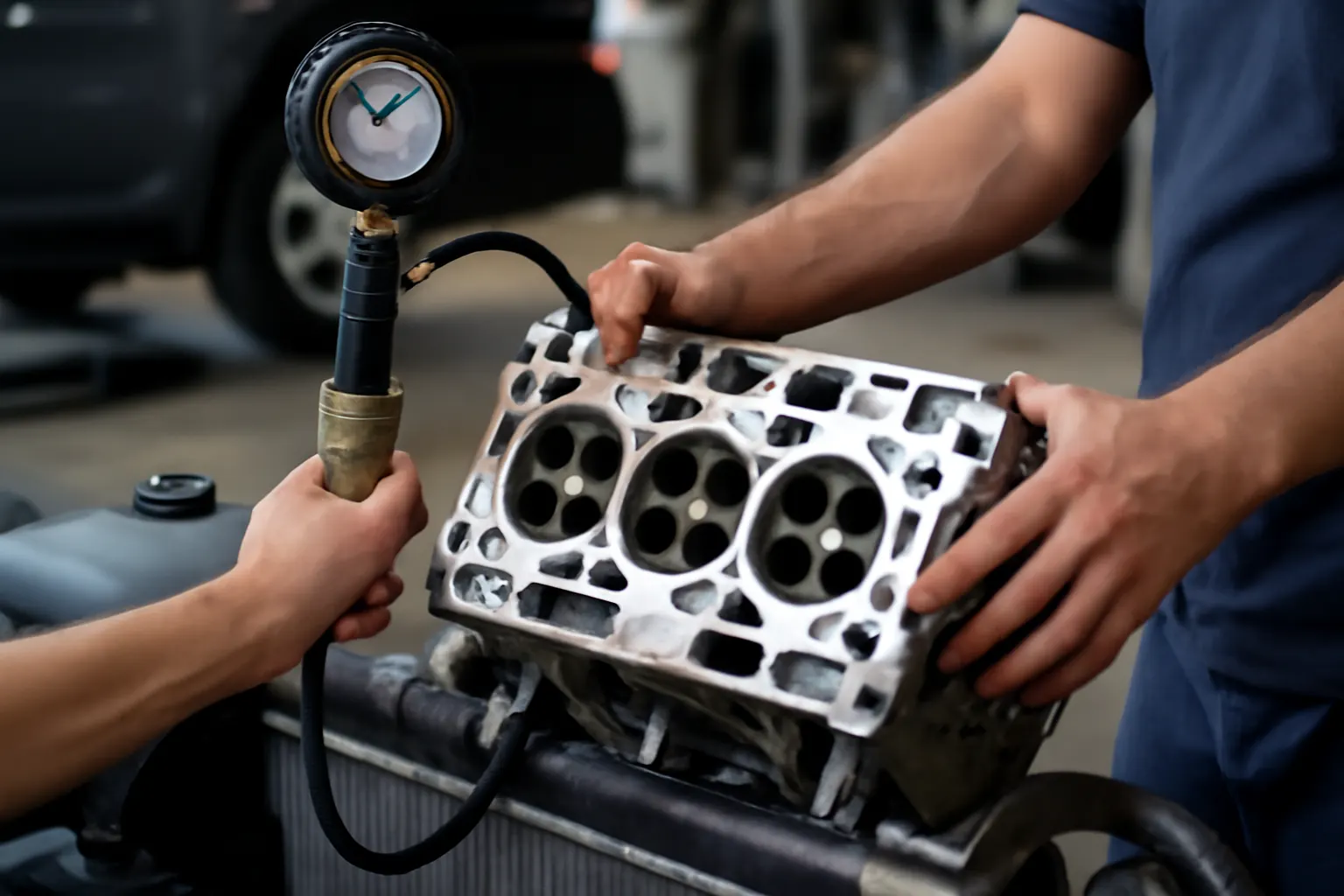
2. Cooling System Pressure Test
- Pressurize the cooling system and monitor for pressure loss.
- Check for coolant leaks external to the engine.
3. Combustion Leak Test
- Use a chemical block tester to check for combustion gases in the coolant (color change indicates a leak).
4. Compression and Leak-Down Test
- Measure cylinder compression; low readings in adjacent cylinders may indicate a head or gasket failure.
- Perform a leak-down test to pinpoint the source of leakage (air escaping into the cooling system or adjacent cylinders suggests a head/gasket breach).
5. Exhaust Smoke Analysis
- Observe exhaust color and volume after warm-up.
- Persistent white smoke, especially with coolant loss, is a strong indicator of internal head failure.
Cylinder Head Removal and Inspection: What to Expect
If diagnostics confirm a head or gasket issue, removal and inspection are required:
- Disassembly: Remove intake and exhaust manifolds, timing components, and head bolts in the manufacturer’s specified sequence.
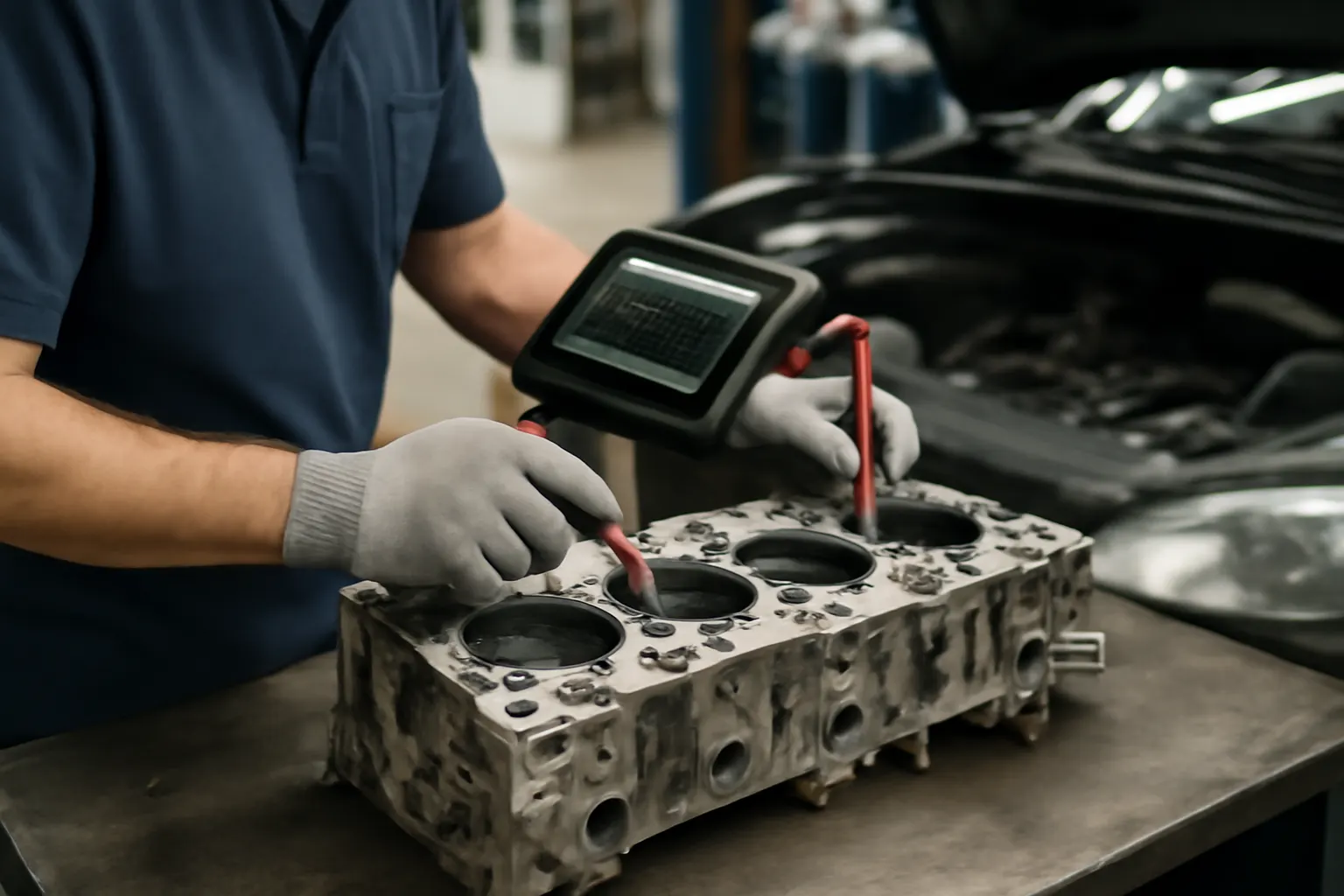
- Visual Inspection: Examine the head for warping (use a straightedge and feeler gauge), cracks (especially between valves and coolant passages), and corrosion.
- Gasket Surface: Check for erosion or pitting where the gasket seals.
- Valve and Seat Inspection: Look for burned valves or seats, which can occur if combustion leaks past the head/gasket.
Professional machine shops can pressure test the head for hidden cracks and resurface it if needed.
Common Causes of Cylinder Head Failure: Prevention Strategies
Understanding the root causes of cylinder head failure helps prevent recurrence:
Overheating
- Maintain your cooling system—regularly flush coolant, replace hoses, and inspect the radiator.
- Replace the thermostat and water pump at recommended intervals.
Poor Installation
- Always use new head bolts (especially torque-to-yield types).
- Follow the correct torque sequence and specifications.
Inferior Materials or Parts
- Use OEM or high-quality aftermarket cylinder heads and gaskets.
- Avoid reusing old gaskets or bolts.
Neglected Maintenance
- Change engine oil and coolant at intervals recommended by your vehicle manufacturer.
- Use the correct coolant type to prevent corrosion.
For more on how cooling system health impacts cylinder head longevity, see How Cooling System Health Impacts Cylinder Head Longevity.
Repair or Replace? Making the Right Decision
After diagnosis, you’ll face a key decision: repair the existing cylinder head or replace it.
Repair
- Resurfacing: Minor warping can often be corrected by machining the head.
- Crack Repair: Some cracks can be welded or sealed, but this is typically a short-term fix.
- Valve Work: Burned valves or seats can be replaced or re-machined.
Replacement
- Severe Cracks or Warping: If the head is beyond repair, replacement is the safest option.
- Cost Considerations: Sometimes, the cost of repair approaches or exceeds that of a quality replacement head.
Always consult with a trusted automotive machinist or technician to determine the best course of action.
Choosing the Right Replacement Cylinder Head
When selecting a replacement cylinder head, consider the following:
- Material Compatibility: Match the original (aluminum or cast iron) for proper performance and longevity.
- OEM vs. Aftermarket: OEM heads guarantee fitment and performance. High-quality aftermarket heads can offer performance improvements but should meet or exceed OEM standards.
- Supplier Reputation: Source from reputable vendors who provide warranty and support.
- Application Fitment: Verify compatibility with your specific engine code and vehicle model.
For a detailed look at materials, see Understanding Cylinder Head Materials: Aluminum vs. Cast Iron.
Installation Best Practices: Ensuring Long-Term Reliability
Proper installation is critical to avoid repeat failures:
- Preparation: Clean all mating surfaces thoroughly; ensure no debris or old gasket material remains.
- Head Bolt Replacement: Always use new head bolts if specified. Lubricate threads and follow the torque sequence in stages.
- Torque Specifications: Use a calibrated torque wrench and follow manufacturer specs precisely.
- Gasket Selection: Use a high-quality head gasket suited for your engine (MLS for modern engines, composite for older designs).
- Coolant and Oil Refill: Use the manufacturer-recommended fluids and bleed the cooling system to prevent air pockets.
For a full installation guide, see Cylinder Head Installation Best Practices.
Maintenance Tips to Prevent Future Cylinder Head Failures
Proactive maintenance can save you from repeat cylinder head issues:
- Regular Coolant Changes: Prevents corrosion and overheating.
- Monitor Engine Temperature: Address overheating immediately.
- Oil Changes: Clean oil maintains proper lubrication and prevents sludge buildup.
- Inspect for Leaks: Address coolant or oil leaks promptly.
- Check Engine Light: Don’t ignore warning lights—scan codes and investigate.
When to Seek Professional Help
While DIY diagnosis and repair are possible for experienced enthusiasts, cylinder head work often requires specialized tools and expertise:
- Precision Machining: Resurfacing, pressure testing, and crack repair require machine shop equipment.
- Accurate Diagnosis: Professional shops use advanced diagnostic tools to confirm failures.
- Warranty and Safety: Professional installation may be required to maintain parts warranty and vehicle safety standards (see NHTSA equipment guidelines).
If you’re unsure about any step, consult a trusted automotive technician.
AutoPartEx: Your Partner for Cylinder Head Solutions
At AutoPartEx, we understand that the cylinder head is the heart of your engine’s performance and reliability. Our curated selection of OEM and high-quality aftermarket cylinder heads, gaskets, and installation hardware ensures you get the right parts for your vehicle. Our technical resources—like this guide—are designed to help you make informed decisions, whether you're diagnosing a problem or upgrading for improved performance. For more information and a complete selection, explore our Engine Cylinder Head category.
Related Reading and Next Steps
- Engine Cylinder Head: The Heart of Precision Combustion and Performance
- Cylinder Head Installation Best Practices
- How Cooling System Health Impacts Cylinder Head Longevity
- Understanding Cylinder Head Materials: Aluminum vs. Cast Iron