BMW Reliability Patterns: Common Issues and Longevity Strategies
BMW’s reputation is built on precision engineering, dynamic driving, and a blend of luxury with performance. But how reliable are BMWs over the long haul, and what are the most common issues that owners should prepare for? This in-depth guide from AutoPartEx delivers practical, shop-tested strategies for identifying BMW reliability patterns, addressing known weak points, and maximizing your BMW’s lifespan—all grounded in real-world data and industry standards. If you want to keep your Ultimate Driving Machine running like new, this is your essential reference.
For a deeper look at BMW’s engineering philosophy, model-specific part fitment, and the heritage of genuine components, visit our BMW OEM Parts: Heritage, Engineering, and Genuine Replacement Guide | AutoPartEx.
Immediate Answers: BMW Reliability at a Glance
BMWs, especially models produced in the last two decades, are renowned for their driving dynamics and advanced technology. However, real-world reliability data reveals that certain systems—particularly electronics, cooling, and suspension—require more attention than those of some competitors. The most common BMW reliability issues include:
- Electronic sensor and module failures (especially in models from the E60, E90, F30, and G20 generations)
- Cooling system weaknesses, such as water pump and thermostat failures
- Oil leaks from gaskets and seals, notably valve cover and oil filter housing gaskets
- Suspension bushing and control arm wear
- High-maintenance direct-injection fuel systems
The good news: most of these issues are predictable, diagnosable, and preventable with the right maintenance strategies, timely parts sourcing, and adherence to OEM standards.
The Hidden Problem: Beyond the Badge—Complexity and Maintenance Sensitivity
BMW’s commitment to performance and innovation means that even entry-level models are packed with sensors, modules, and lightweight materials. While this makes for an exhilarating driving experience, it also increases the complexity of diagnostics and repair. Many owners underestimate the importance of proactive maintenance and using genuine or OE-quality replacement parts.
Hidden issue: Deferred maintenance, non-OEM parts, and unaddressed weak points can lead to cascading failures, higher repair costs, and diminished reliability—particularly as BMWs age past their original warranty period. Unlike some mass-market brands, BMW’s engineering tolerances and system integrations mean that small issues, if ignored, can quickly escalate.
Deep Dive: Common BMW Reliability Weak Points
1. Electronic Systems and Sensor Failures
Modern BMWs feature a network of sensors and electronic control units (ECUs) managing everything from fuel injection to adaptive suspension. According to the National Highway Traffic Safety Administration (NHTSA), electronic equipment is a leading source of recalls and service bulletins for BMW models, especially from the 2000s onward1.
Frequent trouble spots include:
- Crankshaft position sensors (leading to no-start or stalling)
- Mass air flow (MAF) sensors (causing rough running or check engine lights)
- ABS and DSC modules (triggering warning lights and loss of stability control)
- iDrive and infotainment glitches
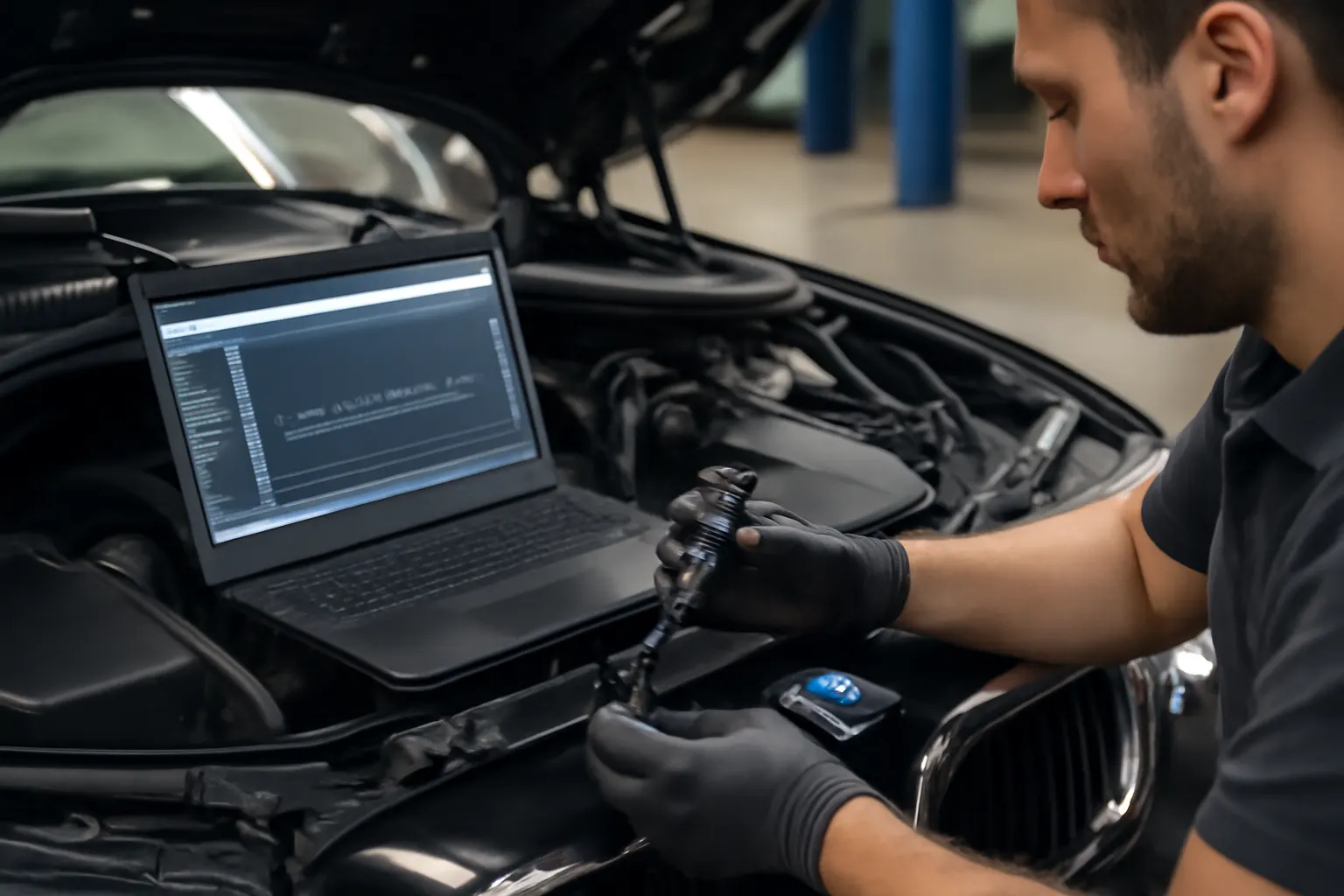
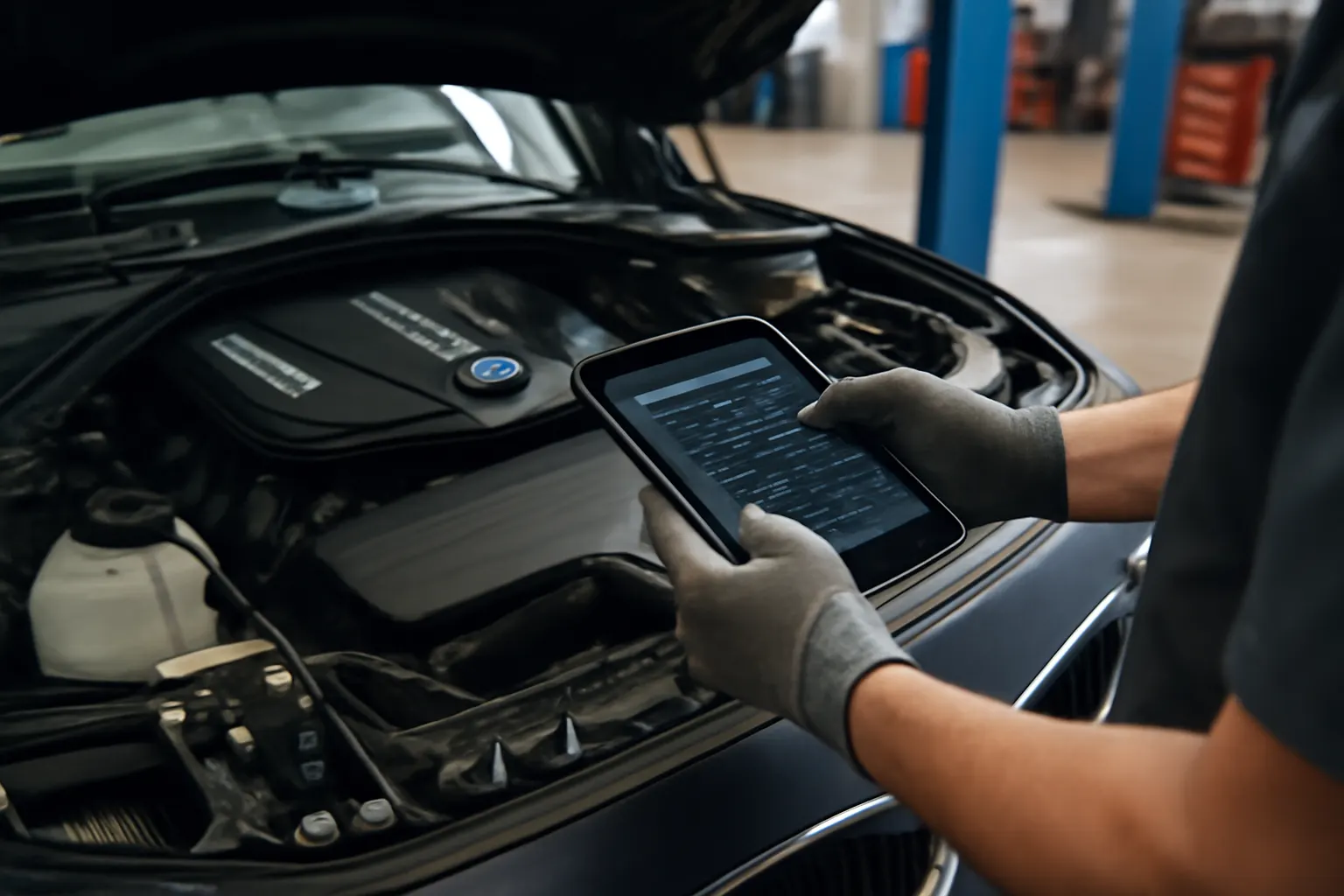
Diagnostic tip: Use a BMW-specific scan tool (such as INPA, ISTA, or a professional-grade OBD2 scanner) to read manufacturer-specific codes. Generic scanners may miss BMW’s proprietary fault codes, especially for chassis electronics.
2. Cooling System Vulnerabilities
BMW’s use of composite plastics and compact engine bay layouts improves performance and weight distribution but introduces a weak point: the cooling system. Water pumps (often electric), thermostats, and radiator expansion tanks are prone to premature failure, sometimes as early as 60,000–80,000 miles.
Symptoms to watch for:
- Sudden overheating or temperature fluctuations
- Coolant leaks near the front of the engine
- Warning messages for low coolant or overheating
Shop advice: Replace the water pump, thermostat, and expansion tank as a preventive maintenance package every 80,000–100,000 miles, using OEM or OE-quality components.
3. Oil Leaks and Gasket Failures
BMW inline-six and V8 engines are celebrated for their smoothness but are notorious for oil leaks from aging gaskets and seals. The most common culprits:
- Valve cover gasket (VCG) leaks, often causing burning oil smells and visible seepage
- Oil filter housing gasket (OFHG) leaks, which can drip onto belts or alternators
- Oil pan gasket leaks in higher-mileage vehicles
Pro tip: Address leaks early to prevent further damage to belts, alternators, and suspension bushings.
4. Suspension and Bushing Wear
BMW’s precise handling is achieved through multi-link rear suspensions and advanced front geometry, but this comes at the cost of higher bushing and control arm wear, especially in models subjected to spirited driving or poor road conditions.
Common issues:
- Front lower control arm bushings (leading to clunks, vibration, or imprecise steering)
- Rear trailing arm bushings and subframe mounts
Maintenance strategy: Inspect suspension bushings at every oil change after 60,000 miles and replace with OE or performance-upgraded equivalents as needed.
Expansion: Why Do These Problems Happen?
Engineering Choices and Their Consequences
BMW’s pursuit of driving excellence leads to the adoption of advanced, often lightweight materials (such as magnesium engine covers and composite cooling system parts) and tightly integrated electronic systems. These engineering choices have both benefits (weight savings, efficiency, and performance) and drawbacks (reduced tolerance for neglected maintenance, higher part complexity, and more frequent sensor/module failures).
Industry context: According to SAE International, modern automotive systems are governed by increasingly complex standards for safety, emissions, and diagnostics, making robust electronic and mechanical integration a must for compliance and performance2.
The Role of Preventive Maintenance
Unlike some brands that can tolerate deferred service, BMWs require strict adherence to maintenance intervals. Oil change frequency, coolant flushes, and timely replacement of “lifetime” components (such as transmission fluid and cooling system parts) are critical to longevity.
Missed maintenance = increased risk: Neglecting these intervals can lead to knock-on effects, such as sludge buildup, overheating, or cascading sensor failures, which are more expensive to correct after the fact.
Solution Path: Shop-Tested Longevity Strategies
1. Use Genuine or OE-Quality Parts
BMW’s systems are engineered to tight tolerances. Using genuine BMW parts or OE-quality alternatives ensures proper fitment, material compatibility, and long-term reliability. Aftermarket parts may offer cost savings up front, but can introduce fitment, durability, or even safety issues.
For a deeper parts comparison, see our Genuine vs Aftermarket BMW Parts: A Fitment Comparison.
2. Follow Enhanced Maintenance Schedules
BMW’s factory “Condition Based Service” (CBS) intervals are optimized for newer vehicles under ideal conditions. In real-world use, more frequent maintenance is often warranted:
- Engine oil: Every 5,000–7,500 miles (use BMW LL-01 or LL-04 approved oils)
- Coolant flush: Every 4 years or 50,000 miles
- Transmission fluid: Every 60,000 miles (even for “lifetime fill” units)
- Brake fluid: Every 2 years
- Spark plugs: Every 45,000–60,000 miles
Proactive approach: Don’t wait for warning lights—schedule preventive replacement of known weak points.
3. Diagnostic Rigor: Don’t Ignore Warning Lights
BMW’s dashboard warning lights and iDrive messages are not to be ignored. A check engine light or electronic system warning is an early alert—prompt diagnosis can prevent minor issues from becoming major repairs.
Diagnostic checklist:
- Use a BMW-specific scan tool for accurate code reading
- Document all fault codes and symptoms
- Address root causes, not just symptoms (e.g., replace a failing sensor, not just clear the code)
- Re-test and verify after repairs
4. Inspect and Upgrade Key Systems
Cooling system: Upgrade to all-aluminum radiators or water pumps with metal impellers where available.
Suspension: Consider polyurethane bushing upgrades for longevity if you drive in harsh conditions.
Electronics: Regularly check battery health—low voltage can cause a cascade of electronic faults in BMWs.
BMW Reliability Checklist: What Every Owner Should Do
| Task | Interval | Notes |
|---|---|---|
| Engine oil change | 5,000–7,500 miles | Use BMW-approved oil |
| Coolant flush | 4 years/50,000 miles | Replace pump/thermostat as package |
| Transmission fluid | 60,000 miles | Use OE-spec fluid |
| Brake fluid flush | 2 years | DOT 4 or as specified |
| Spark plugs | 45,000–60,000 miles | Use OEM plugs |
| Valve cover/OFH gaskets | Inspect every 30,000 miles | Replace at first sign of leak |
| Suspension bushings | Inspect every oil change after 60k | Replace with OE or upgraded parts |
| Battery health check | Annually | Replace if below 70% capacity |
| Electronic system scan | Annually or at every service | Use BMW-specific tool |
Model-Specific Reliability Patterns
E46 (1999–2006 3 Series)
- Common issues: Cooling system (radiator, expansion tank), rear subframe cracking, window regulator failures
- Longevity tips: Reinforce subframe, proactively refresh cooling system, use OE window regulators
E60/E61 (2004–2010 5 Series)
- Common issues: Electronic failures (iDrive, CCC modules), oil leaks, active steering faults
- Longevity tips: Update software, replace gaskets early, monitor for steering warnings
F30 (2012–2019 3 Series)
- Common issues: Timing chain stretch on early N20 engines, electric water pump failures, sensor faults
- Longevity tips: Use approved oil, replace water pump/thermostat preventively, monitor timing chain noise
G20 (2019+ 3 Series)
- Common issues: Advanced electronics glitches, sensor-related check engine lights, occasional cooling system complaints
- Longevity tips: Maintain battery health, keep software updated, adhere to strict fluid intervals
Diagnostic and Maintenance Guidance for BMW Owners
How to Diagnose Common BMW Problems
- Start with symptoms: Note any warning lights, unusual sounds, or changes in performance.
- Scan for codes: Use a BMW-specific diagnostic tool; avoid generic code readers for best accuracy.
- Inspect visually: Look for leaks, worn bushings, cracked plastic cooling parts, and corroded electrical connectors.
- Research TSBs and recalls: Check NHTSA’s recall database for your VIN and model year3.
- Test components: For sensors, use a multimeter to verify resistance or voltage; for cooling systems, pressure-test for leaks.
Sourcing the Right BMW Parts
- Genuine BMW: Best for critical systems (cooling, electronics, gaskets).
- OE-quality: Acceptable for suspension, filters, and some sensors.
- Aftermarket: Use only from reputable brands with proven BMW fitment; always cross-check part numbers.
For more on sourcing, see our BMW OEM Parts: Heritage, Engineering, and Genuine Replacement Guide | AutoPartEx.
Proactive Strategies: Preventing the Most Expensive BMW Failures
1. Address Oil Leaks Immediately
Oil leaks in BMWs can quickly lead to secondary issues—damaged belts, alternator failure, and even engine fires in extreme cases. Always inspect for leaks at every oil change and replace gaskets at the first sign of seepage.
2. Replace Cooling System as a Preventive Package
Don’t wait for a water pump or thermostat to fail. If your BMW is approaching 80,000–100,000 miles, replace the pump, thermostat, expansion tank, and hoses together. This approach minimizes labor costs and dramatically reduces the risk of overheating.
3. Keep Up with Software Updates
BMW’s advanced electronics often benefit from dealer or independent shop software updates, which can resolve known bugs, improve performance, and extend component life.
4. Battery Maintenance Is Critical
A weak battery can cause a cascade of electronic faults. Test battery health annually and replace with an OE-equivalent AGM battery if capacity drops below 70%.
When to Seek Professional Help
Some BMW repairs—especially those involving advanced electronics, timing chains, or transmission internals—are best left to trained professionals with BMW-specific tools. Warning lights related to airbags, ABS/DSC, or drivetrain malfunctions should be diagnosed with ISTA/D or equivalent software.
Tip: Choose a shop experienced with BMW models and familiar with the latest SAE Standards for diagnostics and repair procedures.
AutoPartEx Expertise: Your Partner in BMW Longevity
At AutoPartEx, we understand that BMW ownership is about more than just driving—it’s about preserving the performance, safety, and value of your vehicle for years to come. Our curated catalog of genuine and OE-quality BMW parts, combined with expert guides like this one, ensures that you have the resources needed for every stage of your BMW’s life.
For step-by-step maintenance schedules and essential repair tips, don’t miss our BMW Maintenance Guide: Service Intervals & Essential Repairs. If you’re troubleshooting electronics, see BMW Electronic Components: Diagnosing and Replacing Sensors.
Whether you’re a DIY enthusiast or a professional technician, AutoPartEx is your trusted source for accurate fitment, reliable parts sourcing, and actionable technical advice.
Conclusion: Driving BMW Longevity with Knowledge and Precision
BMWs reward attentive owners with years—often decades—of dynamic, reliable performance. By understanding the brand’s unique reliability patterns, addressing common weak points proactively, and adhering to rigorous maintenance and diagnostic standards, you can keep your Ultimate Driving Machine running like new.
Remember: the cost of preventive maintenance is always less than the cost of deferred repairs. Invest in quality parts, use BMW-specific diagnostic tools, and follow expert-backed strategies to maximize your BMW’s longevity and driving enjoyment.
References
- Vehicle Safety and Equipment – National Highway Traffic Safety Administration
- Fuel Efficiency – United States Department of Energy
- SAE Standards – SAE International
- Vehicle, Car Seat, Tire, and Equipment Recalls – National Highway Traffic Safety Administration
- Materials Technologies – United States Department of Energy