
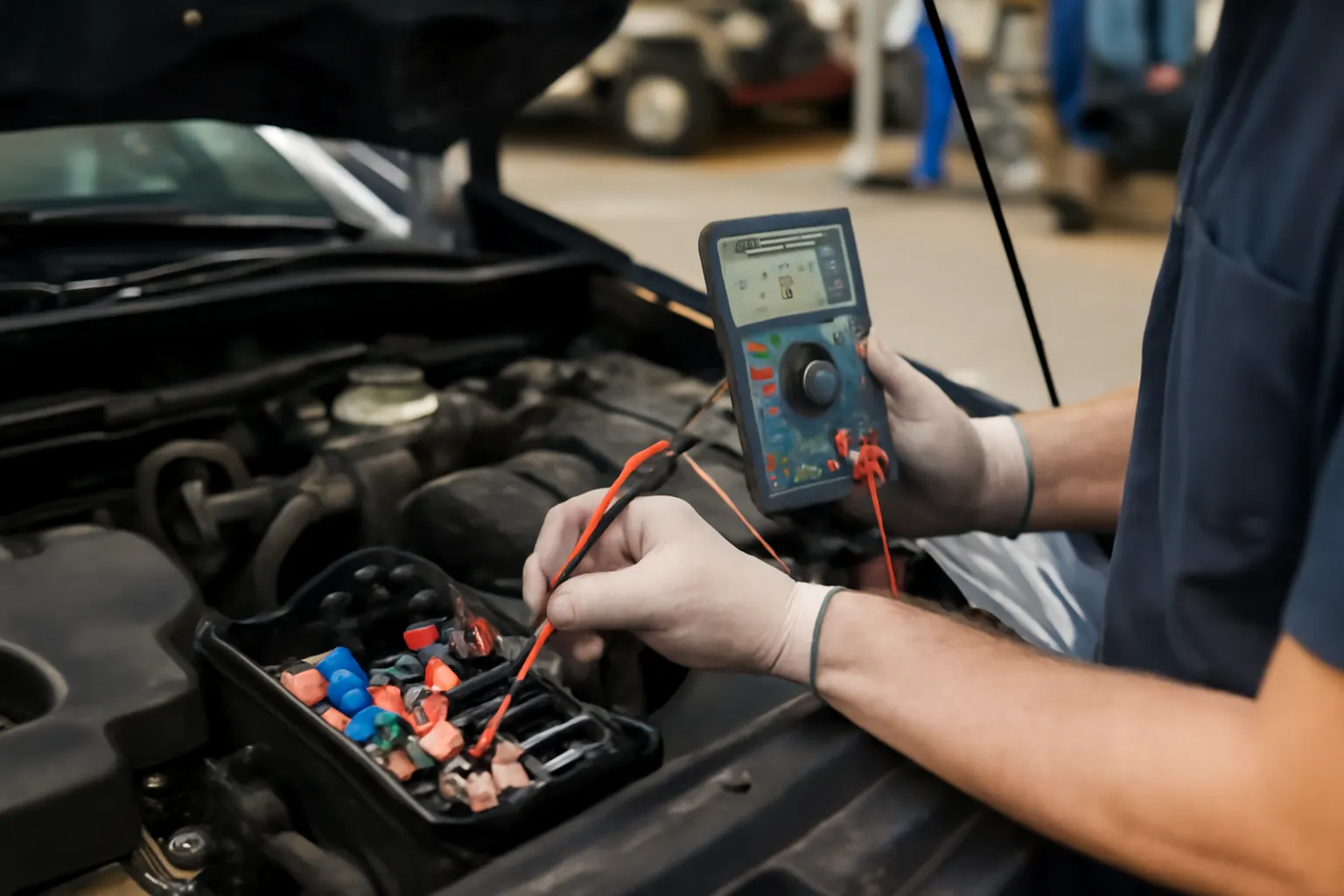
Toyota Fuse Box Case Studies
Real-world diagnostics of Toyota engine fuse boxes reveal that hidden faults can cause elusive electrical problems, from intermittent stalling to total engine shutdowns. This article compiles detailed technician case studies, highlighting the symptoms, diagnostic steps, and solutions for fuse box issues across popular Toyota models. If you’re experiencing electrical gremlins and traditional troubleshooting isn’t working, your fuse box could be the culprit. Understanding these cases can save hours of guesswork and unnecessary part replacements.
For a broader overview of fitment, diagnostics, and sourcing, see our Toyota Engine Fuse Box: OEM Fitment, Diagnostics, and Sourcing Guide.
Why Fuse Box Faults Are Overlooked in Toyota Vehicles
Most Toyota owners and even some technicians underestimate the complexity and vulnerability of the engine fuse box. While fuses themselves are simple devices, the fuse box is a critical junction integrating relays, connectors, and circuit pathways for dozens of vital systems. Its location—often exposed to heat, moisture, and vibration—makes it susceptible to failure modes that can mimic sensor, wiring, or even ECU faults.
The Hidden Problem: Electrical Faults Beyond the Obvious
When a Toyota exhibits electrical symptoms—such as random power loss, non-functioning accessories, or persistent warning lights—the assumption is often a blown fuse, bad relay, or a sensor fault. Yet, in many case studies, the root cause was a failing fuse box: corroded terminals, internal cracks, or manufacturing defects that escape visual inspection. These hidden issues frequently lead to misdiagnosis, unnecessary parts replacement, and extended downtime.
Case Study 1: 2010 Toyota Camry – The Phantom No-Start
Symptom Overview
A 2010 Toyota Camry arrived at the shop with an intermittent no-start condition. The owner reported that the car would crank but not fire about once a week, with no check engine light or obvious fuse issues.
Diagnostic Approach
- Initial Checks: Battery, starter, and ignition switch tested normal.
- Scan Tool: No stored DTCs. Live data showed no RPM signal during crank, suggesting a crankshaft position sensor issue.
- Sensor Testing: Crank sensor and wiring were intact.
- Fuse Box Inspection: Under-hood fuse box cover removed; fuses and relays visually inspected and tested with a multimeter.
Findings
Upon careful probing, the main EFI fuse socket showed voltage drop and intermittent continuity. Removing the fuse box revealed slight corrosion and heat discoloration at the fuse terminal. The underlying bus bar had a hairline crack, causing intermittent contact.
Solution
The fuse box assembly was replaced with an OEM unit. The no-start symptom was eliminated, and the Camry started reliably thereafter.
Case Study 2: 2015 Toyota RAV4 – Accessory Power Loss
Symptom Overview
A 2015 RAV4 presented with intermittent loss of radio, HVAC, and power windows, especially after rain or car washes.
Diagnostic Approach
- History: No aftermarket wiring or modifications.
- Moisture Check: Water intrusion suspected due to symptom timing.
- Fuse Box Inspection: Under-hood fuse box checked for signs of water ingress.
Findings
Moisture was detected inside the fuse box housing. Several terminals showed greenish corrosion, especially at the ACC and IG relay sockets. Water had entered through a cracked fuse box cover gasket.
Solution
The fuse box was cleaned, corroded terminals replaced, and the gasket was renewed. The technician recommended regular inspection and immediate replacement of cracked covers or gaskets to prevent recurrence.
Case Study 3: 2012 Toyota Prius – Hybrid System Warning
Symptom Overview
A 2012 Prius displayed a hybrid system warning light and would occasionally refuse to go into “Ready” mode. Multiple shops had replaced the battery and relays with no improvement.
Diagnostic Approach
- Scan Tool: Hybrid DTCs related to inverter and DC-DC converter communication errors.
- Wiring Inspection: Harness integrity checked with no faults found.
- Fuse Box Voltage Drops: Technician checked voltage at the main hybrid power relay and fuses.
Findings
A melted plastic odor was traced to the engine fuse box. Upon disassembly, one of the main bus bars feeding the hybrid system relay was partially melted, causing intermittent open circuits.
Solution
The fuse box was replaced, and the hybrid system warning resolved. The vehicle passed all post-repair drive cycles.
The Anatomy of a Toyota Engine Fuse Box
Understanding the structure of the Toyota engine fuse box is key to diagnosing subtle faults. Modern Toyota fuse boxes are modular, combining high-current fuses, micro-relays, and multi-pin connectors in a single housing.
Key Components
- High-Current Fuses: Protect main circuits like the starter, alternator, and hybrid system.
- Mini/Blade Fuses: Cover individual circuits for sensors, injectors, and accessories.
- Relays: Switch high-current loads, often for EFI, fuel pump, and cooling fans.
- Bus Bars: Internal metal strips distributing power across multiple circuits.
- Connectors: Interface with the main vehicle harness.
Common Failure Points
- Corrosion: Moisture ingress leads to terminal and bus bar corrosion.
- Thermal Stress: High current loads can deform or crack plastic and metal parts.
- Vibration: Repeated engine vibration may loosen terminals or fracture solder joints.
Diagnostic Checklist: Pinpointing Fuse Box Faults
Technicians and advanced DIYers can use this checklist to systematically diagnose fuse box issues:
Toyota Engine Fuse Box Diagnostic Checklist
| Step | Action | Tools Needed | What to Look For |
|---|---|---|---|
| 1 | Visual Inspection | Flashlight, mirror | Burn marks, melted plastic, corrosion |
| 2 | Fuse/Relay Test | Multimeter, relay tester | Voltage drop, continuity, relay operation |
| 3 | Wiggle Test | Hands | Intermittent faults when moving wires or box |
| 4 | Moisture Probe | Moisture meter, compressed air | Signs of water inside housing |
| 5 | Voltage Drop Test | Multimeter | Check for >0.1V drop across fuse/relay terminals under load |
| 6 | Harness Check | Visual, continuity test | Loose pins, damaged wires at connectors |
| 7 | Scan Tool Analysis | OBD-II scanner | Unusual DTCs or data patterns related to power supply |
If any step reveals an anomaly, further disassembly or fuse box replacement should be considered.
Why Toyota Fuse Box Faults Impact Safety and Efficiency
The engine fuse box is not just a convenience component—it’s a critical safety and efficiency node. According to the National Highway Traffic Safety Administration, electrical failures can disable essential safety systems like airbags, ABS, and stability control. Meanwhile, the U.S. Department of Energy notes that consistent electrical supply is essential for optimal fuel injection, ignition, and hybrid system efficiency. A compromised fuse box can lead to reduced fuel economy, increased emissions, and in worst cases, roadside breakdowns.
Real-World Consequences
- Safety Risks: Loss of lighting, airbags, or power steering due to fuse box faults.
- Performance Drops: Intermittent power to injectors or sensors leads to rough running.
- Diagnostic Confusion: Faults may mimic other component failures, leading to misdiagnosis.
The Role of Materials and Manufacturing in Fuse Box Reliability
Modern Toyota fuse boxes employ advanced polymers and copper alloys to balance weight, heat resistance, and durability. However, as described by the U.S. Department of Energy’s Materials Technologies initiative, even small deviations in material quality or assembly can introduce weaknesses.
Manufacturing-Related Failure Modes
- Cold Solder Joints: Automated assembly can leave weak spots prone to cracking.
- Imperfect Seals: Subpar gaskets or housing design allow moisture ingress.
- Plastic Deformation: Repeated heating and cooling cycles weaken the housing, causing internal misalignment.
What This Means for Owners
Even well-maintained Toyotas can develop fuse box issues over time, especially in regions with high humidity, temperature swings, or poor road conditions.
Case Study 4: 2008 Toyota Corolla – Intermittent Engine Stalling
Symptom Overview
A 2008 Corolla would randomly stall at idle or low speed, then restart immediately. No codes were stored, and all sensors checked out.
Diagnostic Approach
- Fuel and Ignition: Both systems tested normal.
- Power Supply: Technician monitored voltage at ECM and ignition coil during stall events.
- Fuse Box Wiggle Test: Moving the fuse box harness replicated the stall.
Findings
A cracked solder joint in the fuse box’s internal bus bar intermittently cut power to the ECM. This explained the random stalling without codes.
Solution
The fuse box was replaced. The stalling issue was fully resolved, confirmed by a week of test driving.
Preventive Maintenance: Protecting Your Toyota’s Fuse Box
While not a scheduled maintenance item, regular inspection of the engine fuse box can prevent costly failures. Here’s how:
Maintenance Tips
- Inspect Annually: Open the fuse box and check for signs of corrosion, moisture, or melting.
- Replace Covers and Gaskets: If damaged, replace immediately to prevent water ingress.
- Address Warning Signs: Flickering lights, intermittent accessory loss, or unexplained warning lights warrant a fuse box check.
- Avoid Overloading Circuits: Never install higher-amp fuses; this can mask underlying problems and cause fuse box damage.
When to Seek Professional Help
If you’re uncomfortable with electrical diagnostics, or if symptoms persist after replacing fuses and relays, consult a technician familiar with Toyota electrical systems.
Sourcing the Correct Toyota Engine Fuse Box
Not all fuse boxes are interchangeable—even within the same Toyota model year. When sourcing replacements:
Sourcing Checklist
- Match Part Numbers: Use the original part number; see our Toyota Part Number Decoding guide.
- Choose OEM or Quality Aftermarket: OEM parts ensure fit and function; some reputable aftermarket suppliers offer robust alternatives.
- Verify Compatibility: Cross-check with your VIN and production date.
- Inspect Before Installation: Ensure no shipping damage or missing seals.
For a step-by-step installation walkthrough, refer to our Toyota Fuse Box Install Guide.
Installation Considerations: Getting It Right the First Time
Replacing a Toyota engine fuse box is more involved than simple fuse replacement. Key points:
Installation Steps
- Disconnect Battery: Prevents shorts and accidental airbag deployment.
- Label Connectors: Take photos or tag connectors for accurate reassembly.
- Transfer Fuses and Relays: Move all components from the old box to the new one.
- Torque Fasteners Properly: Avoid overtightening, which can crack the housing.
- Test All Circuits: After installation, verify operation of all protected systems.
- Clear DTCs: Use a scan tool to clear any stored codes and verify no new faults appear.
Common Pitfalls
- Forgetting to transfer relays: Leads to non-functioning circuits.
- Mismatched connectors: Can cause immediate electrical faults.
Case Study 5: 2017 Toyota Highlander – Persistent ABS and Traction Lights
Symptom Overview
A 2017 Highlander arrived with ABS and traction control warning lights that would not reset, even after sensor replacement.
Diagnostic Approach
- OBD-II Scan: DTCs indicated intermittent power loss to the ABS module.
- Power Supply Trace: Technician traced power from the battery through the fuse box to the ABS module.
- Fuse Box Testing: Voltage drop across the ABS fuse under load.
Findings
A loose internal terminal in the fuse box intermittently interrupted ABS module power. Reseating the fuse did not resolve the issue due to internal damage.
Solution
A new fuse box restored full ABS and traction control function, and all warning lights cleared.
The Cost of Misdiagnosis: Time, Money, and Safety
Misdiagnosed fuse box faults can lead to:
- Unnecessary Parts Replacement: Sensors, modules, and wiring replaced when the root cause is the fuse box.
- Extended Downtime: Vehicles out of service for days or weeks.
- Safety Risks: Unreliable operation of essential systems.
Accurate fuse box diagnostics are essential for cost-effective, safe Toyota ownership.
Advanced Tips: Prolonging Fuse Box Life
Experienced technicians recommend these advanced strategies:
- Dielectric Grease: Apply to terminals to prevent corrosion (where manufacturer-approved).
- Aftermarket Covers: Consider upgraded or reinforced covers in harsh climates.
- Secure Mounting: Ensure the fuse box is firmly attached to minimize vibration.
For more on Toyota electrical architecture, see our Toyota Electrical System Article.
AutoPartEx: Your Partner in Toyota Fuse Box Solutions
At AutoPartEx, we combine real-world technician insights with rigorous parts sourcing to ensure you get the right Toyota engine fuse box the first time. Our guides, diagnostic checklists, and OEM cross-referencing help you avoid costly mistakes and keep your Toyota running at peak safety and efficiency.
Explore our Toyota Engine Fuse Box: OEM Fitment, Diagnostics, and Sourcing Guide for comprehensive information on fitment, compatibility, and sourcing.