OEM vs Aftermarket Hood Hinges: Which Should You Choose?
When it comes to replacing your vehicle’s hood hinges, the decision between Original Equipment Manufacturer (OEM) and aftermarket options is more than just a matter of price. The right choice can impact your car’s safety, fitment, and long-term reliability. If you want to ensure the longevity and performance of your hood hinge system—a critical component for both daily use and emergency situations—understanding the differences is essential. In this comprehensive guide, we’ll compare OEM and aftermarket hood hinges in terms of material quality, fitment precision, safety standards, and durability, giving you the technical knowledge and practical advice needed for a confident decision.
For a broader look at hood hinge system design and technology, visit our Hood Hinge Systems: Precision, Safety, and Longevity for Every Vehicle category page.
The Quick Answer: OEM or Aftermarket Hood Hinges?
If you prioritize exact fit, factory-level safety, and proven durability, OEM hood hinges are generally the best choice. For budget-conscious repairs or custom projects, reputable aftermarket hinges can deliver solid value, but require careful sourcing and inspection. Both options have their place, but understanding their differences is vital for optimal vehicle performance and safety.
The Hidden Risks of Hood Hinge Replacement
Most drivers overlook hood hinges until a problem arises—usually a misaligned hood, unexpected noises, or even a hood that won’t stay open. However, hood hinges are not just convenience items. They play a crucial role in:
- Crash safety: Properly engineered hinges help control hood movement in a collision, reducing the risk of windshield penetration and injury (NHTSA Equipment).
- Corrosion prevention: Quality hinges protect against rust, which can compromise the hood’s structural integrity.
- Component clearance: The hood hinge’s design ensures safe clearance for critical engine bay components like the Air Box/Air Cleaner and AC Compressor.
Choosing the wrong hinge can lead to misalignment, premature wear, corrosion, or even safety hazards in an accident. That’s why it’s crucial to weigh the technical and practical differences before making a purchase.
Technical Overview: OEM vs Aftermarket Hood Hinges
What Are OEM Hood Hinges?
OEM (Original Equipment Manufacturer) hood hinges are produced by the same manufacturers that supply parts for new vehicles. These hinges are built to the exact specifications set by the automaker, ensuring:
- Precise fitment
- Consistent material quality
- Compliance with safety and performance standards
OEM hinges are often stamped with the automaker’s logo or part number, indicating authenticity and traceability.
What Are Aftermarket Hood Hinges?
Aftermarket hood hinges are produced by third-party manufacturers. They may replicate OEM designs or introduce modifications for cost, customization, or performance. The aftermarket segment ranges from high-quality, reputable brands to low-cost generic parts. Key differences often include:
- Variability in material quality and thickness
- Differences in surface treatments and corrosion resistance
- Potential deviations from OEM geometry
Material Quality: The Foundation of Longevity
OEM Materials and Manufacturing
OEM hood hinges are generally constructed from high-grade steel or aluminum alloys, chosen for optimal strength-to-weight ratio and corrosion resistance (DOE Materials Technologies). OEMs also apply advanced surface coatings, such as:
- Electroplating (zinc or cadmium)
- Powder coating
- E-coating (electrophoretic deposition)
These coatings are rigorously tested for resistance to salt spray, humidity, and temperature cycling.
Aftermarket Variation
Aftermarket hinges may use similar materials but often substitute lower-cost steel or thinner gauge metals. Surface treatments vary widely:
- Some reputable aftermarket brands apply robust coatings comparable to OEM.
- Budget options may use minimal or inconsistent protection, increasing the risk of rust and premature failure.
Checklist: Material Quality Comparison
| Feature | OEM Hinges | Aftermarket Hinges |
|---|---|---|
| Base Material | High-grade steel/aluminum | Varies (steel, sometimes thinner) |
| Surface Coating | Advanced, tested coatings | Ranges from robust to minimal |
| Corrosion Resistance | Proven in OEM testing | Highly variable |
| Weight Consistency | Engineered for safety/performance | May vary, can affect hood operation |
Fitment and Installation: Precision vs. Adaptation
OEM Fitment Advantages
OEM hinges are engineered to match the vehicle’s body lines and mounting points with millimeter precision. This ensures:
- Bolt-on installation with no modification
- Correct hood alignment and gap
- Smooth hood articulation and latching
Aftermarket Fitment Challenges
While many aftermarket hinges claim “direct fit,” subtle differences in geometry, hole placement, or thickness can result in:
- Difficult or forced installation
- Uneven hood gaps
- Binding or creaking during operation
- Hood latch misalignment, risking accidental hood opening
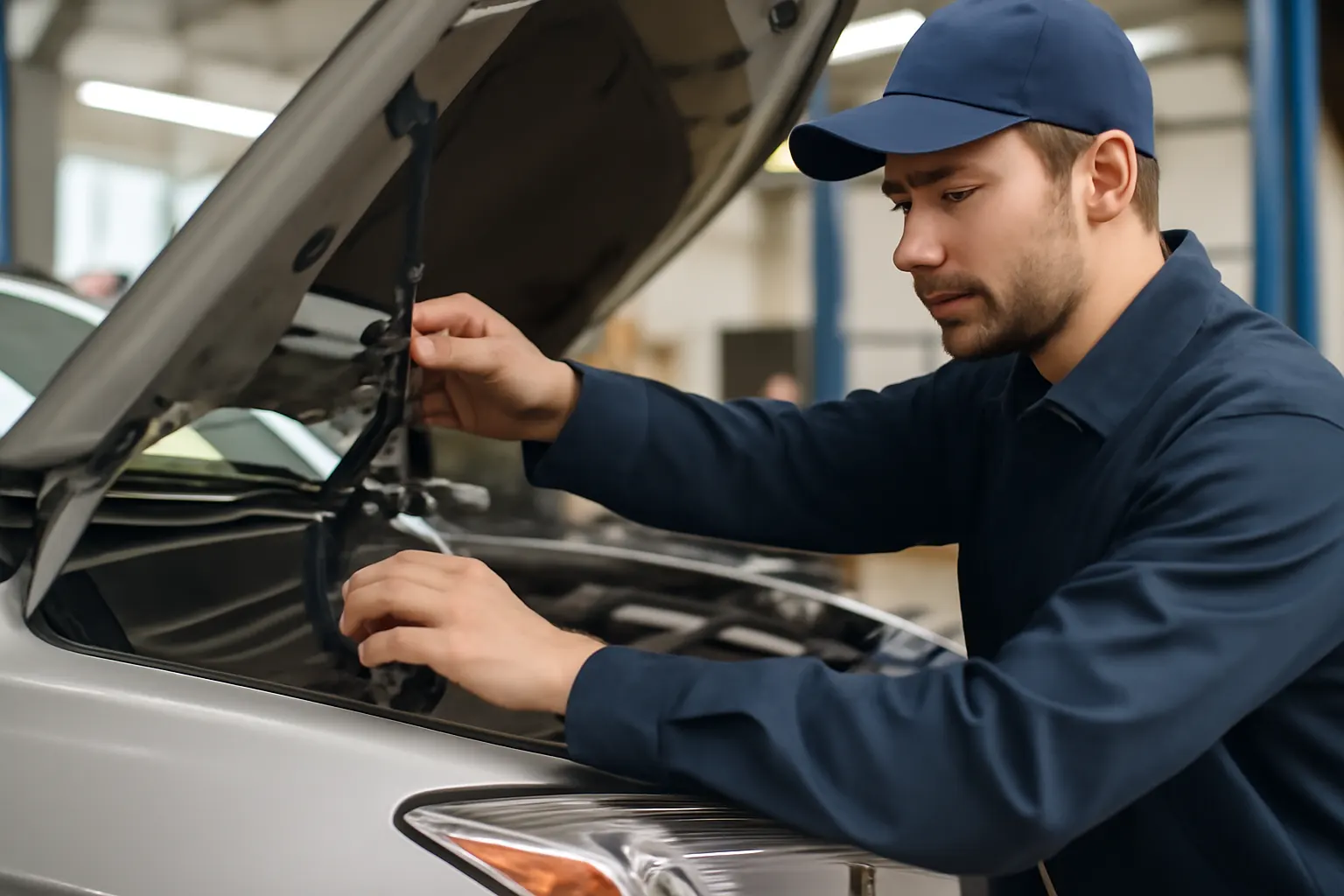
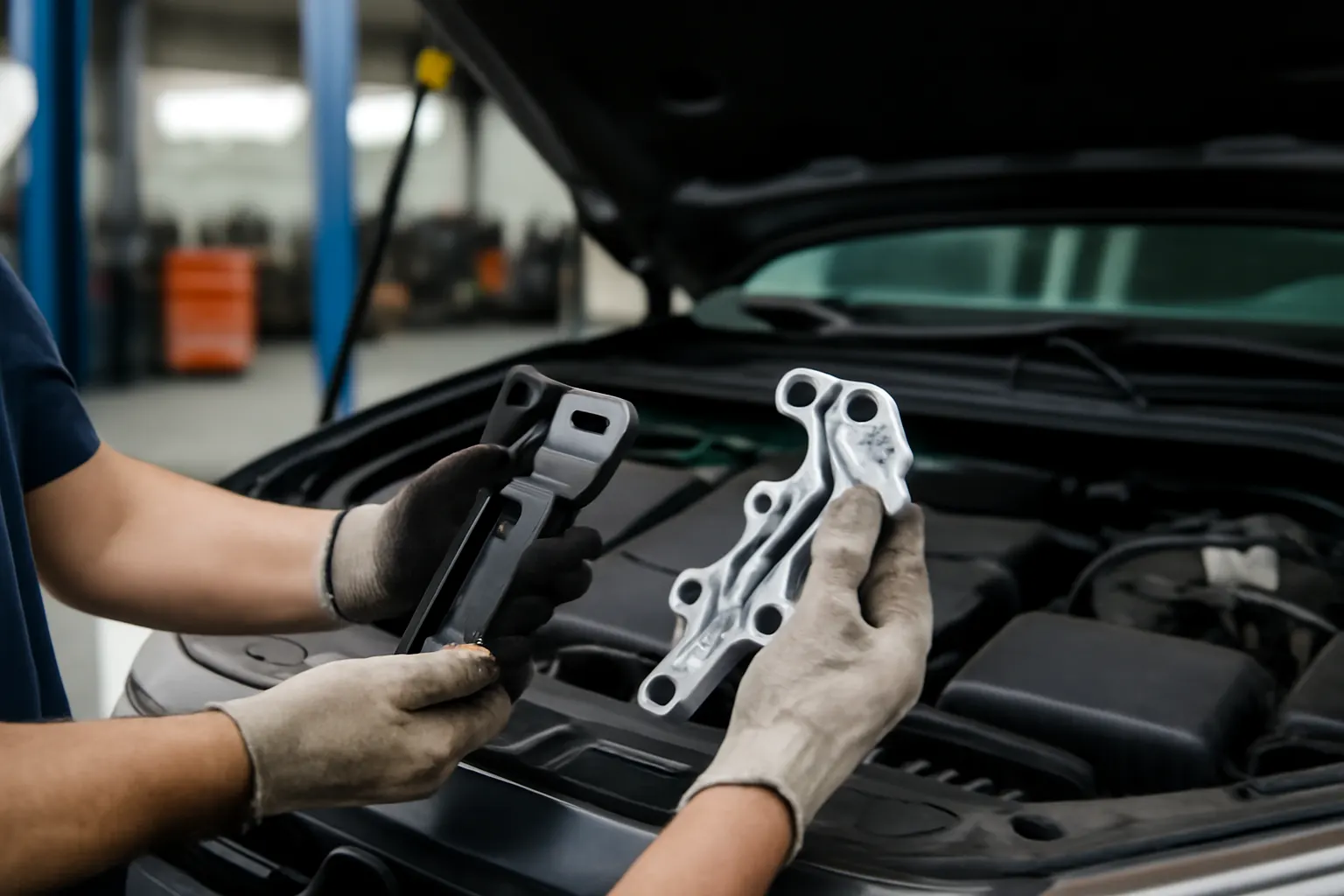
Tip: Always compare the old and new hinges side-by-side before installation. Test-fit hinges before final tightening.
For a step-by-step installation guide, see How to Diagnose and Replace a Hood Hinge.
Safety and Crashworthiness: Beyond Basic Function
OEM Safety Standards
OEM hinges must pass stringent safety tests, including crash simulations and real-world impact studies. The National Highway Traffic Safety Administration (NHTSA) requires that OEM components support specific safety outcomes (NHTSA Equipment):
- Controlled hood deformation in frontal impacts
- Prevention of hood intrusion into the passenger compartment
- Integrity under repeated stress cycles
Aftermarket Certification
Some premium aftermarket brands test their hinges to Society of Automotive Engineers (SAE) or equivalent standards (SAE Standards). However, many low-cost options do not undergo the same rigorous validation.
Safety Red Flags:
- No certification or test results available
- Noticeable differences in weight or weld quality
- Poor reviews regarding fitment or durability
Durability and Corrosion Resistance: The Long-Term View
OEM Longevity
OEM hinges are designed to last the life of the vehicle, often exceeding 10-15 years with basic maintenance. Their corrosion resistance is validated through:
- Salt spray testing (ASTM B117 or equivalent)
- Humidity and thermal cycling
- Real-world field trials by automakers
Aftermarket Lifespan
Aftermarket hinge durability varies significantly:
- Premium brands: May offer multi-year warranties and robust coatings.
- Budget options: Often lack long-term corrosion protection, leading to early rust, binding, or even hinge failure.
Maintenance Tip: Regardless of hinge type, regular cleaning and lubrication can extend hinge life. See Preventing Corrosion: Hood Hinge Maintenance Tips for best practices.
Cost Considerations: Upfront Savings vs. Lifecycle Value
OEM Cost Profile
- Higher initial cost: OEM hinges are typically 1.5x to 3x the price of aftermarket alternatives.
- Lower long-term risk: Fewer fitment issues, less rework, and greater peace of mind.
Aftermarket Cost Profile
- Lower initial cost: Attractive for budget repairs or older vehicles.
- Potential hidden costs: Time spent on modification, risk of premature failure, and possible safety compromises.
Pro Tip: Factor in installation labor and the potential for rework when comparing total costs.
Availability and Sourcing: Where and How to Buy
OEM Sourcing
- Available through dealership parts departments, authorized online retailers, and certified resellers.
- Part numbers are vehicle-specific, minimizing guesswork.
- Higher assurance of authenticity.
Aftermarket Sourcing
- Widely available through auto parts stores, online marketplaces, and specialty shops.
- Quality varies by brand and retailer.
- Research is critical—look for brands with strong reputations and clear fitment guarantees.
Checklist: Sourcing Safe and Reliable Hood Hinges
- Verify part numbers: Use your VIN or OEM reference for exact match.
- Check for certifications: Look for SAE, ISO, or automaker approvals.
- Read reviews: Prioritize products with positive feedback on fitment and longevity.
- Inspect on arrival: Compare to original, check welds, coatings, and geometry.
- Buy from reputable sellers: Avoid unknown brands or suspiciously low prices.
When to Choose OEM Hood Hinges
Best Use Cases for OEM
- Late-model vehicles: Preserve factory fit, finish, and resale value.
- Leased vehicles: Maintain compliance with lease return standards.
- Collision repairs: Ensure restoration to pre-accident safety levels.
- High-performance or specialty cars: Maintain original engineering for safety and aerodynamics.
Key Benefits
- Guaranteed fit and finish
- Proven crash safety
- Long-term reliability
- Easier insurance claims and resale
When Aftermarket Hinges Make Sense
Ideal Scenarios for Aftermarket
- Older vehicles: Cost-effective repairs where absolute originality is less critical.
- Custom builds: Specialty hinges for modified hoods or custom designs.
- Temporary fixes: Budget solutions when longevity is not a primary concern.
What to Watch For
- Choose reputable brands with clear fitment data.
- Inspect for proper coatings and weld quality.
- Test fit before final installation.
Diagnosing Hood Hinge Problems: OEM and Aftermarket Alike
Regardless of hinge type, early diagnosis of hinge issues is crucial for safety and performance. Common signs of hood hinge problems include:
- Stiff, creaking, or binding motion: Indicates corrosion or internal wear.
- Visible rust or flaking: Surface corrosion can quickly compromise hinge strength.
- Misaligned hood gaps: Suggests hinge deformation or improper fitment.
- Hood not latching or popping open: Critical safety concern, often due to hinge misalignment.
Diagnostic Steps:
- Open and close the hood slowly, observing for smooth motion.
- Check for even hood gaps along both fenders.
- Inspect hinge mounting points for cracks or elongation.
- Look for missing, seized, or bent hinge pins.
- Test the hood latch operation—ensure secure closure.
If any of these symptoms are present, prompt hinge inspection and replacement are recommended.
Installation Tips: Ensuring a Secure and Lasting Fit
Proper installation maximizes the benefits of either hinge type. Here’s how to ensure a successful replacement:
Preparation
- Gather correct tools (ratchets, wrenches, torque wrench, rust penetrant).
- Support the hood with a prop rod or assistant.
- Mark hood and hinge positions with tape for alignment reference.
Removal
- Disconnect the hood prop or struts.
- Remove hinge mounting bolts from the hood and body.
- Carefully lift off the hood (with assistance for larger hoods).
- Remove the old hinges, noting orientation and shims (if present).
Installation
- Position new hinges, loosely install bolts.
- Align hinges using tape marks or measurements.
- Torque bolts to manufacturer specifications.
- Reinstall the hood, check alignment, and adjust as needed.
- Test open/close motion and latch engagement.
Installation Pitfalls to Avoid:
- Over-tightening bolts, which can distort mounting points
- Failing to lubricate new hinges
- Ignoring minor misalignments, which can worsen over time
For a full walkthrough, see How to Diagnose and Replace a Hood Hinge.
Maintenance for Maximum Hinge Lifespan
Regardless of hinge origin, routine maintenance is key:
- Clean regularly: Remove dirt and debris from hinge pivots.
- Lubricate: Use a high-quality, non-gumming lubricant on all moving parts.
- Inspect for corrosion: Address early signs with rust inhibitor or touch-up paint.
- Check fasteners: Ensure bolts remain tight after periodic use or rough driving.
For detailed maintenance strategies, refer to Preventing Corrosion: Hood Hinge Maintenance Tips.
AutoPartEx Positioning: Your Trusted Hood Hinge Resource
At AutoPartEx, we combine deep technical expertise with real-world experience to help you make informed choices about critical components like hood hinges. Whether you’re searching for OEM precision or high-value aftermarket solutions, our Hood Hinge Systems: Precision, Safety, and Longevity for Every Vehicle category connects you with rigorously sourced parts and expert guidance. We believe that safety and reliability should never be compromised—especially for components that protect you and your vehicle’s vital systems.
Expert Action: Making the Right Choice for Your Hood Hinge
- For maximum safety, fitment, and peace of mind, choose OEM hinges whenever possible—especially for newer vehicles, collision repairs, or when safety is paramount.
- If you select aftermarket hinges, invest in reputable brands, verify certification, and inspect carefully before installation.
- Never ignore hinge issues—early diagnosis and timely replacement prevent safety risks and costly rework.
For further technical insights on hinge safety, see The Role of Hood Hinges in Vehicle Safety.