
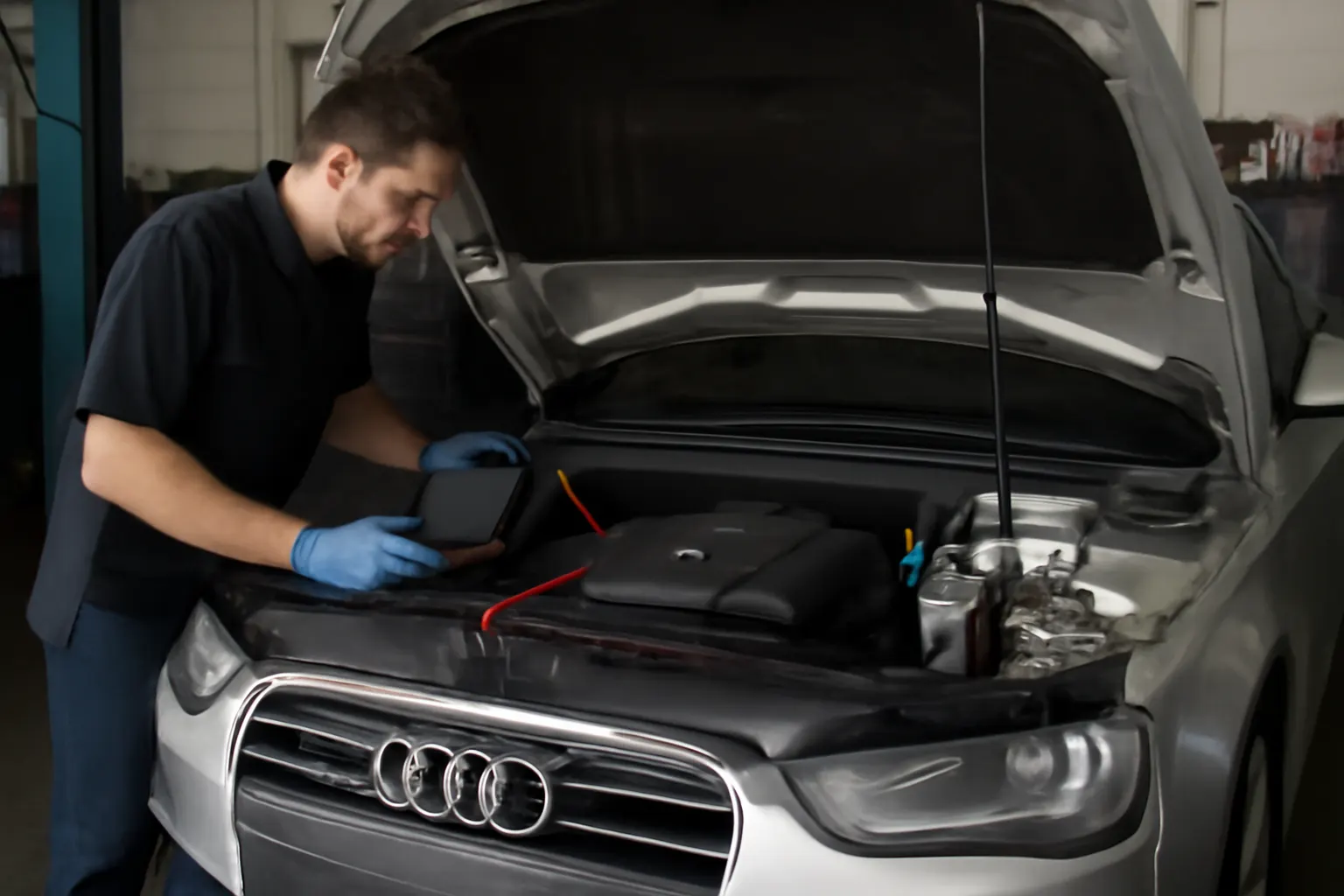
Audi Maintenance Blog
Get the definitive guide to Audi A4 maintenance—from essential service intervals and expert tips, to avoiding the most common and costly repairs. Whether you’re a new owner or a seasoned enthusiast, this blog will help you extend your Audi A4’s life and reliability.
For a complete overview of parts, model-specific issues, and service planning, visit our Audi A4 Auto Parts & Model Service Guide.
The Immediate Answer: What Does Your Audi A4 Need Most?
The Audi A4, renowned for its blend of German engineering, performance, and comfort, demands meticulous maintenance to uphold its reputation for reliability and driving excellence. The most common maintenance tasks for the Audi A4 include:
- Engine oil and filter changes (every 5,000–10,000 miles)
- Brake system inspection and fluid replacement (every 2 years)
- Timing chain or belt inspection (intervals vary by engine generation)
- Carbon buildup cleaning (especially on direct-injection engines)
- Transmission fluid service (every 40,000–60,000 miles)
- Coolant flushes (every 5 years)
- Tire rotation and alignment (every 5,000–7,500 miles)
- Regular safety checks on lighting and electronics
- Monitoring for recalls and service bulletins
Sticking to these basics—and using high-quality, model-specific Audi A4 auto parts—will help you avoid the most frequent and expensive failures.
The Hidden Problem: Why Routine Maintenance Isn’t Enough
While following the factory maintenance schedule is crucial, many Audi A4 owners are caught off guard by issues that the schedule doesn’t directly address. These include:
- Premature carbon buildup on intake valves, especially in TFSI direct-injection engines
- Timing chain tensioner failures in certain model years
- Electronic glitches affecting MMI, sensors, or lighting
- Undetected safety recalls that go unresolved
- Non-OEM part fitment issues leading to recurrent repairs
Without proactive attention to these risk areas, you may face breakdowns, safety hazards, or costly repairs that could have been prevented with a more holistic maintenance approach.
Understanding Audi A4 Maintenance: Beyond the Basics
Scheduled Maintenance Intervals
Audi’s recommended maintenance schedule is a critical starting point, but intervals can vary depending on model year, engine type, and driving style. For the B8 and B9 generations of the A4, the following intervals are typical:
| Service Item | Recommended Interval |
|---|---|
| Engine Oil & Filter | 5,000–10,000 miles / 12 months |
| Brake Fluid | Every 2 years |
| Spark Plugs | 40,000–60,000 miles |
| Air Filter | 20,000–30,000 miles |
| Cabin Air Filter | 20,000 miles |
| Transmission Fluid | 40,000–60,000 miles |
| Coolant | Every 5 years |
| Timing Belt/Chain | Varies by engine |
Always verify your specific engine and chassis code for exact intervals. Some TFSI engines use timing chains, while earlier models may have belts with strict replacement intervals.
Safety and Equipment Checks
Don’t neglect safety-critical components. The National Highway Traffic Safety Administration (NHTSA) emphasizes the importance of regular checks on lighting, tires, brakes, and restraint systems. Faulty or worn components can compromise both performance and safety NHTSA Equipment.
Diagnosing Common Audi A4 Maintenance Needs
Engine Oil and Filter
Symptoms of overdue oil changes:
- Ticking or knocking noises
- Oil warning lights
- Reduced fuel efficiency
- Dark, dirty oil on dipstick
Action: Use only VW/Audi-approved synthetic oil and OEM filters. Extended intervals can cause sludge and premature wear, especially in turbocharged engines.
Carbon Buildup
Symptoms:
- Rough idle
- Misfires, especially at cold start
- Loss of power
- Check engine light (P0300 misfire or P0171 lean codes)
Action: Direct-injection engines are prone to carbon buildup. Manual walnut shell blasting or chemical cleaning every 40,000–60,000 miles is recommended. See our Audi A4 Carbon Cleaning guide for in-depth procedures.
Timing Chain/Belt Issues
Symptoms:
- Rattling noise at startup
- Engine misalignment codes
- Poor running or no-start
Action: Many 2.0T engines (especially 2009–2012) are notorious for timing chain tensioner failures. Early inspection and replacement can prevent catastrophic engine damage. For more, refer to our Audi A4 Timing Chain Guide.
Brake System
Symptoms:
- Spongy or soft pedal
- Squealing or grinding sounds
- Vibration during braking
Action: Inspect pads, rotors, and fluid at least annually. Use DOT 4 or DOT 5.1 fluid as specified. Electronic parking brakes require special procedures and scan tools for service.
The Deeper Technical Explanation: Why Audi Maintenance Is Unique
Advanced Engineering, Higher Maintenance Demands
Audi’s use of advanced turbocharged engines, direct fuel injection, and lightweight materials delivers exceptional performance—but also introduces unique maintenance challenges:
- Turbochargers require clean oil and proper cool-down to prevent coking and bearing wear.
- Direct injection improves efficiency but increases carbon buildup risk.
- Aluminum suspension components are lightweight but prone to bushing and ball joint wear.
- Sophisticated electronics (MMI, sensors, driver aids) require regular software updates and careful diagnostics.
Fuel Efficiency and Emissions
Maintaining optimal fuel efficiency is not just about saving money—it’s about reducing engine stress and emissions. The U.S. Department of Energy highlights that regular oil changes, clean air filters, and properly inflated tires are among the most effective ways to preserve efficiency DOE Fuel Efficiency.
Safety Recalls and Technical Service Bulletins
Audi vehicles, like all modern cars, may be subject to recalls—especially for airbags, electronics, or emissions systems. Unresolved recalls can pose safety risks and may even void insurance coverage in the event of an accident. Always check your VIN against the NHTSA Recall Database.
The Solution Path: Preventive Audi A4 Maintenance Checklist
Below is a comprehensive maintenance checklist tailored for the Audi A4. Use this as a supplement to your owner’s manual and be sure to document all service for resale value and warranty compliance.
Audi A4 Preventive Maintenance Checklist
| Item | Frequency/Interval | Notes |
|---|---|---|
| Engine Oil & Filter | 5,000–10,000 mi / 12 months | Use VW 502.00/504.00 spec synthetic |
| Brake Fluid | Every 2 years | Use DOT 4; flush system, not just top-off |
| Spark Plugs | 40,000–60,000 miles | Use OEM or NGK/BERU equivalents |
| Air Filter | 20,000–30,000 miles | Replace more often in dusty conditions |
| Cabin Filter | 20,000 miles | Use activated carbon for best filtration |
| Transmission Fluid | 40,000–60,000 miles | Required for S tronic/Tiptronic/Multitronic |
| Coolant | Every 5 years | Use G13 or G12++ only |
| Timing Chain/Belt | 60,000–100,000 miles (if equipped) | Chain tensioners on early 2.0T models prone to failure |
| Carbon Cleaning | 40,000–60,000 miles | Especially for direct-injection engines |
| Tire Rotation & Alignment | 5,000–7,500 miles | Inspect for uneven wear or cupping |
| Battery & Charging System | Annually | Test voltage; replace battery every 4–6 years |
| Lighting & Electronics | Annually | Check all bulbs, sensors, and MMI operation |
| VIN Recall Check | Annually | Use NHTSA Recall Lookup |
Sourcing Quality Audi A4 Auto Parts
OEM vs. Aftermarket: What Matters Most
Audi engines and systems are engineered to tight tolerances. Using the correct specification parts—especially for fluids, filters, and timing components—is essential for reliability. OEM (Original Equipment Manufacturer) parts ensure fitment and longevity, but high-quality aftermarket brands can also offer value when chosen carefully.
Key considerations:
- Always match part numbers and specifications with your VIN or engine code.
- For critical systems (timing, brakes, electronics), prioritize OEM or OE-equivalent brands.
- For wear items (filters, wipers), reputable aftermarket brands may suffice if they meet or exceed Audi’s standards.
For a curated selection of model-specific parts, check out the Audi A4 Auto Parts & Model Service Guide.
Diagnosing Audi A4 Issues: Practical Tips
Using OBD-II Diagnostics
Modern Audi A4s are equipped with advanced onboard diagnostics (OBD-II). A quality scan tool can reveal stored trouble codes, pending faults, and live sensor data. Some issues—like timing chain stretch or misfire—may not trigger a check engine light immediately, so periodic scans are wise.
Top diagnostic tips:
- Scan for codes before and after maintenance.
- Use Audi/VW-specific scan tools (VCDS, OBDeleven) for deeper access.
- Record freeze frame data for intermittent faults.
Visual and Manual Inspections
- Listen for abnormal noises on cold start (timing chain rattle, lifter tick).
- Inspect under the hood for oil leaks, coolant crust, or worn belts.
- Check for uneven tire wear—could indicate suspension or alignment issues.
Extending Service Intervals Without Sacrificing Reliability
While Audi’s “long-life” service intervals (10,000+ miles between oil changes) are tempting, experience shows that more frequent maintenance—especially with turbocharged engines—can dramatically extend engine life and prevent sludge or carbon issues.
Expert recommendations:
- Change oil every 5,000–7,500 miles, regardless of oil life monitor.
- Replace spark plugs and filters more frequently if you drive short trips or in harsh climates.
- Use top-tier synthetic oils and high-quality filters.
Addressing Recalls and Technical Service Bulletins
Why Recalls Matter
Ignoring recalls can put you at risk for safety issues and out-of-pocket repairs. Recalls may cover:
- Airbag inflators
- Fuel system components
- Electronic modules
- Suspension parts
How to check for recalls:
- Locate your 17-digit VIN (see our Audi A4 VIN Decoding guide).
- Enter it on the NHTSA Recall Lookup page.
- Schedule recall repairs promptly at an authorized Audi dealer.
Special Considerations for High-Mileage Audi A4s
As your Audi A4 ages, certain components require extra attention:
- PCV and vacuum system hoses can harden and crack, causing rough running or leaks.
- Suspension bushings and control arms wear out, leading to clunks and poor handling.
- Water pumps and thermostats may fail, especially if coolant isn’t changed on schedule.
- Turbochargers can develop shaft play or oil leaks.
Preventive action: Proactively replace high-mileage wear items, especially before long trips or extreme weather seasons.
Fuel Efficiency and Performance: Keeping Your Audi A4 at Its Best
Optimizing fuel efficiency not only saves money but also reduces engine stress and emissions. The Department of Energy lists these as top efficiency boosters:
- Maintain correct tire pressures (check monthly)
- Use the recommended engine oil viscosity
- Replace air and fuel filters on schedule
- Fix engine misfires and check engine lights promptly
- Limit idling and avoid aggressive acceleration
Regular maintenance can restore lost MPG and keep your Audi A4 running smoothly for years DOE Fuel Efficiency.
When to Seek Professional Help
While many maintenance tasks can be tackled by a skilled DIYer, some repairs—especially involving timing chains, electronic modules, or advanced diagnostics—are best left to Audi-trained technicians with the proper tools and software.
Signs you need a pro:
- Persistent warning lights after basic checks
- Unusual noises from engine or drivetrain
- Electrical issues affecting multiple systems
- Unresolved recall or service bulletin repairs
A professional shop can also update your vehicle’s software, recalibrate sensors, and ensure all work meets SAE and manufacturer standards SAE Standards.
AutoPartEx: Your Partner in Audi A4 Maintenance
At AutoPartEx, we’re committed to helping Audi owners maximize reliability, performance, and safety. Our platform offers:
- Model-specific part recommendations and fitment guidance
- DIY installation instructions and maintenance schedules
- Editorial guides on common Audi A4 issues and solutions
- VIN decoding and recall lookup tools
Explore our Audi A4 Auto Parts & Model Service Guide for everything you need to keep your Audi A4 running like new.
Expert Action: Start Your Audi A4 Maintenance Plan Today
- Download and customize the preventive maintenance checklist above.
- Check your VIN for outstanding recalls using the NHTSA tool.
- Stock up on OEM-quality parts and fluids for your next service interval.
- Schedule or perform key inspections—oil, brakes, timing components, and carbon cleaning.
- Document all work for future reference and resale value.
With proactive care and the right resources, your Audi A4 will deliver years of reliable, exhilarating driving. For more guides, tips, and parts, trust AutoPartEx to be your maintenance ally.