
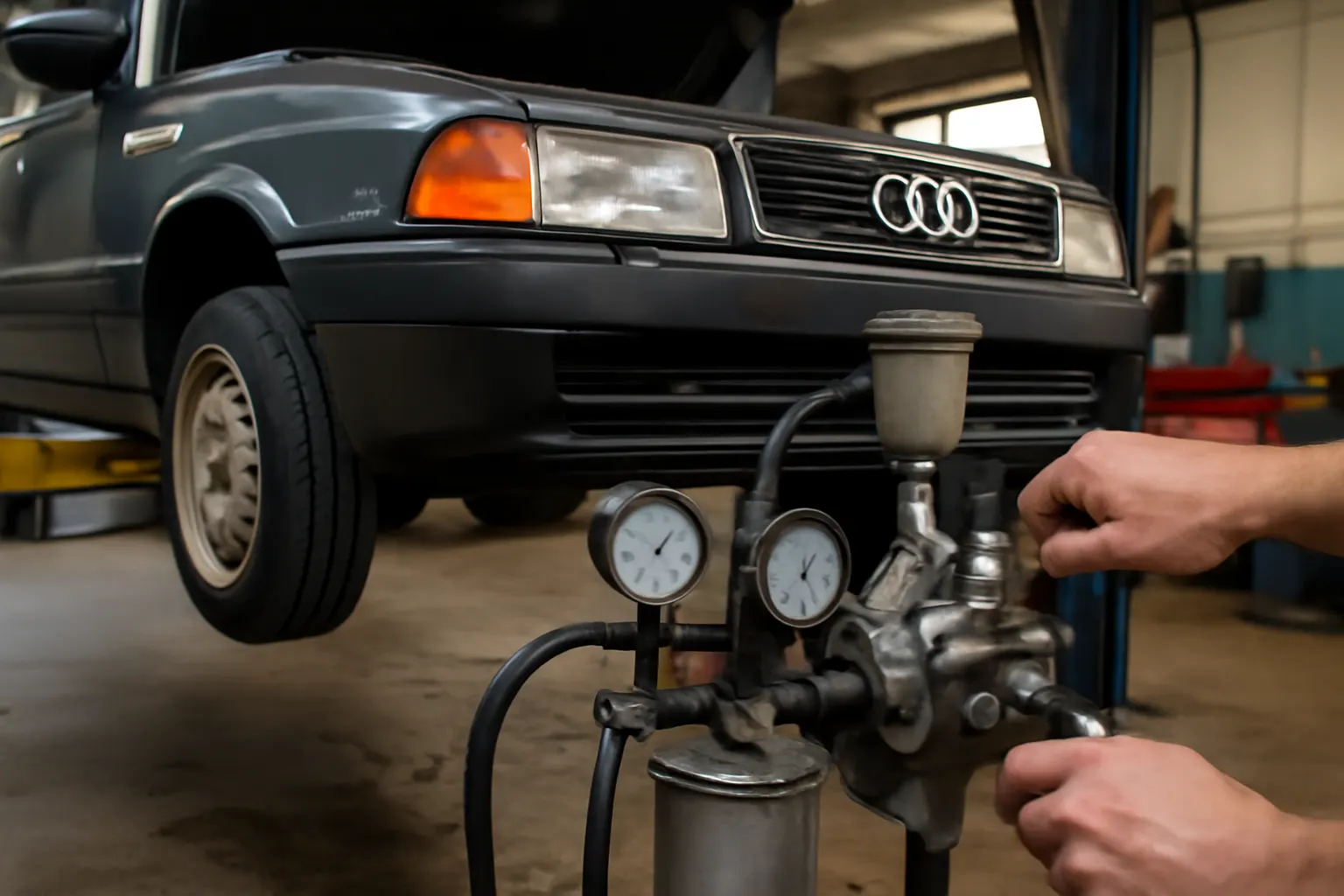
Audi 5000 Hydraulic Service Case Study
Sourcing and installing discontinued hydraulic and brake components in a late Type 44 Audi 5000 quattro is a challenge that tests the resourcefulness and expertise of even the most seasoned technicians. This case study walks you through a real-world shop service scenario: how to track down rare hydraulic system parts, the pitfalls of fitment, and the practical solutions that keep classic Audi 5000s safe and roadworthy. If you maintain or restore vintage Audis, the lessons and checklists here will help you avoid costly mistakes and ensure system integrity.
For a broader look at compatible parts and fitment specifics for your Audi, see our Audi 5000 Auto Parts & Model-Specific Fitment Guide.
Immediate Answer: How to Service the Audi 5000 Hydraulic System Today
If you are tasked with hydraulic or brake service on a late Type 44 Audi 5000 quattro (particularly 1987–1988 models), your best approach is:
- Source rebuilt or NOS (new old stock) hydraulic pumps, accumulators, and master cylinders from Audi specialists or reputable vintage parts suppliers.
- Verify part numbers and fitment against official Audi and NHTSA parts databases.
- Carefully inspect all lines, fittings, and seals for compatibility and integrity before installation.
- Follow SAE and NHTSA guidelines for safety-critical repairs.
- Document all part numbers, sources, and installation steps for future reference.
Attempting to retrofit parts from other models without precise fitment data risks loss of braking power or steering assist, both of which are safety-critical. Always prioritize verified components and professional installation.
The Hidden Problem: Discontinued Parts and Fitment Uncertainty
While the Audi 5000’s hydraulic system is robust, its unique design—combining power steering and brake boost in a shared hydraulic circuit—means that many core components were model-specific and discontinued by the early 2000s. Many owners and general repair shops do not realize:
- Aftermarket reproduction parts are rare and often lack proper certification.
- Many used components are worn beyond safe service limits.
- Incorrect or improvised fitment (e.g., using a pump from a different Audi model) can cause catastrophic failure.
This creates a scenario where even basic hydraulic maintenance can become a high-stakes project, especially when safety and regulatory compliance are on the line.
Understanding the Audi 5000 Type 44 Hydraulic System
The late Audi 5000 quattro (Type 44, especially 1987–1988) employed a central hydraulic system that powered both steering and brake boost. Key features include:
- Hydraulic Pump: Driven by the engine, this high-pressure pump supplies both the power steering rack and the brake servo.
- Brake Accumulator ("Bomb"): Stores hydraulic pressure for brake assist, even if the engine stalls.
- Combined Master Cylinder/Servo: Unique to this model, integrating hydraulic boost.
- Specialized Hoses and Fittings: High-pressure lines, often model-specific in length and thread type.
This setup differs from the vacuum-assisted brakes common on most vehicles, making parts interchangeability with other Audi models limited. The system’s complexity means that even minor leaks or pressure drops can severely impact both steering and braking performance.
Diagnosing Hydraulic System Issues: Symptoms and Testing
Classic Audi 5000s often present with vague or intermittent brake and steering symptoms. Accurate diagnosis is essential before sourcing parts. Common symptoms include:
- Hard Brake Pedal: Indicates a failed accumulator or low hydraulic pressure.
- Intermittent Power Steering Assist: May point to pump wear, fluid starvation, or leaks.
- Hydraulic Fluid Leaks: Often at hose fittings, pump seals, or accumulator.
- Warning Lights: The dashboard brake and hydraulic warning lights are early indicators of pressure loss.
Diagnostic Checklist
- Visual Inspection: Check for fluid leaks at all connections and under the accumulator.
- Pedal Test: With the engine off, pump the brake pedal. If the pedal firms up after 2–3 pumps, the accumulator is likely failing.
- Pressure Gauge Test: Install a hydraulic pressure gauge at the test port (if equipped) to verify system pressure (should exceed 140 bar).
- Steering Function: With engine running, turn the wheel lock-to-lock. Any groaning, lag, or stiffness suggests pump or fluid issues.
- Fluid Quality: Inspect for metallic particles, discoloration, or foaming—signs of pump or hose degradation.
Accurate diagnosis up front ensures you order the correct parts and avoid unnecessary labor.
Sourcing Discontinued Hydraulic and Brake Parts
With most OEM parts long out of production, finding safe and compatible replacements for the Audi 5000 hydraulic system requires a multi-pronged approach:
- New Old Stock (NOS): Some specialist suppliers still carry NOS hydraulic pumps, accumulators, and master cylinders. Always verify packaging, part numbers, and shelf life.
- Rebuilt Components: Reputable rebuilders can restore OEM pumps and accumulators with new seals and internals. Ensure the rebuilder uses parts that meet or exceed SAE and NHTSA standards.
- Used Parts: Only consider low-mileage used parts as a last resort, and always bench-test for leaks and pressure before installation.
- Cross-Reference: Use Audi parts catalogs and NHTSA equipment databases to confirm part numbers and fitment for your specific VIN.
Trusted Sourcing Checklist
| Source Type | Pros | Cons | Verification Steps |
|---|---|---|---|
| NOS | Authentic, unused, correct fitment | Expensive, rare, possible age-related degradation | Inspect packaging, date codes, part numbers |
| Rebuilt | Restored to spec, often warrantied | Quality varies by rebuilder, core required | Request rebuild documentation, test results |
| Used | Sometimes only option for rare parts | Unknown wear, no guarantee | Bench test, inspect for wear/leaks |
| Aftermarket | Occasionally available for hoses/seals | Rare for pumps/accumulators, questionable quality | Check certifications, reviews, fitment data |
When in doubt, consult with a vintage Audi specialist or reference the Audi 5000 Maintenance Guide for sourcing tips.
Fitment Pitfalls: Avoiding Costly Errors
Incorrect fitment is a leading cause of post-repair failures on the Audi 5000 hydraulic system. Key pitfalls include:
- Wrong Thread or Fitting Size: Many late 5000s use unique thread pitches and banjo bolt sizes. Forcing a near-match can strip threads or cause leaks.
- Incorrect Hose Routing: The hydraulic lines are routed to avoid heat and moving parts. Improper routing risks abrasion or overheating.
- Mixing Early/Late Type 44 Parts: Hydraulic system changes occurred during production. Always match parts to your exact build date and VIN.
- Using Non-rated Seals or Hoses: Only use hoses and seals rated for high-pressure mineral hydraulic fluid (Pentosin CHF 7.1/11S).
Always dry-fit components before final installation, and compare old and new parts side-by-side for dimensional accuracy.
Installation Best Practices: Step-by-Step Guide
Professional installation is critical for safety and performance. Here’s a step-by-step outline:
Hydraulic Pump and Accumulator Replacement
- Safety First: Disconnect battery and relieve hydraulic system pressure by pumping the brake pedal with the engine off.
- Drain Fluid: Use a vacuum pump or siphon to remove old hydraulic fluid from the reservoir.
- Remove Old Components: Carefully disconnect hoses and fittings, catching residual fluid. Label each connection.
- Inspect Mounts and Hardware: Check for worn bushings or stripped threads.
- Install New/Rebuilt Parts: Hand-thread all fittings, torque to Audi spec (typically 22–30 Nm for banjo bolts).
- Replace Seals: Always use new copper or aluminum crush washers.
- Refill and Bleed: Fill with fresh, correct-spec mineral hydraulic fluid. Bleed the system per Audi procedure—usually involves cycling the steering and brakes with the engine running.
- Test: Check for leaks, verify pressure, and road-test for proper brake and steering feel.
Brake Master and Servo Replacement
- Remove Brake Lines: Use flare nut wrenches to avoid rounding fittings.
- Disconnect Hydraulic Feed: Carefully detach high-pressure line from the accumulator.
- Install Replacement: Torque all fasteners to spec, and ensure seals are properly seated.
- System Bleed: Bleed all four brake calipers in the correct sequence (usually RR, LR, RF, LF).
Detailed torque specs and fluid types are available in the Audi 5000 Auto Parts & Model-Specific Fitment Guide.
Maintenance Strategies for Long-Term Reliability
Once the hydraulic system is restored, proactive maintenance is critical for continued safety and performance:
- Fluid Changes: Replace hydraulic fluid every 2 years or 30,000 miles, using only the manufacturer-specified mineral fluid.
- Periodic Inspection: Check all hoses, fittings, and reservoir for leaks or wear at every oil change.
- Accumulator Testing: Every 2 years, perform the brake pedal pump-down test to verify accumulator function.
- Steering and Brake Feel: Any change in pedal or steering response warrants immediate inspection.
Avoid mixing fluid types—using ATF or standard power steering fluid will damage seals and cause system failure.
Regulatory and Safety Considerations
Hydraulic system integrity is not just a matter of performance—it’s a safety requirement. The National Highway Traffic Safety Administration (NHTSA) classifies braking and steering systems as critical safety equipment. Improper repairs can result in:
- Loss of Vehicle Control: Both brakes and steering depend on hydraulic pressure.
- Inspection Failure: Many states require proof of safe operation for classic vehicles.
- Liability: In the event of an accident, improper repairs may be scrutinized.
Always document your repairs, including part numbers, sources, and test results. Reference NHTSA equipment standards for brake and hydraulic system repairs here.
Lessons from the Shop Floor: Real-World Challenges and Solutions
Over dozens of Audi 5000 hydraulic restorations, several recurring challenges emerge:
- Part Availability: The most difficult items to source are accumulators and master cylinders. Early planning and multiple supplier contacts are essential.
- Shipping Damage: Hydraulic components are heavy and fragile. Insist on double-boxed, well-padded shipping.
- Fitment Surprises: Even with correct part numbers, subtle production changes (e.g., different banjo bolt lengths) can halt a job. Always compare old and new parts before installation.
- Test Drives: Post-repair test drives should include cold and hot cycles, multiple steering and braking maneuvers, and a check for warning lights.
Technicians who document each step, communicate with suppliers, and test thoroughly have the highest success rates.
When to Seek Expert Help
While many classic Audi owners are skilled DIYers, hydraulic system service is not the place for guesswork:
- If you lack specialized hydraulic tools or experience with high-pressure systems, seek a shop with vintage Audi expertise.
- Shops with experience in European hydraulics can often rebuild or source rare parts, and have the diagnostic tools to verify system pressure and function.
- For complex ABS integration (as on some late 5000 quattros), professional-level scan tools and wiring diagrams are essential.
If you encounter persistent leaks, warning lights, or inconsistent brake/steering feel, halt repairs and consult a specialist.
Upgrades and Modernization: What’s Possible?
Some owners ask about modernizing the Audi 5000 hydraulic system. Options are limited, but include:
- Upgraded Hoses: Custom-fabricated hoses with modern materials can improve longevity.
- Accumulator Rebuilds: Some specialists offer upgraded internals for longer service life.
- Fluid Monitoring: Aftermarket fluid level and pressure sensors can be retrofitted for added peace of mind.
However, replacing the entire system with a vacuum-assisted or electric setup is not practical without extensive engineering and loss of originality.
How Hydraulic System Condition Affects Fuel Efficiency
A leaking or inefficient hydraulic system can marginally increase engine load, reducing fuel efficiency. According to the U.S. Department of Energy, accessory loads (including hydraulic pumps) can impact overall vehicle efficiency. Ensuring your Audi 5000’s hydraulic system is leak-free and operating at correct pressure helps maintain optimal fuel economy, especially on long drives.
AutoPartEx: Your Partner in Vintage Audi Hydraulic Solutions
At AutoPartEx, we specialize in helping owners and shops keep classic Audis on the road with the right parts, fitment data, and technical support. Our database includes cross-referenced part numbers, fitment notes, and sourcing tips for the Audi 5000 and other vintage models. Whether you’re searching for a rebuilt hydraulic pump, need help decoding VIN-specific fitment, or want to avoid common pitfalls, we’re here to help.
Explore our Audi 5000 Auto Parts & Model-Specific Fitment Guide for more sourcing and technical resources, or read our Vintage Audi Fitment Basics for broader compatibility tips.
Expert Action Checklist: Audi 5000 Hydraulic Service
For your next Audi 5000 hydraulic service, follow this expert checklist:
- Confirm Symptoms: Use diagnostic steps to verify hydraulic system failure.
- Identify Parts: Cross-reference part numbers with VIN and production date.
- Source Safely: Prioritize NOS or rebuilt components from trusted suppliers.
- Prepare Tools: Gather flare nut wrenches, torque wrenches, and a pressure gauge.
- Document Process: Photograph old and new parts, note all part numbers.
- Install Carefully: Follow torque specs, replace all seals, and route hoses properly.
- Bleed Thoroughly: Remove all air from the system per Audi procedure.
- Test Extensively: Road test, check for leaks, and monitor warning lights.
- Maintain Records: Keep receipts, test data, and installation notes.
- Schedule Maintenance: Plan for periodic fluid changes and accumulator testing.
By following these steps and leveraging AutoPartEx’s technical resources, you can keep your Audi 5000’s unique hydraulic system safe, reliable, and ready for the road.