
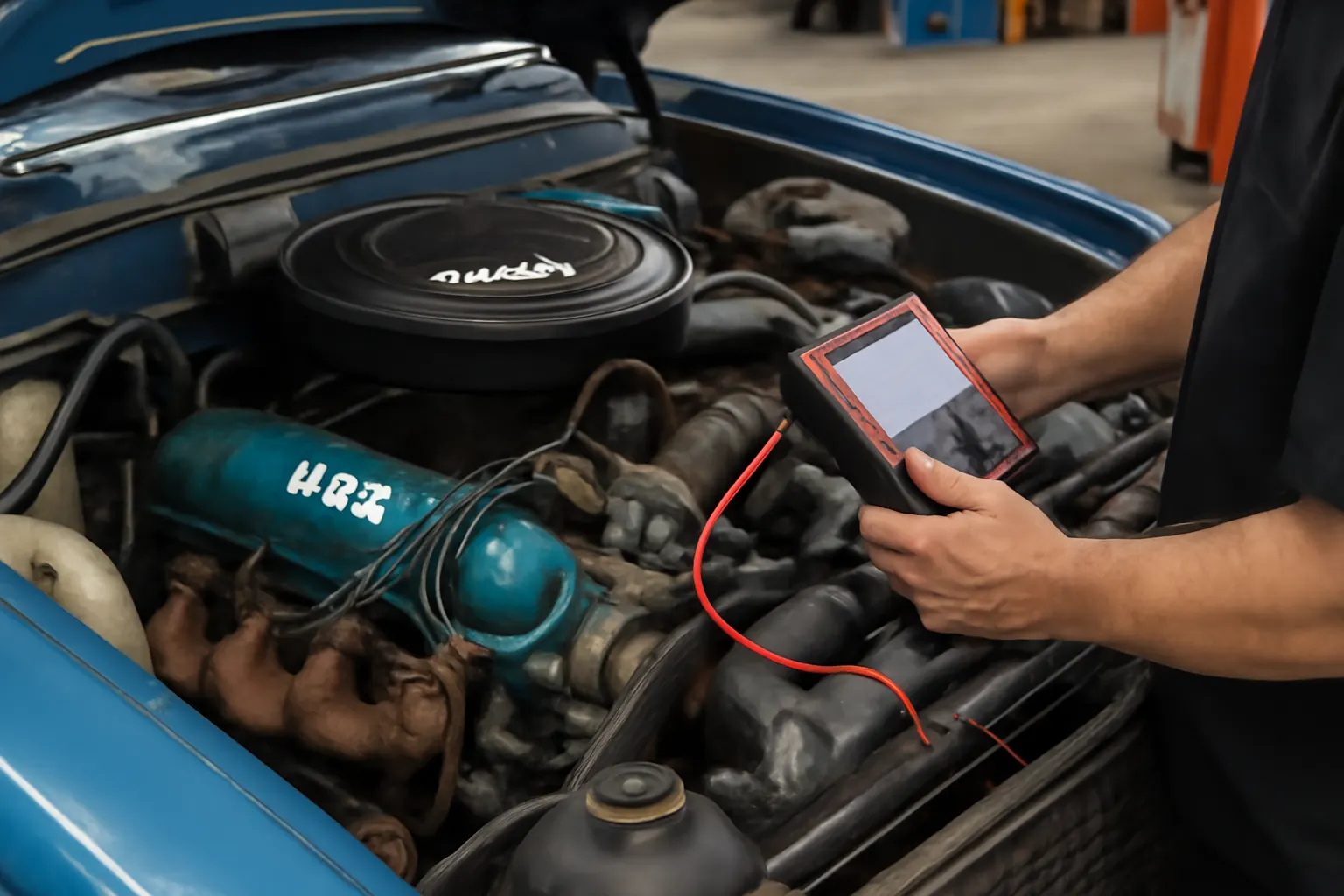
Amc Pacer Engine Variations
When maintaining, restoring, or upgrading an AMC Pacer, understanding its engine variations is essential for sourcing the correct parts, diagnosing issues, and ensuring optimal performance. The AMC Pacer, produced from 1975 to 1980, was offered with several distinct inline-six and V8 engine options, each presenting unique maintenance and interchange considerations. This detailed guide breaks down the differences between these engine types, highlights their specific maintenance requirements, and provides actionable advice for parts sourcing and troubleshooting. For a complete overview of AMC Pacer parts and systems, see the AMC Pacer Auto Parts: Comprehensive Guide to Model-Specific Maintenance & Replacement.
Immediate Answer: Key AMC Pacer Engine Variations
The AMC Pacer was primarily equipped with two major engine families: the AMC inline-six (I6) and, from 1978 onward, the AMC 304 V8. Early Pacers (1975–1977) exclusively featured the 232 and 258 cubic inch (ci) inline-six engines, while later models (1978–1980) offered an optional 304 ci V8 alongside the 258 ci I6. Each engine requires different maintenance approaches, has distinct parts interchangeability, and impacts overall vehicle dynamics and fuel efficiency.
Quick reference:
- 1975–1977: 232 I6 (3.8L), 258 I6 (4.2L)
- 1978–1980: 258 I6 (4.2L), 304 V8 (5.0L, optional)
- Major differences: mounting hardware, cooling systems, exhaust, ignition, and fuel delivery components.
Hidden Problem: Overlooked Differences Impacting Maintenance and Parts Selection
While AMC’s modular approach means many parts appear similar across engine families, critical differences in mounting points, accessory brackets, and emission controls can lead to incorrect part selection or installation errors. Swapping or sourcing parts without verifying engine-specific fitment can result in compatibility issues, compromised safety, and reduced reliability. Additionally, the introduction of the V8 option brought changes to the Pacer’s drivetrain, cooling, and electrical systems that impact long-term maintenance and restoration strategies.
Expanding the Problem: Why Engine Variation Matters for AMC Pacer Owners
Inline-Six vs. V8: More Than Just Displacement
The AMC inline-six and V8 engines differ not only in displacement and power output but also in ancillary systems, fuel delivery, and emissions equipment. For example:
- The 232 and 258 I6 engines share many components, but the 258 features a longer stroke and different intake/exhaust manifolds.
- The 304 V8 requires a larger radiator, unique engine mounts, a different front crossmember, and a dual exhaust system.
- Emissions and ignition systems evolved between model years, particularly with the introduction of Electronic Ignition and catalytic converters.
Maintenance and Restoration Pitfalls
- Parts Interchangeability: Some accessories (alternators, water pumps) may appear interchangeable but have different mounting bosses or pulley alignments.
- Fuel System Changes: Carburetor types and fuel line routing differ between I6 and V8 models, affecting replacement and tuning.
- Cooling System Upgrades: V8 Pacers use a heavy-duty radiator and shroud not found in I6-equipped cars.
Technical Deep Dive: AMC Pacer Engine Specifications
AMC Inline-Six Engines (232 & 258)
- 232 I6 (1975–1977): 3.8L, 1-barrel carburetor, 100–110 hp (net), cast iron block/head.
- 258 I6 (1975–1980): 4.2L, 1-barrel or 2-barrel carburetor (late models), 110–120 hp (net), longer stroke, improved torque.
- Key Differences: The 258’s increased stroke and displacement provide better low-end torque, making it more suitable for automatic transmissions and air conditioning.
AMC 304 V8 (1978–1980)
- 304 V8: 5.0L, 2-barrel carburetor, 120–150 hp (net depending on year and emission calibration), cast iron block/head.
- Unique Features: Larger engine bay clearances, dual exhaust, specific transmission bellhousing, and upgraded drivetrain components.
Emissions and Fuel Efficiency
- All AMC Pacer engines transitioned to stricter emissions controls during their production run. Catalytic converters, EGR valves, and air injection systems were added or revised, affecting both performance and parts sourcing.
- Fuel efficiency ratings varied, with I6 models generally outperforming V8s in mileage (see Fuel Efficiency, United States Department of Energy).
Maintenance Considerations by Engine Type
Inline-Six Maintenance
- Valve Adjustment: The I6 features hydraulic lifters, generally maintenance-free but susceptible to oiling issues if neglected.
- Carburetor Tuning: Frequent carburetor cleaning and adjustment are required for optimal performance, especially with ethanol-blended fuels.
- Cooling System: Regular inspection of the water pump, radiator, and hoses is critical; the I6 is less prone to overheating but still requires attention.
V8 Maintenance
- Accessory Drive: The 304 V8 uses a unique accessory drive layout, requiring correct pulley and bracket alignment.
- Ignition System: The V8’s distributor is different from the I6 and should be checked for proper advance and wear.
- Exhaust System: Dual exhaust increases complexity; leaks and heat management are more challenging.
Interchangeability and Parts Sourcing Challenges
Engine Mounts and Crossmembers
- I6 vs. V8 Mounts: Engine mounts and frame brackets differ; V8 mounts are heavier-duty and offset for engine clearance.
- Transmission Crossmembers: V8 Pacers use a different crossmember and transmission mount due to the longer engine and different transmission bellhousing.
Fuel and Ignition Components
- Carburetors: The I6 and V8 use different carburetor models and linkages. Attempting to interchange them without proper adapters leads to poor performance.
- Distributors: Shaft length and drive gear differ between I6 and V8. Swapping is not recommended.
Cooling and Exhaust
- Radiators: V8 radiators are larger and thicker, with different hose routing.
- Exhaust Manifolds: I6 and V8 manifolds are not interchangeable; V8 requires dual-outlet exhaust.
Diagnostic Checklist: Identifying Your AMC Pacer Engine
Before ordering parts or performing major maintenance, confirm your engine type and configuration. Use the following checklist to identify your AMC Pacer’s engine:
AMC Pacer Engine Identification Checklist
| Step | Inspection Point | I6 (232/258) | V8 (304) |
|---|---|---|---|
| 1 | Valve Cover Bolts | 4 or 5 bolts, centered | 5+ bolts, offset |
| 2 | Spark Plug Count | 6 | 8 |
| 3 | Distributor Location | Front passenger side | Rear center |
| 4 | Exhaust Manifold(s) | Single (driver side) | Dual (both sides) |
| 5 | Radiator Hose Layout | Smaller, single outlet | Larger, dual outlets |
| 6 | Emissions Label (under hood) | Lists 232/258 | Lists 304 |
| 7 | Engine Code (stamped on block) | Starts with "A" or "B" | Starts with "Z" or "T" |
If in doubt, consult the original VIN decoder or factory service manual for confirmation.
Fuel Efficiency and Emissions Considerations
Engine choice has a direct impact on fuel consumption and emissions compliance. Inline-six Pacers generally achieve better fuel economy, especially when equipped with manual transmissions and single-barrel carburetors. The V8, while offering improved acceleration and towing capacity, consumes more fuel and may require additional emissions components depending on local regulations.
- I6 (232/258): Typically 16–22 mpg depending on configuration and condition.
- V8 (304): Typically 12–16 mpg, with a noticeable decrease in urban driving.
- Emissions Equipment: Both engines may be equipped with air injection pumps, EGR valves, and catalytic converters, especially in 1978–1980 models (NHTSA Equipment).
Engine Upgrade and Swap Considerations
Many AMC Pacer owners consider engine swaps or upgrades, either for increased power or improved reliability. However, the differences between I6 and V8 configurations mean that a swap involves more than just the engine block.
Key Swap Considerations
- Engine Bay Modifications: Swapping an I6 for a V8 requires changes to engine mounts, crossmember, and sometimes firewall clearance.
- Drivetrain Compatibility: The V8’s increased torque requires a compatible transmission and rear axle ratio.
- Cooling and Exhaust: Upgrading to a V8 necessitates a larger radiator, dual exhaust routing, and heat shields.
- Electrical System: V8s may require a higher-output alternator and different wiring harness sections.
Parts Sourcing Tips
- Use reputable suppliers specializing in AMC parts.
- When sourcing used parts, verify casting numbers and fitment, as AMC engines share components with other AMC models but not always with Jeep or Rambler variants.
Common Problems and Troubleshooting by Engine Type
Inline-Six Issues
- Oil Leaks: Valve cover gaskets and rear main seals are common leak points.
- Carburetor Stumble: Ethanol in modern fuels can degrade gaskets; regular rebuilds are recommended.
- Cooling Problems: Rust and scale buildup in the block can reduce cooling efficiency.
V8 Issues
- Exhaust Manifold Cracks: The 304 is prone to heat-induced cracking, especially if the exhaust system is neglected.
- Timing Chain Wear: V8s may develop slack timing chains, affecting ignition timing and performance.
- Starter Heat Soak: The starter is close to the exhaust and may overheat, causing hard hot starts.
Preventive Maintenance Schedule
To keep your AMC Pacer engine running reliably, follow a preventive maintenance schedule tailored to your engine type:
Inline-Six (232/258) Maintenance
- Oil & Filter: Every 3,000 miles or 6 months
- Valve Cover Gasket: Inspect annually for leaks
- Carburetor: Clean and adjust every 12,000 miles
- Cooling System: Flush and refill every 24,000 miles
V8 (304) Maintenance
- Oil & Filter: Every 3,000 miles or 6 months
- Ignition Timing: Check every 6,000 miles
- Exhaust Manifolds: Inspect for cracks every oil change
- Radiator & Hoses: Inspect every 6 months, replace as needed
Safety and Recall Considerations
Both inline-six and V8 Pacers have been subject to recalls related to engine and fuel system components. Always check the NHTSA recall database before performing major repairs or sourcing used parts. Common recall items include fuel lines, carburetor gaskets, and emission control devices. Ensuring your Pacer is up-to-date with all recall repairs is crucial for safety and reliability.
Sourcing Quality Parts and Ensuring Proper Fitment
When sourcing replacement parts for your AMC Pacer engine, prioritize quality and verified fitment. Use the following guidelines:
- OEM vs. Aftermarket: Whenever possible, use OEM or high-quality aftermarket parts that meet or exceed SAE standards.
- Cross-Reference Part Numbers: AMC engines share components with other AMC vehicles, but always cross-check part numbers for your specific year and engine.
- Supplier Reputation: Buy from established AMC specialists or suppliers who provide clear fitment information.
- Documentation: Keep a log of all part numbers, installation dates, and any modifications for future reference.
AutoPartEx Guidance: Maximizing Your AMC Pacer’s Longevity
AutoPartEx recommends a systematic approach to maintaining your AMC Pacer, starting with accurate engine identification and a clear understanding of parts compatibility. Our technical resources and curated parts database are designed to help you avoid costly mistakes, streamline sourcing, and ensure safety and performance. For in-depth guides on related systems, see Amc Pacer Weatherstripping Fitment and Amc Pacer Suspension Service.
Whether you’re restoring a classic Pacer to factory specs or upgrading for modern performance, trust AutoPartEx for expert technical support and the most comprehensive AMC Pacer parts selection. Visit our AMC Pacer Auto Parts: Comprehensive Guide to Model-Specific Maintenance & Replacement for further resources and model-specific advice.