
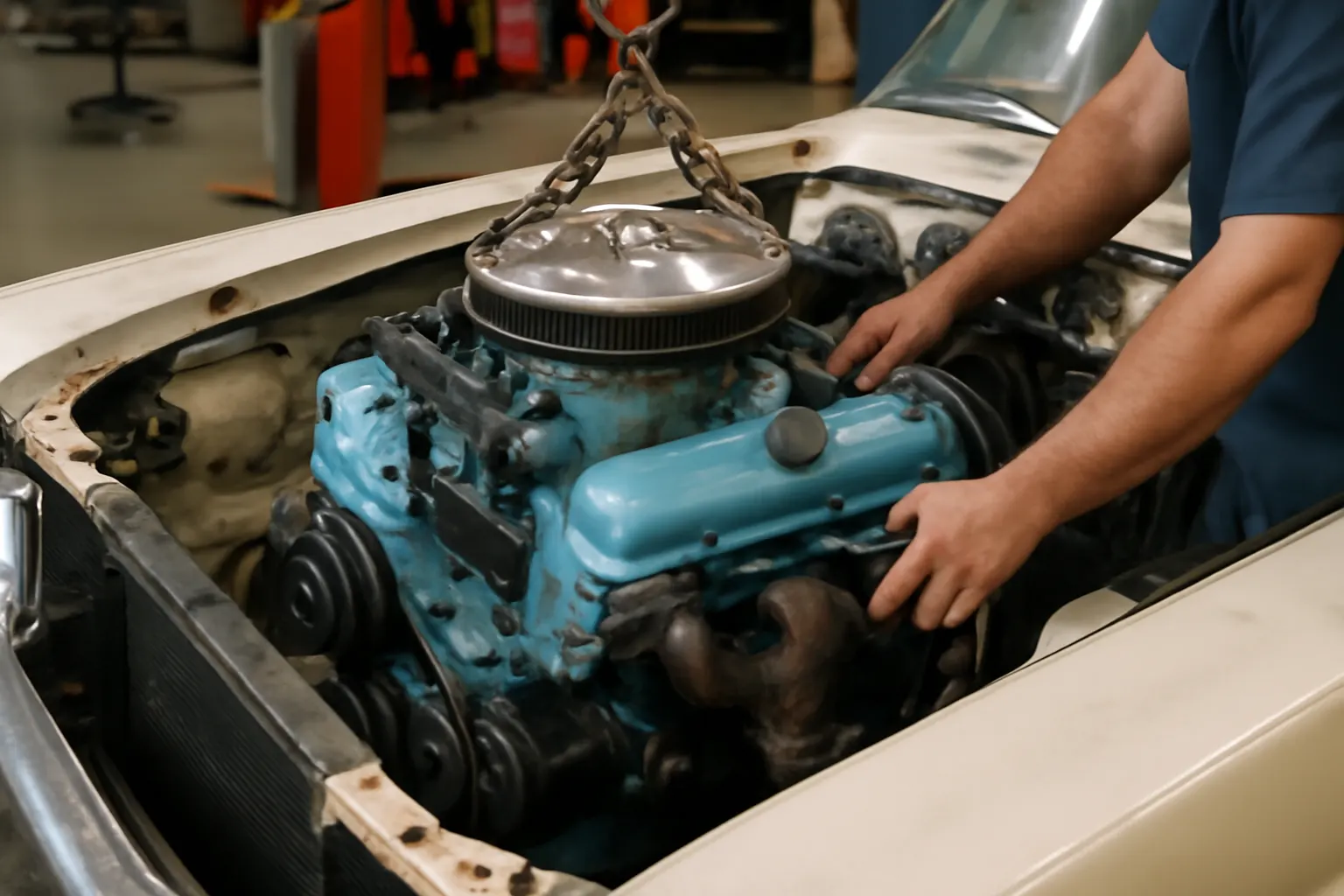
Amc Classic Engine Swap Guide
Swapping an engine into your AMC Classic can transform its performance, reliability, and value—if you follow the right compatibility, fitment, and safety strategies. Whether you're restoring a barn find, upgrading for modern drivability, or pursuing track-day aspirations, this comprehensive guide delivers the critical steps, diagnostic tips, and component selection advice you need for a successful AMC engine swap. For a broader look at OEM and aftermarket AMC Classic parts, be sure to visit our AMC Classic Parts & Maintenance Guide.
Why AMC Classic Engine Swaps Are Popular—and Challenging
AMC Classic models (including Rambler Classics and later AMC intermediates) are sought after for their unique design, robust chassis, and underappreciated performance potential. However, their original engines—though reliable—can be limited in power, parts availability, and efficiency by modern standards. Engine swapping offers a path to increased horsepower, torque, and reliability, but brings its own set of technical hurdles:
- Compatibility: Not all engines fit AMC engine bays or mate to AMC drivetrains without significant modifications.
- Drivetrain Upgrades: Higher-output engines demand stronger transmissions, axles, and cooling systems.
- Safety & Compliance: Swaps must meet modern safety, fuel efficiency, and material standards set by agencies like the NHTSA and the US Department of Energy 12.
Understanding these issues up front will save you time, money, and headaches—ensuring your AMC Classic swap is both rewarding and roadworthy.
The Most Common AMC Classic Engine Swap Candidates
Before diving into tools and teardown, you’ll need to decide which engine best fits your goals and AMC Classic platform. Here are the most popular swap choices:
AMC V8 Family (290, 304, 343, 360, 390, 401)
- Pros: Direct fit, plentiful aftermarket support, retains AMC authenticity.
- Cons: Some parts are scarce, and high-performance builds can get expensive.
Modern Jeep/AMC-Based Engines (4.0L I6, 4.2L I6)
- Pros: Improved reliability, fuel injection options, better parts availability.
- Cons: Requires custom mounts and wiring, may need transmission adapters.
GM LS-Series V8
- Pros: Lightweight, powerful, massive aftermarket, fuel efficient for the output.
- Cons: Substantial fabrication, transmission and driveshaft adaptation needed.
Ford Small-Block V8 (302/5.0L, 351W)
- Pros: Compact, good power-to-weight, strong aftermarket.
- Cons: Custom mounts, transmission mods, exhaust clearance issues.
Checklist: Choosing a Swap Candidate
| Criteria | AMC V8 | Jeep/AMC I6 | GM LS | Ford SBF |
|---|---|---|---|---|
| Direct Fit | Yes | No | No | No |
| Aftermarket Support | Good | Moderate | Excellent | Good |
| Parts Availability | Moderate | Good | Excellent | Excellent |
| Fabrication Needed | Low | Moderate | High | High |
| Retains AMC Heritage | Yes | Yes | No | No |
Hidden Pitfalls: What Most AMC Swappers Overlook
Many enthusiasts jump into an engine swap focused only on horsepower gains, overlooking several critical factors that can derail the project:
- Engine Bay Clearance: AMC engine compartments, especially in early models, are narrower than most modern V8 bays.
- Transmission Tunnel Size: Modern transmissions may not fit without tunnel modifications.
- Cooling System Upgrades: Higher-output engines require radiators, fans, and shrouds capable of dissipating more heat.
- Fuel System Compatibility: Carbureted-to-fuel-injection swaps necessitate new fuel pumps, lines, and sometimes tank mods.
- Steering and Suspension Geometry: Heavier or longer engines can upset front-end balance, requiring suspension tuning or upgrades.
- Driveshaft and Differential Strength: More power can quickly destroy original AMC driveline components if not upgraded.
Deeper Dive: Technical Considerations for AMC Classic Swaps
Engine Mounting and Fitment
AMC used several engine mount patterns across years and models. Swapping to a different AMC V8 is often straightforward, but mixing in Jeep, GM, or Ford engines requires custom or aftermarket mounts, precise alignment, and sometimes firewall modifications. Always measure twice—factory tolerances were wider than today’s standards.
Transmission Compatibility
AMC transmissions use a unique bellhousing bolt pattern. Swapping to a non-AMC engine often means adapting a new transmission as well. Consider these points:
- AMC V8s: Use factory or aftermarket bellhousings.
- GM LS: Aftermarket adapters or custom crossmembers required.
- Ford SBF: Transmission swaps often needed, plus custom linkage.
Fuel System Upgrades
Modern engines demand high-pressure fuel delivery. For EFI swaps, use an in-tank or inline electric fuel pump, upgraded lines, and a return-style regulator. Carbureted swaps may only need a higher-capacity mechanical or low-pressure electric pump.
Cooling System Demands
High-performance and modern engines run hotter. Upgrade to a 3-row aluminum radiator, electric fans, and ensure shrouds are fitted for optimal airflow. AMC’s original radiators are often inadequate for swapped engines.
Electrical and Electronics
Swapping in a modern engine means integrating its ECU, sensors, and harness with your AMC’s vintage wiring. Plan for:
- Standalone or reworked engine harnesses
- Upgraded alternator and battery
- Modern fuse and relay blocks
- Diagnostic ports for troubleshooting
Step-by-Step AMC Classic Engine Swap Planning
A methodical approach is crucial for a successful swap. Here’s an actionable roadmap:
1. Define Your Goals
- Restoration vs. Performance: Are you after OE authenticity, daily reliability, or maximum power?
- Budget: Factor in the engine, transmission, mounts, electronics, cooling, and labor.
- Regulatory Compliance: Ensure the swap meets local safety and equipment standards (NHTSA guidelines).
2. Assess Your AMC Classic’s Condition
- Frame and body integrity (see Amc Classic Rust Repair)
- Suspension and steering wear
- Brake system condition
- Electrical system health (see Amc Classic Electrical Diagnostics)
3. Choose Engine and Transmission
- Match engine to driving goals and skill level.
- Select compatible transmission for power level and fitment.
4. Source Components
- Engine, transmission, mounts, crossmembers
- Upgraded radiator, fans, and shrouds
- Fuel system (tank, pump, lines, regulator)
- Exhaust headers/pipes
- Wiring harness and ECU
5. Mock-Up and Test Fit
- Test-fit engine and transmission in bay.
- Confirm clearance at firewall, steering, and suspension.
- Mark and plan for modifications before final assembly.
6. Final Assembly and Integration
- Install mounts, crossmembers, and driveline.
- Route and secure wiring, fuel, and cooling systems.
- Address shifter linkage, speedometer, and gauges.
7. Initial Startup and Troubleshooting
- Prime oil and fuel systems.
- Check all connections and torque fasteners.
- Start engine, monitor for leaks, noises, or error codes.
8. Post-Swap Road Testing and Tuning
- Gradually test drivability, temperature, and performance.
- Tune ignition and fuel maps as needed.
- Inspect all fasteners and systems after initial miles.
AMC Classic Engine Swap Compatibility Table
| Model Year | Factory Engine Bays | Direct AMC V8 Swap | Jeep I6 Swap | GM LS Swap | Ford SBF Swap |
|---|---|---|---|---|---|
| 1961–1966 | Narrow, early mounts | Yes (with mods) | Yes (mod mounts) | Challenging (tight fit) | Difficult (major mods) |
| 1967–1974 | Standard, V8-ready | Yes | Yes | Yes (some mods) | Yes (some mods) |
| 1975–1978 | Wider, smog-era | Yes | Yes | Yes | Yes |
Swapping for Efficiency: Beyond Just Power
Modern engine swaps aren’t just about adding horsepower—they can also dramatically improve fuel efficiency, emissions, and drivability, thanks to advances in materials and electronics (DOE Fuel Efficiency). For example:
- LS-based swaps often deliver 300+ horsepower and 20+ mpg, outperforming original AMC V8s in both power and efficiency.
- EFI Jeep 4.0L swaps offer reliable starts, smooth idle, and improved fuel economy over carbureted AMC sixes.
When planning your swap, consider not just the peak numbers, but how the engine will perform in your typical driving scenarios. Lighter, more efficient engines can reduce front-end weight and improve handling (DOE Materials Technologies).
Drivetrain and Supporting Upgrades
Transmission and Driveshaft
- Strength: Match transmission and driveshaft to expected torque.
- Length and Yoke: Swaps often require custom-length driveshafts and yokes.
- Crossmember: Fabricate or source a crossmember that supports your new transmission’s mount location.
Axles and Differentials
- Stock AMC axles: Suitable for mild upgrades, but high-power swaps may require Dana 44 or Ford 9-inch replacements.
- Differential Ratio: Match to new engine’s power curve for optimal acceleration and cruising RPM.
Suspension and Brakes
- Springs/Shocks: Heavier engines may require stiffer front springs and performance shocks.
- Brakes: Upgrade to disc brakes and larger rotors to handle increased speed and weight.
Cooling System and Fuel Delivery Upgrades
Cooling Checklist
- Aluminum radiator with 3+ rows
- High-flow water pump
- Dual electric fans with shroud
- Overflow reservoir
- High-quality hoses and clamps
Fuel System Checklist
- High-pressure in-tank or inline pump (for EFI)
- Upgraded fuel lines (rated for pressure/ethanol)
- Return-style regulator
- Cleaned or new fuel tank
Electrical and Electronics Integration
Modern engine swaps require careful electrical planning:
- Harness: Use a standalone harness or modify the donor’s harness for your AMC.
- ECU Mounting: Secure in a dry, accessible location.
- Relays and Fuses: Add circuits for fans, pumps, and ECU.
- Gauges: Use adapters or electronic senders for oil, temp, and tach signals.
Diagnostics and Testing After Swap
After completing your swap, systematic diagnostics are key to long-term reliability:
- OBD/ECU Codes: Scan for errors with a compatible scanner.
- Fluid Leaks: Check all connections after heat cycling.
- Vibration and Noise: Inspect mounts, exhaust, and driveline for contact or imbalance.
- Cooling System: Monitor for overheating during extended idling and highway runs.
- Fuel System: Watch for pressure drops or leaks under load.
Sourcing AMC Classic Swap Parts
Finding the right parts is often the most time-consuming step. Here are proven strategies:
- Donor Vehicles: Source engines and transmissions from running, wrecked, or retired vehicles for best reliability.
- Aftermarket Kits: Use swap kits for mounts, crossmembers, and wiring when available.
- AMC Specialty Suppliers: For rare parts, check AMC-specific vendors and forums.
- Documentation: Obtain service manuals for both donor and recipient vehicles to aid wiring and mechanical integration.
AMC Classic Engine Swap Maintenance Tips
Once your swap is complete, ongoing maintenance is essential:
- Oil and Fluid Checks: Use fluids recommended for the new engine and transmission, not the original AMC specs.
- Cooling System Service: Flush and replace coolant annually, check for leaks.
- Electrical Inspection: Periodically test harness connections and grounds.
- Fastener Retorque: Recheck mount and crossmember bolts after the first 500 miles.
- Fuel Filter Replacement: Change filters regularly to protect EFI systems.
AutoPartEx: Your AMC Classic Engine Swap Resource
AutoPartEx provides the most comprehensive catalog of AMC Classic restoration and swap parts, plus step-by-step technical guides for every stage of your project. Whether you’re tackling a simple AMC V8 upgrade or a complex LS or EFI Jeep swap, our experts can help you source the right components, avoid compatibility pitfalls, and achieve professional results. For more AMC Classic content, explore our AMC Classic Parts & Maintenance Guide and related how-tos like Amc Classic Suspension Restoration.
Conclusion: Take the Next Step in Your AMC Classic Build
Engine swapping an AMC Classic isn’t a bolt-in affair, but with careful planning, the right parts, and expert guidance, it can transform your classic into a faster, more reliable, and more enjoyable machine. Consider your goals, budget, and mechanical skills, and don’t hesitate to reach out to AMC forums or AutoPartEx technical support for advice tailored to your exact model.
References
- Fuel Efficiency — United States Department of Energy
- Vehicle Safety and Equipment — National Highway Traffic Safety Administration
- Materials Technologies — United States Department of Energy