Advertisement
Transmission speed sensors are critical to the modern drivetrain, silently ensuring your vehicle shifts gears at the right moment, delivers optimal fuel efficiency, and maintains safety standards. If you’ve ever experienced erratic shifting, a malfunctioning speedometer, or a sudden check engine light, a failing transmission speed sensor could be the hidden culprit. In this comprehensive guide, we’ll explore how these sensors work, why they’re so vital, the symptoms of failure, and how to diagnose and replace them—so you can keep your car running smoothly and avoid costly repairs.
If you’re looking for OEM or aftermarket drivetrain sensors, start with our Sensor (Drivetrain, Misc) – OEM & Aftermarket Drivetrain Sensors | AutoPartEx page for tailored fitment and high-quality options.
The Immediate Answer: What Is a Transmission Speed Sensor?
A transmission speed sensor measures the rotational speed of your vehicle’s transmission shafts—either input, output, or both. The data collected is sent to your vehicle’s engine control unit (ECU) or transmission control module (TCM), which uses this information to:
- Determine optimal shift timing for automatic transmissions
- Regulate engine functions such as ignition timing and fuel delivery
- Control anti-lock braking and traction control systems
- Provide accurate speedometer readings
Without a functioning speed sensor, your vehicle may experience poor shifting, loss of advanced safety features, and inaccurate speed display. For most vehicles, there are typically two types of transmission speed sensors:
- Input Shaft Speed Sensor (ISS): Monitors the speed of the transmission’s input shaft, indicating how fast the engine is delivering power to the transmission.
- Output Shaft Speed Sensor (OSS): Measures the rotational speed of the output shaft, reflecting how fast the wheels are turning.
The Hidden Problem: Why Speed Sensor Failure Is More Serious Than You Think
While a malfunctioning speed sensor may initially seem like a minor annoyance, it can quickly cascade into major drivability and safety issues. The most immediate risks include:
- Erratic or harsh shifting: The TCM relies on accurate speed data to ensure smooth gear changes. Faulty readings can cause abrupt or delayed shifts, or even prevent shifting altogether.
- Reduced fuel efficiency: Inaccurate speed data disrupts the ECU’s ability to optimize engine performance, leading to wasted fuel and higher emissions.
- Disabled safety features: Systems like traction control, ABS, and stability control may be partially or fully disabled, increasing the risk of a loss of vehicle control.
- Speedometer failure: In some vehicles, the speedometer relies on the output speed sensor. A failed sensor can render your speedometer useless, risking traffic citations or unsafe driving.
These problems are often mistaken for more severe transmission or engine failures, leading to unnecessary repairs and expenses. Prompt diagnosis is essential.
How Transmission Speed Sensors Work: Technical Breakdown
Transmission speed sensors are typically magnetic or Hall effect devices that generate a signal as metal targets (such as gear teeth) pass by. Here’s a deeper look at their operation:
Magnetic Inductive Sensors
- Construction: Magnetic coil and permanent magnet
- Operation: As the transmission shaft rotates, gear teeth pass the sensor, altering the magnetic field and inducing an alternating current (AC) voltage.
- Signal: The frequency of the AC signal correlates directly to shaft speed.
Hall Effect Sensors
- Construction: Semiconductor chip with a magnet
- Operation: When a ferrous object passes the sensor, it disturbs the magnetic field, causing the chip to produce a digital on/off signal (square wave).
- Signal: The number of pulses per second represents shaft speed.
Both sensor types are robust and reliable, but are susceptible to failure from contamination, wiring faults, or internal electronic breakdown.
The Role of Speed Sensors in Vehicle Performance and Safety
Transmission speed sensors are not just about shifting gears—they’re integral to a range of vehicle systems:
- Automatic Transmission Control: The TCM uses speed sensor data to determine the precise moment to shift gears, maximizing both performance and fuel efficiency. According to the United States Department of Energy, accurate control of drivetrain components is a key factor in overall fuel economy.
- Engine Management: The ECU adjusts ignition timing and fuel injection based on speed sensor feedback, ensuring smooth acceleration and optimal combustion.
- Safety Systems: ABS, traction control, and stability control depend on accurate vehicle speed data. A faulty sensor can compromise these critical safety features (NHTSA Vehicle Safety and Equipment).
- Speedometer and Odometer Accuracy: The vehicle’s cluster relies on the output speed sensor for accurate speed and distance readings.
Advertisement
Common Symptoms of a Failing Transmission Speed Sensor
Recognizing a bad speed sensor early can save you from more expensive repairs down the road. Here are the most common warning signs:
- Erratic or Harsh Shifting: Sudden jerks, delays, or the transmission stuck in a single gear.
- Check Engine Light: Often triggered by codes such as P0720 (Output Speed Sensor Circuit) or P0715 (Input Speed Sensor Circuit).
- Non-Functional Speedometer: Speedometer drops to zero or fluctuates erratically while driving.
- Cruise Control Failure: Inability to engage or maintain cruise control.
- ABS or Traction Control Warning Lights: Loss of speed data disables these systems.
- Decrease in Fuel Efficiency: The ECU cannot optimize engine performance without accurate speed input.
If you notice any combination of these symptoms, immediate diagnosis is advised.
Diagnosing Transmission Speed Sensor Issues: Step-by-Step
Modern vehicles make it relatively straightforward to diagnose speed sensor problems using both visual inspection and diagnostic tools. Here’s a practical checklist:
Transmission Speed Sensor Diagnostic Checklist
- Scan for Diagnostic Trouble Codes (DTCs):
- Use an OBD-II scanner to check for codes related to speed sensors (e.g., P0720, P0715).
- Visual Inspection:
- Locate the speed sensors (typically on the transmission housing).
- Check for damaged wiring, loose connectors, or signs of corrosion.
- Sensor Testing:
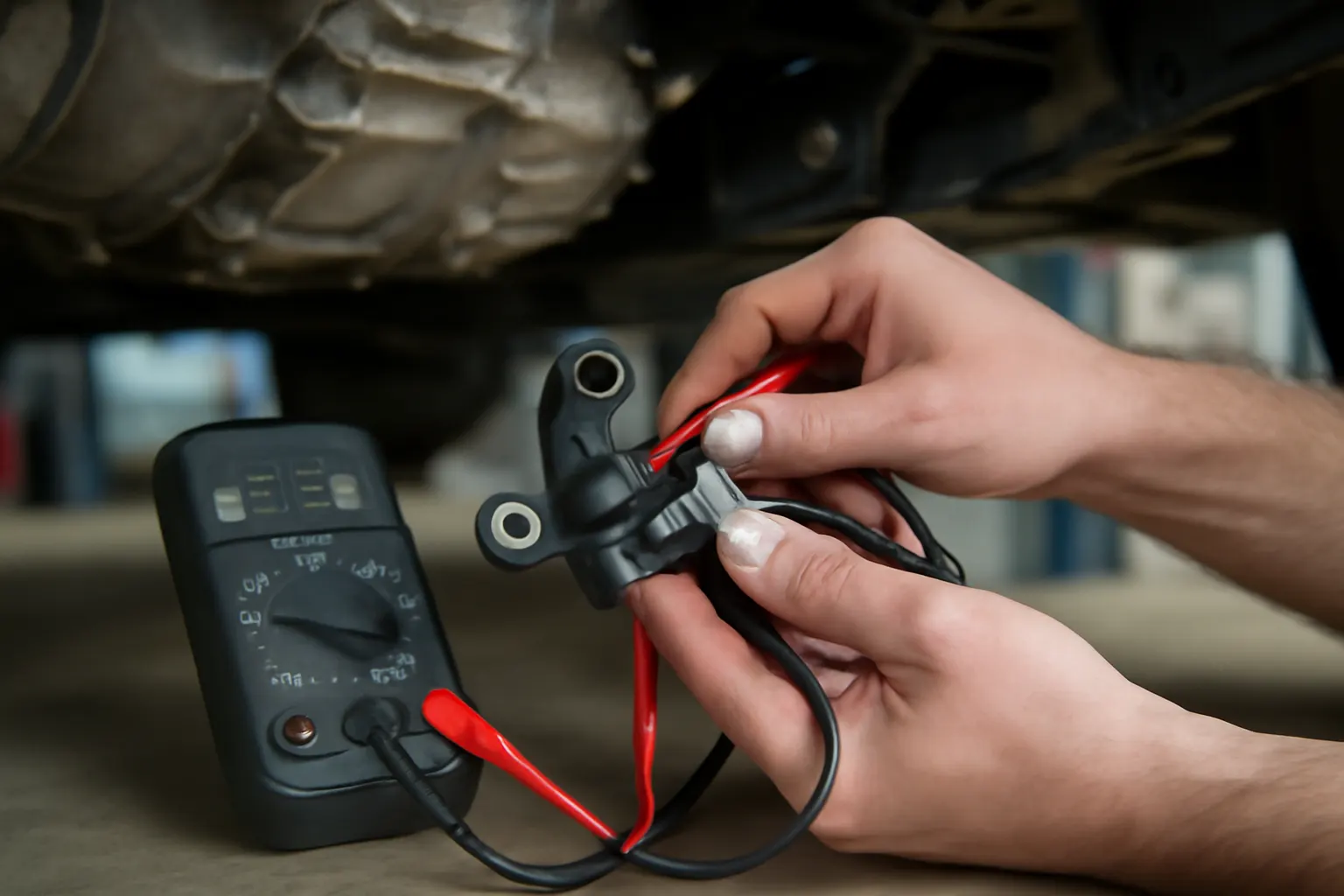
- Use a multimeter to test resistance (specifications vary by sensor type and vehicle).
- For Hall effect sensors, check for the presence of a digital signal while rotating the shaft.
- Check for Contamination:
- Inspect the sensor tip for metal shavings or debris, which can disrupt signal generation.
- Test Drive:
- Monitor live data with a scan tool to see if the sensor is producing a plausible speed signal.
If the sensor fails any of these steps, replacement is usually required. For a deeper dive into troubleshooting, see our guide: How to Diagnose Drivetrain Sensor Faults.
Why Transmission Speed Sensors Fail
Understanding why these sensors fail can help you prevent future issues:
- Contamination: Metal shavings or debris from internal transmission wear can coat the sensor tip, blocking signal generation.
- Wiring Damage: Exposure to heat, vibration, or road debris can cause wiring harnesses to fray or connectors to corrode.
- Sensor Fatigue: Repeated exposure to temperature extremes and vibration can degrade internal electronics over time.
- Fluid Intrusion: Leaks from the transmission can allow fluid to enter the sensor body, causing short circuits.
Routine inspection during transmission service can catch many of these issues before they lead to failure.
Replacing a Transmission Speed Sensor: What You Need to Know
Replacing a speed sensor is typically a straightforward repair, but attention to detail is crucial for long-term reliability. Here’s a step-by-step overview:
- Vehicle Preparation:
- Disconnect the battery to prevent electrical shorts.
- Raise and secure the vehicle if the sensor is located underneath.
- Locate the Faulty Sensor:
- Refer to your vehicle’s service manual for the exact location (input vs. output sensor).
- Remove the Old Sensor:
- Disconnect the electrical connector.
- Remove mounting bolts and gently extract the sensor.
- Inspect the Area:
- Check for debris, fluid leaks, or damaged wiring.
- Install the New Sensor:
- Ensure the replacement sensor matches OEM specifications.
- Install the sensor, torque bolts to spec, and reconnect the wiring.
- Test Operation:
- Reconnect the battery.
- Clear any stored DTCs with a scan tool.
- Test drive to confirm proper operation.
For help choosing between OEM and aftermarket options, see our guide: Sensor Replacement: OEM vs Aftermarket Explained.
Preventing Future Sensor Failures: Maintenance Best Practices
Proactive maintenance can extend the life of your transmission speed sensors:
- Regular Fluid Changes: Clean transmission fluid reduces metal debris and contamination.
- Inspect Wiring Harnesses: Look for signs of abrasion, corrosion, or loose connections during routine service.
- Monitor for Leaks: Address any transmission fluid leaks immediately to prevent fluid intrusion into sensors.
- Routine Diagnostic Scans: Periodic OBD-II scans can catch intermittent sensor faults before they become severe.
Advertisement
These practices are part of a holistic approach to drivetrain health, as recommended by NHTSA equipment safety guidelines.
Choosing the Right Transmission Speed Sensor: OEM vs Aftermarket
When replacing a transmission speed sensor, it’s crucial to select the right part for your vehicle:
- OEM Sensors: Designed to meet the exact specifications of your vehicle’s manufacturer. They ensure compatibility and reliability but may carry a higher price tag.
- Aftermarket Sensors: Often less expensive and widely available. Quality can vary, so choose reputable brands and verify compatibility.
For most daily drivers, quality aftermarket sensors are sufficient, but performance vehicles or those under warranty may benefit from OEM components. Our Sensor (Drivetrain, Misc) – OEM & Aftermarket Drivetrain Sensors | AutoPartEx page lists both options for a wide range of makes and models.
Transmission Speed Sensors and Fuel Efficiency
Accurate speed sensor data is essential for optimizing fuel economy. The ECU uses this information to:
- Adjust shift points for the most efficient gear selection
- Regulate engine load and throttle response
- Minimize unnecessary fuel consumption under varying driving conditions
According to the U.S. Department of Energy, drivetrain efficiency improvements can have a significant impact on overall fuel consumption, making sensor health directly relevant to your wallet.
Integration with Advanced Drivetrain and Safety Systems
Modern vehicles rely on a complex network of sensors to manage drivetrain and safety systems. Transmission speed sensors are a cornerstone of this network, feeding data to:
- Traction Control: Prevents wheel slip during acceleration by modulating power based on wheel speed differentials.
- ABS: Adjusts braking pressure to prevent wheel lockup, using speed data from multiple points.
- Stability Control: Helps maintain directional control during evasive maneuvers.
A single failed sensor can disrupt the entire system, triggering dashboard warnings and disabling key safety features. For a broader look at sensor reliability, check out Top 5 Drivetrain Sensors Most Likely to Fail.
Transmission Speed Sensor Installation Checklist
Before you begin, gather the following tools and supplies:
- Replacement speed sensor (OEM or quality aftermarket)
- Socket set and ratchet
- Torque wrench
- Multimeter
- OBD-II scan tool
- Jack and jack stands (if needed)
- Safety gloves and eyewear
Installation Steps:
- Disconnect vehicle battery.
- Safely lift and support the vehicle if required.
- Locate the faulty sensor on the transmission housing.
- Disconnect electrical connector and remove mounting bolt(s).
- Extract the old sensor and inspect for contamination or damage.
- Clean the sensor mounting area.
- Install the new sensor and torque bolts to manufacturer specifications.
- Reconnect the wiring harness.
- Lower the vehicle and reconnect the battery.
- Clear any trouble codes and verify operation with a scan tool.
- Test drive to confirm shift quality and sensor function.
When to Seek Professional Help
While many DIYers can replace a transmission speed sensor with basic tools, some situations call for expert intervention:
- Difficult Access: Some sensors are buried deep within the transmission or require disassembly of other components.
- Complex Diagnostics: Intermittent electrical faults or multiple sensor failures may require advanced diagnostic equipment.
- Persistent Trouble Codes: If replacement does not resolve the issue, further inspection of the wiring harness, TCM, or internal transmission components may be needed.
Certified technicians have the experience and equipment to ensure a correct diagnosis and long-lasting repair.
AutoPartEx: Your Trusted Source for Drivetrain Sensors
At AutoPartEx, we specialize in providing both OEM and high-quality aftermarket drivetrain sensors for nearly every make and model. Our catalog is curated to ensure you get the right fit the first time, with detailed fitment guides and technical support. Explore our full selection of electrical & sensor parts or consult our Sensor (Drivetrain, Misc) – OEM & Aftermarket Drivetrain Sensors | AutoPartEx page for the most reliable options on the market.
Conclusion: Stay Ahead of Transmission Sensor Problems
Transmission speed sensors may be small, but their impact on your vehicle’s performance, safety, and efficiency is enormous. By understanding how they work, recognizing failure symptoms, and following best practices for diagnosis and replacement, you’ll keep your vehicle shifting smoothly and avoid unnecessary repairs. Whether you’re a DIY enthusiast or rely on professional service, prioritizing sensor health is a smart investment in your vehicle’s future.
References
Advertisement