
Advertisement
Diagnosing Rear Wiper System Failures
Rear wiper system failure can leave you with obscured visibility and compromise your vehicle’s safety, especially in adverse weather. If your rear wiper is stuttering, not moving, or failing to clear your rear window, swift diagnosis and repair are essential. This comprehensive guide from AutoPartEx walks you through the most common rear wiper system symptoms, diagnostic procedures, and expert-backed repair solutions—ensuring you restore optimal rearward visibility and stay compliant with safety standards. For those seeking replacement components or a deeper understanding of rear wiper motor fitment, our Rear Wiper Motor Replacement & Buying Guide | OEM Fitment for Modern Vehicles offers detailed insights for every make and model.
Understanding the Importance of Rear Wiper System Health
Rear wipers play a crucial role in maintaining safe driving conditions by ensuring a clear view through the rear window. While front wipers receive regular attention, rear wiper systems are often neglected until a failure occurs. According to the National Highway Traffic Safety Administration (NHTSA), proper equipment maintenance—including wiper systems—is fundamental for vehicle safety and compliance with federal standards [^1].
Rear wiper failures can be subtle at first, but ignoring early warning signs can lead to more significant issues, including reduced visibility, failed inspections, and potential safety hazards. Recognizing symptoms and acting promptly is the first line of defense.
Immediate Action: Recognizing Common Symptoms
The first step in diagnosing rear wiper system issues is identifying the specific symptoms:
- Wiper Does Not Move: Total inactivity when the rear wiper switch is engaged.
- Erratic or Slow Movement: The wiper moves sluggishly, pauses, or operates intermittently without user input.
- Unusual Noises: Grinding, squealing, or clicking sounds emanating from the rear wiper area.
- Incomplete Sweep or Stopping Mid-Arc: The blade fails to cover the full window or stops before completing its cycle.
- Blade Skipping or Smearing: The wiper cleans unevenly or leaves streaks, despite a new blade.
Each symptom points to a distinct potential failure point, from electrical issues and mechanical wear to component misalignment or corrosion.
The Hidden Problem: Overlooked Rear Wiper System Complexity
Rear wiper assemblies are more than a simple blade and arm. The system typically includes:
- Wiper motor (with integrated gear reduction)
- Linkage assembly
- Wiper arm and wiper blade
- Electrical connectors, relays, and fuses
- Control switches and, in some models, interval control modules
Unlike front wipers, rear systems often operate under harsher conditions—exposed to road grime, salt, and infrequent use, which can accelerate component wear or corrosion. Additionally, rear wiper motors are often compact, integrated into the hatch or tailgate, making access and diagnosis more challenging.
Expanding the Issue: Why Rear Wiper Failures Are Increasing
Modern vehicle design trends—such as composite liftgates, complex electronics, and integrated rear cameras—have made rear wiper systems more intricate. These advancements, while improving aerodynamics and aesthetics, can complicate diagnostics and repairs.
A few underlying reasons for increased rear wiper failures include:
- Material Degradation: Use of lightweight materials in rear hatches can exacerbate vibration and stress on the wiper assembly [^3].
- Electrical Complexity: Newer vehicles rely on multiplexed wiring and body control modules, increasing the number of potential electrical failure points.
- Neglected Maintenance: Rear wipers are often forgotten during routine maintenance, leading to dried-out blades, seized linkages, or corroded motor housings.
Ignoring rear wiper issues can also affect other systems, such as rear defrosters, cameras, and sensor arrays, compounding repair costs and downtime.
Step-by-Step Diagnostic Process
A systematic approach is essential for accurate rear wiper system diagnosis. Use the following checklist to narrow down the fault:
Advertisement
Rear Wiper Diagnostic Checklist
| Step | Task | Tools Required | Possible Findings |
|---|---|---|---|
| 1 | Visual Inspection | Flashlight | Damaged blade, loose arm, corrosion on linkage |
| 2 | Function Test | None | No movement, erratic operation, noise |
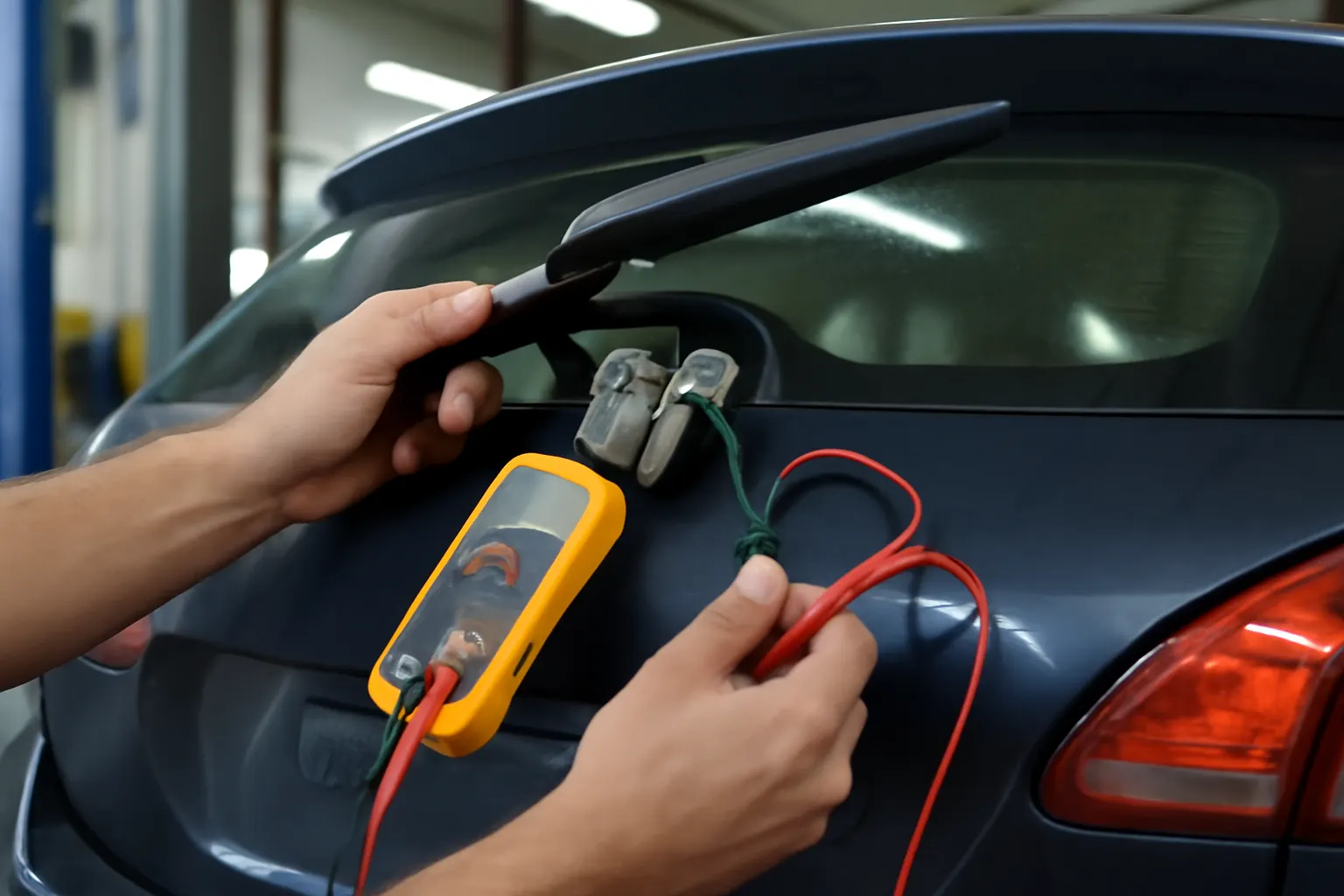
| 3 | Fuse Check | Multimeter or test light | Blown fuse, indicating electrical short/overload |
| 4 | Relay/Switch Test | Multimeter | Faulty relay, bad switch contact |
| 5 | Motor Power Test | Multimeter | No power at motor = wiring/switch issue |
| 6 | Motor Ground Test | Multimeter | Poor ground = intermittent operation |
| 7 | Linkage Movement | Manual manipulation | Binding, seized, or disconnected linkage |
| 8 | Arm/Blade Fitment | None | Loose or stripped splines, improper fit |
| 9 | Connector Corrosion Check | Visual/multimeter | Green/white corrosion, poor continuity |
| 10 | Body Control Module Scan | Scan tool (if applicable) | Stored fault codes, communication errors |
Thoroughly document findings at each step to guide repair or replacement decisions.
Common Rear Wiper System Failure Points
Let’s break down the most frequent rear wiper system failures:
1. Wiper Motor Failure
Symptoms: No movement, intermittent operation, or stalling mid-cycle.
- Causes: Internal brush wear, gear reduction failure, water ingress, or electrical burnout.
- Diagnosis: Check for voltage at the motor connector when the switch is engaged. If voltage is present but the motor does not run, the motor is likely faulty.
2. Seized or Damaged Linkage
Symptoms: Motor runs but wiper arm does not move or moves erratically.
- Causes: Rust, debris, or physical damage to the linkage joints.
- Diagnosis: Disconnect the wiper arm and attempt to move the linkage manually. Resistance or binding indicates mechanical failure.
3. Electrical Issues
Symptoms: No response from wiper system; may coincide with other electrical faults.
- Causes: Blown fuse, faulty relay, corroded connectors, or damaged wiring.
- Diagnosis: Trace power from the fuse box to the motor using a wiring diagram and multimeter.
4. Wiper Arm/Blade Issues
Symptoms: Streaking, skipping, or incomplete sweep.
- Causes: Worn blade, loose arm, stripped splines, or improper installation.
- Diagnosis: Inspect for physical damage, ensure proper fitment, and test with a known-good wiper arm or blade.
Electrical Diagnostics: Testing Fuses, Relays, and Switches
Electrical faults are a common cause of rear wiper failure. Here’s how to systematically test each component:
- Fuses: Locate the rear wiper fuse (refer to owner’s manual). Use a test light or multimeter to check continuity. Replace with correct amperage if blown.
- Relays: Swap the rear wiper relay with a known-good relay of the same type, if possible. Listen for relay click when the switch is engaged.
- Switches: With the ignition and wiper switch on, test for voltage at the switch output terminal. No voltage indicates a faulty switch.
- Wiring: Inspect for chafed, pinched, or broken wires, especially where the harness passes through the tailgate hinge.
On modern vehicles, rear wiper operation may be controlled by the body control module (BCM). If all basic checks pass but the system is still inoperative, a scan tool may be required to check for BCM faults.
Mechanical Diagnostics: Linkage, Arm, and Blade Assessment
Mechanical issues often present as noise, erratic movement, or failure to clear the window. Key points to assess:
- Linkage: Remove the interior trim panel to access the linkage. Lubricate joints and check for free movement.
- Wiper Arm: Remove and inspect the arm for stripped splines or cracks. Confirm it is securely fastened to the motor shaft.
- Blade Condition: Replace blades at least annually or if rubber is cracked, torn, or hardened. Refer to the Wiper Arm and Blade Selection Guide for proper sizing and fitment.
Rear Wiper Motor Removal and Replacement Considerations
If diagnostics point to a failed motor, replacement is often the most practical solution. Key steps include:
Advertisement
- Disconnect Battery: Prevent accidental short circuits.
- Remove Interior Trim: Access the motor assembly (usually via hatch or tailgate panel).
- Disconnect Electrical Connector: Carefully release locking tabs.
- Unbolt Motor: Remove mounting bolts and gently extract the motor.
- Install New Motor: Ensure correct orientation and torque specifications.
- Reconnect Components: Attach the linkage, arm, and blade.
- Test Operation: Verify smooth, complete sweep and proper parking position.
Refer to our Rear Wiper Motor Replacement: Step-by-Step Guide for detailed installation instructions tailored to your vehicle.
Preventative Maintenance to Reduce Future Failures
Routine maintenance is critical to extending rear wiper system life:
- Clean Blade and Arm: Remove debris and road salt regularly.
- Inspect Linkage and Motor: Lubricate pivot points and check for corrosion.
- Replace Blades Annually: Even if not visibly worn, rubber degrades over time.
- Check Electrical Connections: Ensure no corrosion or loose terminals.
- Operate Rear Wiper Monthly: Prevents parts from seizing due to inactivity.
For a comprehensive maintenance plan, visit our Preventative Maintenance: Your Wiper System Checklist.
Sourcing Quality Rear Wiper System Components
When replacement is necessary, sourcing the right parts is essential for safety and fitment. Here’s what to consider:
- OEM Fitment: Choose parts designed for your vehicle’s make, model, and year to guarantee compatibility.
- Material Quality: Select motors and linkages with corrosion-resistant finishes and high-quality seals.
- Warranty and Support: Reputable suppliers offer warranties and technical support for peace of mind.
- Comprehensive Kits: Some suppliers provide complete kits including the motor, arm, blade, and mounting hardware, simplifying installation.
AutoPartEx specializes in OEM and premium aftermarket rear wiper system components, ensuring every part meets or exceeds industry standards.
Ensuring Proper Fitment and Installation
Improper fitment can cause premature failure or reduced wiper performance. Follow these best practices:
- Double-Check Part Numbers: Cross-reference your VIN or consult the manufacturer’s application chart.
- Torque Specifications: Use a torque wrench to avoid overtightening or damaging mounting points.
- Blade Orientation: Confirm the blade parks in the correct position and clears the entire window arc.
- Functional Test: Run the wiper through multiple cycles before reassembling trim panels.
If in doubt, consult a professional technician or reference our detailed Rear Wiper Motor Replacement & Buying Guide | OEM Fitment for Modern Vehicles.
When to Seek Professional Help
While many rear wiper repairs are DIY-friendly, certain situations warrant expert intervention:
- Persistent Electrical Faults: If multiple electrical issues are present or BCM faults are detected.
- Integrated Systems: Vehicles with advanced driver assistance systems or rear cameras may require recalibration after wiper service.
- Heavy Corrosion or Structural Damage: Severe rust or damage to the hatch/tailgate may compromise mounting points.
Certified technicians have the diagnostic tools and expertise to address complex issues and ensure all related systems function correctly.
AutoPartEx: Your Partner in Rear Wiper System Solutions
At AutoPartEx, we understand that a reliable rear wiper system is vital for safety and peace of mind. Our extensive catalog includes OEM fitment motors, arms, and blades for virtually every modern vehicle, backed by technical support and installation resources. Whether you’re tackling a simple blade replacement or a full motor swap, our guides and product expertise help you get the job done right the first time.
Explore our Rear Wiper Motor Replacement & Buying Guide | OEM Fitment for Modern Vehicles for tailored solutions, or consult our Wiper Arm and Blade Selection Guide for component compatibility.
Conclusion: Restore Performance and Safety with Expert Diagnosis
Rear wiper system failures can compromise your vehicle’s safety, especially in rain, snow, or dusty conditions. By following a structured diagnostic process—starting with symptom recognition, progressing through electrical and mechanical checks, and concluding with quality replacement and maintenance—you can restore full function and meet regulatory requirements. Remember, timely intervention prevents minor issues from escalating into costly repairs or safety risks.
For all your rear wiper system needs, trust AutoPartEx’s expertise, comprehensive resources, and premium product selection to keep your rear view clear and your journey safe.
References
Advertisement


