Advertisement
Modern vehicles are marvels of engineering, but at the heart of every advanced system lies something deceptively simple: the wiring harness. If you’re troubleshooting electrical issues, retrofitting accessories, or just seeking the best possible reliability, using OEM (Original Equipment Manufacturer) or high-quality aftermarket harnesses is not just a recommendation—it’s essential. The wiring harness is the backbone of your vehicle’s electronics, connecting everything from safety systems to infotainment. In this article, we’ll uncover why OEM harnesses matter, highlight the risks of subpar replacements, and provide practical guidance for sourcing, diagnosing, and maintaining harnesses for peak performance. To dive deeper into harness types, fitment, and sourcing, explore our Wiring Harness (Misc): The Backbone of Modern Vehicle Electronics category.
The Immediate Answer: Why OEM Harnesses Are Critical
OEM harnesses are engineered to exacting standards for your specific vehicle make and model. They guarantee correct fitment, material quality, and performance, ensuring that all electrical systems—from airbags to engine controls—operate safely and reliably. High-quality aftermarket harnesses that meet or exceed OEM specifications can be suitable alternatives, but generic or low-grade harnesses often introduce hidden risks.
When you use an OEM or trusted aftermarket harness, you’re supporting:
- Electrical reliability: Consistent voltage delivery, signal integrity, and reduced risk of shorts or open circuits.
- Safety: Proper airbag deployment, ABS functionality, and compliance with federal safety standards.
- System compatibility: Seamless integration with engine management, infotainment, sensors, and advanced driver-assist systems.
- Longevity: Harnesses built from durable materials resist heat, vibration, and chemical exposure, minimizing long-term failures.
The Hidden Problem: Risks of Non-OEM or Low-Quality Harnesses
It’s tempting to save money by opting for a cheap, generic wiring harness. However, these alternatives can jeopardize more than just performance—they may compromise safety, fuel efficiency, and even lead to costly repairs down the road.
Common issues with low-quality harnesses include:
- Inferior materials: Substandard insulation and conductors degrade quickly, leading to brittle wires, shorts, or melting.
- Incorrect pinouts: Mismatched connectors or wire colors can result in miswiring, damaging sensitive electronics.
- Insufficient shielding: Poor electromagnetic shielding introduces noise and interference, especially in sensor and communication circuits.
- Lack of testing: Non-OEM harnesses may skip critical quality checks, increasing the likelihood of manufacturing defects.
These risks are not always immediately apparent. A harness might function at first but fail prematurely, causing intermittent faults or catastrophic system failures.
Technical Deep Dive: What Sets OEM Harnesses Apart
Engineering to Exact Specifications
OEM harnesses are designed alongside the vehicle’s architecture. This means every wire gauge, connector, and routing path is optimized for the intended electrical load and environmental conditions. For example, harnesses near the engine compartment use high-temperature insulation and are routed to avoid abrasion and fluid exposure.
Materials and Construction
According to the United States Department of Energy’s Materials Technologies, advanced materials are critical for automotive performance and longevity. OEM harnesses use copper or tinned copper conductors, high-grade insulation, and robust connectors that withstand years of vibration and thermal cycling.
Compliance and Testing
OEM harnesses are subject to rigorous testing and must comply with standards set by organizations such as SAE International and the National Highway Traffic Safety Administration (NHTSA). This ensures:
- Electrical performance: Resistance, insulation, and continuity are verified.
- Mechanical durability: Harnesses are flexed, bent, and vibrated to simulate real-world conditions.
- Safety compliance: Harnesses must not interfere with safety-critical systems or introduce fire hazards (NHTSA Equipment).
Advertisement
Expansion: How Harness Quality Impacts Vehicle Systems
Safety Systems
Modern vehicles rely on complex safety electronics—airbags, ABS, traction control, and more. A single wiring fault can disable these systems or trigger false warnings. The NHTSA emphasizes that all safety equipment, including harnesses, must meet stringent reliability standards. Using non-OEM harnesses can result in:
- Airbags failing to deploy or deploying unexpectedly.
- ABS/ESC systems malfunctioning.
- Inaccurate diagnostic trouble codes, complicating repairs.
Engine and Powertrain Management
Engine control units (ECUs) depend on high-fidelity signals from sensors and actuators throughout the vehicle. Low-quality harnesses introduce resistance, voltage drops, or electrical noise, leading to:
- Poor fuel efficiency (DOE Fuel Efficiency).
- Engine misfires, hesitation, or stalling.
- Failed emissions tests.
Infotainment and Advanced Driver-Assistance Systems (ADAS)
As vehicles add more sensors, cameras, and modules, harness complexity increases. Poor-quality harnesses can cause:
- Intermittent connectivity or total loss of function.
- Glitches in audio, navigation, or driver-assist features.
- Difficulty retrofitting or upgrading components.
The Solution Path: Sourcing and Installing Quality Harnesses
Step 1: Identify Your Harness Needs
Before sourcing a replacement, determine:
- Exact part number: Reference your vehicle’s VIN and service manual.
- System location: Engine, dashboard, chassis, doors, etc.
- Connector types: Match all connectors to avoid miswiring.
- Harness function: Is it for power, data, sensors, or mixed use?
Step 2: Choose OEM or Verified Aftermarket Harnesses
- OEM harnesses: Always fit perfectly and meet all engineering requirements.
- Aftermarket harnesses: Only select those from reputable brands that state compliance with SAE and NHTSA standards.
- Avoid generic or “universal” harnesses for critical systems.
Step 3: Inspect Before Installation
- Check for physical damage: Look for pinched wires, bent pins, or missing seals.
- Verify connector fit: Test each connection for positive engagement.
- Review included documentation: Ensure pinouts and wire colors match your vehicle’s diagrams.
Step 4: Professional Installation and Testing
- Follow OEM routing: Prevents chafing, heat exposure, and interference.
- Secure with proper clips and grommets: Avoids vibration and water ingress.
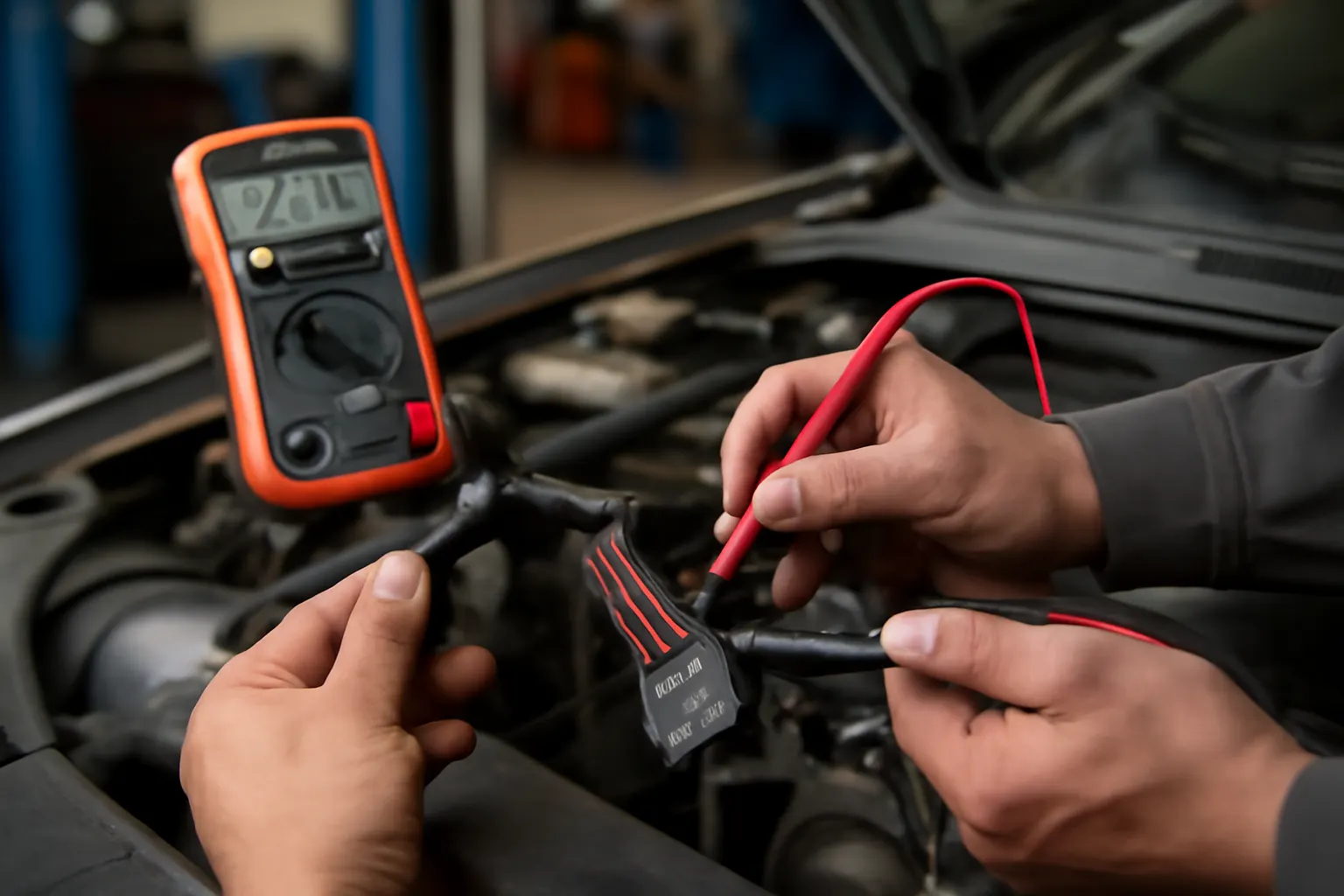
- Test all circuits: Use a multimeter or scan tool to verify continuity and absence of fault codes. For in-depth diagnostic steps, see our Diagnosing Electrical Faults: A Step-by-Step Guide.
Diagnostic Checklist: Wiring Harness Faults
If you suspect a harness issue, use this checklist to pinpoint the problem:
| Symptom | Possible Harness Cause | Diagnostic Step |
|---|---|---|
| Intermittent electrical failure | Broken wire or poor contact | Wiggle test harness while monitoring |
| Blown fuses | Shorted wire | Inspect insulation, check for chafing |
| Warning lights (ABS, airbag, etc) | Open circuit or miswiring | Scan for DTCs, check connector seating |
| No start/no crank | Power supply interruption | Check main harness continuity |
| Module communication errors | Shielding/ground issues | Inspect ground connections, shield paths |
For more on troubleshooting, read Common Causes of Intermittent Electrical Problems.
Harness Materials and Their Impact on Reliability
The choice of materials in a wiring harness isn’t arbitrary. According to the DOE’s Materials Technologies initiative, automotive harnesses are trending toward lighter, more durable materials to improve vehicle efficiency and longevity.
- Conductor material: Copper is standard for its conductivity, but tinned copper resists corrosion in harsh environments.
- Insulation: Modern harnesses use cross-linked polyethylene (XLPE) or similar, which resists heat and chemicals.
- Shielding: Essential for sensor and data lines, shielding prevents interference from ignition or alternator noise.
Low-cost harnesses may cut corners here, using lower-grade copper alloys or PVC insulation prone to cracking.
Advertisement
Fitment and Compatibility: Avoiding Costly Mistakes
One of the most common pitfalls when replacing a wiring harness is incorrect fitment. Even harnesses that look similar may have:
- Different pinouts or connector keys.
- Missing branches for specific options (e.g., heated seats, sunroof).
- Incompatible wire gauges for high-current circuits.
Best practices:
- Always compare the old harness to the new one before installation.
- Use manufacturer diagrams and pinout charts.
- If retrofitting accessories, see our Retrofitting Accessories: Harness Selection and Installation guide.
Maintenance and Inspection: Prolonging Harness Life
Even the best harnesses require care to ensure long-term reliability:
- Inspect connectors for corrosion or bent pins at every service interval.
- Check harness routing for signs of abrasion, pinching, or heat exposure.
- Replace damaged grommets or clips to prevent water ingress and movement.
- Use dielectric grease on exposed terminals to prevent corrosion.
Regular inspection is especially critical in older vehicles or those exposed to harsh climates.
Upgrades and Modifications: When Aftermarket Harnesses Make Sense
While OEM is the gold standard, high-quality aftermarket harnesses are invaluable for:
- Upgrading sound systems or infotainment: Custom harnesses simplify integration.
- Adding accessories: Fog lights, auxiliary power, or towing packages often require harnesses not included from the factory.
- Restorations: For classic vehicles, reproduction harnesses built to OEM specs are often the only option.
Warning: Never splice into critical safety systems with unverified harnesses. Use plug-and-play solutions whenever possible.
Recognizing Harness-Related Recalls and Safety Bulletins
Harness defects are a common cause of manufacturer recalls. The NHTSA Recalls Database lists numerous cases where improper harness routing, insufficient insulation, or connector failures have led to fire risks or disabled safety features.
If you receive a recall notice:
- Schedule repairs promptly at an authorized dealer.
- Do not attempt DIY repairs on recalled harnesses—OEM replacement is required for safety and compliance.
Buying Guidance: What to Look for in a Replacement Harness
When sourcing a replacement harness, ask these questions:
- Is it OEM or made by a reputable aftermarket brand?
- Does it come with a warranty and compliance documentation?
- Are all connectors, terminals, and branches present and correct?
- Is the insulation material rated for your vehicle’s environment (engine bay, interior, chassis)?
- Does the supplier provide technical support or installation guidance?
AutoPartEx vets all harness listings for material quality, connector integrity, and fitment accuracy. For a full selection, visit our Wiring Harness (Misc): The Backbone of Modern Vehicle Electronics category.
Expert Action: Ensuring Long-Term Reliability
To safeguard your investment and vehicle safety:
- Always use OEM or verified high-quality aftermarket harnesses for critical systems.
- Document all harness replacements with part numbers and diagrams for future reference.
- Perform post-installation diagnostics using a scan tool or multimeter.
- Schedule periodic inspections, especially after major repairs or in high-mileage vehicles.
If you’re unsure about harness compatibility, installation, or diagnostics, consult a professional technician or reach out to the AutoPartEx technical team for guidance.
AutoPartEx: Your Partner in Automotive Wiring Solutions
At AutoPartEx, we understand that the right wiring harness is the foundation of reliable vehicle performance. Our curated inventory covers OEM and high-quality aftermarket solutions for virtually every application, from daily drivers to specialty builds. We back our listings with technical documentation and fitment support, ensuring you get the right harness the first time.
Whether you’re replacing a damaged harness, upgrading your system, or troubleshooting an elusive electrical fault, AutoPartEx provides the expertise and product selection you need. For manufacturer-specific harnesses, explore our Acura and AMC parts catalogs.
References
Advertisement