Advertisement
The crank pulley, or harmonic balancer, is a critical yet often overlooked engine component. If neglected, a failing crank pulley can unleash catastrophic engine damage—sometimes in minutes, sometimes over months—resulting in repair bills that can easily run into the thousands. The harmonic balancer doesn't just drive your serpentine belt; it protects your crankshaft, engine bearings, and vital accessories from destructive vibration. Timely inspection and replacement of this unsung hero is essential for engine longevity, fuel efficiency, and safety. If you want to understand why, and how to prevent disaster, read on.
If you’re new to harmonic balancers or want a broader overview, start with our Harmonic Balancer (Crank Pulley): The Unsung Hero of Engine Longevity category page. For now, let’s dive into why ignoring your crank pulley is a risk you can’t afford.
The Immediate Danger: What Happens When a Crank Pulley Fails?
A failing crank pulley doesn’t just make noise or throw a belt. When the harmonic balancer’s rubber isolator deteriorates or the pulley wobbles, it can:
- Cause severe engine vibrations that damage the crankshaft
- Lead to accessory drive failure (alternator, water pump, power steering, AC compressor)
- Trigger timing issues, misfires, or even catastrophic engine failure
The crank pulley absorbs and dampens torsional vibrations from the crankshaft. Without it, those vibrations are transferred directly into the engine and accessory systems, multiplying the risk of failure across multiple systems.
The Hidden Problem: Why Many Drivers Miss the Warning Signs
Unlike a leaking radiator or a screeching brake, a failing harmonic balancer rarely triggers a warning light. Many drivers miss the subtle symptoms:
- Unusual engine vibrations, especially at idle or certain RPMs
- Squealing or flapping accessory drive belts
- Intermittent charging, power steering, or AC issues
- Visible wobble or misalignment of the crank pulley
Because these symptoms often overlap with other engine issues, mechanics sometimes misdiagnose the underlying cause. This is especially common if the rubber isolator within the balancer fails internally, with no obvious external clues.
How a Harmonic Balancer Works: The Technical Core
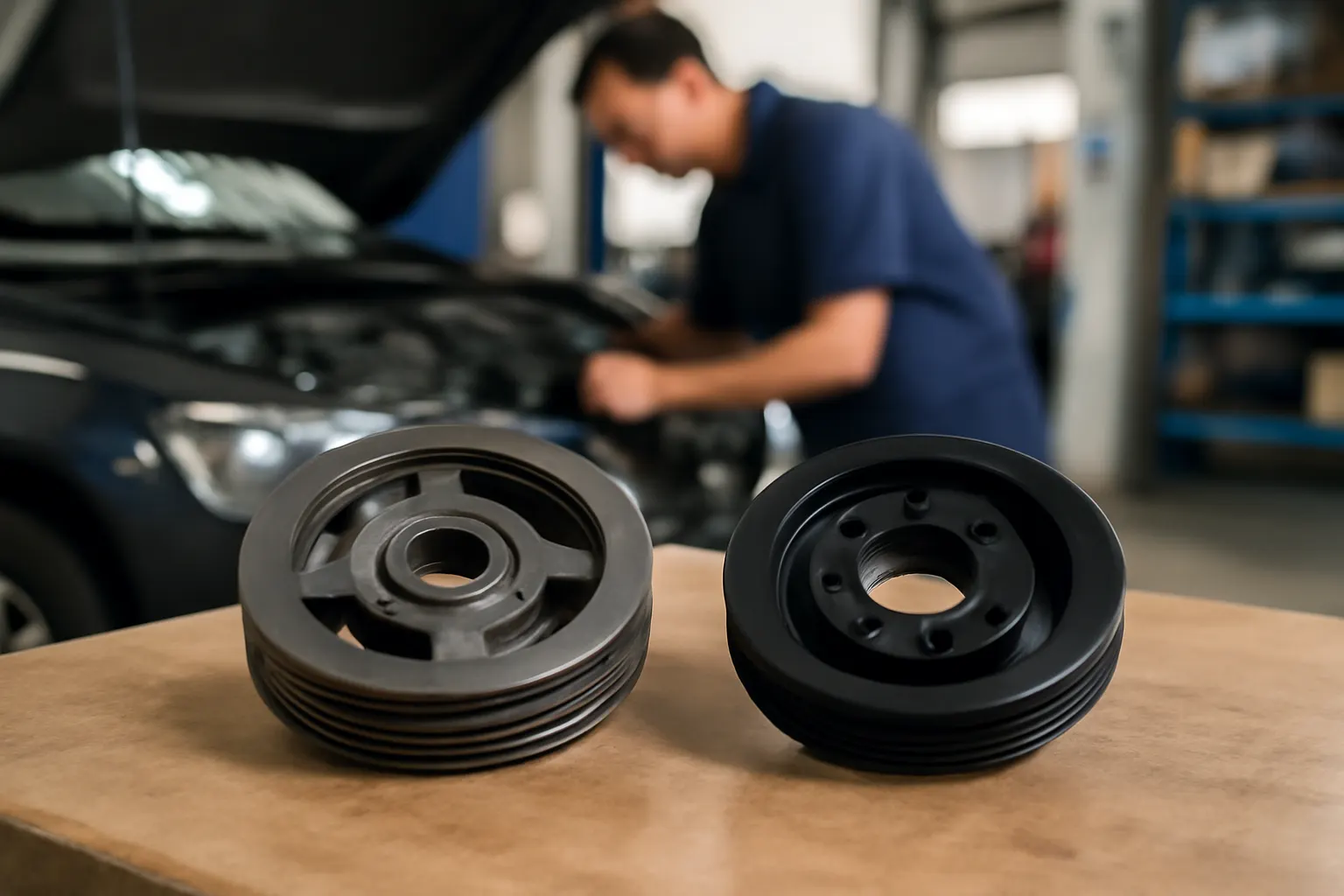
The harmonic balancer is a multi-part assembly mounted to the front of the crankshaft. Its main elements:
- Central hub: Bolts directly to the crankshaft snout.
- Rubber isolator: Bonded between the inner hub and outer ring, it absorbs vibration.
- Outer ring (pulley): Drives the accessory belt.
When the crankshaft twists from combustion and inertia, the balancer’s rubber absorbs these forces, preventing them from resonating through the engine. Without this damping effect, vibrations can amplify, causing metal fatigue and premature wear on the crankshaft, bearings, and timing components.
The Ripple Effect: Systemic Damage from a Bad Crank Pulley
A worn or failed harmonic balancer sets off a chain reaction of mechanical issues:
- Crankshaft Damage: Excessive vibration can crack the crankshaft or damage the keyway, requiring a full engine rebuild.
- Bearing Wear: Vibrations are transmitted to main and rod bearings, accelerating wear and risking catastrophic bearing failure.
- Accessory Failure: The serpentine or V-belt may slip, jump, or break, leading to loss of power steering, alternator charging, water pump, or AC function.
- Timing Problems: On engines where the timing trigger is integrated with the pulley, a failing balancer can throw off ignition or cam timing, causing misfires or engine stalling.
- Safety Hazards: Loss of power steering or alternator can compromise vehicle control and lighting, creating dangerous driving conditions.
Advertisement
These failures are rarely isolated; once the balancer fails, secondary damage can escalate quickly, multiplying repair costs.
Real-World Examples: What Owners Experience
Consider these common scenarios:
-
Case 1: The Subtle Shake A driver notices a minor vibration at idle. Over weeks, the vibration worsens, and the engine develops a misfire. Inspection reveals the balancer’s rubber has split, allowing the outer ring to slip and throw off timing.
-
Case 2: The Sudden Failure A high-mileage sedan suddenly loses power steering and overheats. The crank pulley has separated, causing the serpentine belt to fly off. The engine overheats, warping the cylinder head and leading to a $2,000+ repair.
-
Case 3: The Charging Mystery An SUV’s battery light flickers intermittently. The alternator checks out, but the pulley is wobbling, causing belt slip and inconsistent alternator output. Replacing the balancer restores reliable charging.
Each of these cases illustrates how a neglected crank pulley can cause multiple, expensive problems—often with little warning.
Why Modern Engines Are Especially Vulnerable
Advances in engine technology have increased reliance on the harmonic balancer:
- Lighter-weight engine materials (see Materials Technologies) make modern engines more sensitive to vibration.
- Integrated serpentine belt systems mean a single pulley drives all major accessories—if it fails, multiple systems go down at once.
- Many engines use the balancer as a timing trigger for crankshaft position sensors; a slipping pulley can cause engine management errors, misfires, or no-start conditions.
Ignoring the crank pulley on a modern engine risks not just mechanical damage, but electronic and drivability issues as well.
Diagnosing a Failing Harmonic Balancer: Checklist
Early detection is key. Use this step-by-step checklist to spot a failing crank pulley before disaster strikes:
Visual Inspection
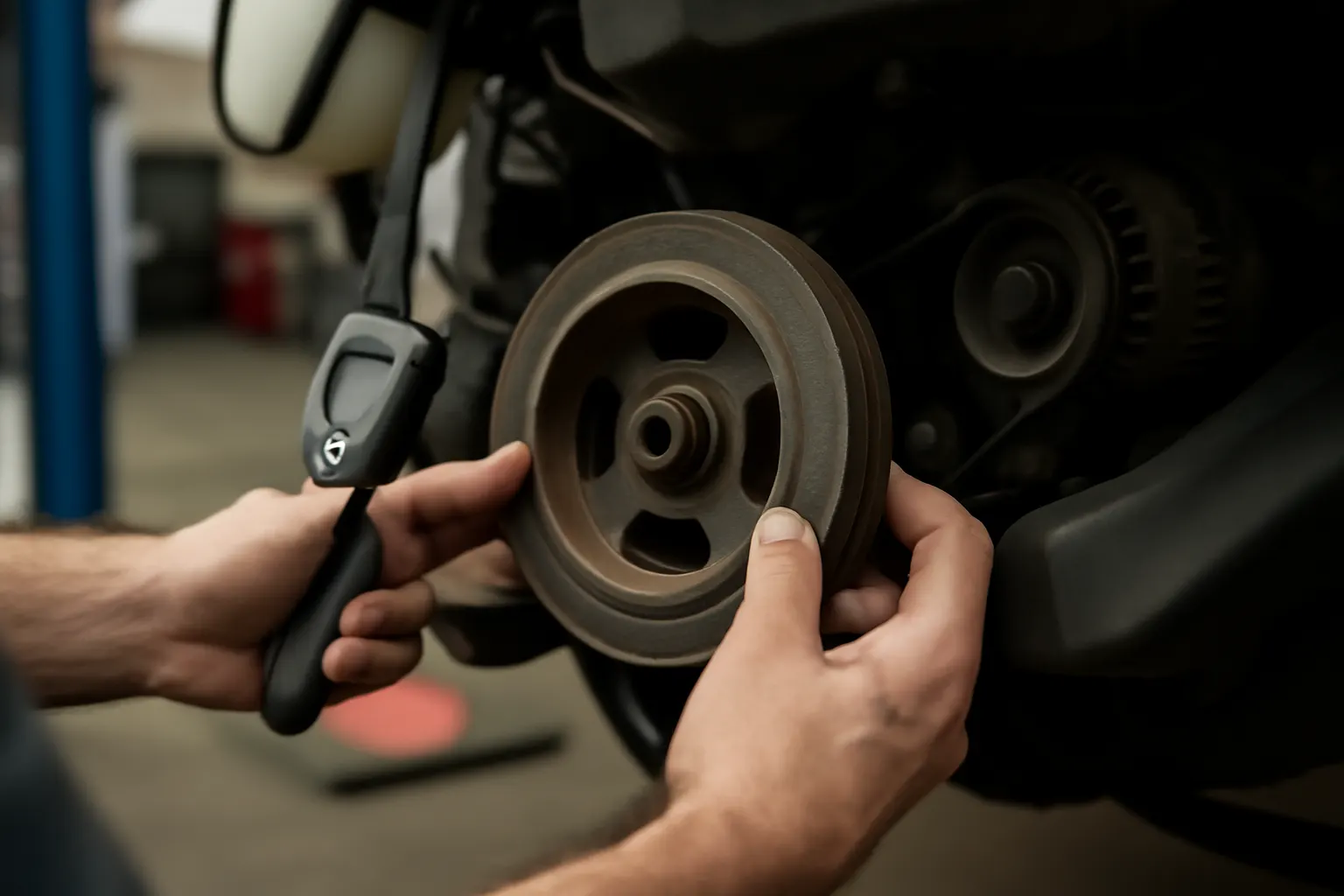
- Inspect the balancer for cracks, missing chunks, or separation between the inner hub and outer ring.
- Check for wobble while the engine is running—any visible oscillation is a warning sign.
- Look for belt misalignment, excessive belt wear, or “walking” belts.
Auditory Clues
- Listen for rattling, knocking, or squealing noises from the front of the engine.
- Note any change in pitch or frequency with engine RPM.
Functional Symptoms
- Watch for intermittent loss of power steering, alternator charging, or AC function.
- Be alert to new or worsening engine vibrations, especially at idle or under load.
Professional Diagnosis
- Mechanics may use a stethoscope or vibration analyzer to pinpoint harmonic balancer issues.
- For engines with timing triggers on the crank pulley, use a scan tool to check for crankshaft position sensor errors.
If you find any of these issues, address them promptly—continued driving risks escalating damage.
Maintenance and Replacement: When and How to Act
Recommended Service Intervals
Most manufacturers do not specify a replacement interval for harmonic balancers, but they typically last 80,000-150,000 miles. However, factors like oil leaks, age, and high engine loads can accelerate failure.
When to Replace
- If there’s visible damage, wobble, or separation.
- If you experience persistent vibration after ruling out other causes.
- Whenever you replace the serpentine belt or perform major front-engine service, inspect the balancer.
Replacement Tips
- Always use a high-quality OEM or performance-rated balancer; avoid low-cost, unbranded parts.
- Replace the crankshaft bolt if the manufacturer recommends it.
- Torque the balancer to specification—improper installation can cause premature failure.
- When in doubt, consult a professional or refer to the SAE Standards for installation best practices.
Advertisement
Choosing the Right Harmonic Balancer: OEM vs. Performance
Not all balancers are created equal. Choosing the right replacement is crucial for engine health:
- OEM Balancers: Designed for stock performance and longevity. Use these for daily drivers and standard vehicles.
- Performance Balancers: Upgraded materials and designs handle higher RPMs and power loads. Essential for modified engines, racing, or heavy towing.
For a deeper dive into your options, read OEM vs. Performance Harmonic Balancers: Which Is Right for You?.
Installation Best Practices: Avoiding Common Pitfalls
Installing a harmonic balancer is not a trivial DIY task. Follow these guidelines for best results:
-
Preparation
- Disconnect the battery (especially on engines with crankshaft position sensors).
- Remove the accessory belt(s) and any obstructing components.
-
Removal
- Use a proper balancer puller tool—never pry or hammer the pulley.
- Inspect the crankshaft snout for wear or scoring.
-
Installation
- Lubricate the crankshaft snout lightly (if specified by the manufacturer).
- Use the correct installer tool to press the balancer onto the shaft.
- Torque the crankshaft bolt to factory spec using a calibrated torque wrench.
-
Post-Installation
- Double-check belt alignment and tension.
- Start the engine and observe for any wobble, noise, or leaks.
A rushed or improper install can destroy a new balancer—or worse, damage your crankshaft.
Preventive Maintenance: Keeping Your Engine Protected
Routine checks go a long way toward preventing unexpected failure:
- Inspect the harmonic balancer during every oil change or major service.
- Address oil leaks promptly—oil degrades the balancer’s rubber isolator.
- Replace accessory belts at manufacturer intervals, and check the balancer at the same time.
- Listen for any new noises or vibrations and investigate immediately.
Integrate harmonic balancer inspection into your regular Accessory Drive System Maintenance routine for maximum protection.
The Cost of Neglect: Real-World Repair Scenarios
Ignoring a failing harmonic balancer can turn a $100–$400 part into a $2,000–$6,000 engine repair. Here’s how the costs break down:
- Balancer replacement (parts and labor): $200–$600
- Accessory drive repair (if belt fails): $300–$1,000
- Crankshaft or bearing damage (engine teardown): $2,000–$6,000+
- Towing, diagnostic, and downtime: $200–$500
Preventive replacement is always cheaper than waiting for failure. Insurance rarely covers preventable mechanical breakdowns, so proactive maintenance is key.
Harmonic Balancer Recalls and Safety
Harmonic balancer failures have triggered recalls across multiple manufacturers, often due to safety risks from sudden loss of power steering or alternator function. The National Highway Traffic Safety Administration monitors equipment safety and recalls. If you suspect a defect or your vehicle is under recall, check your VIN and act immediately.
AutoPartEx: Your Partner in Engine Longevity
At AutoPartEx, we understand the critical role of the harmonic balancer in engine health and safety. Our curated inventory includes only high-quality, tested crank pulleys and balancers for every major manufacturer, from Acura to AMC. Our technical guides, such as Diagnosing Engine Vibrations: Harmonic Balancer Edition, empower you to make informed, confident repair decisions.
Our experts can help you:
- Identify the correct part for your engine
- Understand fitment and installation requirements
- Source OE and performance balancers for stock or modified vehicles
Don’t leave your engine’s future to chance—trust AutoPartEx for the best in parts, expertise, and support.
Take Action: Protect Your Engine Now
If you’ve noticed any symptoms of balancer wear—vibration, noise, belt issues—don’t wait. Inspect your crank pulley today. If in doubt, consult a professional mechanic or reach out to AutoPartEx for guidance. Timely replacement of your harmonic balancer is one of the most cost-effective ways to safeguard your engine, your wallet, and your peace of mind.
References
- Fuel Efficiency – United States Department of Energy
- Vehicle Safety and Equipment – National Highway Traffic Safety Administration
- Materials Technologies – United States Department of Energy
Advertisement