Advertisement
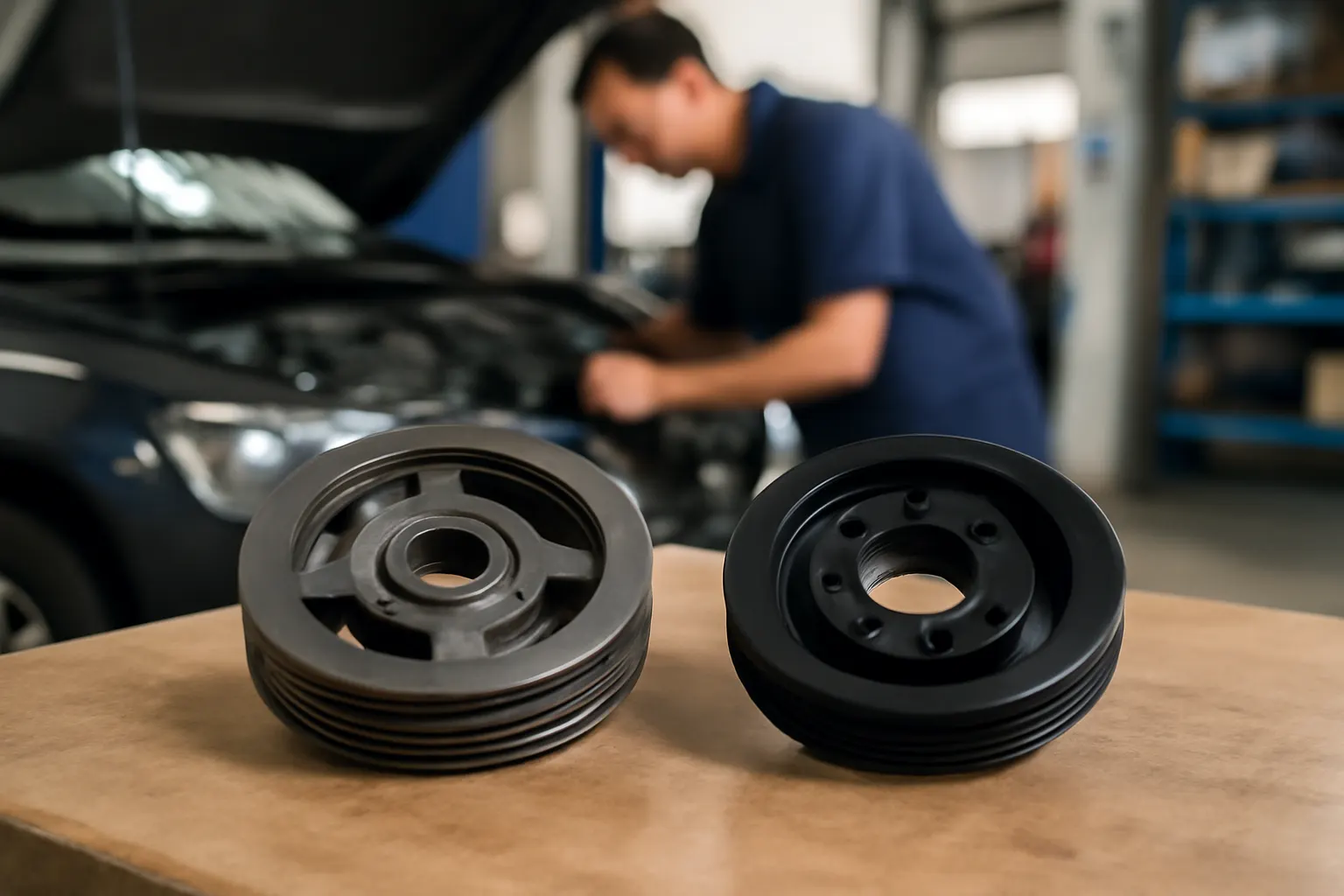
The harmonic balancer, also known as the crank pulley, is one of the most overlooked yet vital components for engine longevity. Ignoring signs of wear or failure can lead to engine vibrations, accessory drive failures, catastrophic crankshaft damage, and ultimately, complete engine destruction. If you want to avoid thousands in repairs, understanding the risks and best practices for maintaining your crank pulley is essential. This article unpacks the hidden dangers, technical mechanics, and proven solutions—so you can protect your investment and keep your vehicle running strong. For a broader overview of this critical part, see our Harmonic Balancer (Crank Pulley): The Unsung Hero of Engine Longevity category page.
The Immediate Answer: Why You Can’t Ignore Your Crank Pulley
If your harmonic balancer (crank pulley) fails, you risk catastrophic engine damage. This component isn’t just a pulley—it dampens crankshaft vibrations and keeps your engine’s rotating assembly in harmony. Ignoring a failing balancer can lead to:
- Severe engine vibrations
- Accessory belt derailment
- Crankshaft damage or breakage
- Loss of critical systems (power steering, alternator, AC)
- Engine timing issues
Timely inspection and replacement are non-negotiable. Even a small crack or delamination in the balancer’s rubber isolator can spell disaster. The cost of a new balancer is trivial compared to engine replacement or major repairs.
The Hidden Problem: Harmonic Balancer Failure Is Often Silent
Most drivers never see their harmonic balancer, and symptoms of failure often develop slowly or are mistaken for unrelated issues. Unlike a snapped belt or a seized alternator, a failing crank pulley can go undetected until it triggers a chain reaction of failures. By the time you hear knocking, feel harsh vibrations, or see the check engine light, significant damage may have already occurred.
Why Is Harmonic Balancer Failure So Overlooked?
- It’s buried at the front of the engine, often behind covers and accessories.
- Early symptoms are subtle: slight vibrations, minor belt misalignment, or faint noises.
- Many technicians focus on belts or accessories, not the balancer itself.
- Some replacement intervals are not listed in owner’s manuals, leaving it off standard maintenance checklists.
The Technical Deep Dive: What Does a Crank Pulley (Harmonic Balancer) Actually Do?
Understanding the balancer’s role is key to appreciating the risks of neglect. The crank pulley is a dual-purpose component:
- Accessory Drive Pulley: It drives the serpentine or V-belts that power your alternator, power steering pump, AC compressor, and more.
- Harmonic Dampener: It absorbs and dissipates torsional vibrations generated by the crankshaft as it spins and fires each cylinder.
Without a functioning harmonic balancer, the crankshaft is exposed to unmitigated vibration. Over time, these vibrations can cause:
- Crankshaft fatigue and even fracture
- Loosening of main bearings and fasteners
- Misalignment or failure of timing components
- Damage to accessory drive components
For more on how vibrations affect engine longevity, check our guide: Diagnosing Engine Vibrations: Harmonic Balancer Edition.
How a Worn or Damaged Crank Pulley Wrecks Your Engine
Let’s break down the progressive failure modes when you ignore a failing balancer:
1. Rubber Isolator Deterioration
Most balancers use a rubber ring to isolate the outer mass from the inner hub. Over time, heat, oil, and age cause this rubber to crack, harden, or delaminate. As the isolator fails:
- The dampening effect is lost.
- The outer ring may shift or wobble, throwing off belt alignment.
- The balancer can separate entirely, causing immediate accessory and engine failure.
2. Metal Fatigue and Cracks
If the balancer’s metal components develop cracks (common with age or subpar materials), the structural integrity is compromised. This can lead to:
- Sudden loss of the pulley section
- Severe imbalance in the rotating assembly
- Catastrophic crankshaft failure
Advertisement
3. Belt and Accessory System Failure
A wobbling or misaligned balancer quickly destroys accessory belts. This leads to:
- Loss of alternator charging (battery drain, stalling)
- Loss of power steering (hard steering, safety risk)
- Loss of air conditioning
- Overheating if water pump is belt-driven
4. Engine Timing Disruption
On some engines, the balancer is used as a timing reference for the crankshaft position sensor. If it slips or shifts, you can experience:
- Engine misfires
- Poor fuel economy
- Difficulty starting or stalling
For more on how balancer issues can affect fuel efficiency and emissions, see the United States Department of Energy’s Fuel Efficiency resource.
Real-World Signs of a Failing Harmonic Balancer
Spotting a failing crank pulley early can save your engine and wallet. Here’s what to look for:
- Visible cracks or separation in the rubber isolator
- Wobbling or misalignment of the pulley when the engine is running
- Unusual engine vibrations, especially at idle
- Squealing or thrown belts
- Knocking or rattling noises from the front of the engine
- Accessory failures (alternator, power steering, AC) with no other obvious cause
If you notice any of these symptoms, inspect the balancer immediately and replace as needed.
Harmonic Balancer Failure Checklist
Use this checklist to quickly assess balancer health during routine maintenance:
| Checkpoint | What to Look For | Action Required |
|---|---|---|
| Rubber Isolator | Cracks, hardening, separation | Replace balancer |
| Pulley Alignment | Wobble, misalignment, visible runout | Inspect, replace if faulty |
| Unusual Noises | Rattling, knocking, squealing | Diagnose source |
| Belt Condition | Fraying, shredding, frequent replacement | Check pulley alignment |
| Accessory Function | Loss of charge, steering, or AC | Inspect entire drive path |
| Engine Vibration | New or worsening vibration at any RPM | Inspect balancer, mounts |
If you check two or more items, immediate replacement is recommended.
The Cost of Ignoring a Failing Crank Pulley
The financial impact of neglecting your crank pulley can be staggering:
- Balancer replacement: $50–$400 (part), $100–$300 (labor)
- Accessory belt replacement: $30–$100 (part), $50–$150 (labor)
- Crankshaft repair/replacement: $1,500–$4,000+
- Engine replacement: $3,000–$10,000+
A $200 balancer can prevent a $5,000 engine overhaul. The math is clear: proactive maintenance pays.
Diagnosing Harmonic Balancer Issues: DIY and Professional Methods
Early diagnosis is critical. Here’s how to check your balancer at home and what professionals do:
DIY Inspection Steps
- Visual Check: With the engine off, inspect the balancer for cracks, rubber deterioration, or separation.
- Wobble Test: With the engine idling, observe the balancer. Any visible wobble or runout means replacement is needed.
- Noise Diagnosis: Listen for rattles, knocks, or squeals from the front of the engine.
- Belt Tracking: Check for belts slipping off or running crooked.
Professional Diagnostic Tools
- Dial Indicator: Measures runout or wobble to thousandths of an inch.
- Stethoscope: Pinpoints internal noises.
- Timing Light: Checks for timing mark drift (indicates slippage).
- Scan Tool: Reads crankshaft position sensor data for errors or misfires.
For a deeper dive into accessory drive system diagnostics, visit our Accessory Drive System Maintenance guide.
Harmonic Balancer Replacement: What You Need to Know
If you’ve diagnosed a bad balancer, here’s what’s involved in replacement:
Key Steps in Replacement
- Disconnect battery for safety.
- Remove accessory belts and any obstructing components (fans, shrouds, etc.).
- Loosen balancer bolt (often requires a heavy-duty impact or breaker bar).
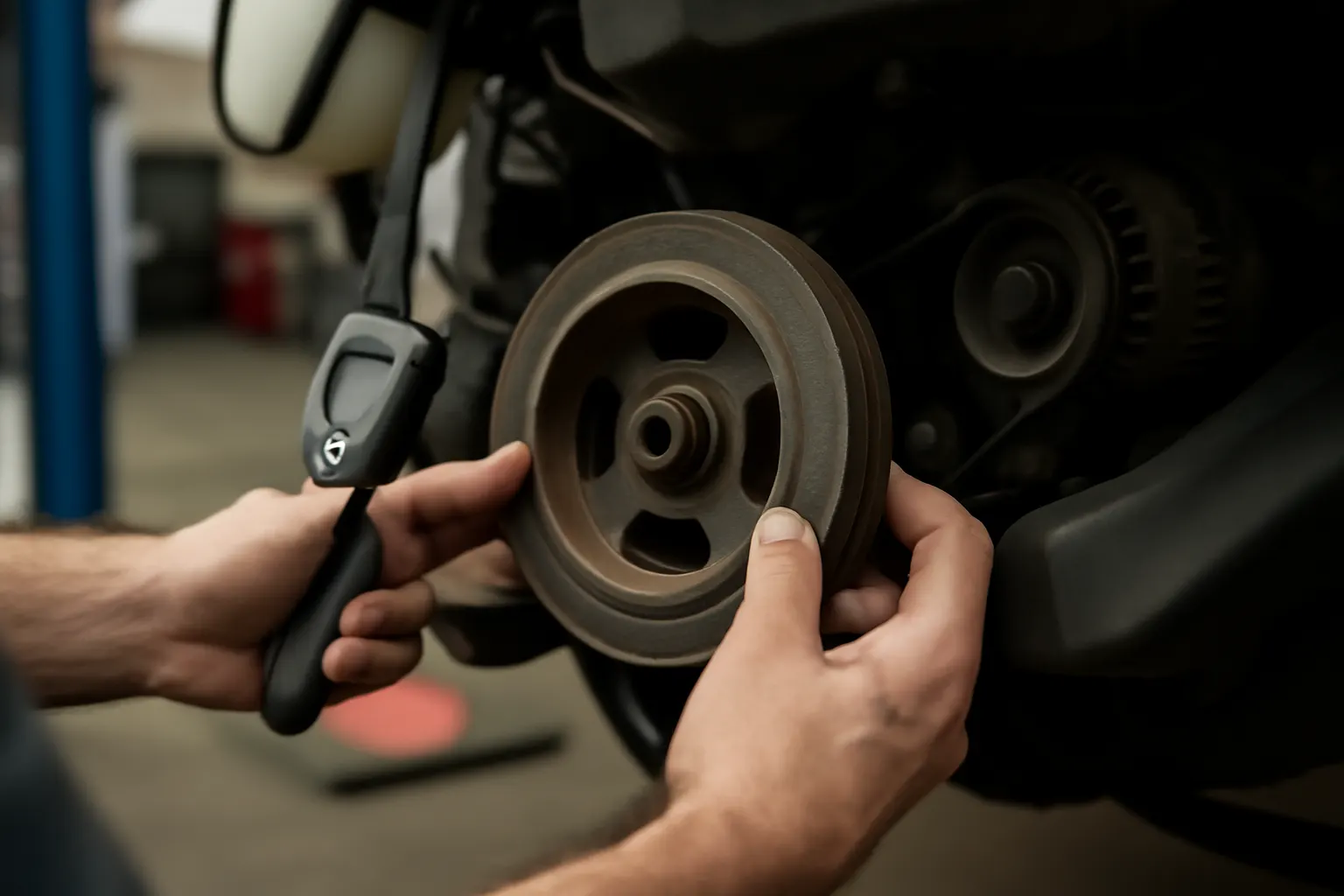
- Use a balancer puller tool to remove the balancer without damaging the crankshaft.
- Clean crank snout and inspect for wear or scoring.
- Install new balancer using proper tools—never hammer it into place.
- Torque to spec using manufacturer guidelines.
- Reinstall belts and accessories, check alignment.
- Start engine and check for vibration, noise, and proper belt tracking.
Advertisement
Tips for a Successful Installation
- Always use a new balancer bolt if required by your manufacturer.
- Apply a small amount of anti-seize to the crank snout (if specified).
- Double-check torque specs—over- or under-tightening can cause immediate failure.
- Replace belts if they show any signs of wear or damage.
Choosing the Right Replacement: OEM vs. Performance Balancers
Not all balancers are created equal. Here’s how to select the right one:
- OEM Balancers: Direct replacement, matches original specs. Best for stock engines and daily drivers.
- Performance Balancers: Upgraded materials and design, handle higher RPM and power. Required for modified or high-performance engines.
For a comprehensive comparison, see OEM vs. Performance Harmonic Balancers: Which Is Right for You?.
Material and Construction Considerations
The United States Department of Energy highlights the importance of advanced materials in automotive components for improved durability and performance Materials Technologies. Look for balancers with:
- High-quality elastomer (rubber) for vibration dampening
- Steel or forged aluminum construction for strength
- SFI certification for performance/racing use
Preventative Maintenance: Keeping Your Harmonic Balancer Healthy
Don’t wait for failure. Proactive maintenance saves money and stress:
- Inspect the balancer every 30,000–50,000 miles or at every major service.
- Check after any major engine work (timing belt/chain, front seal, etc.).
- Replace at the first sign of wear—don’t risk waiting until failure.
- Keep oil leaks in check—oil degrades rubber isolators quickly.
- Replace belts and tensioners as a set to ensure proper alignment and tension.
The Safety and Efficiency Connection
A healthy crank pulley is essential not just for engine longevity, but also for safety and efficiency. The National Highway Traffic Safety Administration (NHTSA) lists engine accessory and pulley failures among common causes for vehicle recalls and safety issues Vehicle Safety and Equipment. A failed balancer can:
- Cause sudden loss of power steering, creating a safety hazard
- Lead to alternator failure and electrical loss, risking breakdowns
- Increase engine vibration, which can affect driver comfort and control
- Reduce fuel efficiency by causing the engine to work harder
Regular inspection and timely replacement are not just good maintenance—they’re critical for safe, efficient operation.
Sourcing Quality Harmonic Balancers: What to Look For
Not all replacement balancers are up to the task. Here’s how to shop smart:
- Buy from reputable suppliers who specialize in automotive parts.
- Check for fitment: Confirm the part number matches your engine and model.
- Ask about materials: High-grade rubber and steel last longer and dampen better.
- Look for certifications: SFI or OEM-equivalent standards ensure reliability.
- Read reviews: See what other owners and technicians say about longevity and installation.
AutoPartEx curates a wide range of harmonic balancers for all major manufacturers, including Acura, AMC, and Alfa. Our listings include detailed fitment data, installation resources, and technical support to ensure you get the right part the first time.
When to Seek Professional Help
While DIY inspection and replacement are possible for skilled enthusiasts, there are times to call in a professional:
- If you don’t have the correct puller or torque tools
- If the balancer is seized or the crank snout is damaged
- If you suspect crankshaft or timing issues
- If your engine is under warranty or has complex accessory drives
A qualified technician can diagnose and replace the balancer, check for related damage, and ensure your engine is protected.
AutoPartEx: Your Partner in Engine Longevity
At AutoPartEx, we understand that a healthy harmonic balancer is the foundation of engine longevity and performance. Our technical resources, curated parts catalog, and expert support make it easy to find, diagnose, and replace crank pulleys for virtually any vehicle. Whether you’re a DIYer or a professional, we’re here to help you avoid catastrophic failures and keep your engine running smoothly for years to come.
For more in-depth information about harmonic balancers, visit our Harmonic Balancer (Crank Pulley): The Unsung Hero of Engine Longevity category page.
References
Advertisement