Advertisement
When it comes to maximizing engine longevity and performance, few components are as critical—yet as overlooked—as the harmonic balancer, also known as the crank pulley. If you’re deciding between an OEM (Original Equipment Manufacturer) and a performance harmonic balancer, the right choice depends on your driving style, vehicle modifications, and long-term goals. This guide delivers a technical, side-by-side comparison, including SFI certification, material construction, and practical buying advice. For an in-depth primer on this crucial part, see our Harmonic Balancer (Crank Pulley): The Unsung Hero of Engine Longevity category overview.
Why the Harmonic Balancer Matters—Right Now
The harmonic balancer is not just another pulley; it’s the first line of defense against destructive crankshaft vibrations. Whether you’re driving a stock commuter or a high-horsepower build, a failed or inadequate balancer can cause catastrophic engine damage, costly downtime, and even safety hazards. The choice between OEM and performance (aftermarket) options directly impacts reliability, performance, and engine lifespan.
The Hidden Problem: One Size Does Not Fit All
Most drivers (and even some technicians) assume any balancer that fits the crank snout will do the job. This is a risky misconception. OEM harmonic balancers are engineered for factory engine outputs and typical driving conditions. If you increase horsepower, change engine RPM limits, or add forced induction, the original balancer’s damping capability may be overwhelmed. Conversely, installing a high-end performance balancer on a stock engine could be unnecessary, costly, and even affect accessory drive alignment or efficiency.
Understanding OEM Harmonic Balancers
Engineering and Materials
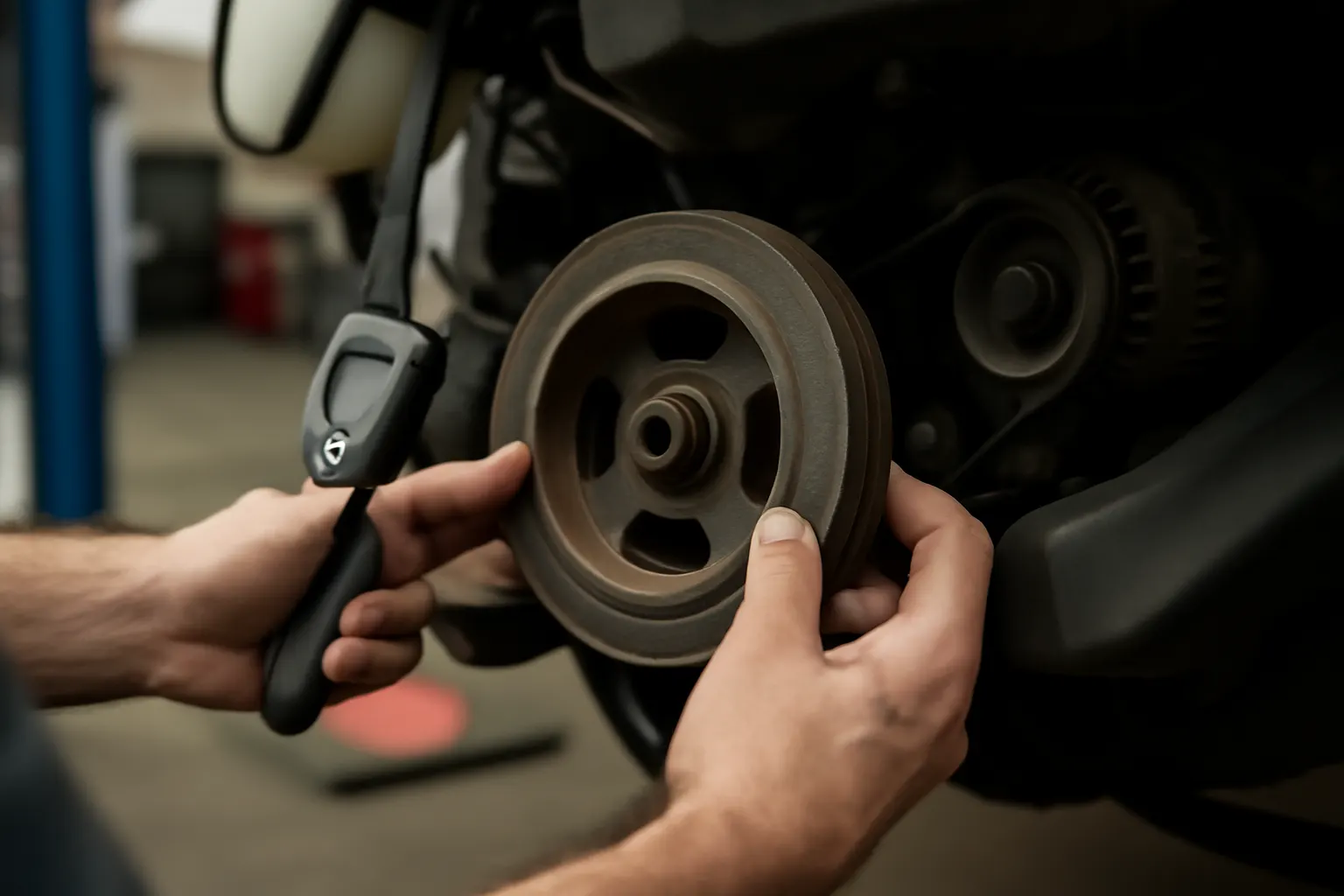
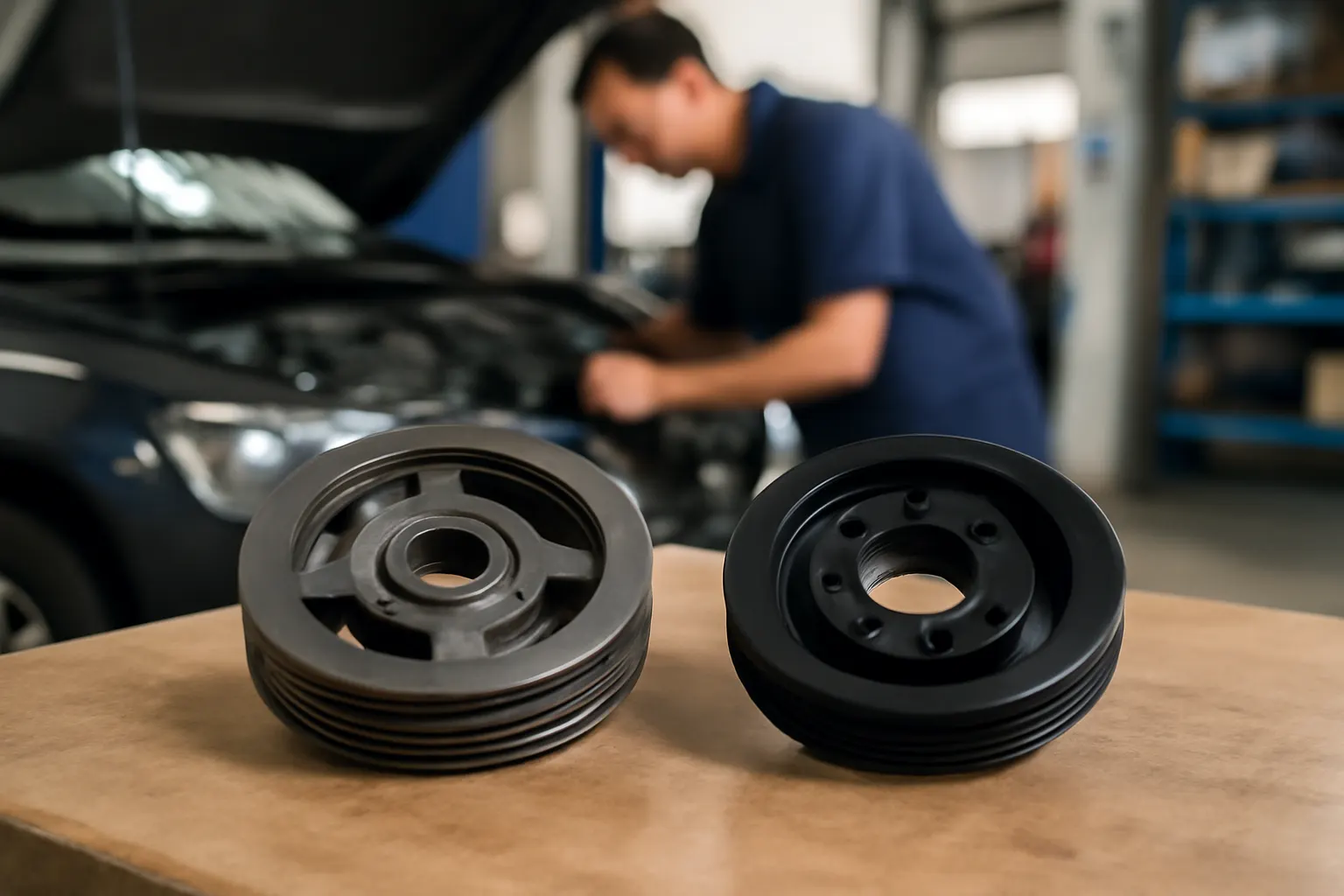
OEM harmonic balancers are designed by vehicle manufacturers to meet the specific needs of a stock engine. They are typically constructed from cast iron or steel, with a bonded rubber isolator sandwiched between the inner hub (attached to the crankshaft) and the outer inertia ring (which absorbs vibration). This configuration is optimized for the engine’s expected power output, RPM range, and accessory loads.
Pros and Cons
Advantages:
- Reliability: OEM balancers are tested to meet manufacturer durability standards.
- Fitment: Guaranteed to fit and align with factory accessory drives (alternator, AC compressor, power steering).
- Cost: Generally more affordable than performance options.
Limitations:
- Vibration Damping Range: Designed for stock power and RPM. Limited effectiveness if power is increased.
- Material Fatigue: Rubber isolators degrade over time, especially with heat and oil exposure.
- No SFI Certification: Not validated for high-RPM racing environments.
Performance Harmonic Balancers: What Sets Them Apart?
Materials and Construction
Performance balancers (also called “aftermarket” or “race” balancers) use advanced materials and engineering to handle high-stress conditions:
-
Material Upgrades: Forged steel, billet aluminum, or even high-strength composites for reduced weight and increased durability.
-
Elastomer or Fluid Damping: Some use improved synthetic elastomers; others use viscous fluid (e.g., ATI Super Damper) for superior vibration absorption across a broader RPM range.
-
Precision Machining: Tighter tolerances for improved balance and longevity.
SFI Certification: What It Means
SFI Foundation, Inc. (SFI) is an independent organization that certifies racing and high-performance automotive equipment. SFI 18.1 is the standard for harmonic balancers used in high-RPM and motorsport applications. Certification requires the balancer to withstand extreme RPMs and stress without failure—a crucial safety factor for racing or heavily modified engines.
Pros and Cons
Advantages:
- Broader Damping Range: Designed for engines with increased horsepower, higher RPM, and forced induction.
- Safety: SFI certification ensures the balancer won’t fragment at high speeds, protecting both driver and engine.
- Longevity: Advanced materials and construction resist fatigue and degradation.
Limitations:
- Cost: Significantly more expensive than OEM units.
- Fitment Issues: Some require custom pulleys or spacers to align with factory accessory drives.
- Overkill for Stock Engines: May not provide tangible benefits for unmodified vehicles.
The Technical Differences: A Closer Look
Material Science in Balancer Design
The choice of material directly impacts the balancer’s effectiveness and lifespan. According to the U.S. Department of Energy’s Materials Technologies, advanced steel alloys and composites are increasingly used to reduce weight and improve strength in critical engine components. Performance balancers often leverage these materials to resist cracking, deformation, and fatigue at high RPMs—conditions where OEM cast iron may fail.
Advertisement
Damping Technology: Elastomer vs. Fluid
- OEM: Usually employ a bonded rubber isolator. Over time, this rubber can harden, crack, or delaminate, reducing damping ability and eventually leading to balancer failure.
- Performance: May use high-durometer synthetic elastomers, which resist heat and oil contamination, or viscous fluid dampers, which absorb a wider frequency of vibrations and self-adapt to changing RPMs.
SFI 18.1 Testing
SFI-certified balancers are subjected to rigorous destructive testing, including:
-
Sustained high-RPM spin tests (typically 12,500+ RPM for one hour)
-
Impact and fragmentation resistance
-
Dimensional and material verification
This ensures the balancer will not come apart under the extreme forces of racing, protecting both engine and occupants. For more on safety standards, see the National Highway Traffic Safety Administration’s equipment guidelines.
Diagnosing When an Upgrade Is Needed
Symptoms of a Failing Harmonic Balancer
- Engine vibration at idle or high RPM
- Visible wobble in the crank pulley
- Accessory belt misalignment or frequent belt failures
- Cracks, bulging, or separation of the rubber isolator
- Unusual noises (squealing, knocking) from the front of the engine
If you notice any of these symptoms, consult our Diagnosing Engine Vibrations: Harmonic Balancer Edition for a step-by-step troubleshooting guide.
Checklist: Should You Upgrade to a Performance Balancer?
Use this checklist to determine if a performance balancer is right for your application:
| Question | If YES, Consider Performance Balancer |
|---|---|
| Have you increased engine horsepower or torque? | ✅ |
| Do you routinely exceed factory RPM limits? | ✅ |
| Is your vehicle used for racing or track days? | ✅ |
| Have you added forced induction (turbo/super)? | ✅ |
| Do you experience persistent engine vibration? | ✅ |
| Is SFI certification required by your sanctioning body? | ✅ |
If you answered “yes” to any of the above, a performance balancer may be essential for safety and reliability.
Installation Considerations: OEM vs. Performance
Fitment and Alignment
- OEM: Direct bolt-on replacement. Maintains precise alignment with factory accessory drive components such as the AC Compressor and alternator.
- Performance: May require accessory drive spacers, custom pulleys, or even trimming of timing covers. Always verify part numbers and dimensions before installation.
Tools and Techniques
- Balancer puller/installer tool is required for removal and installation.
- Torque specifications must be followed precisely to avoid crankshaft or balancer damage.
- Inspect the crank snout for wear or damage before installation.
Balancer-to-Crankshaft Fit
Performance balancers may use a tighter interference fit to prevent slippage at high RPM. This can make installation more challenging and may require heating the balancer or using special lubricants. Always consult the manufacturer’s instructions.
Maintenance and Longevity
OEM Balancer Maintenance
- Inspect for cracks, rubber deterioration, or wobble every 60,000 miles or as recommended in the owner’s manual.
- Replace at any sign of failure, as a compromised balancer can destroy the crankshaft or other engine components.
Performance Balancer Maintenance
- Visually inspect at every oil change, especially after track events.
- Check for loose fasteners, excessive wear, or leaks (fluid dampers).
- Some performance balancers are rebuildable; follow manufacturer guidelines for service intervals.
Maintaining your balancer is a crucial part of Accessory Drive System Maintenance, as failure can quickly cascade to other components.
Impact on Fuel Efficiency and Engine Health
A properly functioning harmonic balancer reduces parasitic vibration losses, improves accessory drive efficiency, and helps maintain optimal timing. According to the U.S. Department of Energy’s Fuel Efficiency research, minimizing vibration and improving drivetrain efficiency can contribute to better overall fuel economy and reduced emissions. Conversely, a failing balancer can cause timing scatter, misfires, and increased fuel consumption.
Safety, Certification, and Compliance
Why SFI Certification Matters
For vehicles used in sanctioned motorsports, SFI 18.1 certification isn’t just a suggestion—it’s often a requirement. SFI-rated balancers are engineered and tested to prevent catastrophic failure, which can cause extensive engine damage or even pose a threat to driver safety. For more on required equipment standards, refer to the NHTSA’s safety equipment guidelines.
Advertisement
Legal and Insurance Considerations
While not all street vehicles require SFI certification, using a non-certified balancer in a high-performance application can jeopardize insurance claims in the event of engine failure or accident. Always check with your sanctioning body and insurer if you’re modifying your engine for competition.
Cost Comparison: What Are You Really Paying For?
OEM Balancer Costs
- Typically range from $60 to $250, depending on make and model.
- Lower cost reflects mass production and basic material selection.
Performance Balancer Costs
- Range from $250 to $800+, depending on material, brand, and certification.
- The higher price includes advanced materials, SFI certification, and precision manufacturing.
Value Assessment
If your engine is stock and your driving is moderate, an OEM balancer offers the best value. For modified, high-RPM, or racing engines, the extra investment in a performance balancer is justified by increased reliability, safety, and lifespan.
Sourcing the Right Balancer: Avoiding Common Pitfalls
How to Select the Correct Part
- Verify Engine Fitment: Double-check part numbers, crankshaft snout dimensions, and accessory pulley alignment.
- Check Accessory Compatibility: Some performance balancers require matching pulleys for the AC Compressor Bracket and other accessories.
- Review Certification: Look for SFI 18.1 markings if required for your application.
- Consult Manufacturer Guides: Leading brands provide detailed fitment and installation instructions.
Avoiding Counterfeit and Substandard Parts
The market is flooded with cheap, untested harmonic balancers—especially online. Substandard materials or poor manufacturing can lead to catastrophic failure. Always buy from reputable suppliers, and check for SFI holograms or manufacturer branding.
Expert Tips: Installation and Troubleshooting
- Pre-Installation: Clean crank snout thoroughly and inspect for scoring or wear.
- Use Correct Tools: Never hammer a balancer onto the crank. Use a balancer installation tool to ensure proper fitment.
- Check Alignment: After installation, verify that all accessory drive belts are running true and that there is no wobble.
- Monitor After Installation: Listen for unusual noises and visually inspect for wobble or belt misalignment after the first 100 miles.
When to Stick with OEM
If your engine is unmodified, you drive primarily on the street, and you don’t plan to exceed factory RPM limits, an OEM balancer is almost always the best choice. It’s cost-effective, easy to source, and designed for your specific vehicle. For most daily drivers and even spirited street cars, the OEM balancer provides all the vibration damping and reliability you need.
When to Upgrade to Performance
If you’ve invested in engine modifications—cylinder head upgrades, forced induction, increased displacement, or higher RPM limits—a performance balancer is a must. It’s also essential for track cars, drag racers, or any application where safety and reliability at high RPM are non-negotiable. SFI certification is a clear indicator that the balancer meets the highest safety and performance standards.
AutoPartEx: Your Partner in Harmonic Balancer Solutions
At AutoPartEx, we understand that the right harmonic balancer is the foundation of engine health and performance. Our curated selection includes both OEM and SFI-certified performance balancers, with expert support to guide you through selection, installation, and maintenance. Whether you’re restoring a classic, building a race car, or simply maintaining your daily driver, our technical team and comprehensive resources—like our Harmonic Balancer (Crank Pulley): The Unsung Hero of Engine Longevity and Diagnosing Engine Vibrations: Harmonic Balancer Edition—ensure you get the right part, every time.
Final Checklist: Selecting the Right Harmonic Balancer
- Assess Your Application: Is your engine stock or modified?
- Check Certification Needs: Is SFI 18.1 required for your use?
- Review Material and Construction: Do you need advanced materials for high-RPM durability?
- Confirm Fitment: Will the balancer align with all accessory drives?
- Verify Supplier Reputation: Buy from trusted sources to avoid substandard parts.
- Plan Maintenance: Understand inspection and replacement intervals for your chosen balancer.
Conclusion
Choosing between an OEM and a performance harmonic balancer is not just a matter of price—it’s a decision that affects the safety, reliability, and longevity of your engine. By understanding the differences in materials, certification, and application, you can make an informed choice that matches your vehicle’s needs and your driving ambitions. For personalized advice or to browse our full selection, visit AutoPartEx’s harmonic balancer crank pulley catalog today.
References
Advertisement