
Harmonic Balancer (Crank Pulley)
Understanding and Choosing Harmonic Balancer (Crank Pulley) Replacements
Many car owners overlook the role of the harmonic balancer (crank pulley) until engine vibrations or accessory drive issues arise. Understanding what this part does, how to recognize potential problems, and how to select a suitable replacement is essential for long-term engine health and performance. This guide clarifies what you need to know before making a decision, backed by trusted consumer and regulatory resources.
Showing 1–8 of 355 products


More Harmonic Balancer (Crank Pulley) options
Filtering for Harmonic Balancer (Crank Pulley)Browse nearby inventory for this category without leaving the page. Use search to filter by price, part number, or city.
No Data Available
Please check back soon when more inventory is available for this part.
Understanding and Choosing Harmonic Balancer (Crank Pulley) Replacements
A Hidden Factor in Engine Smoothness
When considering the performance and longevity of your vehicle’s engine, it’s easy to focus on high-profile components like spark plugs, filters, or timing belts. Yet, one critical part often escapes attention: the harmonic balancer, also known as the crank pulley. This component quietly absorbs and dampens engine vibrations, protecting both the crankshaft and accessory systems from potential damage. Many drivers remain unaware of its importance until symptoms emerge, making it a commonly overlooked factor in engine health.
Most drivers only become aware of the harmonic balancer when unusual noises or vibrations start to affect their driving experience. However, subtle signs of wear or misalignment can develop gradually, escaping notice during routine maintenance. The harmonic balancer’s role in connecting the crankshaft to accessory belts means that its failure can lead to a cascade of issues, from alternator problems to severe engine damage. Recognizing the balancer’s significance before problems escalate is crucial for any vehicle owner.
Ignoring this component can result in more than just a rough-running engine. Over time, a compromised harmonic balancer can accelerate wear on connected parts, leading to unexpected breakdowns or costly repairs. By understanding the balancer’s function and monitoring its condition, you can proactively address issues before they become major headaches. This guide will help you identify what to look for, how to approach repairs, and why documented information is essential for making informed decisions.

How Harmonic Balancer Issues Develop and Affect Your Vehicle
The harmonic balancer is designed to counteract the torsional vibrations produced by the engine’s firing cycles. When functioning correctly, it ensures that engine operation remains smooth and that accessory components, such as the alternator and power steering pump, receive consistent, reliable power. Over time, however, the rubber isolator within the balancer can degrade, or the pulley may become misaligned or cracked, leading to a range of symptoms that can be difficult to trace back to their source.
One of the most common early signs of a failing harmonic balancer is an increase in engine vibration, particularly at certain RPM ranges. Drivers may notice a subtle shaking in the steering wheel, dashboard, or even through the seat. These vibrations can be mistaken for other issues, such as unbalanced wheels or worn engine mounts, making accurate diagnosis challenging without a close inspection of the balancer itself. In some cases, a visible wobble in the pulley or a noticeable misalignment of the accessory belt may be present.
If left unaddressed, a deteriorating harmonic balancer can have serious consequences. The increased vibrations can lead to premature wear of the crankshaft bearings, accessory drive belts, and connected components. In extreme cases, the balancer may separate or fail completely, resulting in the loss of accessory drive function or even catastrophic engine damage. Recognizing the signs early and understanding the risks involved is essential for preventing more extensive—and expensive—repairs down the road.
Diagnosing harmonic balancer issues requires careful observation and, in some cases, specialized tools. Mechanics may use visual inspection to check for cracks, separation, or misalignment, and may also listen for unusual noises such as squealing or rattling from the front of the engine. Because the symptoms can mimic other problems, it’s important to confirm the diagnosis before proceeding with repairs. This often involves comparing the observed symptoms with manufacturer guidelines and considering the vehicle’s maintenance history.
Another layer of complexity arises from the variety of harmonic balancer designs and fitments across different vehicle makes and models. Not all balancers are interchangeable, and using an incorrect part can introduce new problems or fail to resolve existing ones. For owners of specialty or ultra-luxury vehicles, such as Aston Martin, sourcing the correct balancer may require additional research and verification. Relying on catalog information alone is not enough; documentation and expert advice are key to ensuring compatibility and safety.
Finally, it’s important to recognize that not all harmonic balancer issues are the result of manufacturing defects. Wear and tear, driving conditions, and maintenance practices all play a role in the component’s lifespan. While recalls and safety campaigns may address specific defects, most balancer replacements are prompted by routine wear or incidental damage. Understanding the distinction between a defect and normal wear helps set realistic expectations for diagnosis, repair, and part selection.
Practical Steps for Diagnosing and Selecting a Harmonic Balancer
To effectively address harmonic balancer concerns, start with a thorough inspection. Look for visible signs of wear, such as cracks in the rubber isolator, separation between the hub and pulley, or wobbling when the engine is running. If you notice any of these symptoms, it’s time to consider replacement. However, because these signs can also be caused by other issues, it’s wise to consult a technician with experience in your vehicle’s make and model. This ensures that the diagnosis is accurate and that you don’t replace a part unnecessarily.
When seeking professional help, request a written repair estimate that clearly identifies the condition to be repaired, the parts required, and the anticipated labor charges. According to the Federal Trade Commission, this documentation protects you from unexpected costs and ensures transparency throughout the repair process. For complex or expensive repairs, consider obtaining a second opinion, especially if the initial diagnosis is uncertain or if the recommended repair seems excessive. Always ask whether the technician has worked on similar vehicles before, as this experience can influence the quality of the repair.
Selecting the right replacement harmonic balancer involves more than matching part numbers. Take into account whether you need a new, remanufactured, or salvage part. New balancers offer the assurance of unused components, while remanufactured or rebuilt options may provide cost savings with a similar level of reliability. Salvage parts, sourced from other vehicles, can be a budget-friendly choice but may carry unknown wear or compatibility risks. Always verify the source and condition of any part before purchase, and request documentation where possible.
For owners of specialty vehicles or those with unique engine configurations, it’s especially important to confirm fitment using manufacturer documentation or trusted catalog resources. Do not rely solely on online listings or generic compatibility claims. If possible, cross-reference the part number with your vehicle’s VIN or consult with the manufacturer or a reputable parts supplier. This step is crucial for avoiding costly returns or installation issues.
During installation, follow the manufacturer’s recommended procedures and torque specifications. Improper installation can lead to premature failure or introduce new vibrations. If you’re performing the repair yourself, consult your vehicle’s service manual and ensure you have the necessary tools, such as a harmonic balancer puller and proper torque wrench. If in doubt, seek professional assistance to avoid damaging the new part or related components.
After the replacement, keep a detailed repair order that lists the work performed, parts used, costs, and odometer readings. This documentation is valuable for future maintenance, warranty claims, and resale value. It also provides a clear record in case any issues arise with the new balancer. According to the FTC, there is no standard warranty on repairs, so it’s important to understand the coverage offered by the shop or part supplier and get it in writing whenever possible.
Regularly monitor the condition of your new harmonic balancer as part of your ongoing maintenance routine. Check for signs of wear or misalignment during oil changes or accessory belt inspections. Early detection of issues can prevent more serious problems and extend the life of your engine and accessory systems. By staying proactive, you can avoid unexpected breakdowns and costly repairs.
Finally, familiarize yourself with available consumer resources, such as recall databases and maintenance guides. The National Highway Traffic Safety Administration (NHTSA) provides tools for checking open recalls by VIN or license plate, which can alert you to known defects or safety campaigns affecting your vehicle. While most harmonic balancer replacements are due to wear rather than recalls, staying informed helps you make better decisions and ensures your vehicle remains safe and reliable.
What the Evidence Shows About Harmonic Balancer Repairs and Selection
The National Highway Traffic Safety Administration (NHTSA) offers comprehensive guidance on vehicle recalls and safety-related defects. According to their published materials, every vehicle has a unique VIN that can be used to check for open recalls, including those related to components like the harmonic balancer or crank pulley. However, searching by year, make, and model only provides general information about recalls, investigations, and complaints, not confirmation that a specific vehicle or part is affected. This means that while the NHTSA database is a valuable tool for identifying known safety issues, it does not serve as proof that your particular vehicle’s harmonic balancer is defective or subject to recall NHTSA: Vehicle Recalls.
NHTSA also outlines the process by which safety recalls are initiated and managed. When a manufacturer or NHTSA determines that a component poses an unreasonable safety risk, a recall is announced and owners are notified by mail. The manufacturer is then required to provide a remedy, such as repair or replacement, at no cost to the owner. However, the NHTSA database does not include recalls that have already been repaired, recently announced recalls for which not all VINs have been identified, or recalls involving international vehicles and some ultra-luxury brands. Therefore, owners of specialty vehicles, like certain Aston Martin models, should not assume that the absence of a recall in the database guarantees the absence of a problem.
The Federal Trade Commission (FTC) provides general consumer advice on auto repairs, emphasizing the importance of documentation and informed decision-making. The FTC recommends obtaining a written repair estimate, understanding the types of parts available (new, remanufactured, or salvage), and comparing shop recommendations with the manufacturer’s maintenance schedule. These guidelines help consumers avoid unnecessary repairs and ensure that the work performed is appropriate for their vehicle. The FTC’s advice is not vehicle-specific and does not establish technical specifications or failure rates for harmonic balancers, but it does underscore the value of due diligence and transparency in the repair process FTC: Auto Repair Basics.
The FTC also highlights the importance of verifying a technician’s experience with your specific make and model, especially when dealing with complex or expensive repairs. This is particularly relevant for harmonic balancer replacements, as incorrect installation or the use of incompatible parts can lead to further issues. By asking about a technician’s experience and requesting a completed repair order, consumers can reduce the risk of errors and ensure that their vehicle receives the correct parts and service. This approach is supported by the FTC’s broader recommendations for auto repair consumers, which prioritize informed consent and clear communication.
Neither the NHTSA nor the FTC provides data on the frequency of harmonic balancer failures or the effectiveness of specific replacement parts. Instead, their guidance focuses on the processes for identifying potential safety issues, documenting repairs, and making informed purchasing decisions. For vehicle owners, this means that the best approach is to combine visual inspection, professional diagnosis, and careful documentation with the use of trusted resources like recall databases and consumer protection agencies. This multi-faceted strategy helps ensure that repairs are necessary, appropriate, and well-documented.
It is important to note that catalog listings and part names alone do not guarantee compatibility or suitability for a particular vehicle. The NHTSA explicitly states that recall searches by year, make, and model only provide general information, and the FTC advises consumers to verify part fitment and condition before purchase. For specialty vehicles or uncommon configurations, additional verification through manufacturer documentation or expert consultation is essential. This prevents the installation of incorrect parts and reduces the likelihood of repeat repairs or additional damage.
In summary, the available evidence from regulatory and consumer protection sources supports a careful, documented approach to harmonic balancer replacement. While no published statistics or case studies specifically address the outcomes of these repairs, the guidance emphasizes the importance of accurate diagnosis, part verification, and thorough documentation. By following these steps and utilizing trusted resources, vehicle owners can address harmonic balancer issues effectively and with confidence, minimizing the risk of future problems and ensuring the long-term health of their engines.
Take the Next Step: Verify, Document, and Maintain
If you suspect your harmonic balancer (crank pulley) needs attention, begin by verifying symptoms and consulting trusted documentation. Request a written estimate, confirm part compatibility, and keep detailed records of all repairs. Use resources like the NHTSA recall database and the FTC’s consumer guidelines to inform your decisions. For specialty vehicles or complex repairs, seek expert advice and double-check fitment before purchasing or installing a replacement. Proactive attention to your harmonic balancer helps protect your engine and ensures reliable performance for miles to come.
References
- NHTSA: Vehicle Recalls
- FTC: Auto Repair Basics
References
- NHTSA: Vehicle Recalls - NHTSA, accessed 2026-11-01
- FTC: Auto Repair Basics - FTC, accessed 2026-11-01
Related Guides & Articles

Diagnosing Engine Vibrations: Harmonic Balancer Edition
Engine vibrations are among the most common—and most misdiagnosed—symptoms in automotive troubleshooting. If your vehicle has started to shake, rattle, or hum in ways it never did before, a failing harmonic balancer (crank pulley) could be at the root of the problem. This comprehensive guide walks you step by step through diagnosing engine vibrations specifically related to harmonic balancer issues, with practical checklists, technical explanations, and actionable repair advice.
View Guide
Why Ignoring Your Crank Pulley Can Destroy Your Engine
The harmonic balancer, also known as the crank pulley, is one of the most overlooked yet vital components for engine longevity. Ignoring signs of wear or failure can lead to engine vibrations, accessory drive failures, catastrophic crankshaft damage, and ultimately, complete engine destruction. If you want to avoid thousands in repairs, understanding the risks and best practices for maintaining your crank pulley is essential.
Read More
Accessory Drive System Maintenance
The accessory drive system is responsible for transferring rotational power from the crankshaft to critical engine accessories such as the alternator, power steering pump, water pump, and air conditioning compressor. If any component within this system fails or underperforms, it can lead to a cascade of issues—ranging from diminished fuel efficiency and increased emissions to catastrophic engine failure.
View Guide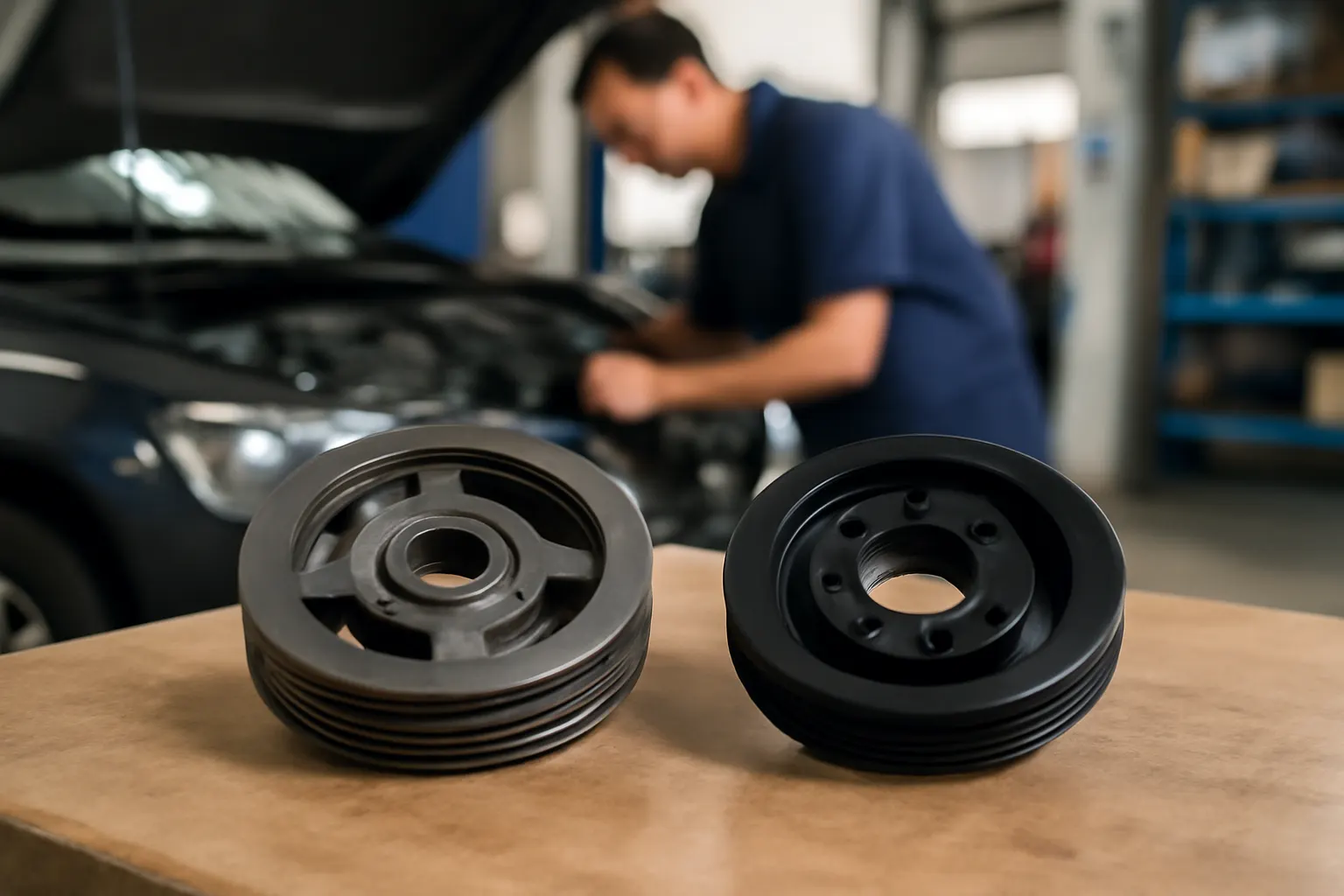
OEM vs. Performance Harmonic Balancers: Which Is Right for You?
When it comes to maximizing engine longevity and performance, few components are as critical—yet as overlooked—as the harmonic balancer, also known as the crank pulley. If you’re deciding between an OEM (Original Equipment Manufacturer) and a performance harmonic balancer, the right choice depends on your driving style, vehicle modifications, and long-term goals. This guide delivers a technical, side-by-side comparison, including SFI certification, material construction, and practical buying advice.
Read More