Advertisement
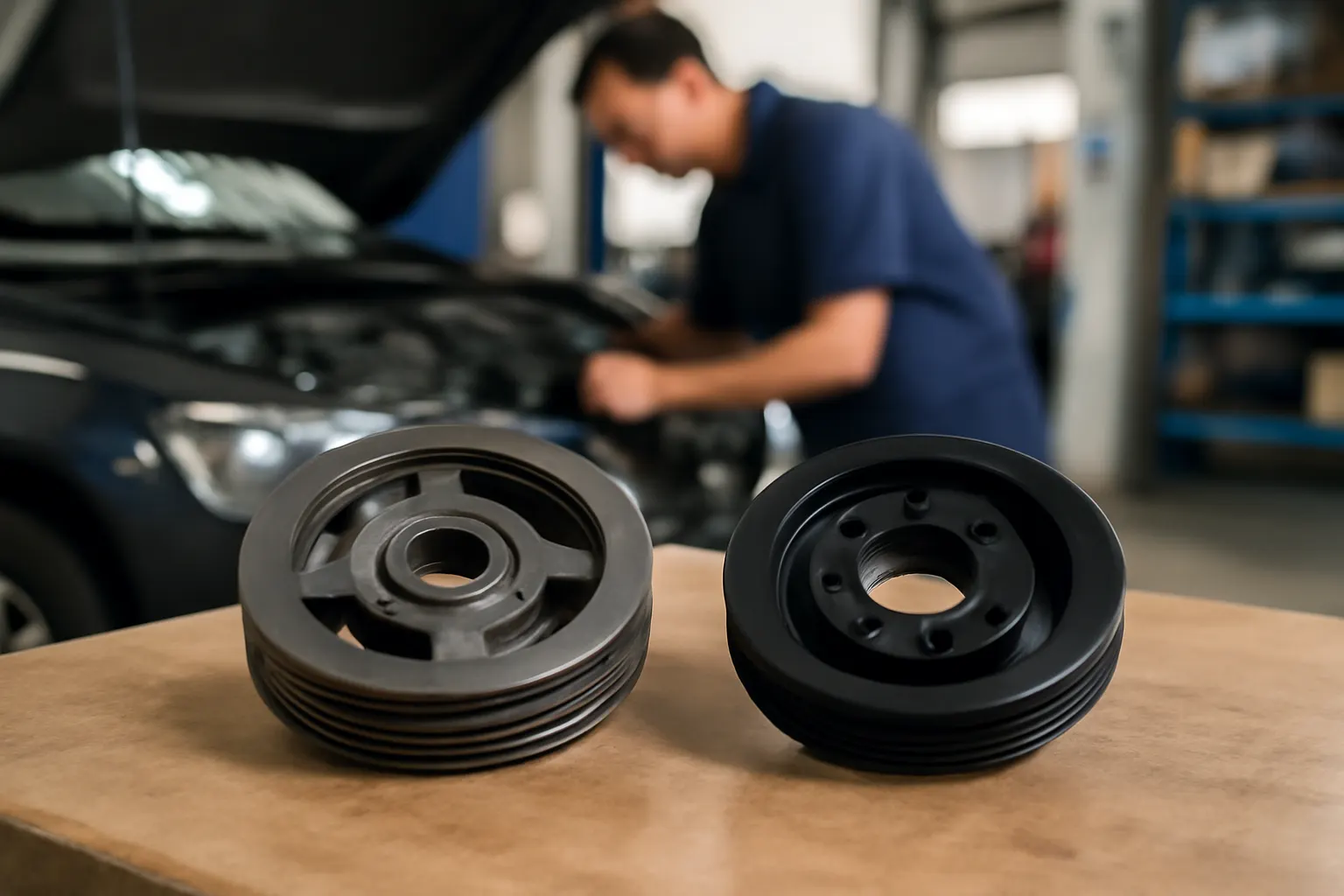
When it comes to protecting your engine from destructive vibrations, the harmonic balancer (also known as the crank pulley) is a silent guardian. But whether you’re driving a stock commuter, building a high-performance street machine, or prepping a race car, the choice between an OEM and a performance harmonic balancer isn’t just about price or appearance—it’s about safeguarding your engine’s longevity, efficiency, and safety. This guide provides a technical, side-by-side comparison of OEM and aftermarket (performance) harmonic balancers, including SFI certification, material differences, and real-world application advice. If you’re not sure which type suits your needs, read on for a practical breakdown, expert tips, and a clear path to the right purchase.
For more on the fundamentals of this vital component, see Harmonic Balancer (Crank Pulley): The Unsung Hero of Engine Longevity.
Immediate Answer: OEM vs. Performance Harmonic Balancers
OEM harmonic balancers are engineered for typical street driving, prioritizing factory-level vibration control, durability, and cost-effectiveness. They’re ideal for daily drivers, original restorations, and vehicles with stock or near-stock power levels.
Performance harmonic balancers, by contrast, are purpose-built for high-RPM, high-power, or racing applications. They often use advanced materials, offer tighter tolerances, and may carry SFI Foundation (SFI) certification for motorsport safety compliance. Choose a performance balancer if your engine sees extended high-RPM use, has significant modifications, or requires extra insurance against catastrophic failure.
In summary:
-
Choose OEM if you want reliable, factory-level performance at a reasonable cost for a standard vehicle.
-
Choose Performance if you need enhanced vibration damping, safety certification, or are running a modified/powerful engine.
The Hidden Problem: Why the Wrong Harmonic Balancer Can Spell Disaster
The harmonic balancer’s job is to absorb and neutralize torsional vibrations from the crankshaft. If it’s mismatched to your engine’s output or driving style, the results can be catastrophic:
-
Excessive vibration leads to premature bearing, accessory drive, and crankshaft failure.
-
Loss of damping (from improper material or worn-out rubber) can destroy a high-RPM engine in seconds.
-
Non-certified or low-quality aftermarket units may not withstand racing conditions or even daily driving, leading to balancer separation or engine damage.
Many owners overlook the balancer during upgrades or maintenance, assuming any part that “fits” will do. But as power levels, RPM, and operating conditions change, so do the demands on this critical component. This is why a technical understanding—and not just a price comparison—is essential.
Expanding the Problem: Technical Differences That Matter
Material Science: Cast Iron, Steel, and Advanced Elastomers
OEM balancers are typically made from cast iron or steel with a bonded rubber isolator. These materials are chosen for cost, manufacturability, and adequate damping at standard RPM ranges. According to the U.S. Department of Energy’s Materials Technologies, material selection directly impacts weight, performance, and durability in automotive components.
Performance balancers may use high-grade steel, billet aluminum, or advanced elastomer compounds for improved strength, reduced weight, or specific damping properties. Some incorporate fluid or viscous damping technology for even greater vibration control at high RPM.
SFI Certification: What It Means and Who Needs It
The SFI Foundation sets safety standards for motorsport equipment, including harmonic balancers (SFI Spec 18.1). SFI-certified balancers must pass rigorous burst, fatigue, and material tests to ensure they won’t fail at racing speeds.
- OEM balancers are not SFI certified and are not intended for competitive use.
- Performance balancers may be SFI certified—a requirement for many sanctioned racing events and a smart choice for any engine that sees the rev limiter.
Tolerances and Balance
Performance balancers are often CNC-machined to tighter tolerances than OEM units, resulting in less runout and more precise balance. This reduces the risk of vibration-induced damage at high engine speeds.
Weight and Inertia
Some performance balancers are lighter than OEM, which can improve throttle response but may reduce damping effectiveness. Others are specifically weighted to match the engine’s balance requirements. Always check manufacturer specs and recommendations.
Advertisement
Real-World Application: When OEM Makes Sense
Daily Drivers and Stock Restorations
If your vehicle is a commuter, family car, or lightly used classic, an OEM balancer is usually the best choice. It provides:
-
Factory-level vibration control
-
Proven reliability
-
Direct fit and finish
-
Cost-effectiveness
Diagnostics: Signs You Need a New Balancer
- Visible cracks or separation in the rubber isolator
- Wobble or runout when the engine is running
- Unusual engine vibrations
- Squealing belts or accessory drive issues
For more on diagnosing balancer problems, see Diagnosing Engine Vibrations: Harmonic Balancer Edition.
When Performance Balancers Are Mandatory
Modified Engines
If you’ve increased compression, added forced induction, or regularly rev past the factory redline, an OEM balancer may no longer provide adequate damping or safety. Performance balancers are engineered to:
-
Handle increased torsional loads
-
Survive at higher RPMs
-
Meet motorsport safety standards
Racing and Track Use
Most racing organizations require SFI-certified balancers for engines exceeding certain RPM or power thresholds. Even if you’re not racing, spirited track days or autocross events can push a stock balancer beyond its safe limits.
High-Performance Street Builds
Performance balancers offer peace of mind for anyone who values engine longevity over the long haul, especially in turbocharged, supercharged, or stroker builds.
Technical Deep Dive: How Harmonic Balancers Work
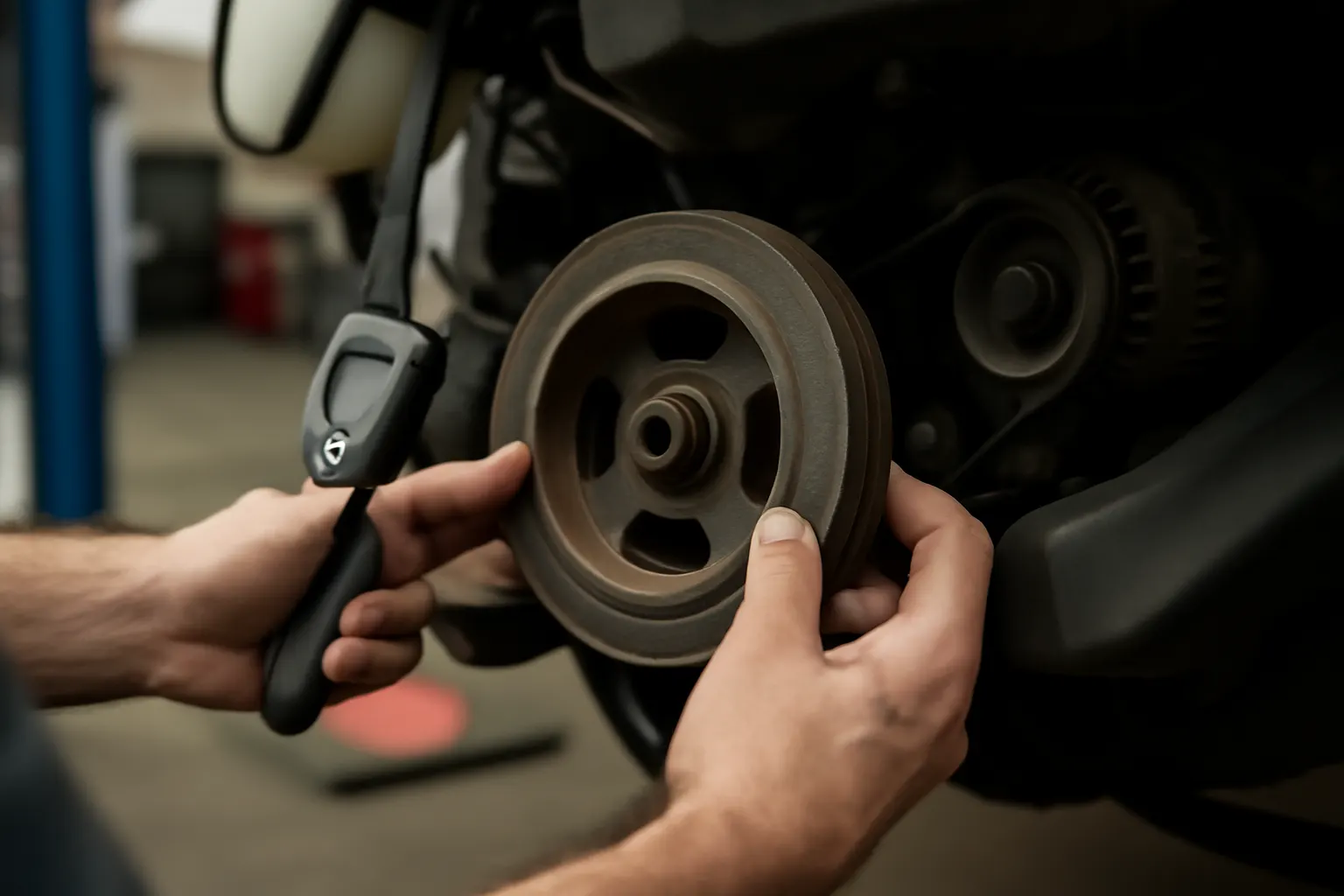
The harmonic balancer is mounted to the front of the crankshaft, where it serves two primary functions:
-
Damping torsional vibrations generated by the firing pulses of the engine.
-
Driving accessory belts for components like the alternator, power steering, and AC compressor.
The typical balancer consists of:
-
Central hub (mounts to crankshaft)
-
Outer ring (drives belts)
-
Elastomer isolator (absorbs vibration)
Performance balancers may add:
-
Steel or aluminum construction for strength/weight reduction
-
Precision machining for balance
-
SFI safety features like containment rings or high-strength fasteners
If the balancer fails or is insufficient for the engine’s output, dangerous vibrations can propagate through the crankshaft, leading to fatigue cracks, accessory failure, or even catastrophic engine failure.
SFI Certification and Safety: What It Means for You
SFI Foundation, Inc. is the gold standard for motorsport safety. To earn SFI 18.1 certification, a balancer must pass:
-
Burst testing (ensuring it won’t come apart at high RPM)
-
Cycle fatigue testing (proving longevity under real-world use)
-
Material verification (confirming the use of high-strength alloys and elastomers)
If your vehicle will ever see competitive use—or if you simply want the best insurance against failure—choose an SFI-certified balancer.
Checklist: Is SFI Certification Required for Your Application?
- Will the vehicle see track or drag strip use?
- Does your sanctioning body (NHRA, SCCA, etc.) require SFI 18.1?
- Is your engine regularly operated above 6,000 RPM?
- Are you running forced induction or high compression?
- Do you want maximum safety for a high-value engine build?
If you checked any of these, an SFI-certified balancer is strongly recommended.
Material Selection: Cast vs. Billet, Elastomer vs. Fluid
OEM Materials
Most OEM balancers use a cast iron or steel hub and ring, with a molded rubber (elastomer) isolator. This combination offers:
-
Adequate damping for stock power levels
-
Cost-effective mass production
-
Predictable service life
Performance Materials
Performance balancers may use:
-
Billet steel or aluminum for increased strength and precision
-
Advanced elastomers for improved high-temperature resistance
-
Fluid/viscous damping (e.g., ATI Super Damper) for superior control at extreme RPM
Material choice affects not just performance, but also weight, cost, and longevity. According to the DOE’s Materials Technologies, advanced materials are key to maximizing both strength and efficiency in modern automotive components.
Fitment, Installation, and Compatibility
OEM Balancer Fitment
OEM balancers are designed as direct replacements for factory units. They typically:
-
Match factory dimensions and keyways
-
Accept stock pulleys and accessories
-
Require minimal installation effort
Performance Balancer Fitment
Performance balancers may require:
-
Checking for correct crankshaft snout diameter and keyway alignment
-
Verifying pulley bolt patterns
-
Adjusting accessory drive belt alignment
-
Ensuring sufficient clearance with aftermarket timing covers or accessory brackets
Advertisement
Consult manufacturer fitment guides and, when in doubt, reach out to technical support before ordering.
Installation Best Practices
- Always use a dedicated balancer installation tool—never hammer the balancer onto the crankshaft.
- Inspect the crank snout and keyway for wear or damage before installation.
- Use threadlocker or specified fastener torque as recommended by the balancer manufacturer.
- After installation, check for runout and proper belt alignment.
See Accessory Drive System Maintenance for more installation and maintenance tips.
Maintenance and Inspection: Keeping Your Balancer Healthy
OEM Balancer Maintenance
- Inspect the rubber isolator annually for cracks, separation, or hardening.
- Check for wobble or misalignment during routine belt or accessory service.
- Replace balancers at the first sign of deterioration—failure can be catastrophic.
Performance Balancer Maintenance
- Periodically check fastener torque and condition, especially after track events.
- Inspect SFI certification sticker or engraving for expiration (some racing organizations require periodic recertification).
- Regularly inspect for physical damage, especially if the engine has seen over-revving or detonation.
Fuel Efficiency and Engine Longevity: Why Balancer Choice Matters
A properly matched, healthy harmonic balancer ensures:
-
Reduced engine vibration, minimizing internal friction and wear
-
Stable accessory drive, preventing belt slip and accessory failure
-
Optimal fuel efficiency, as excessive vibration can increase parasitic losses and reduce overall drivetrain efficiency (DOE: Fuel Efficiency)
Neglecting the balancer or choosing the wrong type can lead to increased maintenance costs, reduced fuel economy, and shortened engine life.
How to Choose: A Step-by-Step Buying Guide
1. Assess Your Engine and Usage
- Is your engine stock or modified?
- Will the vehicle see high RPM, racing, or heavy towing?
- Are you building for longevity or maximum performance?
2. Determine Certification Needs
- Is SFI 18.1 required for your intended use?
3. Match Material and Construction to Your Needs
- OEM (cast iron/steel, elastomer) for stock applications
- Performance (billet, advanced elastomer/fluid) for modified or high-RPM engines
4. Confirm Fitment and Compatibility
- Double-check crankshaft snout size, pulley patterns, and accessory alignment
5. Choose a Reputable Brand
- Look for proven OEM suppliers or racing brands with a track record of reliability
6. Plan for Maintenance
- Know the lifespan and inspection intervals for your chosen balancer
Troubleshooting: Diagnosing Balancer-Related Issues
If you’re experiencing engine vibration, accessory drive problems, or unusual noises, the harmonic balancer is a prime suspect. Use this checklist to diagnose potential issues:
Balancer Diagnostic Checklist:
- Visual inspection of rubber isolator for cracks or separation
- Check for pulley wobble or runout with engine running
- Listen for knocking, rattling, or squealing from the front of the engine
- Inspect accessory belts for abnormal wear or misalignment
- Verify that the balancer bolt is properly torqued
If any issues are found, replace the balancer immediately to prevent further engine damage.
AutoPartEx Expert Positioning: Your Source for Harmonic Balancer Solutions
At AutoPartEx, we understand that the harmonic balancer is more than just a pulley—it’s a critical safeguard for your engine’s health and performance. Whether you need a direct-fit OEM replacement or an SFI-certified performance upgrade, our technical team is ready to help you select the right part for your needs, application, and budget.
Explore our selection of Harmonic Balancer (Crank Pulley): The Unsung Hero of Engine Longevity or browse related accessories and categories like AC Compressor to keep your accessory drive system operating at peak efficiency.
Our guides, including Why Ignoring Your Crank Pulley Can Destroy Your Engine, provide the technical depth and practical insights you need to make informed decisions—backed by verified industry standards and safety data.
Conclusion: Making the Right Choice for Your Engine
Choosing between an OEM and a performance harmonic balancer is about more than just cost—it’s a question of matching your engine’s needs to the right level of protection, performance, and safety.
- For daily drivers and stock restorations, OEM balancers offer reliable, cost-effective vibration control.
- For modified, high-RPM, or racing applications, performance balancers—especially those with SFI certification—provide the strength, precision, and peace of mind required to protect your investment.
Don’t let this “unsung hero” of engine longevity become a weak link in your drivetrain. Make your selection based on technical needs, not just price, and consult the experts at AutoPartEx for guidance every step of the way.
References
Advertisement