Advertisement
When your vehicle starts to misfire, hesitate, or lose fuel efficiency, a failing ignitor or ignition coil is often at the root of the problem. Recognizing the warning signs early can prevent costly engine damage and ensure your vehicle remains safe and reliable on the road. In this comprehensive guide, the AutoPartEx Technical Editorial Team explains how to identify the top symptoms of ignitor/coil failure, why these components are critical, and the best steps for diagnosis and replacement. For a deeper dive into how these systems work, see our Ignitor/Coil Systems: The Heart of Reliable Spark and Engine Performance category page.
Immediate Answer: The Most Common Signs of Ignitor/Coil Failure
Ignitor and ignition coil issues can manifest in several clear ways. Knowing what to look for helps you act before a minor problem becomes a major repair. Here are the top signs your ignitor/coil needs replacement:
- Engine misfires or rough idle
- Difficulty starting the engine
- Noticeable drop in fuel efficiency
- Backfiring or sputtering under acceleration
- Check Engine Light (CEL) illumination
- Loss of engine power, especially under load
- Unusual engine noises (popping, coughing)
- Visible cracks, corrosion, or carbon tracking on the coil
These symptoms can overlap with other ignition or fuel system issues, but when several appear together—especially after significant mileage—your ignitor or coil is a prime suspect.
The Hidden Problem: Ignitor/Coil Failure Can Lead to Severe Engine Damage
While many drivers view misfires or rough running as minor annoyances, ignoring these symptoms can put your engine at risk. A failing ignitor or coil means incomplete combustion, which can:
- Overheat the catalytic converter
- Cause raw fuel to enter the exhaust, risking fire or emissions damage
- Lead to unburned fuel washing down cylinder walls, accelerating engine wear
- Trigger persistent Check Engine Lights, masking other critical issues
These hidden dangers are why timely diagnosis and replacement are crucial. Modern engine management systems are sensitive to ignition faults, and delayed repairs can result in expensive secondary damage.
Why Ignitor/Coil Health Is Critical for Modern Engines
Ignitor and coil systems are responsible for transforming the low voltage from your battery into the high-voltage spark needed to ignite the air-fuel mixture in each cylinder. With the advent of coil-on-plug and distributorless ignition systems, the demands on these components have only increased. Faulty coils or ignitors disrupt this process, leading to:
- Unstable combustion cycles
- Increased emissions and failed inspections
- Reduced engine performance and efficiency
The United States Department of Energy notes that efficient ignition is directly tied to optimal fuel economy and engine health. Even a single weak or failed coil can cause a cascade of drivability problems across the entire engine.
Technical Deep Dive: How Ignitor/Coil Failures Develop
To understand why these failures happen, it’s important to know how ignitor/coils operate. In modern vehicles, each cylinder may have its own coil (coil-on-plug), or a set of coils distribute spark via the ignition module. Over time, heat cycling, vibration, and electrical stress degrade the coil’s insulation and windings. Common failure modes include:
- Thermal breakdown: Prolonged engine heat causes the coil’s epoxy or plastic housing to crack, allowing moisture intrusion.
- Electrical arcing: Worn or cracked coil boots can cause voltage to jump to ground, creating visible carbon tracking.
- Internal short circuits: Coil windings can short out, reducing spark output or causing total failure.
- Ignitor module failure: In systems with a separate ignitor, heat and age can cause the solid-state components to fail, resulting in no spark.
Understanding these mechanisms can help you spot early warning signs and avoid misdiagnosing the issue as a fuel or sensor problem.
In-Depth Symptom Checklist: Diagnosing Ignitor/Coil Issues
Use this comprehensive checklist to determine if your ignitor/coil is the root cause of your engine problems:
Advertisement
| Symptom | Likely Cause | Diagnostic Step |
|---|---|---|
| Engine misfire | Weak/no spark from coil | Inspect coil output, scan ECU |
| Hard starting | Insufficient spark during cranking | Check spark at plugs |
| Rough idle | Intermittent coil output | Listen for idle fluctuations |
| Drop in fuel economy | Incomplete combustion due to weak spark | Monitor MPG, check plugs |
| Check Engine Light | Misfire or ignition fault code | Scan for trouble codes |
| Backfiring | Delayed or erratic spark | Inspect exhaust, scan ECU |
| Visible coil damage | Cracks, carbon tracking, or corrosion | Visual inspection |
| Sudden power loss | Coil or ignitor failure under load | Road test under acceleration |
If you check off two or more of these symptoms, especially with visible coil damage or stored fault codes, replacement is strongly recommended.
Step-by-Step: How to Confirm Ignitor/Coil Failure
- Visual Inspection: Open your hood and locate the ignition coils or ignitor module. Look for cracks, melted areas, or carbon tracks on the housing and boots.
- Scan for Fault Codes: Use an OBD-II scanner to check for codes such as P0300 (random misfire) or cylinder-specific misfire codes (P0301–P0308).
- Spark Test: Remove a spark plug and check for strong, blue spark while cranking. Weak or no spark points to coil or ignitor issues.
- Swap Test: If your engine uses individual coils, swap a suspected bad coil with a known good one. If the misfire follows the coil, it’s faulty.
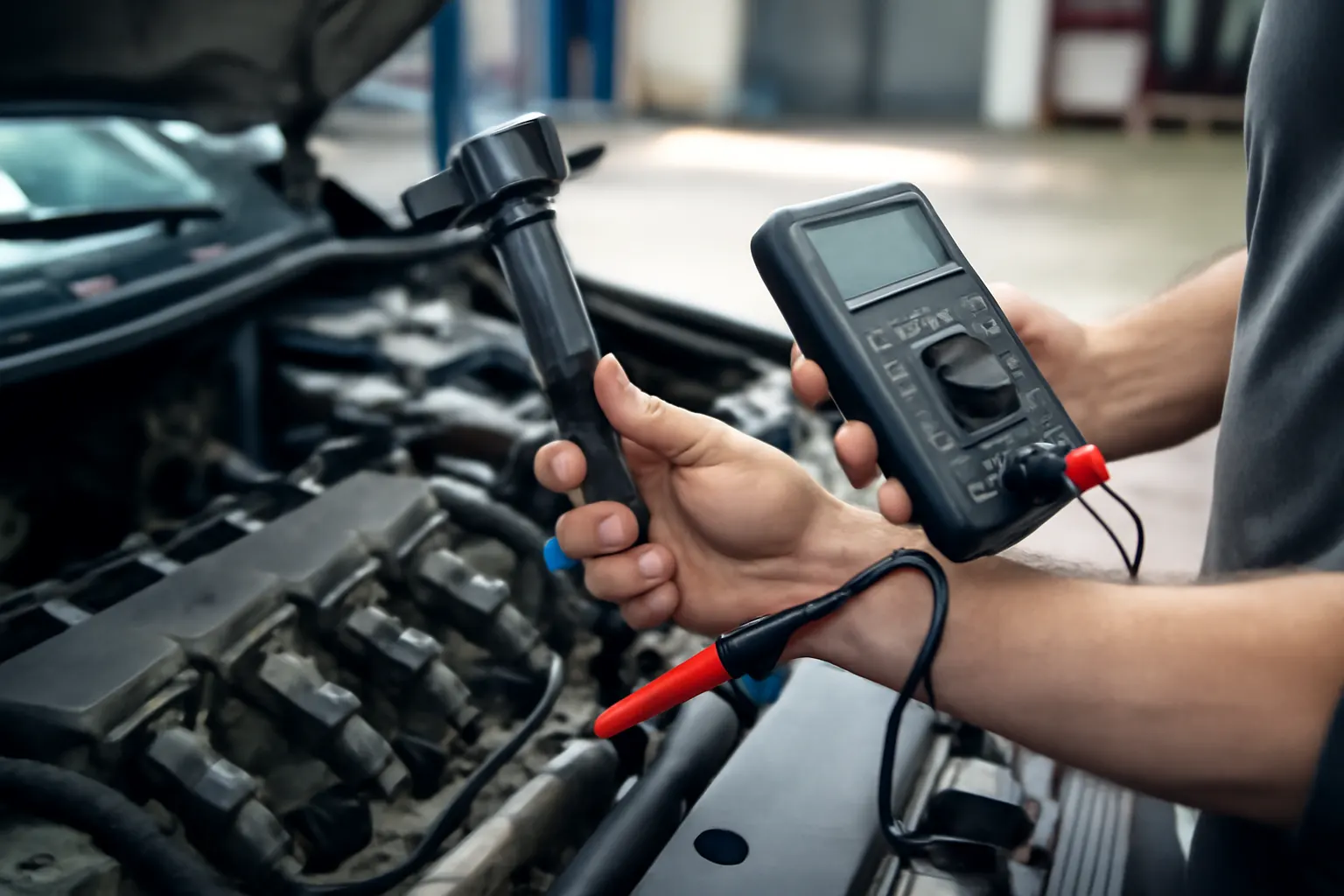
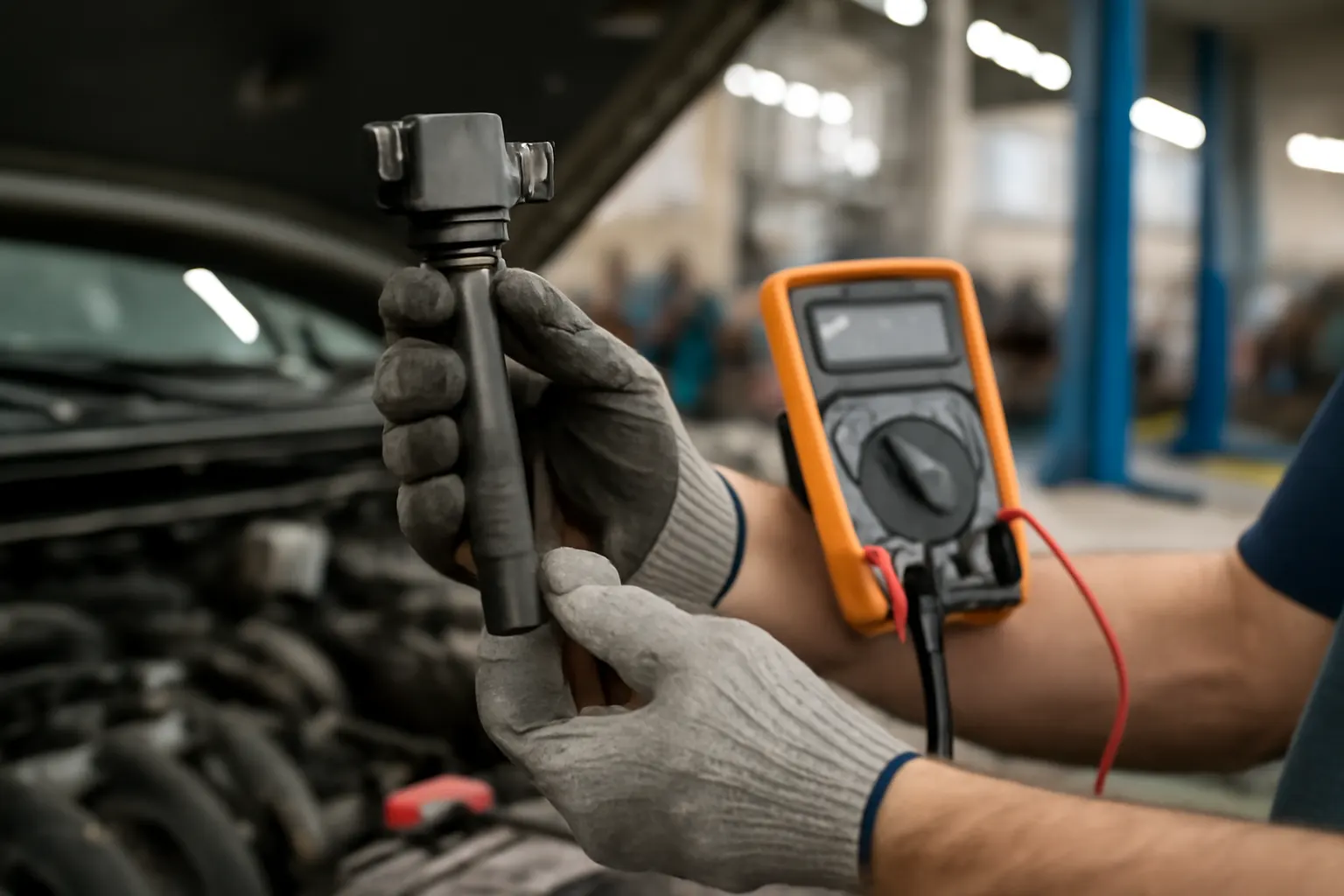
- Resistance Check: Use a multimeter to check primary and secondary coil resistance against manufacturer specs (found in the service manual).
- Ignitor Testing: For systems with a separate ignitor, follow the manufacturer’s test procedures—often involving voltage and continuity checks.
For a more detailed diagnostic walkthrough, see Diagnosing Ignition System Failures.
The Cost of Waiting: Risks of Ignoring Ignitor/Coil Problems
Delaying replacement of a failing ignitor/coil can lead to:
- Catalytic Converter Damage: Unburned fuel from misfires overheats and destroys the catalyst, leading to costly repairs.
- Engine Damage: Continuous misfiring can wash down cylinder walls, causing oil dilution and premature wear.
- Failed Emissions Tests: Poor ignition leads to high hydrocarbon (HC) and carbon monoxide (CO) emissions.
- Stranded Vehicle: A total coil/ignitor failure can leave you unable to start or drive your vehicle, especially in cold or damp conditions.
- Safety Hazards: Misfires can cause backfires, risking fire in the intake or exhaust system.
According to the National Highway Traffic Safety Administration, timely maintenance and replacement of ignition components are crucial for both vehicle safety and compliance.
Choosing the Right Replacement: OEM vs Aftermarket Coils
When it comes time to replace your ignitor or coil, you’ll face a choice between OEM (Original Equipment Manufacturer) and aftermarket options. Each has its pros and cons:
- OEM Coils: Designed to meet the exact specifications of your vehicle. Best for reliability and fitment, but often more expensive.
- Aftermarket Coils: Can offer improved performance or cost savings, but quality varies widely. Stick to reputable brands that meet or exceed SAE Standards.
For a detailed comparison, see OEM vs Aftermarket Ignition Coils: What You Need to Know.
Installation Tips: How to Replace Your Ignitor/Coil Safely
Replacing an ignitor or coil is a straightforward job on many vehicles, but attention to detail ensures a lasting repair:
- Disconnect the Battery: Always disconnect the negative terminal to prevent accidental shorts.
- Label Connectors: If replacing multiple coils, label each connector to avoid mix-ups.
- Remove the Faulty Coil/Ignitor: Unbolt and gently pull the coil or ignitor from its mount.
- Inspect Spark Plugs: Replace any fouled or worn plugs at the same time.
- Install New Coil/Ignitor: Apply dielectric grease to boots, seat the new part fully, and torque bolts to spec.
- Reconnect and Test: Start the engine and verify smooth operation. Clear any stored fault codes with a scanner.
If your vehicle uses a coil-on-plug design, be careful not to overtighten bolts, as this can crack the new coil housing.
Preventive Maintenance: Extending the Life of Your Ignitor/Coil
To maximize the lifespan of your new ignition components:
Advertisement
- Keep Engine Clean: Oil leaks and debris can degrade coil insulation.
- Replace Spark Plugs on Schedule: Old plugs force coils to work harder, shortening their life.
- Avoid Cheap Aftermarket Parts: Low-quality coils often fail prematurely.
- Address Engine Oil Leaks Promptly: Oil intrusion into spark plug wells is a common cause of coil failure.
- Monitor for Recalls: Check for ignition-related recalls on your vehicle at the NHTSA Recalls Database.
Routine inspection—especially at tune-up intervals—can catch early signs of coil degradation before they cause drivability issues.
Special Considerations: Coil-On-Plug and Modern Ignition Systems
Many late-model vehicles use coil-on-plug (COP) systems, which provide individual coils for each cylinder. While these are more reliable, they are also more sensitive to:
- Moisture Intrusion: Water in the plug wells can short coils.
- Plug Well Contamination: Oil, dirt, or coolant in the wells can cause misfires and coil arcing.
- Incorrect Plug Gap: Using the wrong spark plug gap increases coil stress.
Understanding your vehicle’s specific ignition architecture is crucial. For more on how these systems have changed engine design, see How Coil-On-Plug Technology Changed Modern Engines.
Sourcing Quality Ignitor/Coil Parts: What to Look For
When buying replacement coils or ignitors, always:
- Verify Fitment: Use your VIN or vehicle details to match the exact part number.
- Check for Certifications: Look for parts that meet or exceed SAE and OEM standards.
- Choose Trusted Brands: Avoid generic, no-name parts—quality matters for ignition components.
- Buy from Reputable Suppliers: Use established suppliers like AutoPartEx to ensure genuine, tested products.
If you’re unsure about compatibility or quality, consult a professional or use the fitment tools available on the Ignitor/Coil Systems: The Heart of Reliable Spark and Engine Performance page.
Troubleshooting Persistent Issues After Replacement
If symptoms persist after installing new coils or ignitors, consider these possibilities:
- Wiring Harness Damage: Broken or corroded wires can mimic coil failure.
- Faulty Spark Plugs: Old or incorrect plugs can continue to cause misfires.
- ECU/PCM Issues: Engine control modules can sometimes misinterpret or fail to control new coils.
- Vacuum Leaks: Air leaks can cause rough running, unrelated to ignition components.
Repeat diagnostic steps, check for new fault codes, and inspect all related ignition and fuel system parts to resolve lingering problems.
When to Seek Professional Help
While DIY replacement is possible for many models, seek professional assistance if:
- Your vehicle has difficult-to-access coils (e.g., under intake manifolds)
- You lack proper diagnostic tools (OBD-II scanner, multimeter)
- There are multiple, overlapping engine issues
- Your vehicle is under warranty or subject to recalls
Certified technicians have the equipment and experience to quickly pinpoint ignition faults, ensuring a reliable repair and peace of mind.
Why Timely Ignitor/Coil Replacement Matters for Safety and Efficiency
The U.S. Department of Energy emphasizes that a healthy ignition system is essential for both peak fuel efficiency and emissions compliance. Faulty coils or ignitors not only waste fuel but can also cause your vehicle to fail state inspections or even create safety hazards on the road. The National Highway Traffic Safety Administration regularly cites ignition system maintenance as a key factor in vehicle reliability and crash avoidance.
AutoPartEx: Your Partner in Reliable Ignition Solutions
At AutoPartEx, we understand that a dependable ignition system is the foundation of every smooth-running engine. Our curated selection of OEM and high-quality aftermarket ignitors and coils ensures you get the right part, every time. With comprehensive fitment data, technical guides, and a commitment to quality, we help you keep your vehicle performing at its best. Explore our Ignitor/Coil Systems: The Heart of Reliable Spark and Engine Performance section for expert resources and trusted parts.
Conclusion: Don’t Ignore the Warning Signs—Act Early
Recognizing the early signs of ignitor/coil failure is key to preventing costly engine repairs and maintaining your vehicle’s performance, safety, and efficiency. Use the checklists and diagnostic steps outlined above to stay ahead of potential issues. Whether you’re a DIY enthusiast or prefer professional service, timely replacement of failing ignition components is an investment in your vehicle’s longevity.
For more technical insights, check out our related guides and stay informed about the latest in ignition technology and maintenance best practices.
References
Advertisement