Advertisement
Top 5 A/C System Failures and Fixes
Automotive air conditioning (A/C) systems are essential for comfort and safety—especially in extreme climates. But when your A/C fails, it can be more than an inconvenience: it may signal underlying electrical, mechanical, or wiring harness issues that, if ignored, may lead to costly repairs or even safety hazards. In this comprehensive guide, AutoPartEx details the top five A/C system failures, their root causes, and proven fixes—with a special focus on the critical but often-overlooked role of the wiring harness. For those seeking a deeper dive into A/C electrical integration, see our full Wiring Harness (Air Conditioning): OEM Fitment, Diagnostics & Replacement | AutoPartEx resource.
Immediate Answers: The Top 5 A/C System Failures
When an automotive A/C system malfunctions, the most common culprits are:
- Compressor Clutch or Relay Failure
- Refrigerant Leaks
- Electrical or Wiring Harness Faults
- Blower Motor or Resistor Issues
- Clogged or Faulty Expansion Valve/Orifice Tube
Each of these failures can present with similar symptoms—such as warm air from the vents, intermittent cooling, or system shutdown—but the underlying causes and fixes differ. Quick identification and targeted repair are essential to restore full function and prevent further damage.
The Hidden Problem: Wiring Harness Failures in A/C Systems
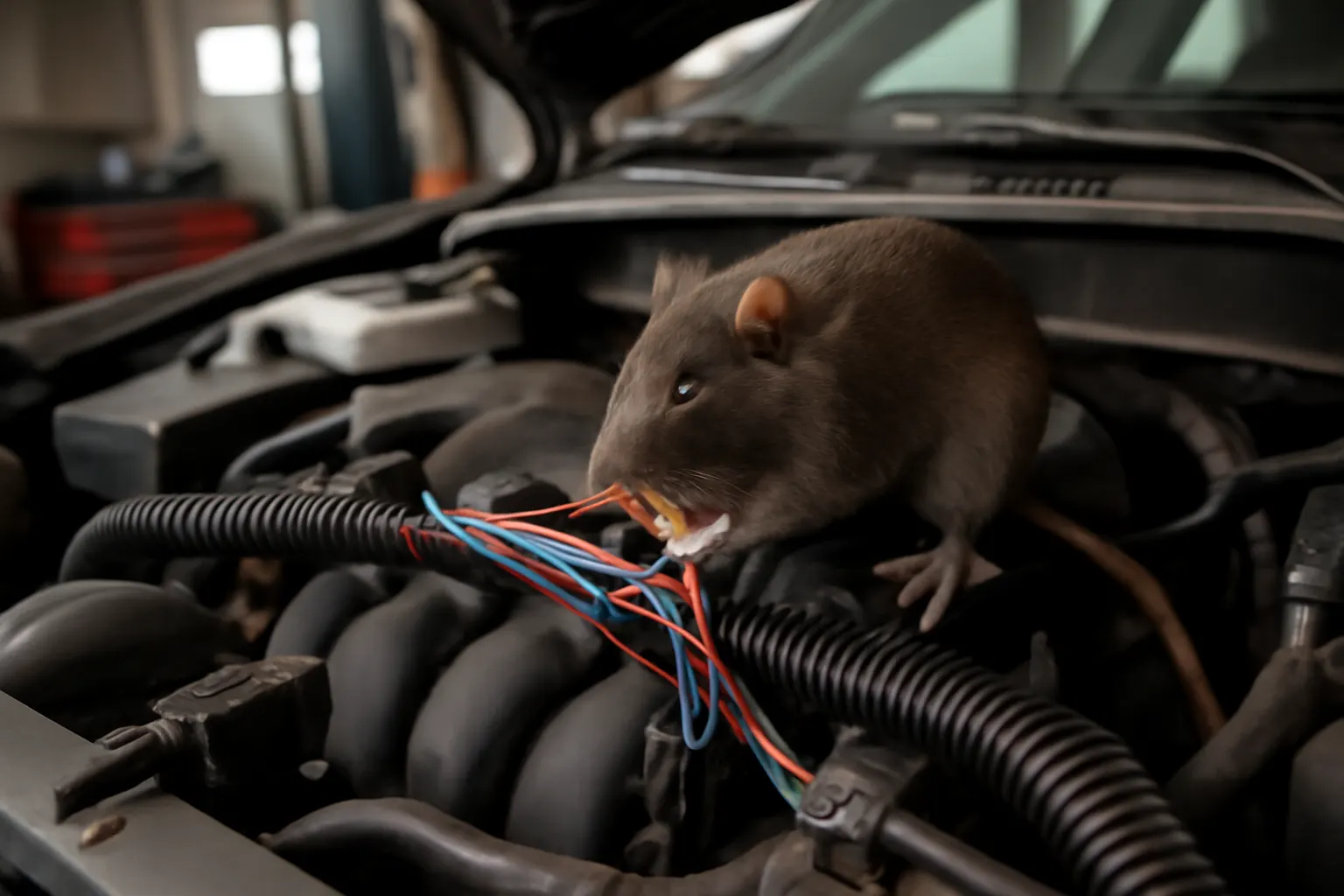
While many focus on mechanical or refrigerant issues, wiring harness faults are among the most insidious A/C problems. The A/C wiring harness acts as the nervous system for climate control, connecting sensors, relays, switches, and actuators. Even minor damage—such as corroded connectors, chafed insulation, or rodent-chewed wires—can cause intermittent or complete system failure.
This is compounded by the fact that A/C wiring is often routed through high-vibration, high-heat areas under the hood or dash, making it susceptible to wear, corrosion, and physical damage. According to the National Highway Traffic Safety Administration, poor electrical connections or degraded wiring are leading causes of vehicle equipment recalls and failures, including A/C systems [^1].
Beyond the Basics: Why A/C System Failures Matter
A malfunctioning A/C system isn’t just about comfort. It can impact:
- Defogging and visibility: A/C is integral to rapid windshield defogging, which is a key safety requirement [^1].
- Fuel efficiency: A faulty A/C can cause drag on the engine if the compressor clutch sticks or the control circuit malfunctions, reducing overall efficiency [^2].
- Electrical system health: Unresolved wiring issues can propagate, leading to failures in other critical vehicle systems.
- Resale value: Persistent A/C problems can reduce the attractiveness and value of your vehicle.
Understanding the technical interplay between wiring harnesses, electronic controls, and mechanical A/C components is vital for accurate diagnostics and reliable repair.
Compressor Clutch and Relay Failure: Symptoms and Fixes
How It Happens
The compressor clutch is an electromagnetically controlled device that engages or disengages the compressor based on cabin demand. Its operation depends on both the relay and the integrity of the wiring harness.
Common failure modes:
- Burned-out clutch coil
- Faulty relay contacts
- Corroded or loose wiring harness connectors
Signs of Trouble
- No cold air, even when the A/C button is engaged
- Audible clicking from the relay, but no compressor activation
- Intermittent cooling, especially after driving over bumps
Technical Fix
- Relay Test: Swap the A/C relay with a similar one (e.g., horn relay) to isolate the fault.
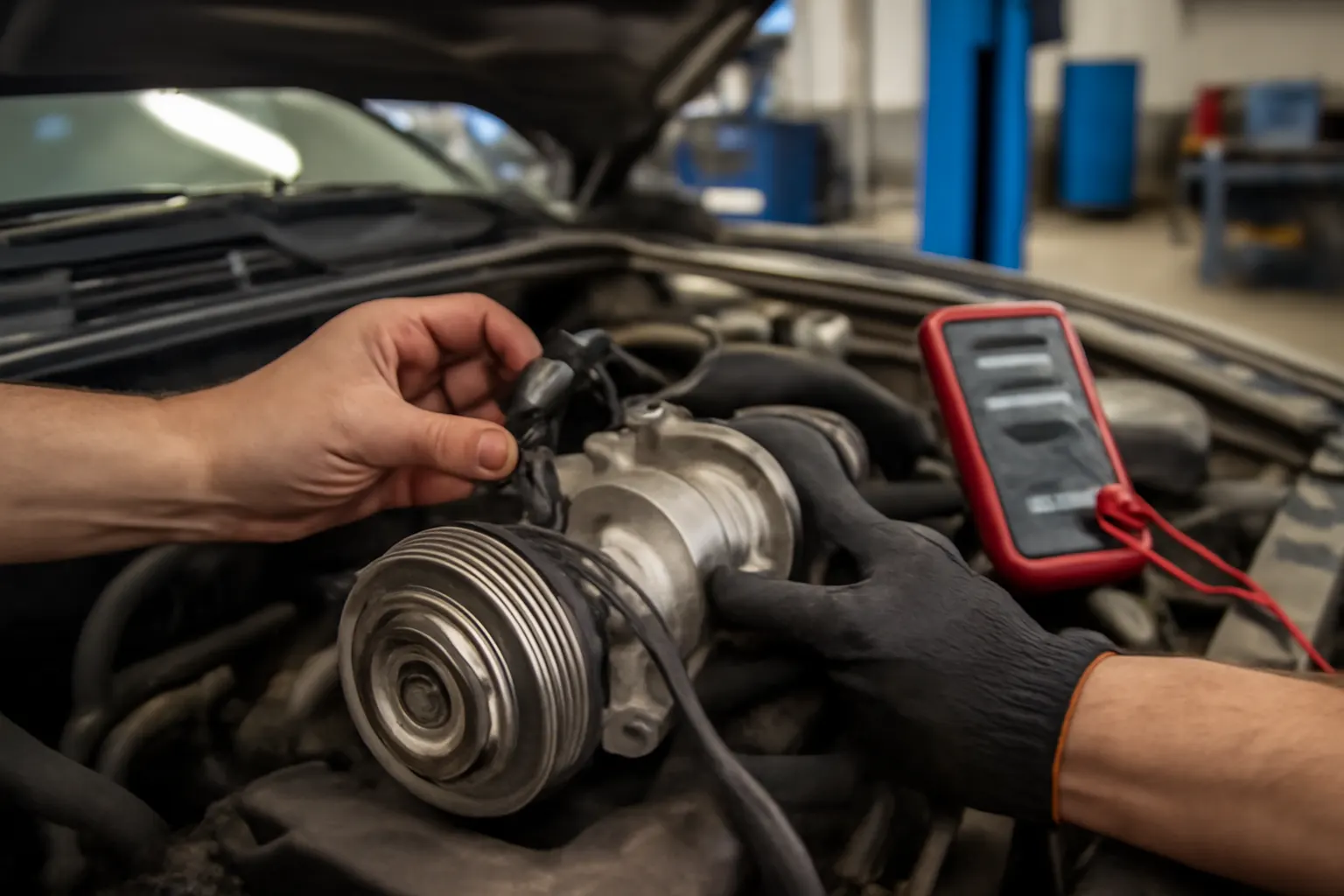
- Clutch Voltage Check: Use a multimeter to confirm 12V at the clutch connector with A/C on.
- Harness Inspection: Inspect and clean all connectors and check for melted or corroded pins.
- Replacement: Replace the clutch, relay, or damaged harness section as needed.
For step-by-step wiring and integration guidance, see our A/C Compressor Replacement: Wiring & Integration Tips.
Advertisement
Refrigerant Leaks: Causes, Detection, and Solutions
How It Happens
Refrigerant leaks are the most common A/C failure and may occur at:
- Compressor shaft seals
- Hose or pipe joints
- Condenser or evaporator cores
- Schrader valves
Leaks can also be caused by vibration-induced cracks or by physical damage to lines routed near the wiring harness, which could cause electrical shorts or trigger system shutdowns.
Signs of Trouble
- Gradual loss of cooling performance
- Hissing noise under the hood
- Visible oil stains at joints or fittings
Technical Fix
- Visual Inspection: Check all visible lines for oil residue or dye.
- Electronic Leak Detection: Use a refrigerant sniffer or UV dye.
- System Recharge: After leak repair, evacuate and recharge the system per SAE standards [^4].
Note: Never attempt to bypass A/C pressure switches or wiring harness safety circuits to “force” the system to run; this risks damage and violates safety standards.
Electrical and Wiring Harness Faults: The Silent Saboteur
Why Wiring Harnesses Fail
- Heat and Vibration: Underhood temperatures and engine vibration degrade insulation and connectors.
- Moisture Intrusion: Water ingress, especially in poorly sealed connectors, causes corrosion.
- Rodent Damage: Rodents are known to chew automotive wiring, especially in vehicles parked outdoors see: Preventing Rodent Damage to Vehicle Wiring.
- Aging Materials: Over time, plastics and rubber harden, increasing the risk of cracks and shorts.
Diagnostic Checklist: Wiring Harness Faults
- Inspect all A/C wiring harness connectors for corrosion or loose pins
- Check for physical abrasion, melted insulation, or rodent damage
- Wiggle-test harnesses with the system running to detect intermittent faults
- Use a multimeter to check continuity and voltage at all critical points
- Verify ground connections at chassis and component mounting points
Solutions
- Clean and tighten connectors
- Repair or splice damaged wires using OEM-spec materials
- Replace harness sections as needed, following SAE and manufacturer guidelines [^4]
- Use dielectric grease on connectors to prevent future corrosion
For advanced diagnostics, see our guide: How to Diagnose HVAC Electrical Faults.
Blower Motor and Resistor Issues: When Airflow Fails
How It Happens
The blower motor delivers cooled (or heated) air to the cabin. Its speed is controlled by a resistor pack or electronic module, both of which rely on a dedicated wiring harness.
Common failure modes:
- Worn-out blower motor brushes
- Failed resistor pack (common in multi-speed systems)
- Burned or melted harness connectors due to high resistance
Signs of Trouble
- No airflow at any speed
- Only high (or low) speed works
- Smell of burning plastic under the dash
Technical Fix
- Voltage Test: Confirm voltage at the blower motor and resistor pack.
- Connector Inspection: Look for heat damage or discoloration.
- Component Replacement: Replace faulty blower motor, resistor, or harness pigtail.
Clogged or Faulty Expansion Valve/Orifice Tube: Restricting the Flow
How It Happens
The expansion valve (or orifice tube) meters refrigerant into the evaporator. If clogged by debris, or if the valve fails, system pressures go awry and cooling is lost.
Causes:
- Desiccant breakdown in the receiver/drier
- Contaminants from compressor failure
- Moisture ingress causing freeze-up
Signs of Trouble
- Frost on low-pressure lines but minimal cabin cooling
- High-side pressure abnormally high
- Erratic cycling of the compressor
Technical Fix
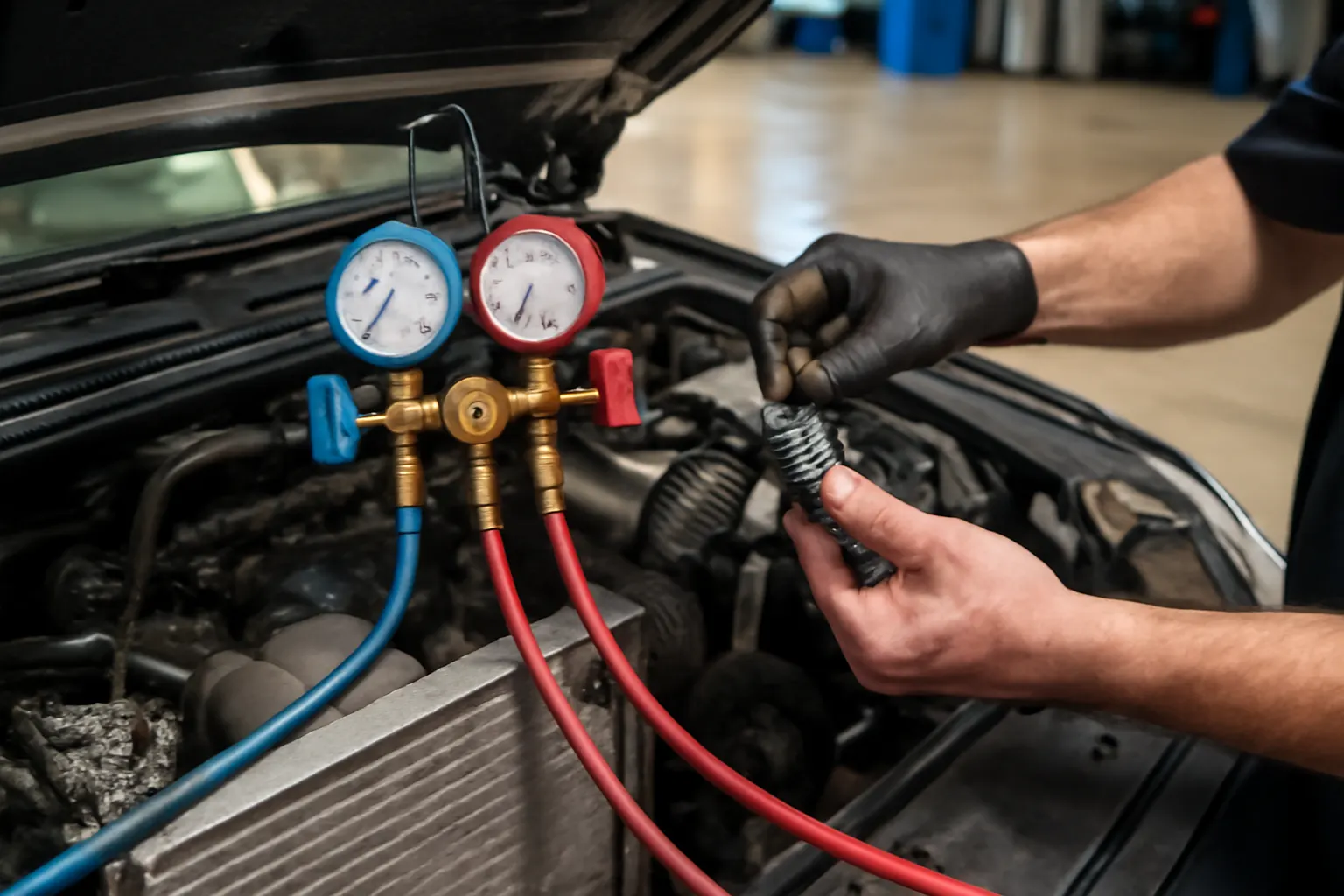
- Pressure Gauge Diagnosis: Check system pressures at both high and low sides.
- Component Access: Remove and inspect the expansion valve or orifice tube for debris.
- System Flush: If contamination is found, flush the entire system and replace the drier.
Advanced Diagnostics: Integrating Mechanical and Electrical Checks
A/C repairs are rarely about a single component. Because the system is a hybrid of mechanical, electrical, and refrigerant circuits, a holistic diagnostic process is essential.
Advertisement
Step-by-Step Diagnostic Approach
- Visual Inspection: Always start with a complete visual and physical inspection of wiring, connectors, and refrigerant lines.
- System Scan: Use a scan tool to read HVAC-related trouble codes and live sensor data.
- Electrical Testing: Check for voltage, ground, and continuity at all harness connections.
- Functional Test: Manually activate relays and switches to verify operation.
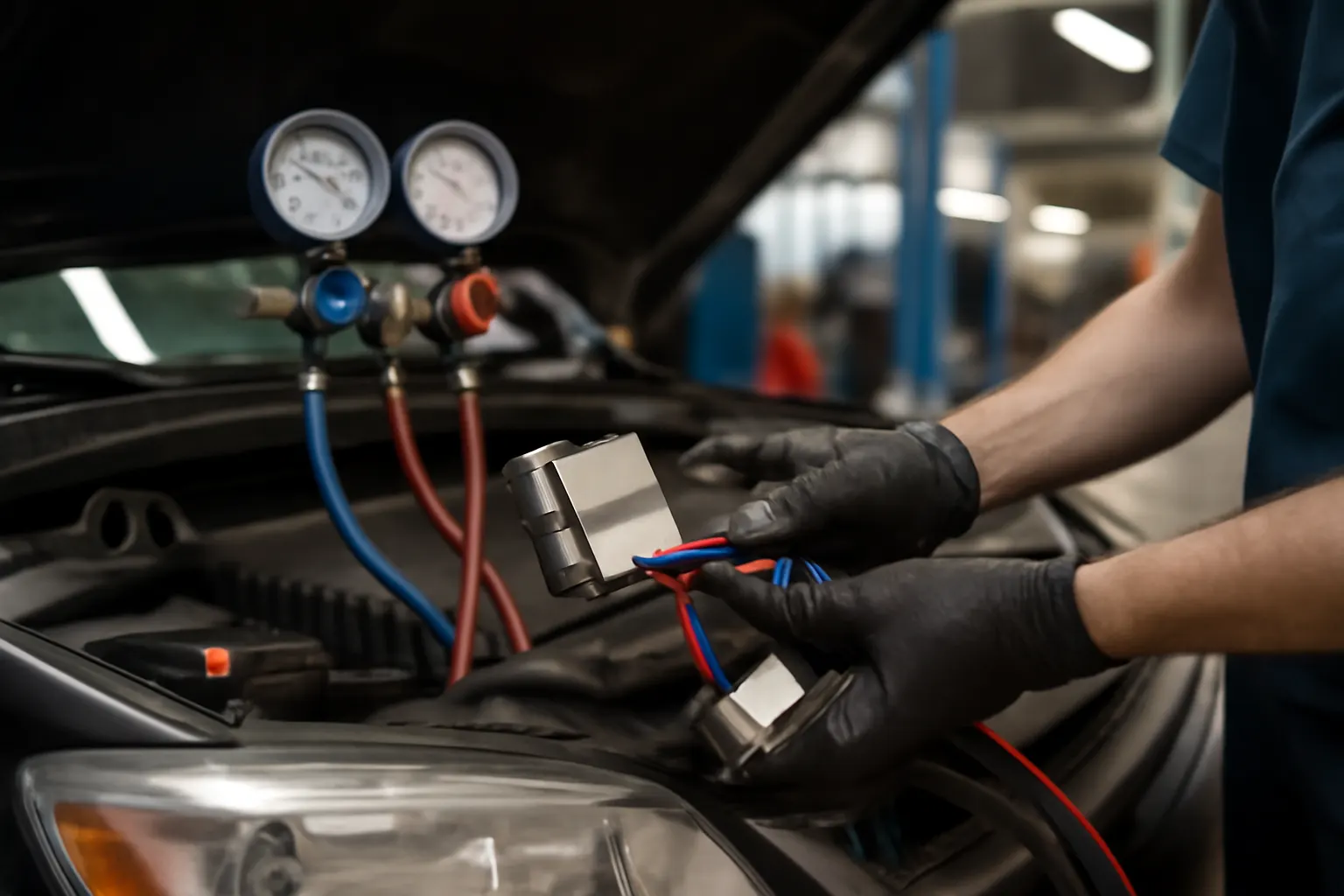
- Pressure Analysis: Use manifold gauges to assess refrigerant circuit health.
Sourcing OEM-Quality Wiring Harnesses and Components
Not all wiring harnesses are created equal. Using substandard or non-OEM harnesses can introduce new faults, reduce reliability, and even void safety certifications. When sourcing replacements:
- Match by VIN or part number: Ensures proper connector types and wire gauges.
- Look for OE or OE-equivalent: Meets or exceeds manufacturer specifications.
- Verify connector pinouts: Some aftermarket harnesses may have different pin arrangements.
- Check for included accessories: Such as mounting clips, heat shielding, and grommets.
For a curated selection, browse our main wiring harness category or our dedicated wiring harness air conditioning section.
Preventive Maintenance: Keeping Your A/C System Reliable
Regular A/C system maintenance can prevent most failures before they start. Key steps include:
- Annual Inspection: Have the A/C system checked by a certified technician each spring.
- Harness Protection: Use split loom and heat shielding to protect exposed harness sections.
- Moisture Control: Clean drains and ensure all seals are intact to prevent corrosion.
- Rodent Deterrence: For vehicles stored outdoors, use repellents or physical barriers to prevent rodent access to wiring see: Preventing Rodent Damage to Vehicle Wiring.
- System Operation: Run the A/C for at least 10 minutes monthly, even in winter, to keep seals lubricated.
Checklist: A/C System Diagnostic and Repair
| Step | Action |
|---|---|
| 1. Visual Inspection | Check all wiring, connectors, and hoses for visible damage or corrosion. |
| 2. Electrical Testing | Use a multimeter to test voltage at compressor, relays, and blower motor. |
| 3. Refrigerant Check | Inspect for leaks using dye or electronic detector; check pressures with manifold gauges. |
| 4. Functional Test | Activate A/C and observe for clutch engagement, blower operation, and air temperature at vents. |
| 5. Harness Integrity | Wiggle-test harnesses while watching for intermittent faults; verify secure mounting and routing. |
| 6. Repair/Replace | Replace faulty components or harness sections with OE-quality parts; use correct connectors and splices. |
| 7. System Recharge/Test | Evacuate and recharge refrigerant as per SAE standards; verify system performance and reset codes. |
The Role of Materials and Standards in A/C Reliability
Materials technology is a critical factor in both harness and component longevity. Modern automotive wiring harnesses use advanced polymers and copper alloys to resist heat, vibration, and chemical attack 1. Following SAE standards for harness construction, routing, and repair ensures long-term reliability and compliance with safety regulations 2.
Selecting the right materials and adhering to proper installation techniques is especially important in high-stress environments like the engine bay or under-dash areas where the A/C harness is routed.
When to Call a Professional: Limits of DIY A/C Repair
While many A/C repairs can be tackled by skilled DIYers, there are times when professional intervention is warranted:
- Refrigerant Handling: By law, refrigerant recovery and charging require certification and specialized equipment.
- Complex Electrical Faults: Intermittent or multiplexed wiring issues may require advanced diagnostics.
- System Reprogramming: Some modern vehicles require HVAC module reprogramming after component replacement.
If in doubt, consult a certified technician or use AutoPartEx’s network of trusted repair professionals.
AutoPartEx: Your Partner in Reliable A/C Repairs
At AutoPartEx, we know that reliable climate control is a blend of quality parts, technical knowledge, and proven standards. Our curated selection of wiring harnesses, A/C compressors, and diagnostic guides are designed to help enthusiasts, technicians, and fleet managers keep their vehicles cool, safe, and efficient.
For more in-depth resources, visit our Wiring Harness (Air Conditioning): OEM Fitment, Diagnostics & Replacement | AutoPartEx page or explore our A/C compressor parts for OE-quality components.
References
- Vehicle Safety and Equipment – National Highway Traffic Safety Administration
- Fuel Efficiency – United States Department of Energy
- Materials Technologies – United States Department of Energy
- SAE Standards – SAE International
Footnotes
Advertisement