Advertisement
When it’s time to replace your vehicle’s knee assembly—commonly known as the strut assembly—one question dominates: should you choose an Original Equipment Manufacturer (OEM) part, or is a quality aftermarket assembly up to the task? The answer impacts your vehicle's safety, handling, ride quality, and long-term maintenance costs. In this comprehensive guide, we’ll break down the real-world differences between OEM and aftermarket knee assemblies, revealing what truly matters for your car, your driving experience, and your peace of mind.
If you’re looking for detailed technical information on how knee assemblies function and their critical role in modern suspension systems, see our Knee Assembly (Strut Assy) Technical Guide: The Backbone of Modern Suspension Systems.
The Immediate Answer: What’s the Difference and Why Should You Care?
The main distinction between OEM and aftermarket knee assemblies lies in their origin, quality control, and intended fitment. OEM assemblies are produced by the same manufacturer that supplied your vehicle’s original suspension components, ensuring a precise fit and adherence to strict automaker specifications. Aftermarket assemblies, on the other hand, are produced by third-party companies and can range from direct-replacement to performance-enhanced options.
Why does this matter? The knee assembly is a structural and safety-critical part, integrating the strut, steering knuckle, and mounting points for suspension and braking components. Its performance directly influences ride quality, handling, alignment, and even fuel efficiency. A mismatch in quality or fitment can compromise the entire suspension system, affecting safety and long-term reliability.
The Hidden Problem: Not All Knee Assemblies Are Created Equal
Drivers and technicians often underestimate the complexity and precision required in a knee assembly. While the aftermarket offers a wide range of choices—sometimes at a lower price—there’s a significant risk of variations in materials, manufacturing tolerances, and quality assurance.
The hidden issue: Even slight deviations in geometry, metallurgy, or weld quality can lead to premature wear, alignment issues, increased noise, and, in worst-case scenarios, catastrophic suspension failure. This risk is heightened by the proliferation of low-cost, generic aftermarket parts that may not meet rigorous safety and materials standards set by regulatory bodies like the National Highway Traffic Safety Administration (NHTSA) and the Society of Automotive Engineers (SAE).
Why Knee Assembly Quality Is Mission-Critical
The knee assembly forms the backbone of modern suspension systems. It connects the wheel hub, strut, and lower control arm, supporting both vertical and lateral loads. This assembly is subjected to constant stresses from road impacts, steering forces, and braking loads. Inferior quality in any component—be it the strut housing, knuckle, or mounting tabs—can result in:
- Reduced ride comfort and handling precision
- Increased tire and suspension wear
- Safety risks from unexpected part failure
- Compromised vehicle alignment and braking performance
Given these factors, the quality of your replacement knee assembly is not just a matter of price—it’s a matter of vehicle integrity and occupant safety.
OEM Knee Assemblies: What You Get
OEM (Original Equipment Manufacturer) knee assemblies are produced by the same company or an approved supplier that provided the components for your vehicle when it was new. Here’s what you can expect:
- Exact Fitment: OEM assemblies are engineered to the precise dimensions and tolerances specified by the automaker, ensuring a direct bolt-on replacement with no guesswork or modifications.
- Material Consistency: OEMs use materials and surface treatments that match the original part, which is critical for strength, corrosion resistance, and long-term durability.
- Quality Assurance: Each assembly passes through rigorous quality control and testing, often to standards set by the automaker and regulatory bodies such as SAE and NHTSA.
- Warranty Coverage: OEM parts typically include a warranty that mirrors or extends the original vehicle coverage.
Advertisement
Drawbacks: OEM assemblies are often more expensive and may have longer lead times, especially for older or less common vehicles.
Aftermarket Knee Assemblies: What to Watch For
Aftermarket knee assemblies are produced by independent manufacturers. The aftermarket segment can be divided into:
- Premium/Direct Replacement: These assemblies are engineered to match or exceed OEM specifications. Reputable brands often certify their products to meet or surpass regulatory standards.
- Economy/Generic: Lower-cost assemblies that may cut corners on materials, tolerances, or quality control. Fitment and longevity can be unpredictable.
- Performance/Upgraded: Designed for enhanced handling, load capacity, or off-road use. These may intentionally deviate from OEM specs for specific performance goals.
Potential Issues:
- Fitment Variability: Some aftermarket assemblies may require minor modifications or additional shimming to achieve proper alignment.
- Material Differences: Cheaper assemblies may use lower-grade steel or subpar welds, increasing the risk of premature failure.
- Inconsistent Quality: Not all aftermarket brands adhere to the same standards. Without SAE or NHTSA certification, quality can be hit-or-miss.
Technical Deep Dive: Materials, Manufacturing, and Standards
Material Selection
The knee assembly must balance strength, weight, and corrosion resistance. OEMs often use high-strength, low-alloy (HSLA) steels or advanced composites, with specific coatings to resist road salt and moisture. According to the U.S. Department of Energy, advanced material technologies are crucial for both durability and fuel efficiency.
Aftermarket manufacturers may use similar materials, but cost pressures can lead to substitutions such as lower-grade steel or thinner wall thicknesses. This can impact both performance and longevity.
Manufacturing Tolerances
OEM assemblies are produced with tight tolerances, minimizing play in suspension geometry. Aftermarket tolerances can vary, which may affect alignment and increase wear on bushings and tires.
Standards and Regulations
Look for assemblies that meet or exceed SAE standards and are listed as compliant with NHTSA equipment requirements. These certifications indicate that the part has passed rigorous testing for strength, fatigue, and crashworthiness.
Fitment and Installation: Getting It Right the First Time
Improper fitment is a leading cause of post-replacement issues. Even a 1–2 mm deviation in mounting points can:
- Compromise alignment, leading to uneven tire wear
- Cause suspension noise or vibration
- Create additional stress on adjacent components
OEM assemblies offer guaranteed fitment, while high-quality aftermarket brands provide detailed fitment charts and installation guides. However, generic aftermarket parts may require adjustments, special tools, or even minor fabrication.
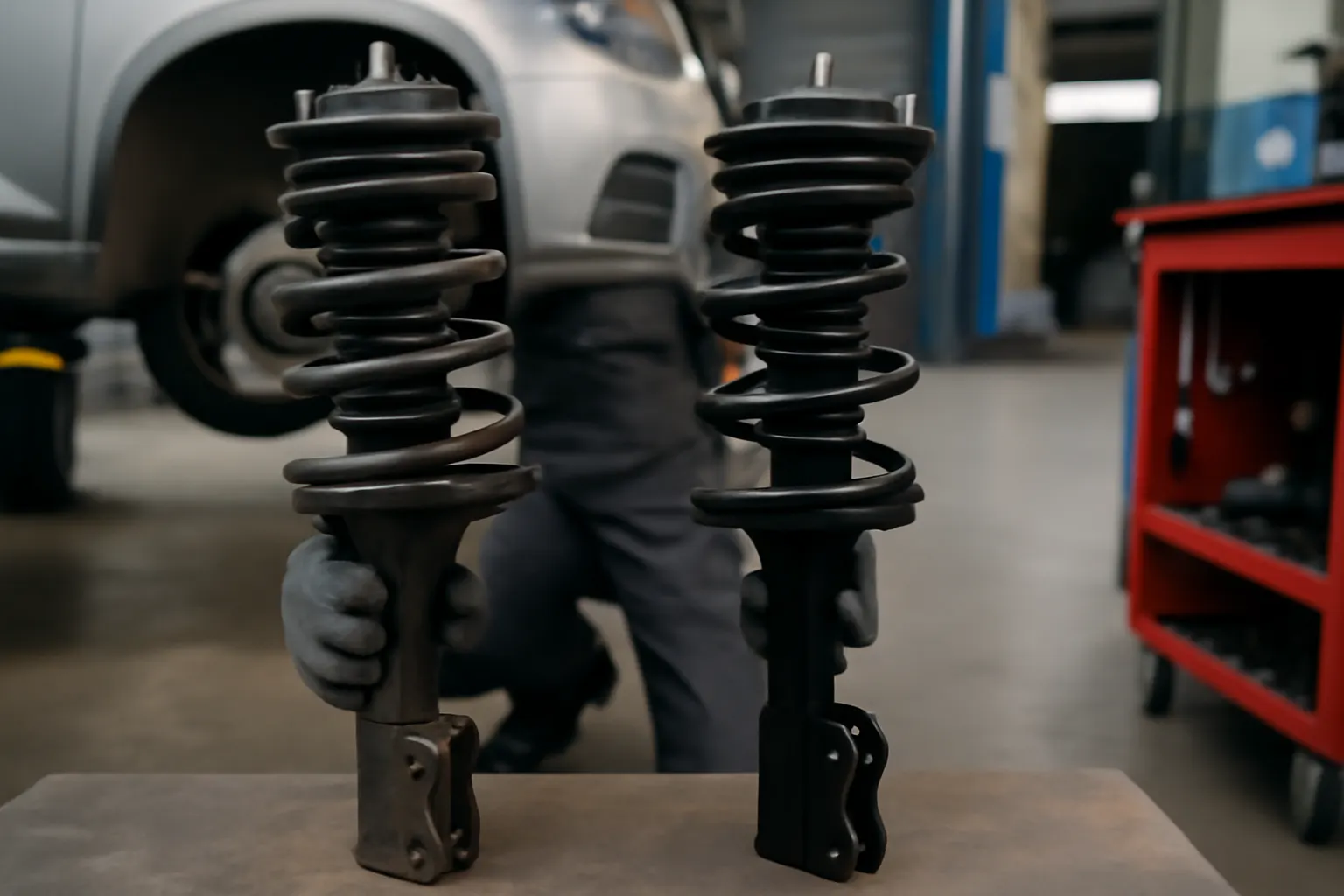
Pro Tip: Always compare the new assembly side-by-side with the original before installation. Check for:
- Matching mounting holes and bracket locations
- Identical strut lengths and knuckle geometry
- Properly aligned spring perches and damper mounts
For a step-by-step guide to diagnosing and resolving suspension noise after a knee assembly replacement, see How to Diagnose Suspension Noise: Knee Assembly Edition.
Checklist: Key Criteria for Selecting a Knee Assembly
Use this checklist before purchasing or installing a knee assembly—OEM or aftermarket:
Quality and Certification
- SAE or NHTSA compliance listed
- Reputable brand with positive reviews
- Material matches or exceeds OEM spec
Fitment
- Confirmed fit for your vehicle’s year, make, and model
- All mounting points and brackets match original
- Proper alignment of strut, knuckle, and spring perch
Warranty and Support
- Manufacturer warranty provided
- Access to technical support or installation guides
Performance Considerations
- Intended use (stock replacement, performance, off-road, etc.)
- Weight rating matches or exceeds original
Installation Readiness
- Includes all necessary hardware (bolts, bushings, etc.)
- Pre-assembled (if needed) to reduce installation time
Long-Term Reliability: What History and Data Tell Us
Data from the National Highway Traffic Safety Administration shows that suspension component recalls often stem from material defects, improper welds, or dimensional inaccuracies—all issues more prevalent in low-quality aftermarket parts. While premium aftermarket brands can match OEM reliability, the risk of early failure is statistically higher with generic, uncertified assemblies.
Signs of a failing or poorly installed knee assembly include:
Advertisement
- Clunking or knocking noises over bumps
- Uneven tire wear
- Steering pull or inconsistent alignment
- Excessive vibration through the steering wheel or chassis
For guidance on when to replace your strut assembly, see When to Replace Your Strut Assembly: Warning Signs and Intervals.
Performance and Fuel Efficiency: The Overlooked Impact
A properly engineered knee assembly maintains correct suspension geometry, which directly affects rolling resistance, tire contact patch, and shock absorption. According to the U.S. Department of Energy, suspension performance is a nontrivial factor in overall vehicle fuel efficiency.
Inferior assemblies can alter alignment angles, increasing resistance and reducing miles per gallon. Additionally, poor ride quality can mask other vehicle issues, leading to deferred maintenance and compounding costs.
Safety and Regulatory Compliance
Safety should be the overriding concern in any suspension repair. Knee assemblies must withstand high loads during emergency maneuvers and collisions. Both OEM and reputable aftermarket assemblies are designed to meet or exceed federal safety standards, but uncertified parts may not.
Check for:
-
SAE certification (for engineering and testing standards)
-
NHTSA compliance (for safety and equipment regulations)
-
Evidence of third-party testing or crash simulation data
If you are unsure about the certification status of a part, consult with a trusted supplier or refer to the NHTSA equipment database.
Cost Considerations: Short-Term Savings vs. Long-Term Value
While aftermarket knee assemblies often come with a lower upfront price, the total cost of ownership can be deceptive. Consider:
- Labor Costs: Additional time spent modifying or troubleshooting a poor-fitting assembly can erase any initial savings.
- Premature Wear: Inferior materials or tolerances can lead to early failure of not only the knee assembly but also related components (bushings, tires, brakes).
- Resale Value: Vehicles with non-OEM or questionable aftermarket parts may be flagged during inspections, reducing resale or trade-in value.
- Warranty Risks: Some vehicle manufacturers or extended warranty providers may deny claims if non-OEM suspension components are installed.
Installation and Post-Installation Best Practices
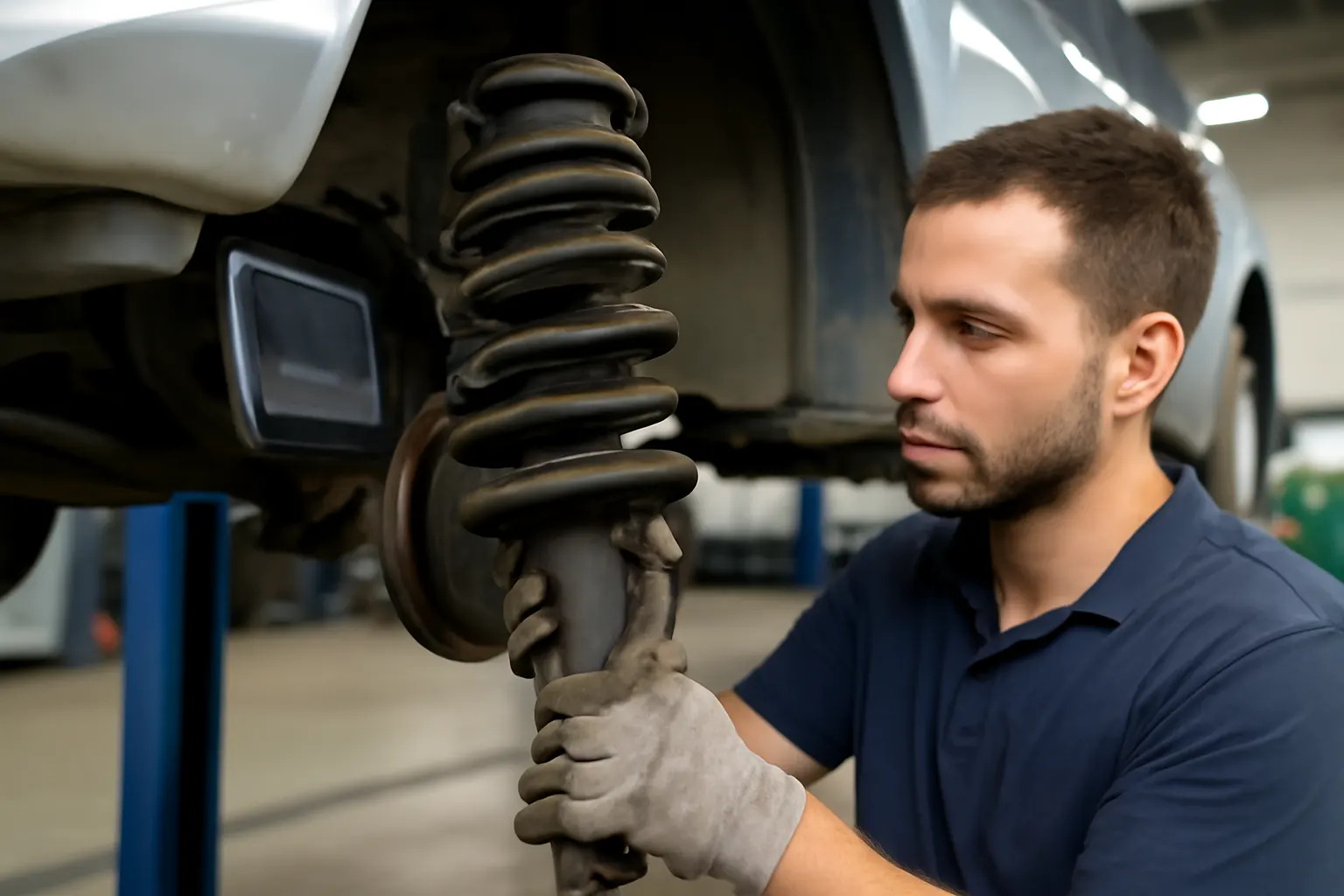
Professional installation is highly recommended for any knee assembly replacement. The process involves:
- Safely lifting and supporting the vehicle
- Removing the wheel and disconnecting the brake, steering, and suspension linkages
- Extracting the old knee assembly and comparing it to the new part
- Installing the new assembly, torquing all fasteners to spec
- Reconnecting all components and verifying fitment
- Performing a full four-wheel alignment (critical for safety and tire wear)
After installation, always test-drive the vehicle and listen for unusual noises or handling changes. If any issues arise, revisit the installation steps or consult a professional.
For post-installation alignment procedures, see Suspension Alignment After Knee Assembly Replacement.
Sourcing Quality Knee Assemblies: The AutoPartEx Approach
At AutoPartEx, we recognize that the knee assembly is not just a part—it’s a critical safety system. Our inventory includes both OEM and premium aftermarket knee assemblies, all vetted for compliance with SAE and NHTSA standards. We provide detailed fitment data, technical support, and installation resources to ensure your repair is done right the first time.
Whether you’re a DIYer or a professional technician, our Knee Assembly (Strut Assy) Technical Guide offers in-depth information on selection, diagnostics, and maintenance.
Expert Action: Making the Right Choice
Bottom line: For most drivers, OEM knee assemblies offer the highest assurance of fit, quality, and long-term reliability—especially for daily drivers and vehicles still under warranty. However, premium aftermarket assemblies from reputable brands are a strong alternative, particularly when seeking specific performance features or when OEM parts are prohibitively expensive or unavailable.
Take these steps before making your purchase:
- Verify all certifications and fitment data
- Compare material specs and manufacturer reputation
- Factor in total cost of ownership, not just initial price
- Insist on professional installation and post-repair alignment
- Monitor for post-installation symptoms and address issues promptly
When in doubt, consult with AutoPartEx technical support for guidance tailored to your vehicle and driving needs.
References
- Vehicle Safety and Equipment - National Highway Traffic Safety Administration
- Materials Technologies - United States Department of Energy
- Fuel Efficiency - United States Department of Energy
- SAE Standards - SAE International
- Vehicle, Car Seat, Tire, and Equipment Recalls - National Highway Traffic Safety Administration
Advertisement