Advertisement
When replacing a faulty rear door window switch, vehicle owners and technicians face a critical decision: choose an OEM (Original Equipment Manufacturer) switch, or opt for an aftermarket alternative? The answer depends on your priorities—whether that's guaranteed fitment, long-term durability, cost savings, or ease of installation. In this comprehensive guide, we break down the key differences, hidden pitfalls, and technical requirements so you can make the most informed choice.
For more on switch types, diagnostics, and vehicle fitment, visit our Rear Door Window Switches: Diagnostics, Replacement & OEM Fitment | AutoPartEx category page.
Immediate Answer: OEM or Aftermarket—Which Rear Window Switch Is Best?
OEM rear door window switches offer guaranteed fitment, factory-level durability, and compliance with all original safety standards. Aftermarket switches can be more affordable and are widely available, but their quality, fit, and longevity can vary significantly depending on the manufacturer.
- Choose OEM if you want a direct replacement with no surprises.
- Consider aftermarket if cost is a concern, but prioritize reputable brands with proven quality and compatibility.
The Hidden Problem: Overlooked Risks in Window Switch Replacement
Many car owners focus solely on price or appearance when shopping for a rear door window switch. However, compatibility, safety, and long-term reliability are often overlooked—leading to premature failures, electrical issues, or even safety hazards. Incorrect fitment can also affect the vehicle’s window control system, especially if the car uses a master control switch or integrates advanced electronics.
Digging Deeper: Why Rear Door Window Switch Selection Matters
Safety, Electronics, and Regulatory Compliance
Rear window switches are not just simple toggles—they’re integral to the vehicle’s power window circuit. As highlighted by the National Highway Traffic Safety Administration, even minor electrical components must meet stringent safety and performance standards. Faulty or poorly matched switches can cause:
- Intermittent window operation
- Electrical shorts or blown fuses
- Potential fire hazards
- Loss of child safety lock functionality
Impact on Vehicle Systems
Modern vehicles often use a master control switch at the driver’s door, which communicates with rear door switches for coordinated window operation. Mismatched or subpar aftermarket switches may not sync properly, leading to erratic window movement, loss of one-touch features, or even disabling child lock systems. For more on system integration, see Master Control Switches and Rear Window Integration.
Understanding OEM Rear Window Switches
What Is an OEM Switch?
An OEM rear window switch is manufactured or approved by the same company that supplied the original part for your vehicle. These switches are designed to match the exact specifications, materials, and electrical connectors as the factory-installed unit.
- Exact fit and finish—matches interior aesthetics
- Meets all original safety and performance standards
- Includes correct electrical pinouts for your make/model
Pros and Cons of OEM Switches
Benefits:
- Guaranteed fitment and function
- High durability and consistent quality
- Maintains manufacturer’s safety compliance
Drawbacks:
- Typically higher cost than aftermarket
- May require dealership purchase or special ordering
- Limited options for customization
Understanding Aftermarket Rear Window Switches
What Is an Aftermarket Switch?
An aftermarket rear door window switch is produced by third-party manufacturers. These switches are designed to fit and function similarly to the OEM part, but actual quality, materials, and compatibility can vary.
- Wide range of brands, prices, and features
- Availability for older or discontinued models
- Potential for design or material upgrades
Pros and Cons of Aftermarket Switches
Benefits:
Advertisement
- Lower cost and broader availability
- May offer enhanced features or aesthetics
- Easier to source for rare or older vehicles
Drawbacks:
- Variable quality—risk of premature failure
- May not perfectly match OEM fit or finish
- Potential for electrical incompatibility
Key Comparison: OEM vs. Aftermarket Rear Window Switches
| Feature | OEM Switch | Aftermarket Switch |
|---|---|---|
| Fitment | Guaranteed, precise | Varies—may require tweaks |
| Durability | Factory-tested, long life | Depends on brand/materials |
| Safety Compliance | Meets all standards | Not always certified |
| Availability | Dealer or specialty shops | Widely available |
| Cost | Higher | Lower to moderate |
| Warranty | Often included | Varies widely |
Fitment and Compatibility: What Can Go Wrong?
Common Issues with Aftermarket Switches
- Connector mismatch: Pin layout or plug shape may differ, requiring splicing or adapters.
- Physical size: Slightly different dimensions can cause loose fit, rattle, or difficult installation.
- Electronic integration: May not support all OEM functions (e.g., child locks, one-touch operation).
- Finish mismatch: Color or texture may not match the original interior trim.
OEM Advantages for Fitment
OEM switches eliminate guesswork—they are engineered for your specific year, make, and model. This is especially important for vehicles with advanced electronics, as highlighted by SAE Standards for automotive systems.
Durability and Material Quality: What You Need to Know
OEM: Built to Last
OEM switches use materials and construction methods specified by the vehicle manufacturer. According to the U.S. Department of Energy’s Materials Technologies, material selection in automotive electronics directly impacts durability, heat resistance, and performance.
Aftermarket: Check Before You Buy
While some aftermarket brands use high-quality plastics and robust contacts, others cut costs with inferior materials. Signs of poor quality include:
- Lightweight, brittle plastic housings
- Thin or poorly plated electrical contacts
- Weak actuator springs or buttons
Safety Considerations: Regulatory and Practical
Why Compliance Matters
As the NHTSA notes, all replacement electrical equipment—including window switches—should meet federal safety standards (NHTSA Equipment). Substandard switches can lead to:
- Short circuits or electrical fires
- Unintended window operation—a child safety hazard
- Failure to operate during emergencies
Checklist: Safe Window Switch Replacement
Before installing any rear door window switch, verify:
- The part matches your vehicle’s year, make, and model
- Electrical connectors and pinouts are identical
- The switch meets or exceeds OEM safety ratings
- The manufacturer is reputable and complies with safety standards
Diagnostics: Identifying Rear Window Switch Issues
Symptoms of a Failing Switch
- Window does not respond to switch input
- Intermittent or slow window movement
- Only one direction (up or down) works
- Switch feels loose or has poor tactile feedback
For a step-by-step troubleshooting guide, see Diagnosing Power Window Switch Failures.
Testing and Confirmation
- Check fuse and power supply—rule out blown fuses or wiring issues.
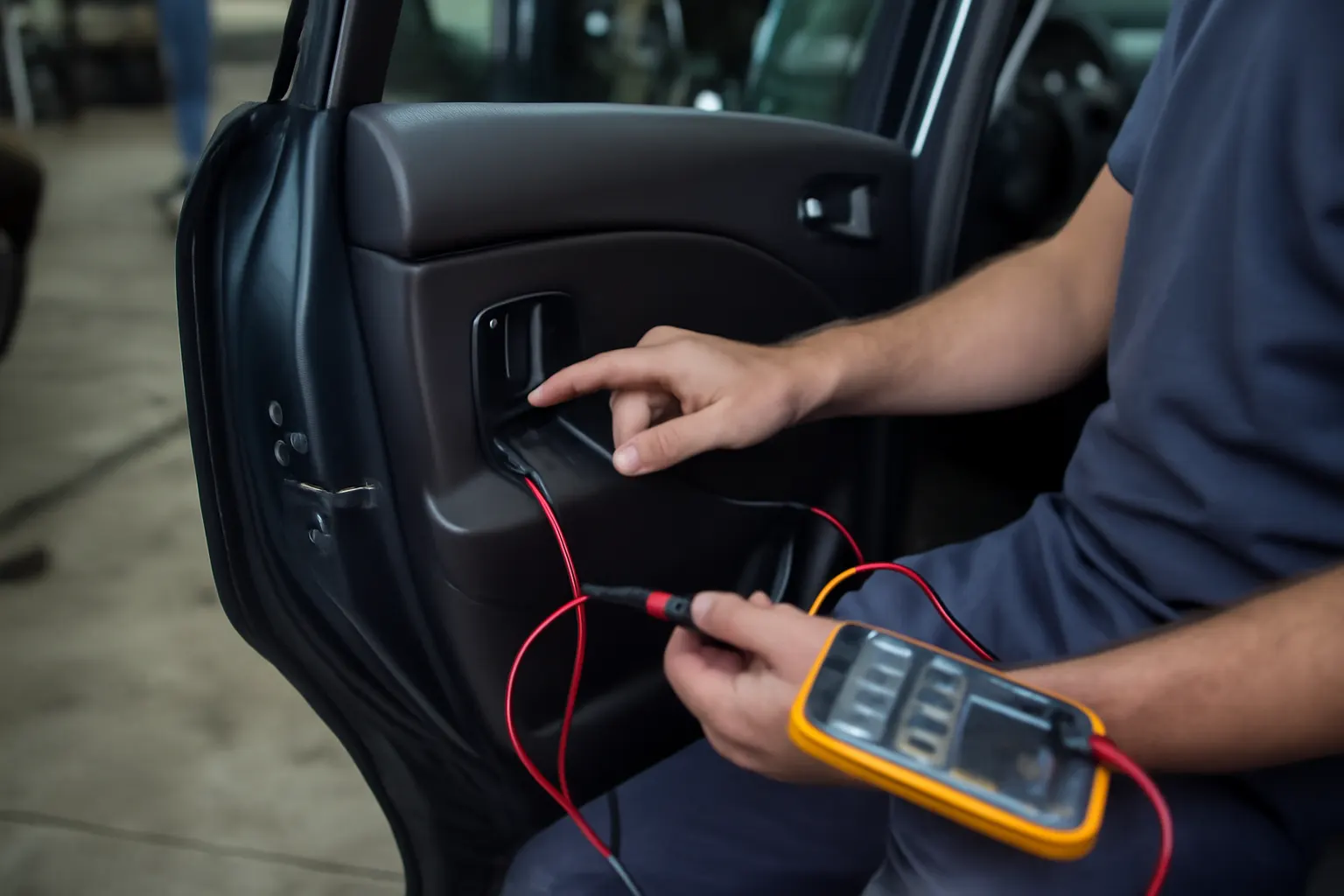
- Test switch operation—use a multimeter to verify continuity.
- Inspect connectors—look for corrosion or bent pins.
- Swap with known good switch—if available, to isolate the problem.
Installation: Best Practices for Rear Door Window Switch Replacement
Preparation and Tools
- Trim removal tools to avoid damaging panels
- Screwdrivers (Phillips and flathead)
- Multimeter or test light (for diagnostics)
- Dielectric grease (for electrical contact protection)
Step-by-Step Installation
- Disconnect the vehicle battery to avoid accidental shorts.
- Remove the door panel using trim tools and carefully disconnecting any clips.
- Unplug the old switch from its harness.
- Compare the new switch (OEM or aftermarket) to the old one for physical and electrical match.
- Install the new switch and reconnect the wiring harness.
- Test window operation before reassembling the door panel.
- Reinstall door panel and reconnect the battery.
Advertisement
Maintenance and Longevity: Maximizing Switch Life
Tips for Long-Lasting Performance
- Keep switches clean: Dust and debris can enter the mechanism, causing wear or sticking.
- Avoid excessive force: Press switches gently—aggressive use can damage internal contacts.
- Address slow windows promptly: This may indicate motor or regulator issues placing extra strain on the switch.
- Inspect wiring annually: Ensure connectors remain corrosion-free and tightly seated.
When to Replace
If your rear window switch shows signs of sticking, intermittent operation, or physical damage, replacement is recommended. For more guidance, see When to Replace Rear Door Window Switches.
Sourcing: How to Choose the Right Rear Window Switch
OEM Sourcing
- Purchase from authorized dealers or reputable online retailers specializing in genuine parts.
- Use your VIN (Vehicle Identification Number) for precise fitment.
Aftermarket Sourcing
- Research brands—look for those with positive reviews and transparent manufacturing standards.
- Check for certifications or compliance with SAE Standards.
- Avoid generic listings that do not specify compatibility with your vehicle.
Fitment Checklist
- Confirm make, model, and year compatibility
- Verify connector and pin configuration
- Check for required features (illumination, child lock, one-touch)
- Assess return policy and warranty
Cost Analysis: OEM vs. Aftermarket Value
Direct Cost Comparison
- OEM switches: Typically priced 2–4 times higher than aftermarket equivalents.
- Aftermarket switches: Range from basic budget models to premium, OEM-quality replacements.
Hidden Costs
- Time spent troubleshooting poor fitment or failures
- Potential for electrical damage if a faulty switch is installed
- Loss of advanced features or safety compliance
Long-Term Value
While aftermarket switches can offer significant upfront savings, an OEM switch may prove more cost-effective over the lifespan of the vehicle due to reduced risk of failure and perfect integration.
Integration with Other Window Controls
Master Switch Coordination
Many vehicles’ rear window switches are electronically linked to the master (driver’s) control panel. Improperly matched switches can cause:
- Loss of master override function
- Failure of window lockout/child safety features
- Inconsistent window operation
For more, see Master Control Switches and Rear Window Integration.
Compatibility with Front Door Switches
Rear and front door window switches may share wiring or circuit logic. Always ensure replacements maintain system integrity.
AutoPartEx Positioning: Your Trusted Source for Window Switch Solutions
At AutoPartEx, we understand the importance of quality, safety, and fitment when it comes to rear door window switches. Our catalog features both OEM and carefully vetted aftermarket options, with detailed fitment data to ensure you get the right part the first time. Our technical guides help you diagnose, select, and install with confidence—backed by the latest industry standards and regulatory guidelines.
Explore our full selection and expert resources at the Rear Door Window Switches: Diagnostics, Replacement & OEM Fitment | AutoPartEx page.
Expert Action: How to Make the Right Choice
- Diagnose the problem thoroughly—ensure the switch, not the motor or wiring, is at fault.
- Decide on priorities—is perfect fit and long-term reliability worth the extra cost of OEM, or does a high-quality aftermarket switch meet your needs?
- Source from reputable vendors—whether OEM or aftermarket, avoid generic or uncertified parts.
- Verify fitment—double-check connector, pinout, and feature compatibility.
- Install carefully—follow best practices to avoid damaging trim or wiring.
- Test all window functions—including master control and safety features, before final reassembly.
By following these steps and leveraging AutoPartEx’s expertise, you can restore your rear window operation with confidence and safety.
References
Advertisement