Advertisement
The Evolution of Power Window Controls
Power window controls have journeyed from simple, clunky toggles to sophisticated, multiplexed modules that are integral to modern automotive safety and convenience. Today’s drivers expect flawless, intuitive operation from every window switch—especially those located in the rear doors, where both safety and reliability are paramount. Understanding how these components evolved, and what that means for diagnostics, replacement, and upgrades, is essential for anyone maintaining or restoring modern vehicles. In this comprehensive guide, we’ll trace the technological path of power window switches, spotlight hidden challenges, and provide actionable expertise for enthusiasts, technicians, and fleet managers. For a deep dive into rear door window switch fitment, troubleshooting, and replacement, see our Rear Door Window Switches: OEM Fit, Troubleshooting, and Replacement | AutoPartEx category page.
Power Window Switches: The Immediate Answer
A power window switch is the driver’s interface for raising and lowering vehicle windows electrically rather than manually. Early systems used simple, mechanical toggles directly wired to a single window motor. Modern switches, however, are part of a complex network—often multiplexed with other vehicle electronics—enabling enhanced safety, convenience, and diagnostics. In rear doors, these switches must balance accessibility with child safety, durability, and seamless integration into the vehicle’s body control module (BCM).
The Hidden Problem: Complexity Breeds New Challenges
While power window switches have become more reliable and feature-rich, their complexity introduces new failure modes and diagnostic hurdles. Intermittent faults, network communication errors, and incompatibility between aftermarket and OEM switches are common headaches. Many DIYers and even seasoned technicians underestimate the intricacies of troubleshooting and replacing modern rear door window switches, leading to repeat failures or system-wide electrical issues.
Expanding the Problem: From Simple Circuits to Multiplexed Networks
Mechanical Simplicity vs. Electronic Complexity
In the past, a window switch simply completed a circuit to the window motor. If it failed, the solution was usually a quick swap. Today, window switches are often part of a multiplexed system—where a single wire carries multiple signals, and the switch communicates digitally with the BCM. This approach reduces wiring weight and complexity but makes diagnostics and replacement more nuanced.
Safety, Standards, and Recalls
Modern window switches are subject to stringent safety standards, particularly regarding accidental operation and child protection. The National Highway Traffic Safety Administration (NHTSA) and SAE International provide clear guidelines on switch design, placement, and function to prevent injuries. Recalls due to faulty window switches are not uncommon, usually involving issues such as unintentional window activation, switch fires, or loss of function (NHTSA Equipment).
Integration with Other Systems
Today’s rear door window switches may also interface with anti-pinch sensors, central locking, and even vehicle alarm systems. Their failure can trigger broader electrical problems, including warning lights, inoperative door locks, or even battery drain.
Historical Overview: The Path from Manual to Multiplexed
The Era of Manual Windows
Before the 1940s, all automotive windows were manually operated by cranks. While simple and robust, they demanded physical effort and couldn’t be controlled remotely.
1940s–1970s: The First Power Window Switches
Luxury vehicles in the 1940s began to feature power windows, using basic toggle or rocker switches. Each switch was directly wired to its respective window motor via relays. These systems were reliable but used heavy-gauge wiring throughout the vehicle.
1980s–1990s: Centralized Controls and Safety Features
As power windows became standard across vehicle classes, manufacturers centralized controls—adding master switches to the driver’s door and child locks for rear windows. Switches became more modular, and early safety features, such as lockouts and illuminated buttons, were introduced.
2000s–Present: Multiplexed and Integrated Systems
Today, power window switches are part of a vehicle-wide network, using multiplexed (CAN bus or LIN bus) communication. This allows for lighter wiring harnesses, advanced diagnostics, and integration with safety systems like anti-pinch, automatic up/down, and programmable lockouts.
Advertisement
Anatomy of a Modern Rear Door Window Switch
Key Components
- Switch Housing: Durable plastic, often color-matched to the interior.
- Actuator Button: The part pressed by the passenger; may include illumination.
- Printed Circuit Board (PCB): Contains the electronic logic and communication components.
- Connector Pins: Interface with the vehicle’s harness.
- Microcontroller or Logic IC: Enables multiplexed communication and advanced features.
Functional Layers
- Mechanical Actuation: User presses the button.
- Electrical Signal Generation: The PCB detects the press and converts it to a digital signal.
- Network Communication: The signal is sent via CAN/LIN bus to the BCM.
- Motor Command: BCM sends power to the window motor, possibly with anti-pinch logic.
Diagnostic Challenges in Modern Systems
Common Symptoms
- Rear window inoperative from either door or master switch
- Window moves only in one direction or intermittently
- Child lock or lockout function not working
- Unexplained battery drain or BCM fault codes
Why Diagnosis Is More Difficult Now
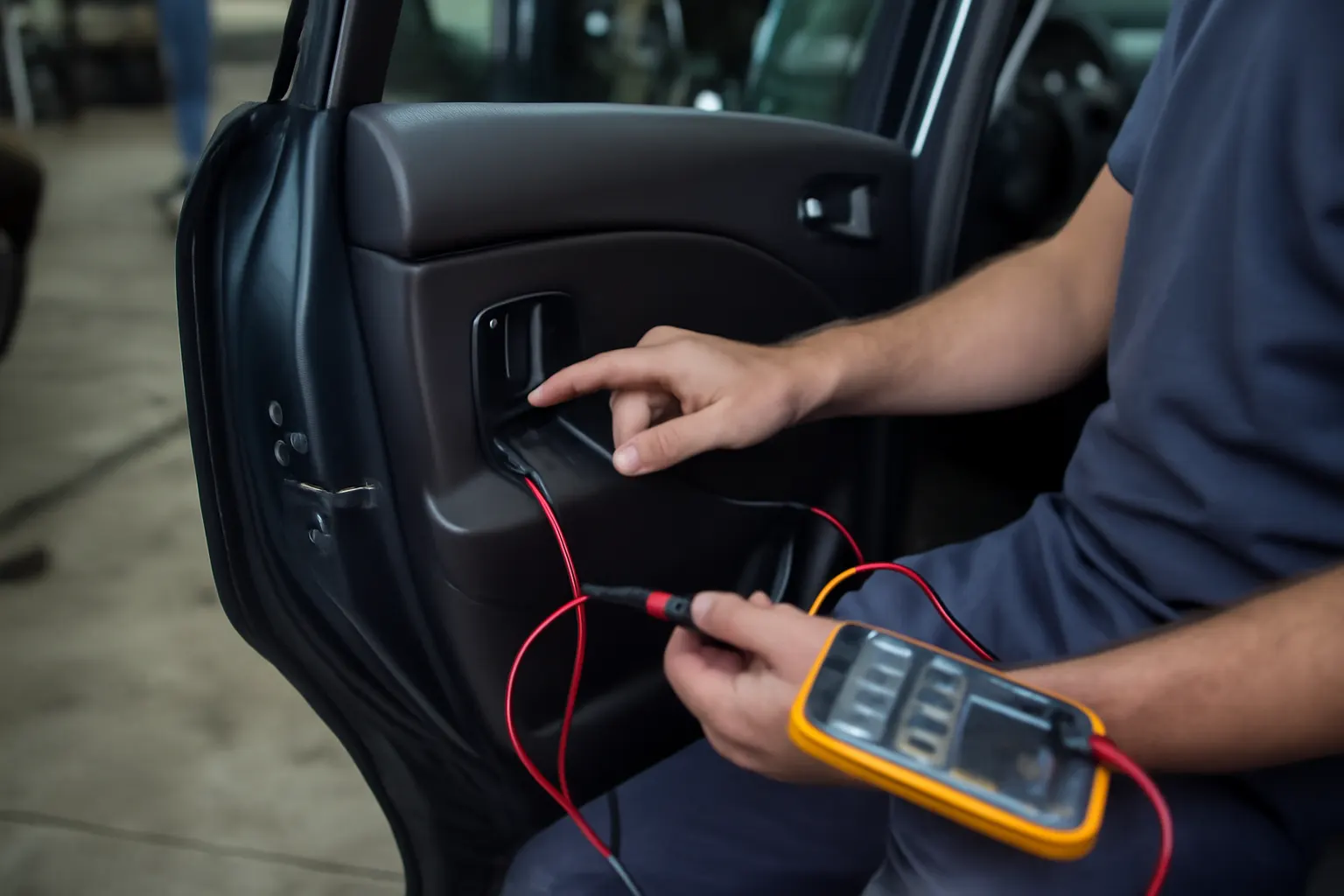
Older systems could be checked with a test light or multimeter at the switch. Modern switches may require a scan tool to read BCM fault codes or verify network communication. Some switches are “coded” to the vehicle, and replacements must be programmed or “learned” by the system.
Diagnostic Checklist for Rear Door Window Switch Issues
When troubleshooting a non-functioning rear door window switch, use this step-by-step checklist:
- Visual Inspection:
- Check for physical damage, worn buttons, or liquid intrusion.
- Power and Ground Verification:
- Confirm voltage and ground at the switch connector with a multimeter.
- Network Communication:
- Use a scan tool to check for BCM or network DTCs (diagnostic trouble codes).
- Switch Function Test:
- Test the switch on both the door and the master panel (if equipped).
- Child Lock/Lockout Function:
- Ensure child lockout is not engaged from the master switch.
- Window Motor Test:
- Bypass the switch to test the motor directly.
- Switch Replacement Test:
- Temporarily swap with a known-good switch, if possible.
- Final System Reset:
- After repair, reset the vehicle’s BCM or perform a relearn procedure if required.
If any step reveals a fault, address it before proceeding to the next. For a detailed diagnosis workflow, see our Diagnosing Power Window Switch Failures guide.
Materials and Manufacturing Advances
Lightweighting and Durability
Modern window switches benefit from advanced plastics and low-mass connectors, contributing to overall vehicle weight reduction and improved fuel efficiency (DOE Materials Technologies). The push for lighter vehicles has driven manufacturers to develop smaller, more efficient switch modules without sacrificing tactile quality or durability.
Electronic Reliability
Switch PCBs now use conformal coatings and sealed housings to resist moisture, dust, and temperature extremes. This is especially important in rear doors, which are more vulnerable to water ingress from open windows or worn seals.
Safety Standards and Regulatory Drivers
Anti-Pinch and Child Safety
NHTSA mandates anti-pinch technology for power windows, requiring switches to “pull up” for closure—reducing the risk of accidental injury (NHTSA Equipment). Rear door switches are often deactivated by a master lockout to prevent unsupervised operation by children.
Fire and Overload Protection
Switches must pass rigorous tests for electrical overload, short-circuit resistance, and flame retardance. Recalls have occurred due to switches overheating or causing fires, prompting manufacturers to improve materials and add circuit protection features.
Standardization
SAE International and automakers have established standards for switch placement, tactile feedback, illumination, and diagnostics (SAE Standards). Compliance ensures cross-manufacturer compatibility and user familiarity.
Integration with Body Control Modules (BCMs)
What Is a BCM?
The BCM is the “nerve center” for many body-related functions, including windows, locks, lights, and alarms. Modern rear door window switches communicate with the BCM, which then commands the window motor.
Advertisement
Implications for Repairs
Replacing a switch may require the vehicle to “learn” the new component via a scan tool or key cycle. Some switches are VIN-coded and will not function until programmed. BCM faults can mimic switch failures, so always diagnose the network before replacing parts.
Replacing Rear Door Window Switches: Step-by-Step Guidance
Removal and Replacement
- Disconnect the Battery: Prevents accidental short circuits.
- Remove Door Panel: Carefully pry off trim and fasteners; avoid damaging clips.
- Unplug Old Switch: Depress the connector lock and pull gently.
- Inspect Harness: Check for corrosion, bent pins, or water damage.
- Install New Switch: Align pins and press firmly until locked.
- Test Operation: Before reassembling, test all switch functions.
- Reinstall Door Panel: Ensure all clips and screws are secure.
- System Reset: If required, reset or reprogram the switch via scan tool.
For a complete walkthrough, refer to our How to Replace a Rear Door Window Switch guide.
Selecting the Right Replacement: OEM vs. Aftermarket
OEM (Original Equipment Manufacturer) Switches
- Pros: Guaranteed fit, material quality, and compatibility with BCM and safety features.
- Cons: Higher cost; sometimes only available through dealerships.
Aftermarket Switches
- Pros: Lower cost, wider availability, sometimes improved aesthetics.
- Cons: Risk of poor fit, incompatibility with multiplexed systems, lack of anti-pinch or child lock functions.
Fitment Considerations
Always match the part number and connector type. For multiplexed vehicles, verify that the switch supports your vehicle’s network communication protocol. Consult the window switch category for application-specific guidance.
Maintenance and Longevity: Keeping Rear Door Switches Reliable
Preventive Measures
- Keep Switches Clean: Wipe away dust and spills promptly.
- Protect from Moisture: Ensure window and door seals are intact.
- Use Child Lockouts: Prevent accidental or excessive use by children.
- Regular Operation: Exercise all windows periodically to prevent motor and switch corrosion.
Signs of Impending Failure
- Sticking or intermittent operation
- Dim or flickering illumination
- Physical looseness or rattling
- Unusual heat or burning smell
Promptly address these issues to avoid more costly BCM or wiring harness repairs.
Troubleshooting Complex Electrical Issues
When It’s More Than the Switch
If replacing the switch doesn’t resolve the issue, consider:
- Wiring Harness Breaks: Especially in door flex points.
- BCM Software Faults: May require dealer reprogramming.
- Motor or Regulator Failure: Test independently from the switch.
For electrical gremlins in rear doors, see our dedicated article on Common Electrical Issues in Rear Doors.
The Role of Window Switches in Modern Vehicle Design
User Experience and Ergonomics
Automakers now design window switches with tactile feedback, intuitive placement, and LED illumination. Rear door switches are often recessed or shielded for child safety, while still providing easy access for adult passengers.
Integration with Smart Features
Some vehicles enable remote window operation via key fob or smartphone app, requiring switches to communicate with telematics modules and security systems. This further underscores the need for high-quality, compatible replacement switches.
AutoPartEx: Your Partner in Window Switch Solutions
AutoPartEx specializes in sourcing OEM-quality and rigorously tested aftermarket rear door window switches for a wide range of makes and models. Our expert-driven guides cover everything from diagnosis to installation, ensuring you get the right part the first time. Whether you’re addressing a frustrating electrical issue, restoring a classic, or upgrading for safety, trust AutoPartEx for technical clarity and reliable parts. For a full selection and fitment support, visit our Rear Door Window Switches: OEM Fit, Troubleshooting, and Replacement | AutoPartEx hub.
Taking Action: What Experts Recommend
- Diagnose Thoroughly: Use both manual and scan tool-based methods to pinpoint the fault.
- Prioritize OEM Fitment: Especially for multiplexed systems or vehicles with advanced safety features.
- Follow Proper Installation Procedures: Avoid shortcuts that lead to repeat failures or electrical damage.
- Stay Informed: Monitor recalls and service bulletins for your vehicle’s make and model.
- Leverage Trusted Resources: Use AutoPartEx guides and category pages for the latest technical and sourcing information.
By understanding the evolution and complexity of power window controls, you can confidently maintain, diagnose, and upgrade your rear door window switches—ensuring safety, reliability, and satisfaction for years to come.
References
Advertisement