
Advertisement
Common Electrical Issues in Rear Doors
Rear door electrical systems are often overlooked until something goes wrong. Whether your rear window refuses to budge, the child lock won't disengage, or a switch feels dead, these symptoms usually point to a handful of common electrical issues. Understanding these problems, how to diagnose them, and how to address them is essential for anyone maintaining, repairing, or upgrading a vehicle’s rear door components.
For a complete overview of rear door window switches and troubleshooting, visit our Rear Door Window Switches: OEM Fit, Troubleshooting, and Replacement | AutoPartEx category page.
This in-depth guide covers the most frequent electrical issues affecting rear door modules, including switches, regulators, harnesses, and control modules. We’ll move from immediate fixes to deeper technical explanations, finishing with actionable steps and professional advice to keep your vehicle’s rear doors functioning reliably.
Quick Answers: What Are the Most Common Rear Door Electrical Problems?
The majority of rear door electrical issues fall into a few categories:
- Faulty window switches: Often due to worn contacts, moisture intrusion, or physical damage.
- Defective window regulators/motors: Resulting in slow, erratic, or non-functional windows.
- Broken or frayed wiring: Especially at the door jamb, causing intermittent or total loss of power.
- Failed child safety locks: Electrical or electronic lock mechanisms that stop responding.
- Malfunctioning door control modules: Affecting multiple door functions, including central locking and window operation.
Most of these problems can be traced to either individual component wear or issues in the wiring and connectors that link everything together.
The Hidden Problem: Why Rear Door Electrical Issues Go Undetected
Rear doors are less frequently used than front doors, so electrical issues can develop unnoticed for months. Children or infrequent passengers may not report slow windows or unresponsive switches. This delayed detection can allow minor faults to escalate into more complex failures—sometimes affecting multiple systems, such as central locking or rear window defrost.
Additionally, rear door wiring is subject to repeated flexing, temperature swings, and moisture exposure. Over time, these factors degrade insulation, corrode contacts, and weaken solder joints, making rear doors a prime site for elusive electrical gremlins.
Expanding the Problem: How Rear Door Electrical Faults Affect Vehicle Safety and Usability
While a stuck rear window might seem like a minor inconvenience, rear door electrical failures can have broader consequences:
- Passenger Safety: In emergencies, malfunctioning windows or locks can impede escape or rescue.
- Child Safety Features: Failed child locks or window switches can expose children to hazards.
- Security: Broken door locks or windows may compromise vehicle security.
- Comfort: Passengers lose access to ventilation and convenience features.
The National Highway Traffic Safety Administration (NHTSA) recognizes the importance of reliable electrical equipment in vehicle safety systems, including window and lock controls [NHTSA Vehicle Safety and Equipment]. Ignoring rear door electrical issues can lead to safety recalls or failed inspections, emphasizing the need for prompt diagnosis and repair.
Anatomy of a Rear Door Electrical System
Understanding the components involved helps pinpoint failure points. A typical rear door electrical system includes:
- Window Switch: The user interface for raising/lowering the window.
- Window Regulator and Motor: The mechanism and electric motor that move the glass.
- Wiring Harness: Connects switches, motors, locks, and sensors to the vehicle’s main electrical system.
- Door Control Module (if equipped): Microcontroller managing multiple door functions.
- Child Safety Lock (manual or electronic): Prevents rear passengers from opening the door/window.
- Speakers and Courtesy Lamps: Additional powered elements.
Each component depends on secure connections, proper grounding, and unbroken power/ground paths.
Diagnosing Rear Door Electrical Issues: A Step-by-Step Checklist
Accurate diagnosis is critical to avoid unnecessary part replacements. Use the following checklist to systematically identify the root cause:
Rear Door Electrical Issue Diagnostic Checklist
- Visual Inspection
- Examine switches for physical damage or sticking.
- Check window movement for abnormal noises or binding.
- Inspect the door harness at the jamb for visible fraying or exposed wires.
- Look for signs of moisture or corrosion on connectors.
Advertisement
-
Function Test
- Operate the window/lock from both the rear door switch and the driver’s master switch.
- Test child lock functionality (if equipped).
- Listen for clicking or humming from inside the door when switches are pressed.
-
Electrical Testing
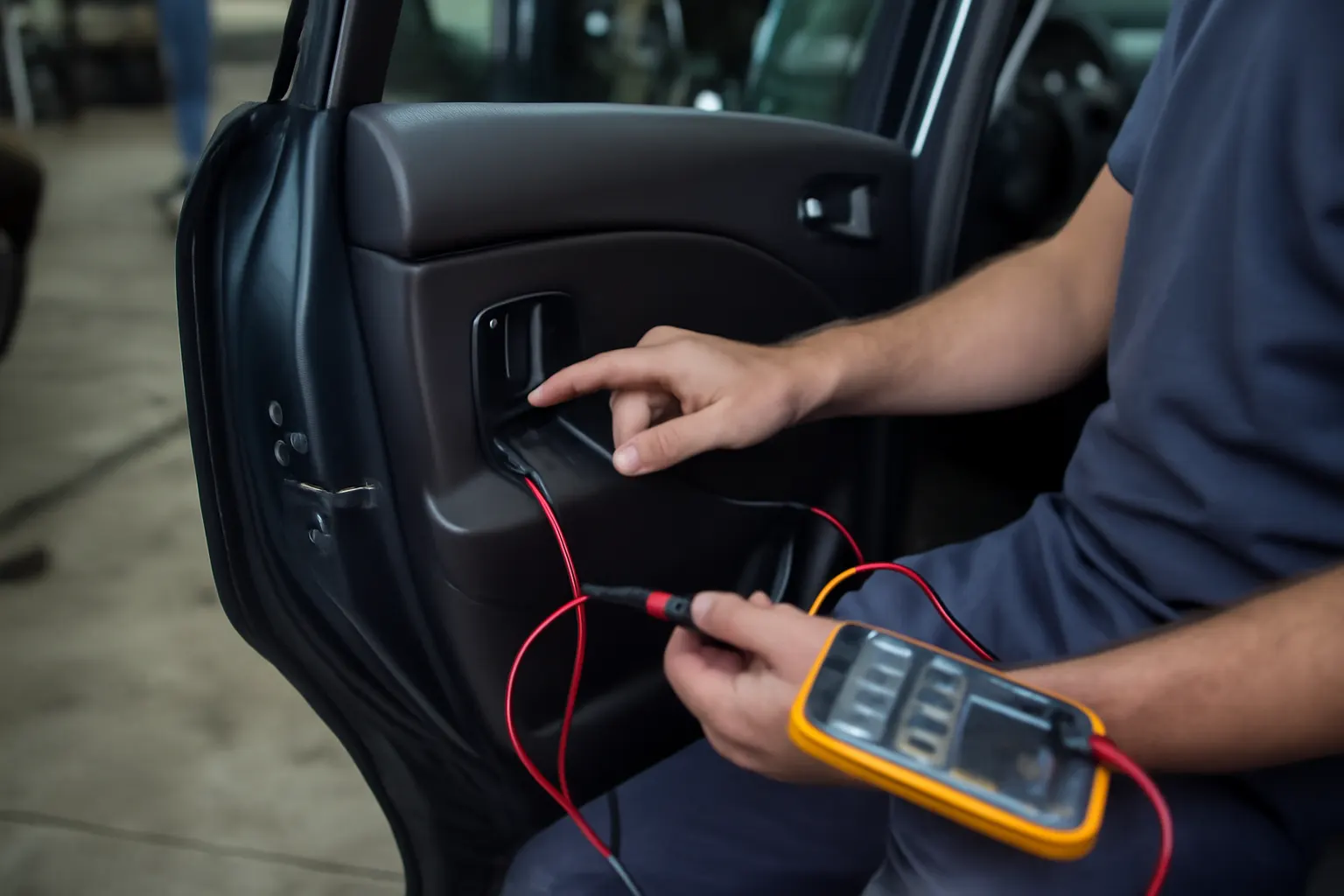
- Use a multimeter to check for voltage at the switch terminals.
- Test continuity of the wiring harness, especially through the flex point at the door jamb.
- Check for proper ground at the door’s electrical components.
-
Module and Relay Checks
- Scan for diagnostic trouble codes (DTCs) using an OBD-II scanner if the vehicle has a body control module.
- Inspect related fuses and relays in the fuse box.
-
Component Substitution
- Swap the suspect switch with a known-good unit (if available).
- Temporarily connect the window motor to a 12V source to verify operation.
By following this systematic approach, you can isolate whether the problem lies in the switch, regulator, wiring, or control module.
Window Switch Failures: Symptoms, Causes, and Solutions
Window switches are high-wear items, especially in vehicles with frequent rear passenger use or ridesharing applications. The most common symptoms of failure include:
- No response when pressing the switch.
- Window moves only in one direction.
- Intermittent operation (window works only when the switch is pressed a certain way).
- Visible melting or discoloration of the switch housing.
Causes:
- Worn or pitted electrical contacts.
- Moisture or beverage spills seeping into the switch.
- Physical breakage from excessive force or vandalism.
Solutions:
- Remove and inspect the switch for corrosion or broken tabs.
- Clean contacts using electrical contact cleaner (if minor corrosion is present).
- Replace the switch with an OEM or high-quality aftermarket part. For a detailed guide, see How to Replace a Rear Door Window Switch.
Window Regulator and Motor Issues: Detection and Replacement
A faulty window regulator or motor can manifest as:
- Slow or jerky window movement.
- Clicking, grinding, or popping noises inside the door.
- Complete failure to move the window, even with a working switch.
Common Causes:
- Worn gears or cables in the regulator.
- Burned-out motor windings.
- Broken plastic guides or mounting points.
Detection:
- Listen for motor noise when the switch is pressed. If you hear the motor but the window doesn’t move, the regulator is likely at fault.
- If there’s no sound, test the motor directly with a 12V source.
- Remove the door panel for a visual inspection.
Replacement:
- Use OEM or OE-fit parts for best results.
- Lubricate moving parts during installation.
- Follow manufacturer torque specs for mounting hardware.
Wiring Harness and Connector Failures: The Overlooked Culprit
Door wiring harnesses are subjected to thousands of open/close cycles, causing stress and eventual failure. Common symptoms include:
- Intermittent or total loss of power to windows, locks, or speakers.
- Functions that work only when the door is in a certain position.
- Multiple electrical failures in the same door.
Key Failure Points:
- The flex point at the door jamb (between the body and the door).
- Moisture intrusion at connectors.
- Corroded or loose pins.
Diagnosis and Repair:
- Gently flex the harness while operating the switch; if function returns, suspect a broken wire.
- Use a continuity tester to identify open circuits.
- Repair by splicing in new wire and using heat-shrink tubing for weather protection.
- Replace damaged connectors or pins as needed.
Door Control Modules: When Electronics Complicate the Picture
Modern vehicles often use a dedicated door control module (DCM) to manage windows, locks, and sometimes mirror adjustments. DCM failures can cause:
- All rear door functions to stop working simultaneously.
- Random or erratic operation of windows and locks.
- Diagnostic trouble codes (DTCs) related to body control systems.
Diagnosis:
- Scan for DTCs using an OBD-II tool.
- Check for module power and ground.
- Inspect for water ingress or corrosion on the module housing and connectors.
Solution:
Advertisement
- Replace the module if faulty. Programming may be required for some vehicles—consult service information or a qualified technician.
Child Safety Lock and Rear Door Lock Issues
Child safety locks are critical for rear passenger safety. Failures may be mechanical or electrical:
- Mechanical: Lever or cam inside the lock mechanism breaks or jams.
- Electrical: Solenoid or actuator fails, or wiring to the actuator is damaged.
Symptoms:
- Child lock cannot be engaged/disengaged.
- Rear door cannot be opened from inside, even with the lock disengaged.
- Audible clicking but no movement when activating the lock.
Diagnosis:
- Remove the door panel and inspect the lock mechanism.
- Test the actuator with 12V power.
- Check wiring continuity.
Repair:
- Replace the actuator or lock assembly if defective.
- Lubricate moving parts to prevent recurrence.
Moisture Intrusion: The Silent Destroyer
Water intrusion is a leading cause of rear door electrical failures. Sources include:
- Faulty window seals.
- Damaged vapor barriers inside the door.
- Blocked drain holes at the bottom of the door.
Consequences:
- Corrosion of switch contacts and connectors.
- Short circuits or blown fuses.
- Mold or odor issues.
Prevention and Repair:
- Inspect and replace damaged seals and weatherstripping.
- Ensure drain holes are clear.
- Use dielectric grease on connectors to prevent future corrosion.
Preventive Maintenance for Rear Door Electrical Components
Routine maintenance helps prevent many common failures:
- Annual Inspection: Remove the rear door panel and inspect switches, wiring, and connectors for signs of wear or moisture.
- Harness Flex Test: Gently move the harness at the door jamb to check for intermittent faults.
- Connector Cleaning: Use electrical contact cleaner and apply dielectric grease to all connectors.
- Seal and Drain Check: Verify that all seals are intact and drains are clear.
Sourcing Quality Replacement Parts: OEM vs. Aftermarket
Selecting the right replacement parts is crucial for reliability and safety. Consider the following:
- OEM (Original Equipment Manufacturer): Guaranteed fit and function, meets all safety standards.
- OE-Equivalent Aftermarket: Often more affordable, but quality varies—choose reputable brands.
- Cheap Non-Certified Parts: May not meet safety or durability standards and can cause new issues.
When replacing switches, regulators, or modules, always verify compatibility with your vehicle’s make, model, and year. For a curated selection of trusted parts, see our window switch category.
The Impact of Materials and Vehicle Design on Rear Door Electrical Reliability
The United States Department of Energy highlights the ongoing development of advanced materials and vehicle structures to improve performance and durability [DOE Materials Technologies]. Lightweight materials and modular door assemblies have improved crash safety and fuel efficiency but also introduce new electrical integration challenges:
- Thinner Door Panels: Less space for wiring and insulation, increasing the risk of pinched or damaged wires.
- Modular Harnesses: Simplify assembly but require precise connector engagement.
Understanding these factors can guide both diagnostics and repairs, especially when dealing with late-model vehicles.
Professional Solutions: When to Call an Expert
While many rear door electrical issues can be addressed by DIYers with basic tools, certain situations call for professional expertise:
- Complex DCM or CAN Bus Diagnostics: Modern vehicles may require advanced scan tools and programming.
- Persistent Water Intrusion: May involve bodywork or glass replacement.
- Multiple System Failures: Could indicate deeper electrical system problems needing full-vehicle diagnostics.
Certified technicians follow standards such as those set by SAE International [SAE Standards] and have access to manufacturer service bulletins and recall information [NHTSA Recalls]. Don’t hesitate to seek expert help if you encounter recurring or complex failures.
AutoPartEx: Your Partner for Reliable Rear Door Electrical Solutions
At AutoPartEx, we understand the frustration and safety concerns that come with rear door electrical failures. Our expertise covers OEM fitment, troubleshooting, and replacement, ensuring you get the right parts and guidance for your vehicle. Whether you’re tackling a simple switch replacement or a full harness repair, our resources—including detailed guides like Diagnosing Power Window Switch Failures—are designed to help you restore function and confidence.
For a complete selection of rear door window switches, regulators, and related components, visit the Rear Door Window Switches: OEM Fit, Troubleshooting, and Replacement | AutoPartEx category page.
References
Advertisement


