Advertisement
Why Modern Vehicles Rely on Advanced Harness Designs
Modern vehicles are more than just machines—they are intricate networks of sensors, controllers, actuators, and safety systems, all interconnected by sophisticated body wiring harnesses. These advanced harness designs are the backbone of automotive safety, connectivity, and reliability. Without them, today’s vehicles could not deliver the seamless integration of advanced driver-assistance systems (ADAS), infotainment, and electronic safety features that drivers expect. In this article, we’ll explore the evolution of body wiring harnesses, why their design has become so critical, and how industry standards and materials shape their performance. For a complete overview of harness solutions and diagnostics, visit our Wiring Harness (Body): OEM-Grade Body Harness Solutions & Diagnostics category page.
The Immediate Answer: Why Harness Design Matters More Than Ever
The body wiring harness is the central nervous system of any modern vehicle. It connects hundreds of electronic components—sensors, control units, actuators, lighting, infotainment, and safety systems—ensuring precise, reliable operation. Advanced harness designs are critical because:
- Safety: Modern harnesses support active and passive safety systems, including airbags, ABS, ESC, and collision avoidance sensors.
- Connectivity: As vehicles become more connected, harnesses must handle increased data transmission for infotainment, telematics, and ADAS.
- Reliability: Quality harnesses reduce the risk of electrical faults, which can lead to safety recalls or system failures.
- Weight and Efficiency: Advanced materials and design reduce harness weight, improving vehicle efficiency and performance.
In short, the complexity and expectations of today’s vehicles demand harnesses that are more than just bundles of wires—they are engineered solutions that directly impact performance, safety, and the driving experience.
The Hidden Problem: Harness Failures and Their Consequences
Despite their critical role, wiring harnesses are often overlooked until something goes wrong. When a harness fails, the consequences can be severe:
- Safety System Malfunction: Airbags, collision sensors, or ABS may fail to operate, putting occupants at risk.
- Connectivity Interruptions: Loss of infotainment, navigation, or ADAS functionality can compromise driver convenience and safety.
- Diagnostic Challenges: Electrical faults can be intermittent and difficult to trace, leading to prolonged downtime and costly repairs.
- Recall Risks: Harness defects are a common cause of vehicle recalls, impacting manufacturer reputation and customer trust (NHTSA Equipment).
Harness failures are not always immediately obvious; they often manifest as intermittent faults or subtle system errors. Diagnosing and resolving these issues requires a deep understanding of harness design, materials, and integration.
Evolution of Body Wiring Harnesses: From Simple to Sophisticated
The wiring harness has evolved dramatically over the past few decades. Early automotive harnesses were relatively simple, serving basic lighting, ignition, and starter circuits. Today, harnesses must accommodate:
- High-Speed Data Transmission: Modern vehicles use CAN, LIN, FlexRay, and Ethernet protocols for communication between ECUs.
- Increased Circuit Count: Premium vehicles may have over 5,000 individual wires and 100+ connectors.
- Complex Routing: Harnesses must fit precisely within compact vehicle architectures without interfering with moving parts or safety features.
- Advanced Materials: Lightweight, heat-resistant, and corrosion-resistant materials are now standard (DOE Materials Technologies).
This evolution is driven by consumer demand for more features, stricter safety regulations, and the industry’s push for efficiency and sustainability.
The Technical Foundation: Materials, Standards, and Testing
Materials Matter: Lightweight and Durable Solutions
Modern harnesses utilize advanced materials to balance durability, flexibility, and weight. Key considerations include:
- Conductor Material: Copper remains the primary conductor, but aluminum and copper alloys are used to reduce weight.
- Insulation: High-performance plastics such as cross-linked polyethylene (XLPE) and polyvinyl chloride (PVC) offer superior resistance to heat, chemicals, and abrasion.
- Shielding: To prevent electromagnetic interference (EMI), sensitive circuits are shielded with foil or braided wire.
Harness material selection directly impacts vehicle weight, fuel efficiency, and long-term reliability. The U.S. Department of Energy highlights the shift toward lightweight materials as a key driver for improved vehicle performance (DOE Materials Technologies).
Standards and Testing: Ensuring Safety and Compatibility
Automotive harnesses are designed and tested to meet strict industry standards:
- SAE Standards: Define requirements for wire size, insulation, connectors, and testing protocols (SAE Standards).
- OEM Specifications: Manufacturers set additional requirements for fitment, integration, and serviceability.
- Testing: Harnesses undergo rigorous testing for electrical continuity, resistance, insulation breakdown, vibration, and environmental exposure.
These standards ensure that harnesses perform reliably under real-world conditions and integrate seamlessly with vehicle electronics.
Advertisement
The Role of Harnesses in Vehicle Safety
Active and Passive Safety Systems
Modern harnesses are mission-critical for both active and passive safety systems, including:
- Airbags and Crash Sensors: Require fast, reliable signal transmission to deploy airbags in milliseconds.
- ABS and ESC: Depend on accurate sensor data and actuator control for vehicle stability.
- Blind Spot and Collision Detection: Use harnesses to transmit sensor data to warning systems or automated brakes.
A single harness fault can disable life-saving safety features, underscoring the importance of robust design and quality manufacturing (NHTSA Equipment).
Harness-Related Safety Recalls
Harness defects are a frequent cause of vehicle recalls. Common issues include:
- Connector Corrosion: Leads to intermittent or failed connections.
- Insulation Degradation: Causes shorts, open circuits, or fire risk.
- Improper Routing: Results in chafing, pinched wires, or exposure to heat sources.
Manufacturers and service professionals must stay vigilant for harness-related safety issues and reference recall databases such as the NHTSA Recalls portal.
Connectivity and Data: Harnesses as Information Highways
Supporting Advanced Driver Assistance Systems (ADAS)
ADAS features such as adaptive cruise control, lane keeping, and automatic emergency braking rely on rapid data exchange between sensors, ECUs, and actuators. Body harnesses must:
- Support High Bandwidth: Ethernet and high-speed CAN lines are increasingly integrated into harness assemblies.
- Maintain Signal Integrity: Shielded wiring and careful routing reduce EMI and crosstalk.
- Enable Modular Upgrades: Harnesses must accommodate new sensors or modules as vehicle features evolve.
Infotainment and Telematics Integration
Modern harnesses also support infotainment, navigation, wireless charging, and telematics functions. This requires:
- Multiple Data Protocols: Integration of USB, HDMI, Bluetooth, and Wi-Fi wiring.
- Power Distribution: Safe, reliable delivery of power to screens, amplifiers, and wireless modules.
- User-Centric Design: Harnesses must be serviceable and upgradable to support future technology.
As vehicles become more connected, the harness becomes a critical component in the digital ecosystem.
Diagnosing Harness Issues: A Step-by-Step Approach
Electrical faults can be elusive and frustrating, but a systematic diagnostic approach can pinpoint harness problems. Refer to our Wiring Harness Diagnosis: Step-by-Step Inspection guide for a comprehensive walkthrough. Key steps include:
Diagnostic Checklist
-
Visual Inspection
- Check for obvious signs of wear, abrasion, or damage.
- Inspect connectors for corrosion, bent pins, or loose fit.
-
Continuity Testing
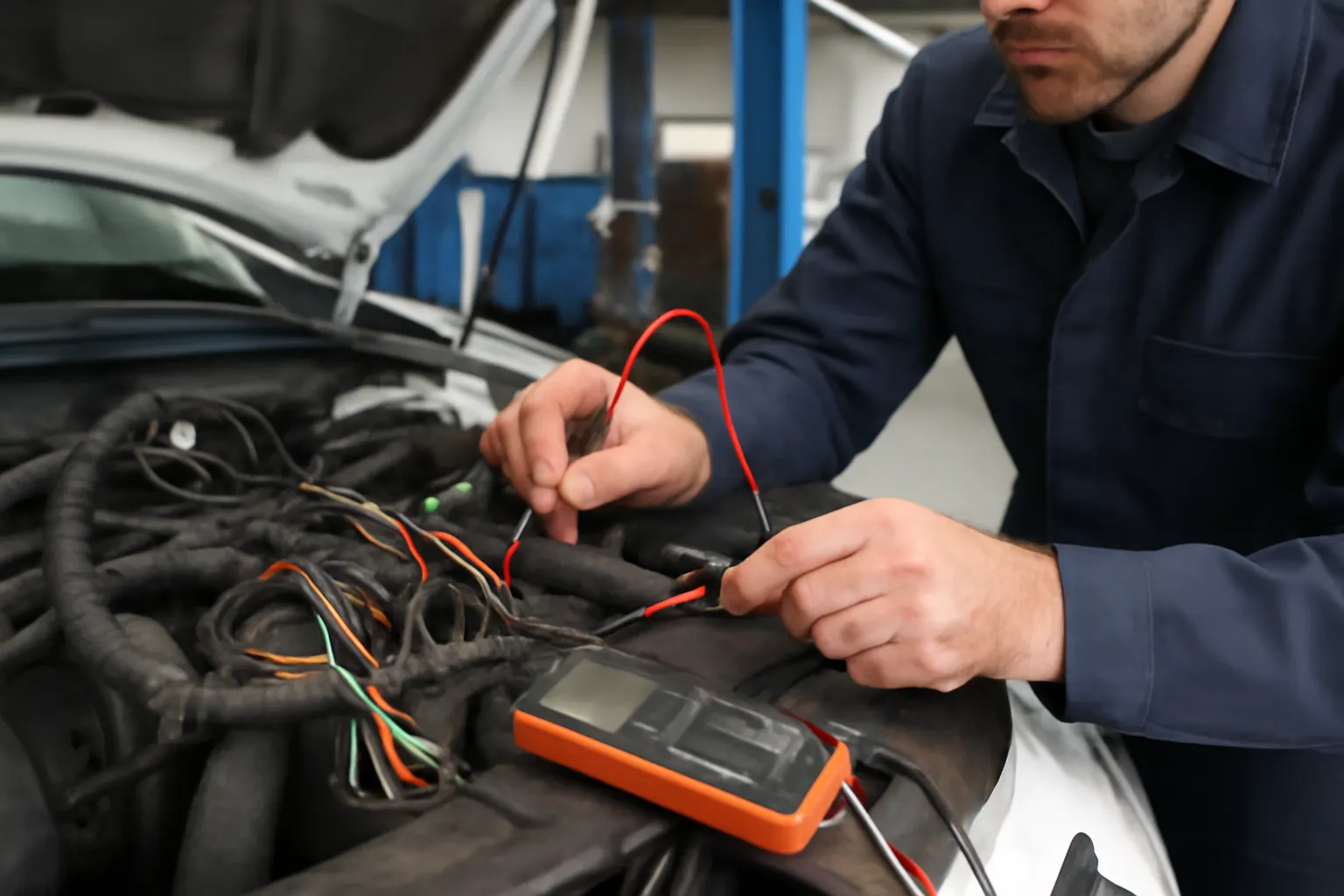
- Use a multimeter to verify electrical continuity along suspect circuits.
- Test for unexpected resistance, shorts, or open circuits.
-
Load Testing
- Apply a controlled load to verify circuit function under real-world conditions.
-
Module Communication
- Use diagnostic tools to check for communication errors between ECUs.
-
Reference Technical Diagrams
- Always consult OEM wiring diagrams to understand circuit layout and harness routing.
Intermittent faults are often the result of vibration-induced connector issues, pinched wires, or thermal cycling. Thorough diagnosis is essential for reliable repair.
Installation and Replacement: Best Practices for Technicians
Preparation and Safety
- Disconnect the Battery: Prevent accidental shorts or airbag deployment.
- Label and Document: Tag all connectors and mounting points before removal.
- Use OEM-Grade Parts: Ensure harnesses meet or exceed original specifications.
Harness Routing and Securing
- Follow OEM Paths: Use factory mounting clips and grommets to prevent movement.
- Avoid Heat and Moving Parts: Route harnesses away from exhaust, sharp edges, and hinges.
- Check for Pinch Points: Ensure no wires are trapped under panels or fasteners.
Post-Installation Testing
- Function Test All Systems: Verify operation of all connected circuits.
- Scan for DTCs: Use diagnostic tools to clear and check for new trouble codes.
- Re-Check Critical Fasteners: Ensure all harness supports and connectors are secure.
Proper installation prevents future failures and ensures vehicle safety.
Maintenance and Longevity: Keeping Harnesses in Top Condition
Routine Inspection
- Regular Visual Checks: Especially after collision repairs or underbody work.
- Monitor for Rodent Damage: Vehicles stored outdoors are susceptible to wiring damage from animals.
- Watch for Moisture Intrusion: Water ingress can quickly degrade connectors and insulation.
Cleaning and Protection
- Use Electrical Contact Cleaners: Safe for plastic and metal, removes corrosion and debris.
- Apply Dielectric Grease: Protects connectors from moisture and corrosion.
- Replace Damaged Components: Don’t patch—replace damaged sections with OEM-grade parts.
Prevention is always less costly than repair.
Advertisement
Sourcing the Right Harness: OEM vs. Aftermarket
OEM-Grade Harnesses
- Guaranteed Fit and Function: Built to exact vehicle specifications.
- Compliance with Standards: Meets all industry and manufacturer requirements.
- Complete Integration: Includes all necessary connectors, grommets, and mounting hardware.
Aftermarket Options
- Cost Savings: Can be less expensive, but quality varies.
- Compatibility Risks: May not include all connectors or match routing exactly.
- Warranty Considerations: Some aftermarket parts may affect vehicle warranties.
When sourcing a replacement, prioritize quality, fitment, and documentation. For trusted options and technical support, explore our Wiring Harness (Body): OEM-Grade Body Harness Solutions & Diagnostics page.
Harness Design Innovations: Modular, Flexible, and Sustainable
Automotive harness design continues to evolve, driven by:
- Modular Harnesses: Allow for easier upgrades and repairs by segmenting harnesses into replaceable modules.
- Flexible Printed Circuits (FPCs): Reduce weight and space, ideal for tight or complex routing.
- Eco-Friendly Materials: Harness manufacturers are exploring bio-based plastics and recyclable materials for insulation and sheathing.
These innovations help manufacturers meet new performance, safety, and environmental targets.
Common Hidden Harness Issues: Case Studies and Lessons
Harness failures can be elusive, often masquerading as intermittent electrical faults or system glitches. For real-world troubleshooting, see our Case Study: Solving Hidden Harness Failures in the Field. Common hidden issues include:
- Broken Wires Inside Insulation: Difficult to detect visually; require continuity testing.
- Connector Pin Backout: Pins may push out of the connector housing, causing intermittent contact.
- Chafed or Pinched Wires: Often occur at body panel transitions or mounting points.
Learning from field failures helps technicians and engineers design more robust harness solutions.
Harnesses and the Future of Vehicle Electrical Systems
The automotive industry is racing toward electrification, autonomy, and greater integration of electronic systems. Body wiring harnesses will continue to play a central role in:
- Electric and Hybrid Vehicles: High-voltage harnesses require advanced insulation and safety features.
- Autonomous Driving: Increased sensor density and data bandwidth demand even more sophisticated harness designs.
- Over-the-Air Updates: Harnesses must support reprogrammable modules and secure data transmission.
Advertisement
Harness design will only grow in importance as vehicles become more software-defined and connected.
Expert Guidance: Choosing, Installing, and Diagnosing Body Harnesses
When it comes to selecting, installing, or diagnosing a body wiring harness, expertise matters. Here’s a summary checklist to guide your process:
Harness Selection and Installation Checklist
| Step | Action | Details |
|---|---|---|
| 1 | Verify Fitment | Confirm part number and compatibility with VIN/model. |
| 2 | Inspect Harness | Check for shipping damage, correct connectors, and complete accessories. |
| 3 | Prepare Vehicle | Disconnect battery, label connectors, and consult wiring diagrams. |
| 4 | Remove Old Harness | Carefully unclip, unbolt, and remove without damaging adjacent systems. |
| 5 | Install New Harness | Route along OEM paths, secure with factory clips, and avoid pinch points. |
| 6 | Connect All Circuits | Double-check connectors for proper seating and locking. |
| 7 | Test Systems | Power up, scan for DTCs, and verify function of all connected systems. |
| 8 | Final Inspection | Ensure all fasteners are secure and no wires are exposed or under tension. |
For a deeper dive into connector service and selection, see our Electrical Connectors: Selection and Service Tips.
AutoPartEx: Your Partner in Harness Solutions
At AutoPartEx, we understand that the wiring harness is the foundation of every modern vehicle’s electrical system. Our curated selection of OEM-grade body harnesses, connectors, and diagnostic tools ensures you have access to the highest-quality components and up-to-date technical resources. Whether you’re a professional technician or a dedicated DIYer, our Wiring Harness (Body): OEM-Grade Body Harness Solutions & Diagnostics category provides the information and parts you need for reliable repairs and upgrades.
We also offer a comprehensive range of Electrical System Parts to support your broader service and diagnostic needs. Our editorial team is committed to delivering practical guides, case studies, and technical insights to help you stay ahead of evolving vehicle technology.
Conclusion: The Critical Role of Advanced Harness Designs
The humble wiring harness has become a sophisticated, mission-critical system in modern vehicles. As automotive technology advances, the demands on harness design, materials, and integration continue to grow. By understanding the evolution, challenges, and best practices in harness technology, technicians and vehicle owners can ensure safety, reliability, and future-ready performance.
Harness failures are more than an inconvenience—they can compromise safety, trigger costly recalls, and undermine the driving experience. Investing in quality harnesses, following best practices for installation and maintenance, and staying informed about new technologies are essential steps for anyone involved in automotive service or repair.
For more information, comprehensive guides, and premium harness solutions, trust AutoPartEx as your go-to resource.
References
Advertisement