Advertisement
Rear door window switches are a vital but often overlooked safety feature in modern vehicles, especially for families with young children. These switches, when equipped with proper child safety mechanisms, help prevent accidental window operation and the associated risks of injury or entrapment. This article delivers a comprehensive, practical guide to understanding, evaluating, and maintaining rear window controls for optimal child safety—empowering parents and caregivers to ensure their vehicles are as secure as possible.
If you’re seeking detailed information on part selection, system function, or replacement, our Rear Door Window Switches: Precision Control for Modern Vehicles category page is an essential resource.
Why Rear Door Window Switch Safety Matters Immediately
For any parent, the safety of children inside a vehicle is paramount. Rear window switches, when not properly secured or maintained, can pose significant hazards. Accidental activation by a child can lead to pinched fingers, risk of ejection, or other injuries. Modern vehicles incorporate child safety features such as window lockouts, anti-pinch technology, and specialized switch designs to minimize these risks.
However, many parents remain unaware of how these systems function or how to verify their effectiveness. The result? A hidden vulnerability in vehicle safety that can have serious consequences if left unaddressed.
The Hidden Problem: Overlooked Rear Window Hazards
While most parents are diligent about car seats and door locks, rear window controls often escape scrutiny. Yet, according to the National Highway Traffic Safety Administration (NHTSA), window-related injuries—particularly involving children—are a real and persistent concern. The risks include:
- Children accidentally lowering windows and potentially falling out, especially if unrestrained.
- Entrapment or pinched fingers from power window operation.
- Bypassing child safety locks due to faulty switches or outdated systems.
Complicating matters, many vehicles on the road today either lack advanced window safety features or have components that are worn, malfunctioning, or subject to recall. Without regular inspection and awareness, these vulnerabilities remain hidden until an incident occurs.
Expanding the Problem: Technical and Practical Risks
Power Window Design and Child Safety
Modern vehicles use power-operated window regulators controlled by switches located on each door. Rear door window switches are specifically susceptible to unintended use by children, who may view them as toys or simply experiment out of curiosity.
Key technical and practical risks include:
- Lack of Window Lock Functionality: Not all vehicles are equipped with a master window lockout switch, or the feature may be confusing to use.
- Outdated or Non-Compliant Switches: Older vehicles may feature switches that do not meet current safety standards, lacking anti-pinch technology or recessed designs that minimize accidental activation.
- Wear and Tear: Switches and locking mechanisms degrade over time, reducing their effectiveness and increasing the risk of failure.
- Recall Issues: Some rear window switches and regulators have been subject to manufacturer recalls due to safety defects, but many owners remain unaware or fail to address them.
Real-World Scenarios
Consider the following situations:
- A child, left momentarily unattended, accidentally lowers a window and attempts to climb out, risking serious injury.
- A malfunctioning window switch fails to respond to the lockout command, allowing children to operate the windows despite parental controls.
- An older vehicle’s window switch becomes stuck or jammed, trapping a child’s hand or arm.
These scenarios underscore the importance of not only having functional safety features but also of understanding, testing, and maintaining them.
Understanding Rear Door Window Switch Safety Features
To truly safeguard your passengers, it’s essential to understand the specific technologies and features designed to protect children from window-related hazards.
Window Lockout Function
Most modern vehicles are equipped with a window lockout feature, typically controlled by a master switch on the driver’s door. When activated, this function disables the operation of the rear (and sometimes front passenger) window switches, preventing children from opening or closing windows at will.
Advertisement
How It Works
- The driver’s master switch sends a signal to the rear door window switches, electronically disabling them.
- In multiplexed systems, the command is sent via a data network to each door’s control module, ensuring comprehensive lockout.
Anti-Pinch (Auto-Reverse) Technology
This safety system detects obstructions—such as a child’s hand or arm—during window closure and automatically reverses the window’s direction to prevent injury.
Key Points
- Uses force sensors or current-draw monitoring to detect abnormal resistance.
- Required by safety regulations in many modern vehicles, especially those sold in North America and Europe.
- Not universally present in all vehicles, particularly older models.
Recessed or Pull-Up Switch Design
Switches that require a deliberate pulling motion (rather than an easily-pressed button) are less likely to be activated accidentally by children.
Illuminated and Tactile Feedback
Some switches are illuminated or have tactile markers to help drivers quickly identify and activate the lockout feature, especially in low-light conditions.
Diagnosing Rear Window Switch and Lockout Issues
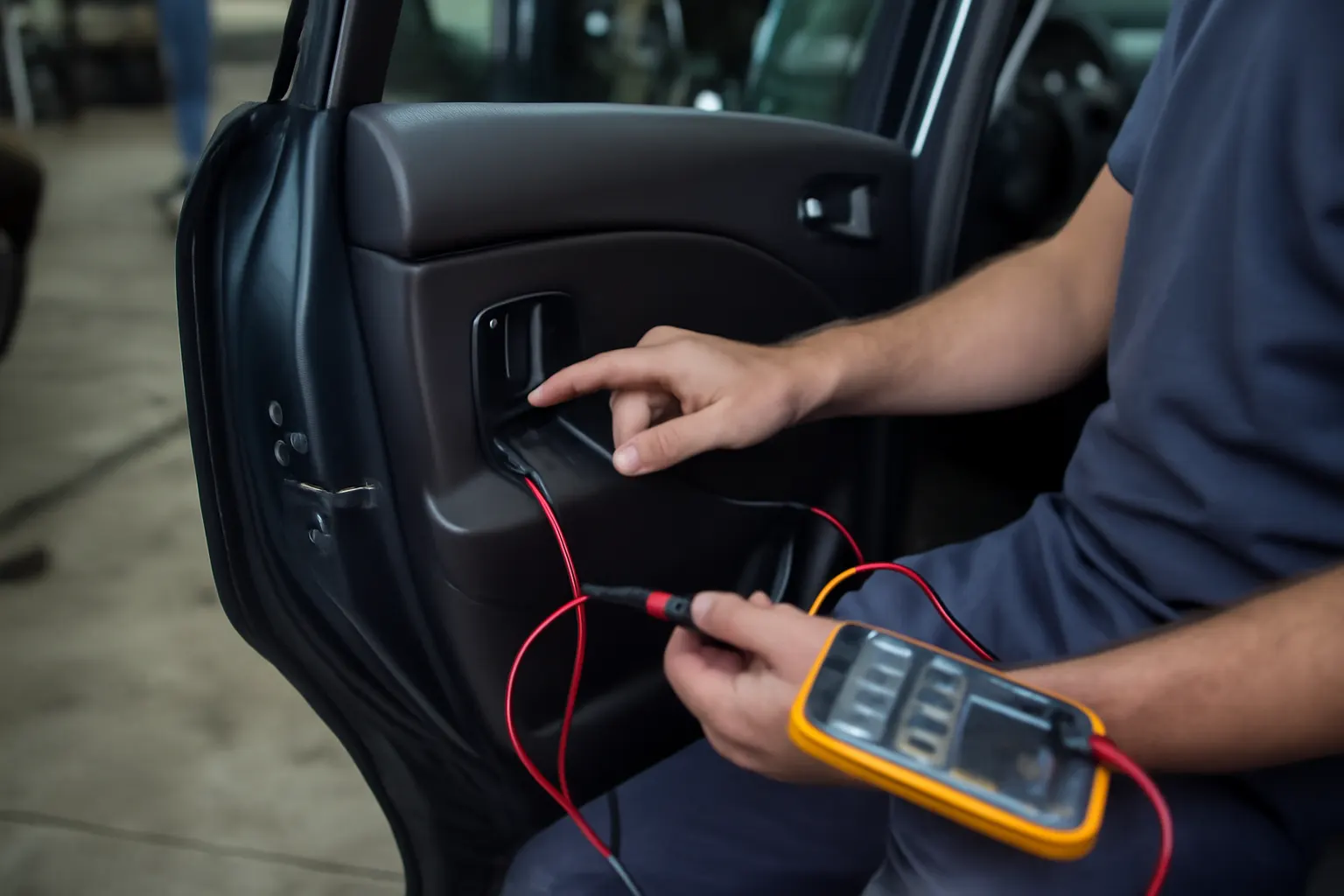
Regular diagnostic checks are crucial to ensure that rear window switches and their safety features are functioning as intended. Here’s a practical approach:
Step-by-Step Diagnostic Checklist
-
Test Window Lockout:
- Activate the master window lock switch.
- Attempt to operate each rear window switch independently.
- Confirm that the windows do not respond.
-
Verify Driver Control:
- With the lockout engaged, verify that the driver can still operate each rear window using the master switch.
-
Check Anti-Pinch Function:
- Carefully introduce a soft object (e.g., a rolled towel) into the window’s path while closing.
- Confirm that the window reverses upon contact.
-
Inspect Switch Movement:
- Ensure that each switch moves freely and returns to its neutral position.
- Look for sticking, excessive looseness, or signs of physical damage.
-
Listen for Unusual Sounds:
- Operate each window and listen for grinding, clicking, or hesitation—possible signs of regulator or motor wear.
-
Review Owner’s Manual:
- Refer to your vehicle’s manual for specific safety feature instructions and operational nuances.
Recognizing and Responding to Recall Notices
Vehicle manufacturers issue recalls for defective window switches, regulators, and control modules that may compromise safety. According to the NHTSA, recalls may address issues such as:
- Switches that short circuit and cause fires.
- Faulty lockout mechanisms.
- Defective anti-pinch systems.
How to Check for Recalls
- Visit the NHTSA Recalls Database: Enter your Vehicle Identification Number (VIN) at https://www.nhtsa.gov/recalls.
- Contact Your Dealer: Dealers can check for outstanding recalls and perform necessary repairs at no cost.
- Sign Up for Alerts: Many manufacturers and the NHTSA offer free email or SMS alerts for new recalls.
Upgrading Rear Door Window Switches for Enhanced Child Safety
If your vehicle lacks modern window safety features or has outdated switches, upgrading to compliant parts is a practical and often straightforward solution.
Considerations for Upgrading
- Compatibility: Ensure the replacement switch matches your vehicle’s make, model, and year.
- OEM vs. Aftermarket: Original Equipment Manufacturer (OEM) parts guarantee fitment and compliance, while quality aftermarket options may offer enhanced features.
- Feature Set: Look for switches with anti-pinch technology, illuminated lockout indicators, and recessed designs.
Installation Guidance
- Refer to guides such as How to Replace a Rear Door Window Switch: Step-by-Step for detailed instructions.
- Always disconnect the vehicle’s battery before working with electrical components.
- Test all functions after installation to confirm proper operation.
Maintenance Best Practices for Rear Door Window Switches
Routine maintenance extends the life of window switches and ensures ongoing safety for your passengers.
Maintenance Checklist
- Monthly Testing: Regularly test window lockout and anti-pinch features.
- Visual Inspection: Look for dirt, moisture, or debris around the switch that could cause malfunction.
- Clean Regularly: Use a soft, dry cloth to clean switch surfaces. Avoid harsh chemicals that may degrade plastics or electrical contacts.
- Monitor for Recalls: Stay proactive by checking recall databases at least twice a year.
Advertisement
Preventing Moisture and Corrosion
Moisture intrusion is a common cause of switch failure. Ensure door seals are intact and repair any leaks promptly. If you notice intermittent switch operation after rain or washing the vehicle, inspect for moisture-related damage.
Teaching Children About Window Safety
While technical solutions are essential, educating children about the dangers of playing with window switches is equally important.
Practical Tips
- Set Rules: Make it clear that window switches are not toys.
- Demonstrate Proper Use: Show older children how to safely operate windows under supervision.
- Explain Hazards: Use age-appropriate language to explain why windows must remain closed when the vehicle is moving.
- Model Behavior: Always use the master lockout when children are in the back seat.
Troubleshooting Common Rear Window Switch Problems
Despite best efforts, problems can arise. Here’s how to address the most frequent issues:
Common Issues and Solutions
| Problem | Likely Cause | Solution |
|---|---|---|
| Rear window does not respond | Faulty switch, blown fuse, or lockout engaged | Check fuse, test lockout, replace switch if needed |
| Window only works from driver’s switch | Rear switch failure or wiring issue | Inspect wiring, replace rear switch |
| Window reverses randomly | Faulty anti-pinch sensor or regulator | Diagnostic scan, replace sensor/regulator |
| Switch feels loose or sticky | Wear, debris, or physical damage | Clean or replace switch |
If DIY troubleshooting does not resolve the issue, consult a qualified technician.
Selecting the Right Replacement Rear Door Window Switch
When replacement is necessary, choosing the correct part is critical for safety and function.
Buying Guide
- Verify Part Number: Use your vehicle’s VIN and consult manufacturer parts diagrams.
- Check for Advanced Safety Features: Prioritize switches with anti-pinch and child lock integration.
- Read Reviews: Look for feedback from other parents or vehicle owners regarding ease of use and reliability.
- Confirm Return Policy: Ensure you can return the part if it does not fit or function as expected.
For a comprehensive selection, visit Rear Door Window Switches: Precision Control for Modern Vehicles.
How Multiplexed Window Control Systems Enhance Child Safety
Many late-model vehicles employ multiplexed window control systems, which use data networks to coordinate switch commands, lockouts, and anti-pinch responses.
Advantages
- Improved Reliability: Centralized control reduces the risk of individual switch failure.
- Advanced Diagnostics: Faults can be quickly identified and isolated by scanning the vehicle’s electronic control modules.
- Enhanced Feature Integration: Allows for programmable lockouts and automatic child safety settings.
Learn more about these advanced systems in our Understanding Multiplexed Window Control Systems guide.
Integrating Rear Window Safety with Overall Vehicle Security
Rear door window switches are only one component of a comprehensive child safety strategy. Combine window safety with:
- Proper Use of Car Seats: Always secure children in age-appropriate restraints.
- Childproof Door Locks: Engage rear door child locks to prevent accidental opening.
- Regular Safety Audits: Periodically review all child safety features, including seat belts, airbags, and window controls.
By taking a holistic approach, you minimize the risk of injury from any source while your children are in the vehicle.
AutoPartEx: Your Partner in Rear Door Window Safety
At AutoPartEx, we understand that your family’s safety depends on every component—no matter how small. Our extensive catalog of Rear Door Window Switches: Precision Control for Modern Vehicles ensures you’ll find reliable, compliant parts for any make or model. Our technical guides, diagnostic resources, and expert support empower you to make informed decisions, from diagnosis to installation and maintenance.
Whether you’re dealing with a malfunctioning switch, upgrading for peace of mind, or simply maintaining your vehicle’s safety systems, AutoPartEx is here to help you every step of the way.
Key Takeaways and Next Steps
- Don’t overlook rear door window switches when evaluating vehicle safety for children.
- Regularly test and maintain window lockout and anti-pinch features.
- Upgrade outdated components to meet current safety standards.
- Check for recalls and stay informed about manufacturer updates.
- Educate children and model safe behavior.
For further reading, explore our editorial content on Diagnosing Power Window Failures in Modern Vehicles and practical installation guides.
References
Advertisement