
Chevy Corvette Harmonic Balancer (Crank Pulley) Parts
Chevy Corvette Harmonic Balancer (Crank Pulley): What to Know
Many Chevy Corvette owners overlook the harmonic balancer (crank pulley) until symptoms arise or a replacement is needed. Understanding the role and sourcing a suitable part can prevent costly repairs and maintain performance. This guide highlights what to watch for, how to select the right balancer, and what published evidence says about the process. Whether you’re comparing options or planning a repair, informed steps make all the difference.
1 Chevy Corvette Harmonic Balancer (Crank Pulley) Parts
Advertisement
Advertisement
More Harmonic Balancer (Crank Pulley) options for Chevy Corvette
Filtering for Chevy Corvette • Harmonic Balancer (Crank Pulley)Browse nearby inventory for this model and category without leaving the page.
No Data Available
Please check back soon when more inventory is available for this part.
Advertisement
The Overlooked Role of the Harmonic Balancer in Your Corvette
It’s easy to focus on high-profile components when maintaining a Chevy Corvette, but the harmonic balancer (crank pulley) is often overlooked until there’s a problem. This part quietly manages engine vibrations and ensures accessory belts run smoothly. Many owners don’t realize its importance until issues like unusual noises, belt misalignment, or even engine damage occur. Addressing the harmonic balancer proactively can help prevent more significant—and expensive—engine problems down the road.
Most Corvette enthusiasts are passionate about performance, but even the most meticulous maintenance routines can miss the subtle signs of a failing harmonic balancer. Unlike visible wear on tires or brakes, deterioration here is gradual and often internal. By the time symptoms become obvious, the risk of collateral damage increases. Recognizing the balancer’s function and its potential failure points is key to keeping your Corvette running as intended.
Shopping for a replacement harmonic balancer or crank pulley can be confusing. Listings may not clarify compatibility, and visual inspection alone rarely confirms a match. Understanding what to look for, and knowing how to verify fitment and condition, can save time, money, and frustration. This guide brings overlooked considerations to the forefront, helping Corvette owners make informed decisions about this critical component.

Why Harmonic Balancer Issues Matter for Chevy Corvette Owners
The harmonic balancer is essential for dampening engine vibrations and maintaining proper timing in the Chevy Corvette’s high-performance engine. When this part starts to fail, the consequences can be far-reaching. Vibrations that go unchecked may lead to premature wear on other engine components, misalignment of accessory belts, or even catastrophic engine failure in severe cases. The balancer’s job is to absorb and neutralize the torsional forces generated by the crankshaft. If compromised, these forces can transfer stress to other parts, compounding potential problems.
Symptoms of a failing harmonic balancer can be subtle at first. Owners might notice a wobbling crank pulley, squealing belts, or an unusual engine vibration at certain RPMs. In some cases, the rubber isolator within the balancer deteriorates, causing the outer ring to slip or separate. This can lead to inaccurate timing marks or, worse, the balancer coming apart while the engine is running. Such failures can damage the timing cover, oil seal, or even the crankshaft itself.
Corvette engines, especially in recent generations, are finely tuned for performance. Even minor imbalances can affect drivability and longevity. Ignoring early warning signs may seem harmless, but the risk of secondary damage increases over time. For instance, a misaligned balancer can cause serpentine or accessory belts to slip off, potentially leaving the vehicle stranded or causing further engine damage.
The process of diagnosing a harmonic balancer issue is not always straightforward. Visual inspection may reveal obvious cracks or separation, but internal deterioration can be missed without removing the part. Additionally, aftermarket and salvage balancers may not always meet the original specifications required for Corvette engines. This makes careful selection and verification especially important for owners seeking reliable performance and longevity.
Complicating matters, online listings and catalog entries may not provide enough detail to ensure compatibility. Corvette engines have evolved over the years, and even small differences in engine design can affect which harmonic balancer is appropriate. Relying solely on model year or engine size may not guarantee a perfect fit. Owners must be diligent in cross-referencing part numbers, checking for physical differences, and consulting trusted sources for confirmation.
Finally, the cost of ignoring a failing harmonic balancer can far exceed the price of a replacement part. Secondary engine repairs, downtime, and potential safety risks all add up. By understanding the role of the harmonic balancer and the risks of neglect, Corvette owners can make informed decisions that protect their investment and driving enjoyment.
How to Select, Diagnose, and Replace a Corvette Harmonic Balancer
When approaching a harmonic balancer issue or replacement for your Chevy Corvette, the first step is accurate identification. Locate your vehicle’s VIN and consult the owner’s manual or a trusted parts catalog to determine the exact balancer specification for your model and engine. Differences between Corvette generations and engine options mean that even a small mismatch can cause installation or performance problems. If you’re considering a used or salvage balancer, verify that it matches the original part number and dimensions.
Next, assess the condition of your current harmonic balancer. Look for signs of wear such as visible cracks, wobbling when the engine is running, or separation between the inner and outer rings. Listen for unusual noises like rattling or squealing, which may indicate internal failure. If you’re unsure, consult a qualified technician with experience in Corvette engines. The Federal Trade Commission (FTC) recommends getting a written repair estimate, especially for complex or costly repairs, and considering a second opinion if you have doubts about a diagnosis FTC: Auto Repair Basics.
When selecting a replacement, consider the part’s origin. New balancers offer the assurance of unused materials and manufacturer backing, while remanufactured or rebuilt options may provide cost savings with some risk. Salvage balancers, as the FTC notes, come from another vehicle without alteration and may show varying degrees of wear. Always ask for a completed repair order detailing the work, parts used, and costs, and clarify any warranty or return policy before purchase FTC: Auto Repair Basics.
Installation of a harmonic balancer requires specific tools and procedures. Removing the old balancer often involves a puller tool to avoid damaging the crankshaft. Clean the mounting surface thoroughly and inspect the keyway and crankshaft for damage before installing the new balancer. Align the keyway and torque the retaining bolt to the manufacturer’s specification. Failure to follow proper installation steps can lead to premature failure or engine damage. If you lack the tools or experience, professional installation is recommended.
After installation, verify that the balancer runs true with no visible wobble. Reinstall accessory belts, ensuring they are properly tensioned and aligned. Start the engine and observe for any unusual noises or vibrations. Check for oil leaks around the crank seal, as improper installation can sometimes disturb the seal. If problems persist, recheck the installation or consult a specialist familiar with Corvette engines.
For ongoing reliability, follow the preventive maintenance schedule outlined in your owner’s manual. Compare shop recommendations with the manufacturer’s guidance and ask for justification if extra services are proposed. Regular inspections of the balancer and accessory drive system can catch issues early, minimizing the risk of unexpected breakdowns or secondary damage. Document all repairs and parts replacements for future reference or resale value.
If you’re buying a used harmonic balancer, request clear photographs and a detailed description of the part’s condition. Ask about the donor vehicle’s mileage and service history, and compare the part visually with your original. Salvage parts should be free of cracks, corrosion, or excessive wear. If possible, request a return policy in case the part does not fit or function as expected. Remember, visual similarity does not guarantee compatibility—always confirm part numbers and specifications.
Finally, keep records of your repair process, including part numbers, installation steps, and any professional assessments. This documentation not only helps with future maintenance but also supports warranty claims or troubleshooting if issues arise. By following a systematic approach to selection, diagnosis, and installation, Corvette owners can ensure their harmonic balancer replacement delivers long-term reliability and performance.
What Published Evidence and Official Guidance Reveal
The National Highway Traffic Safety Administration (NHTSA) provides a comprehensive recall database that allows consumers to check for open recalls affecting specific vehicles or components. While searching by year, make, and model can yield general recall information, it does not guarantee that a particular Chevy Corvette or its harmonic balancer is subject to a recall. Only a VIN-specific search will confirm if a given vehicle has an unrepaired recall related to the harmonic balancer or crank pulley. This distinction is crucial: general recall listings are not proof of a defect or recall for your Corvette. Owners should use the NHTSA VIN lookup tool for the most accurate and up-to-date information NHTSA: Vehicle Recalls.
NHTSA’s recall process involves several stages, including complaint collection, investigation, and recall management. If multiple owners report similar issues with a component like the harmonic balancer, NHTSA may open an investigation. However, unless a recall is officially announced, there is no obligation for manufacturers to provide free repairs or replacements. Corvette owners should be proactive in monitoring NHTSA databases and registering their vehicles to receive recall alerts. This approach ensures that any safety-related defect is addressed promptly and at no cost if a recall is issued NHTSA: Vehicle Recalls.
The FTC’s guidance on auto repairs emphasizes the importance of written estimates, clear communication, and understanding the origin of replacement parts. The agency distinguishes between new, remanufactured, and salvage parts, noting that salvage parts are unaltered components taken from another vehicle. This is particularly relevant when considering used harmonic balancers for a Corvette. Buyers should request documentation and clarification on the source and condition of any salvage part, as there is no standard warranty on such components unless specifically provided by the seller FTC: Auto Repair Basics.
The FTC also recommends following the manufacturer’s maintenance schedule as outlined in the owner’s manual, rather than relying solely on shop recommendations. This ensures that preventive maintenance, including inspection or replacement of the harmonic balancer, is performed at intervals suited to the vehicle’s design and driving conditions. Corvette owners should compare any suggested repairs to the official schedule and seek justification for additional services, helping to avoid unnecessary expenses and maintain vehicle reliability FTC: Auto Repair Basics.
Neither the NHTSA nor the FTC provides technical specifications or fitment guarantees for specific harmonic balancers. Catalog names or parts listings do not confirm compatibility with your Corvette; only a direct match of part numbers and specifications can ensure proper fit and function. This underscores the importance of diligent cross-referencing and, when in doubt, consulting with a technician experienced in Corvette repairs. Owners should not assume that a part listed for a given model year will fit all variants or engine types within that year NHTSA: Vehicle Recalls.
The evidence also highlights the value of consumer vigilance. NHTSA encourages owners to report suspected safety defects, which can lead to investigations and, if warranted, recalls. Filing a complaint is the first step in bringing widespread issues to the attention of regulators and manufacturers. While this process does not guarantee a recall or free repair, it plays a critical role in identifying patterns of failure and protecting the broader owner community NHTSA: Vehicle Recalls.
Finally, the FTC’s advice to obtain a completed repair order and clarify warranty coverage is especially relevant for Corvette owners investing in a harmonic balancer replacement. Since there is no universal warranty on repairs or parts, documentation is essential for recourse if problems arise. This is particularly important when using salvage or remanufactured parts, as coverage may vary widely between sellers. By following these evidence-based recommendations, Corvette owners can navigate the repair process with greater confidence and transparency FTC: Auto Repair Basics.
Take the Next Step Toward Reliable Corvette Performance
If you suspect an issue with your Chevy Corvette’s harmonic balancer or are planning a replacement, start by gathering your VIN and consulting trusted resources for part verification. Use the NHTSA VIN lookup tool to check for recalls and follow the FTC’s advice for clear documentation and communication during the repair process. Compare your options for new, remanufactured, or salvage balancers, and don’t hesitate to seek professional guidance if needed. With careful selection and evidence-based steps, you can protect your Corvette’s engine and enjoy confident performance for miles to come.
References
- NHTSA: Vehicle Recalls
- FTC: Auto Repair Basics
References
- NHTSA: Vehicle Recalls - NHTSA, accessed 2026-11-01
- FTC: Auto Repair Basics - FTC, accessed 2026-11-01
Related Guides & Articles

How to Spot Counterfeit Chevy Parts
Counterfeit Chevy parts can jeopardize your vehicle's safety, reliability, and performance. Whether you're shopping for a replacement alternator, brake pads, or sensors, identifying fakes before you buy is crucial. This guide delivers immediate visual clues, packaging tips, and real-world examples to help you confidently distinguish genuine from counterfeit Chevy components—protecting both your investment and your safety.
Read More
Chevy Service Intervals Explained
Build a Chevrolet maintenance plan from the correct owner’s manual, service history and dashboard messages. Learn how oil-life reminders differ from oil-pressure warnings, how mileage and elapsed time affect a service decision, and why gasoline and electric vehicles need different schedules. Use the checklist to discuss a clear, itemized plan with your repairer.
View Guide
Why Ignoring Your Crank Pulley Can Destroy Your Engine
The harmonic balancer, also known as the crank pulley, is one of the most overlooked yet vital components for engine longevity. Ignoring signs of wear or failure can lead to engine vibrations, accessory drive failures, catastrophic crankshaft damage, and ultimately, complete engine destruction. If you want to avoid thousands in repairs, understanding the risks and best practices for maintaining your crank pulley is essential.
Read More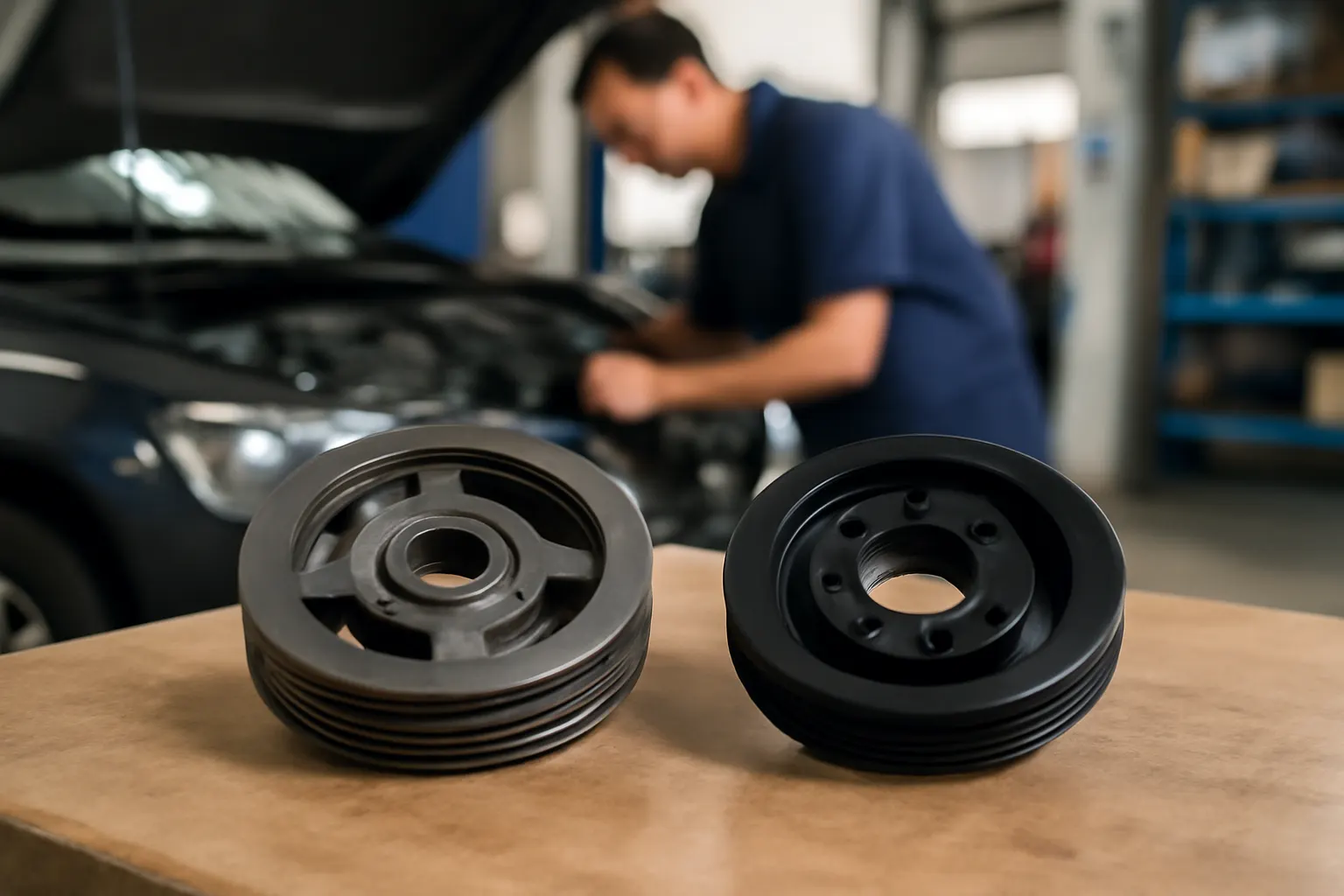
OEM vs. Performance Harmonic Balancers: Which Is Right for You?
When it comes to maximizing engine longevity and performance, few components are as critical—yet as overlooked—as the harmonic balancer, also known as the crank pulley. If you’re deciding between an OEM (Original Equipment Manufacturer) and a performance harmonic balancer, the right choice depends on your driving style, vehicle modifications, and long-term goals. This guide delivers a technical, side-by-side comparison, including SFI certification, material construction, and practical buying advice.
Read More