
Chevy Knee Assembly (see also Strut Assy)
Chevy Knee Assembly: What to Know Before You Buy or Replace
When considering a replacement for your Chevy Knee Assembly (see also Strut Assy), it’s easy to overlook the importance of part sourcing, technical fit, and the nuances of used versus new components. This guide addresses what many buyers miss: the practical and evidence-backed steps to ensure you select the right assembly for your Chevy, avoid common pitfalls, and make informed decisions for both safety and value.
Advertisement


Advertisement
More Chevy Knee Assembly (see also Strut Assy) options
Filtering for Chevy • Knee Assembly (see also Strut Assy)Scan nearby Chevy knee assembly (see also strut assy) inventory without leaving this page.
No Data Available
Please check back soon when more inventory is available for this part.
Advertisement
Why the Right Knee Assembly Matters More Than You Think
Most Chevy owners rarely think about the knee assembly until a suspension issue or accident brings it to the forefront. What’s often overlooked is how this component—sometimes called a strut assembly—serves as a critical structural link between your vehicle’s wheel, suspension, and body. The knee assembly directly affects alignment, ride quality, and even the function of your vehicle’s safety systems. Neglecting to consider the specifics of this part can lead to mismatched replacements, compromised handling, or even safety concerns down the road.
Many buyers assume that all knee assemblies are created equal, or that any part labeled for a Chevy will fit their particular model and year. This is a costly misconception. The knee assembly’s design, mounting points, and compatibility with other suspension components can vary significantly across Chevy vehicles—even within the same model line. Overlooking these differences can result in unnecessary labor, additional parts purchases, or return hassles.
Another easily missed consideration is the source of the replacement assembly. Whether you’re buying new, remanufactured, or salvage, the origin and condition of the part can have a major impact on both performance and longevity. Salvage assemblies, for example, may offer value but require careful inspection and documentation. Understanding these nuances is the first step toward a successful repair or upgrade.

Understanding the Real Challenge: Compatibility and Safety
The primary challenge Chevy owners face when replacing a knee assembly is ensuring compatibility with their specific vehicle. Unlike more generic parts, the knee assembly is engineered to work with precise suspension geometry, wheel hubs, and braking systems. Even a small mismatch can cause issues such as improper wheel alignment, uneven tire wear, or compromised braking performance. These problems may not be immediately obvious but can develop over time, leading to more costly repairs.
Another issue is the lack of clear information about whether a used or salvage knee assembly has been involved in a previous incident or has hidden wear. Since these parts are often sourced from vehicles that have been in accidents, there’s a risk of unseen damage or fatigue. Without proper documentation or inspection, buyers may unknowingly install a compromised component, which can affect not just ride quality but also safety-critical systems like anti-lock brakes and traction control.
Chevy’s model diversity further complicates the selection process. For example, a knee assembly from a Chevy Corvette may not fit or function properly in a different Chevy model, even if the mounting points appear similar. Differences in suspension tuning, weight distribution, and even wheel size can all influence the correct part choice. Relying solely on visual inspection or generic fitment claims can lead to disappointment or unsafe outcomes.
The process of identifying the correct knee assembly is also hampered by inconsistent terminology. Some catalogs and sellers refer to the part as a knee assembly, while others use strut assembly or spindle assembly. This can make it difficult to cross-reference parts or verify compatibility, especially when shopping from multiple sources or considering salvage options. Miscommunication at this stage can derail the entire repair process.
Safety recalls and manufacturer communications add another layer of complexity. While tools like the NHTSA recall database provide valuable information, they are not a guarantee that a specific part or vehicle is free from defects. Recalls are VIN-specific and may not cover all production batches or aftermarket components. Owners must be proactive in checking recall status and understanding what it actually means for their repair or replacement decision.
Finally, the absence of a universal warranty on used or salvage parts means that buyers assume more risk. Unlike new OEM components, salvage knee assemblies typically come with limited or no warranty coverage. This makes it essential to verify the part’s condition, provenance, and return policy before purchase. Understanding these risks is crucial for making an informed choice and avoiding unexpected expenses.
How to Select and Verify a Chevy Knee Assembly
The first step in selecting a replacement knee assembly for your Chevy is to precisely identify your vehicle’s make, model, year, and trim. This information is critical because even small differences—such as a mid-year production change or a special edition—can affect part compatibility. Always use your VIN (Vehicle Identification Number) when searching for parts or communicating with sellers, as it provides the most accurate match. The NHTSA recommends using the VIN to check for recalls and compatibility, ensuring you’re not installing a component that may be subject to a safety campaign.
Once you have your vehicle details, compare part numbers and descriptions from multiple sources. Don’t rely solely on catalog labels or seller claims; cross-reference with official Chevy documentation or reputable parts databases. If possible, obtain a written repair estimate that specifies the exact part number, condition (new, remanufactured, or salvage), and anticipated labor charges. The FTC advises consumers to get all repair details in writing, which helps prevent misunderstandings and provides recourse if the part is incorrect or defective FTC: Auto Repair Basics.
When considering salvage or used knee assemblies, request detailed information about the donor vehicle, including its VIN, mileage, and accident history. Ask the seller whether the part has been inspected for structural integrity, wear, and corrosion. If possible, request photographs of the actual part and compare mounting points, bushings, and attachment hardware to your original assembly. This step is especially important for Chevy vehicles, where subtle differences can affect fit and function.
For expensive or complex repairs, consider seeking a second opinion from a qualified technician with experience in Chevy suspension systems. The FTC recommends this approach for major repairs, as it can help confirm the diagnosis and ensure that the proposed replacement is appropriate for your vehicle FTC: Auto Repair Basics. A technician familiar with your model can also identify any additional components—such as control arms, bearings, or sensors—that may need replacement during the knee assembly swap.
Before installation, inspect the replacement knee assembly for signs of damage, excessive wear, or missing components. Compare it side-by-side with your original part, checking for differences in mounting geometry, bushing condition, and included hardware. If you’re using a salvage part, verify that it has not been bent, welded, or otherwise repaired in a way that could compromise its structural integrity. Document the condition with photographs and keep all receipts and correspondence for your records.
During installation, follow the manufacturer’s recommended procedures and torque specifications. If you’re not performing the work yourself, ensure that your repair shop provides a completed repair order listing the work performed, parts used, costs, and odometer reading. The FTC emphasizes the importance of this documentation for warranty and safety purposes FTC: Auto Repair Basics. This record can also be valuable if you need to address a future recall or dispute a repair outcome.
After installation, test drive your Chevy to check for proper alignment, ride quality, and absence of unusual noises or vibrations. Pay attention to steering response and braking performance, as these can be affected by even minor deviations in suspension geometry. If you notice any issues, return to the repair shop promptly for inspection and adjustment. Keeping detailed records of the repair process can help resolve any disputes or warranty claims that arise.
Finally, periodically check your vehicle’s recall status using the NHTSA database. Even if your replacement knee assembly is functioning well, new recalls or manufacturer communications may affect your vehicle or the installed component. Staying informed and proactive ensures ongoing safety and compliance with federal standards NHTSA: Vehicle Recalls.
What the Evidence Shows About Chevy Knee Assembly Selection
The National Highway Traffic Safety Administration (NHTSA) provides a comprehensive recall database that allows consumers to search for open recalls by VIN or vehicle details. This tool is invaluable for Chevy owners considering a knee assembly replacement, as it can reveal whether the vehicle—or the specific component—has been subject to a safety recall. However, the NHTSA emphasizes that recall information is VIN-specific and does not guarantee that a particular part is free from defects. Owners should use this resource as one part of a broader due diligence process, not as a substitute for inspection or verification NHTSA: Vehicle Recalls.
The NHTSA also outlines the recall process, which begins with owner complaints and may lead to investigations and, if warranted, manufacturer-initiated recalls. This means that even if a knee assembly has not been recalled, it could still have unreported or emerging issues. The agency encourages owners to report any suspected defects, which can help identify patterns and prompt further investigation. For Chevy knee assemblies, this underscores the importance of monitoring for new recalls and maintaining detailed repair records in case future issues arise NHTSA: Vehicle Recalls.
The Federal Trade Commission (FTC) provides general guidance for auto repairs, emphasizing the importance of written estimates, clear communication, and documentation. The FTC distinguishes between new, remanufactured, and salvage parts, noting that salvage parts are sourced from other vehicles without alteration. This is particularly relevant for Chevy knee assemblies, as many replacements are sourced from salvage yards. The FTC’s advice to obtain a written repair order and compare shop recommendations with the manufacturer’s maintenance schedule helps consumers avoid unnecessary or inappropriate repairs FTC: Auto Repair Basics.
The FTC also advises consumers to ask whether technicians have experience with the same make or model, and to seek a second opinion for expensive or complicated repairs. This is especially pertinent for Chevy owners, given the diversity of models and the potential for subtle differences in knee assembly design. Relying on a technician familiar with Chevy suspension systems can help ensure that the replacement part is appropriate and that the installation is performed correctly FTC: Auto Repair Basics.
Neither the NHTSA nor the FTC provides technical specifications or failure rates for Chevy knee assemblies. Instead, their guidance focuses on consumer protection, documentation, and proactive maintenance. This means that buyers must take additional steps to verify part compatibility and condition, especially when purchasing salvage or used assemblies. Comparing part numbers, inspecting components, and retaining documentation are all evidence-based practices recommended by these agencies.
It’s important to note that a recall lookup does not prove that your specific Chevy knee assembly is recalled or defective. The NHTSA database can confirm whether a VIN is associated with an open recall, but it does not provide detailed technical information about individual parts or guarantee fitment. Buyers should use this tool in conjunction with other verification methods, such as part number cross-referencing and physical inspection NHTSA: Vehicle Recalls.
Finally, the FTC makes clear that there is no standard warranty on repairs or salvage parts. Warranty coverage varies by seller and part type, so it’s essential to understand the terms before purchasing a Chevy knee assembly. Get any warranty or return policy in writing, and keep all documentation related to the purchase and installation. These practices, supported by federal guidance, help protect consumers and ensure a successful repair outcome FTC: Auto Repair Basics.
Take the Next Step Toward a Confident Chevy Repair
Ready to move forward with your Chevy Knee Assembly (see also Strut Assy) replacement? Begin by gathering your vehicle’s VIN, reviewing official documentation, and comparing options from reputable sellers. Use the resources and steps outlined here to verify compatibility, inspect the part, and document your repair. For more information or to browse available assemblies, visit our dedicated pages for Chevy Knee Assembly (see also Strut Assy) and Knee Assembly (see also Strut Assy). Taking these proactive steps will help ensure a safe, reliable, and cost-effective repair for your Chevy.
References
- NHTSA: Vehicle Recalls
- FTC: Auto Repair Basics
References
- NHTSA: Vehicle Recalls - NHTSA, accessed 2026-11-01
- FTC: Auto Repair Basics - FTC, accessed 2026-11-01
Related Guides & Articles

How to Spot Counterfeit Chevy Parts
Counterfeit Chevy parts can jeopardize your vehicle's safety, reliability, and performance. Whether you're shopping for a replacement alternator, brake pads, or sensors, identifying fakes before you buy is crucial. This guide delivers immediate visual clues, packaging tips, and real-world examples to help you confidently distinguish genuine from counterfeit Chevy components—protecting both your investment and your safety.
Read More
Chevy Service Intervals Explained
Build a Chevrolet maintenance plan from the correct owner’s manual, service history and dashboard messages. Learn how oil-life reminders differ from oil-pressure warnings, how mileage and elapsed time affect a service decision, and why gasoline and electric vehicles need different schedules. Use the checklist to discuss a clear, itemized plan with your repairer.
View Guide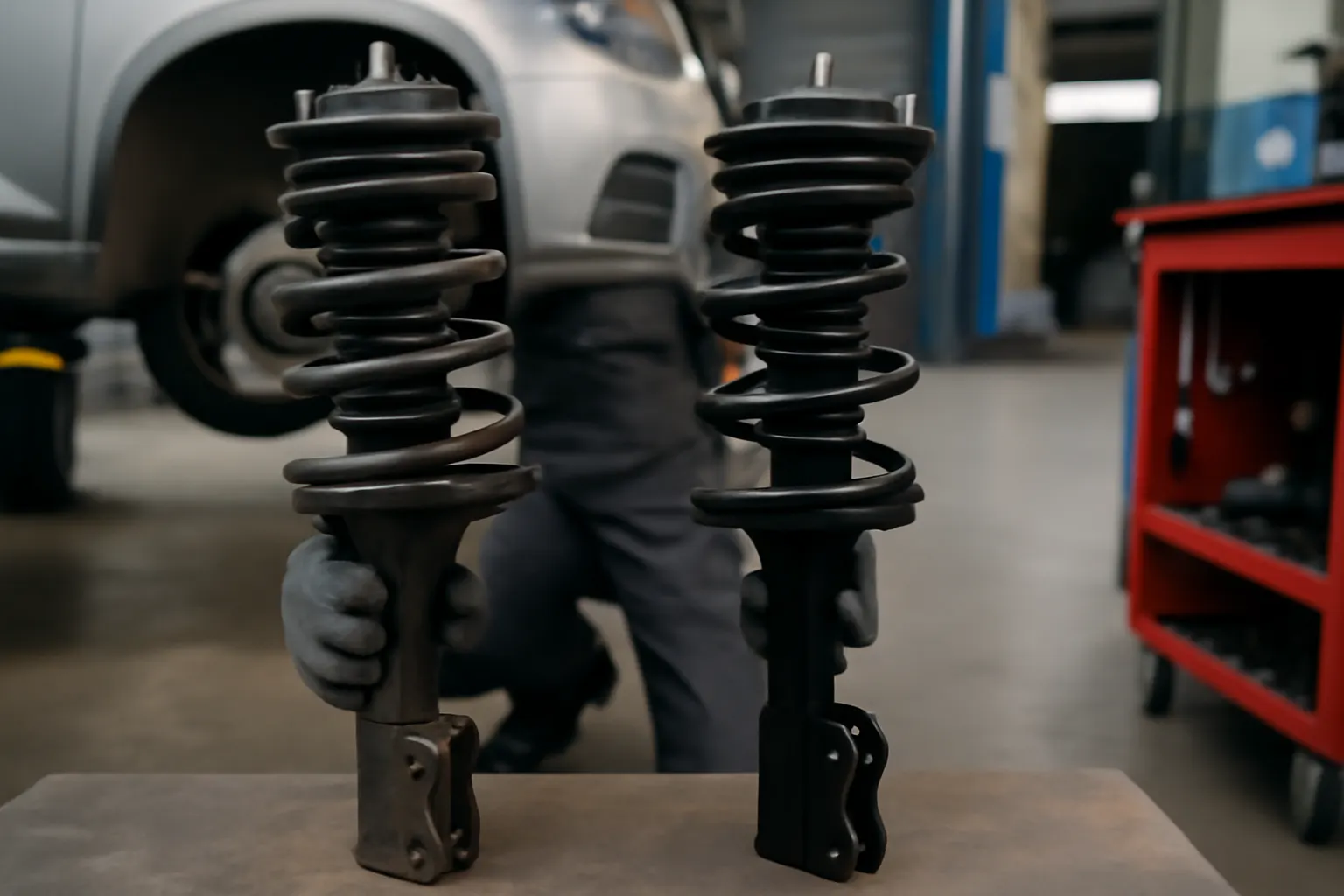
OEM vs Aftermarket Knee Assemblies: What Matters Most?
When it’s time to replace your vehicle’s knee assembly—commonly known as the strut assembly—one question dominates: should you choose an Original Equipment Manufacturer (OEM) part, or is a quality aftermarket assembly up to the task? The answer impacts your vehicle's safety, handling, ride quality, and long-term maintenance costs. In this comprehensive guide, we’ll break down the real-world differences between OEM and aftermarket knee assemblies, revealing what truly matters for your car, your driving experience, and your peace of mind.
Read More
OEM vs Aftermarket Knee Assemblies: What Matters Most?
When it comes to knee assemblies (also known as strut assemblies), your choice between Original Equipment Manufacturer (OEM) parts and aftermarket alternatives can have a profound impact on your vehicle’s ride quality, safety, and long-term reliability. For drivers and technicians alike, understanding the real-world differences between these two categories is essential for making an informed, cost-effective, and safety-conscious decision.
Read More