When to Repair vs. Replace Your Instrument Cluster
When your vehicle’s instrument cluster malfunctions, the decision to repair, replace, or upgrade isn’t just about cost—it’s about safety, vehicle performance, and long-term reliability. This expert guide from the AutoPartEx Technical Editorial Team breaks down exactly when to repair, when to replace, and what to consider for modern, digitally-integrated vehicles. Whether you drive a classic analog dash or a cutting-edge digital display, this comprehensive resource will help you make the right choice for your vehicle, your budget, and your peace of mind. For an in-depth look at how instrument clusters fit into overall vehicle diagnostics and driver awareness, visit our Instrument Cluster: The Nerve Center of Vehicle Diagnostics and Driver Awareness category page.
Why Instrument Cluster Decisions Matter Immediately
Your instrument cluster is more than a display—it’s the nerve center for vital information: speed, fuel levels, engine warnings, and more. A malfunctioning cluster can impair your ability to monitor critical systems, increasing the risk of accidents or costly repairs due to undetected issues. The National Highway Traffic Safety Administration (NHTSA) classifies malfunctioning dashboard equipment as a safety concern, impacting a vehicle’s compliance with safety standards and even its eligibility for recalls or manufacturer support [^1].
If you’re experiencing erratic readings, dead gauges, flickering lights, or total display failure, immediate action is necessary. Ignoring these symptoms can lead to inaccurate vehicle operation, missed warnings, and potential legal or inspection issues. The right decision—repair, replace, or upgrade—depends on understanding the root cause, long-term implications, and the technical complexity of your vehicle’s systems.
The Hidden Complexity Behind Instrument Cluster Failures
Instrument clusters may appear simple, but they’re a convergence of sensors, wiring, microprocessors, and vehicle network systems. Modern clusters, especially digital dashboards, are deeply integrated with safety systems, driver assist features, and even fuel efficiency monitoring [^2]. A failure in the cluster can mask or mimic faults elsewhere in the vehicle, making diagnosis and repair more challenging than most drivers expect.
Common hidden issues include:
- CAN Bus Communication Failures: Modern vehicles use Controller Area Network (CAN) buses to relay data between the cluster and other systems. A malfunction can affect multiple vehicle functions, not just the display.
- Software Glitches: Digital clusters may require software updates or reprogramming, not just hardware replacement.
- Sensor or Wiring Faults: The cluster may be the symptom, not the cause, if upstream sensors or wiring harnesses are faulty.
- Material Degradation: Over time, solder joints, connectors, and circuit boards can degrade, especially in vehicles exposed to extreme temperatures or vibrations [^3].
Understanding these complexities is essential before choosing repair or replacement, as addressing only the cluster may leave deeper issues unresolved.
Recognizing Instrument Cluster Symptoms: Repair or Replace?
To make an informed decision, start by identifying the type and severity of the instrument cluster failure. Use the following checklist to guide your initial assessment:
Instrument Cluster Symptom Checklist
- Gauges Stuck or Inaccurate: Speedometer, tachometer, or fuel gauge doesn’t move, is erratic, or reads incorrectly.
- Warning Lights Malfunction: Check engine, ABS, airbag, or other warning lights remain on or fail to illuminate during startup.
- Total Power Loss: Cluster is completely dark, with no lights or gauge movement.
- Flickering or Dim Display: Backlighting or digital displays flicker, fade, or are difficult to read.
- Intermittent Operation: Cluster works sporadically, often related to temperature, vibration, or moisture.
- Unusual Noises: Clicking, buzzing, or static sounds from behind the dashboard.
- Odometer Errors: Odometer not displaying, rolling back, or showing error codes.
- Communication Errors: Diagnostic scanners cannot communicate with the cluster module.
If you check one or more of these boxes, further diagnosis is warranted. For a step-by-step diagnostic guide, see our Diagnosing Instrument Cluster Failures: Step-by-Step.
Repair: When Is It the Right Choice?
Repair is often the best option when:
- The fault is isolated to a specific, repairable component (e.g., a failed capacitor, burnt-out bulb, or loose solder joint).
- The cluster is unique, rare, or original to a classic/collector vehicle.
- Replacement clusters are unavailable or prohibitively expensive.
- The failure is minor and does not involve deep electronic or software integration.
Common repairable issues include:
- Burnt-out backlighting or indicator bulbs (analog clusters).
- Loose or cracked solder joints on circuit boards.
- Faulty stepper motors (cause of stuck gauges).
- Minor wiring or connector issues.
- Replaceable fuses or relays associated with the cluster.
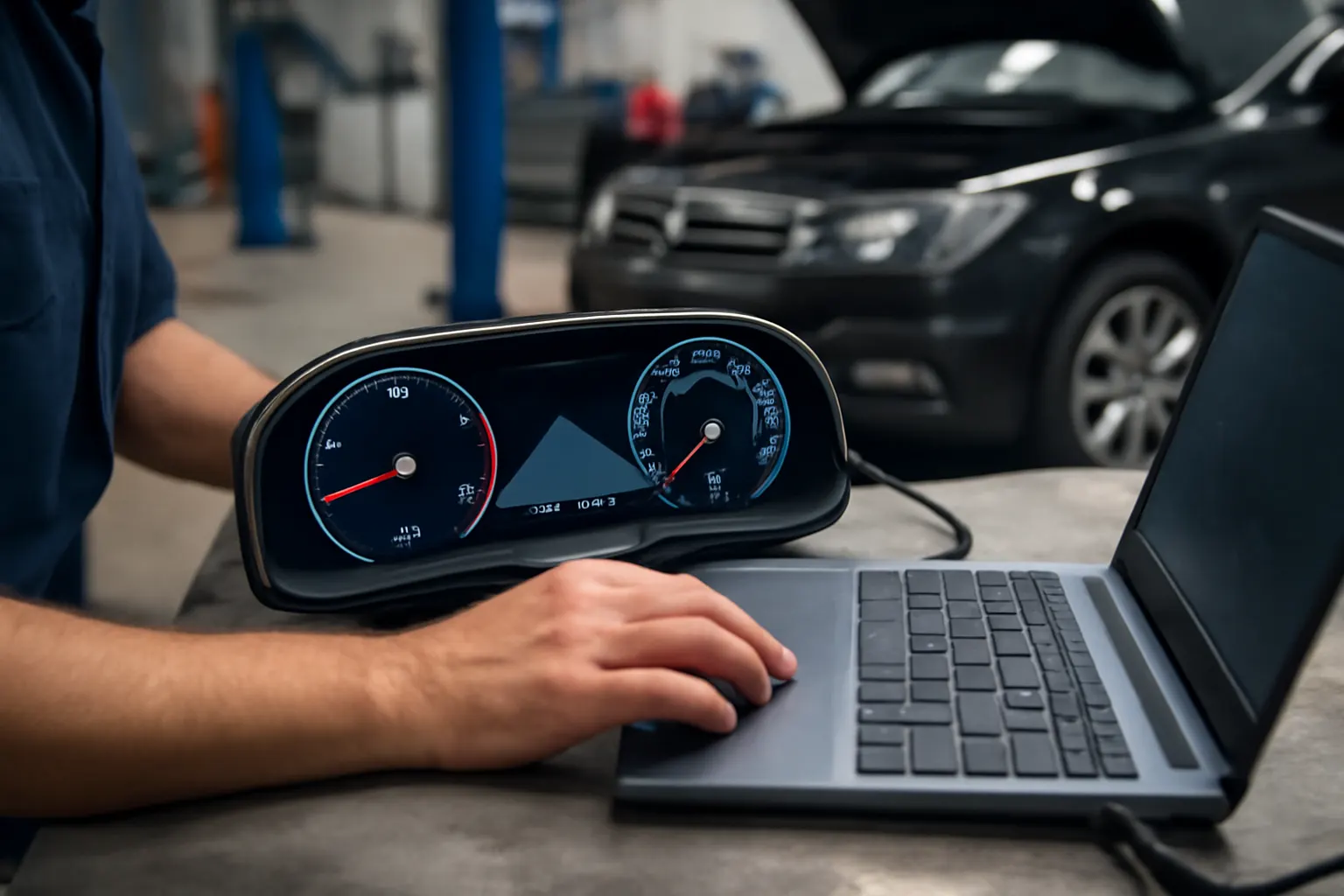
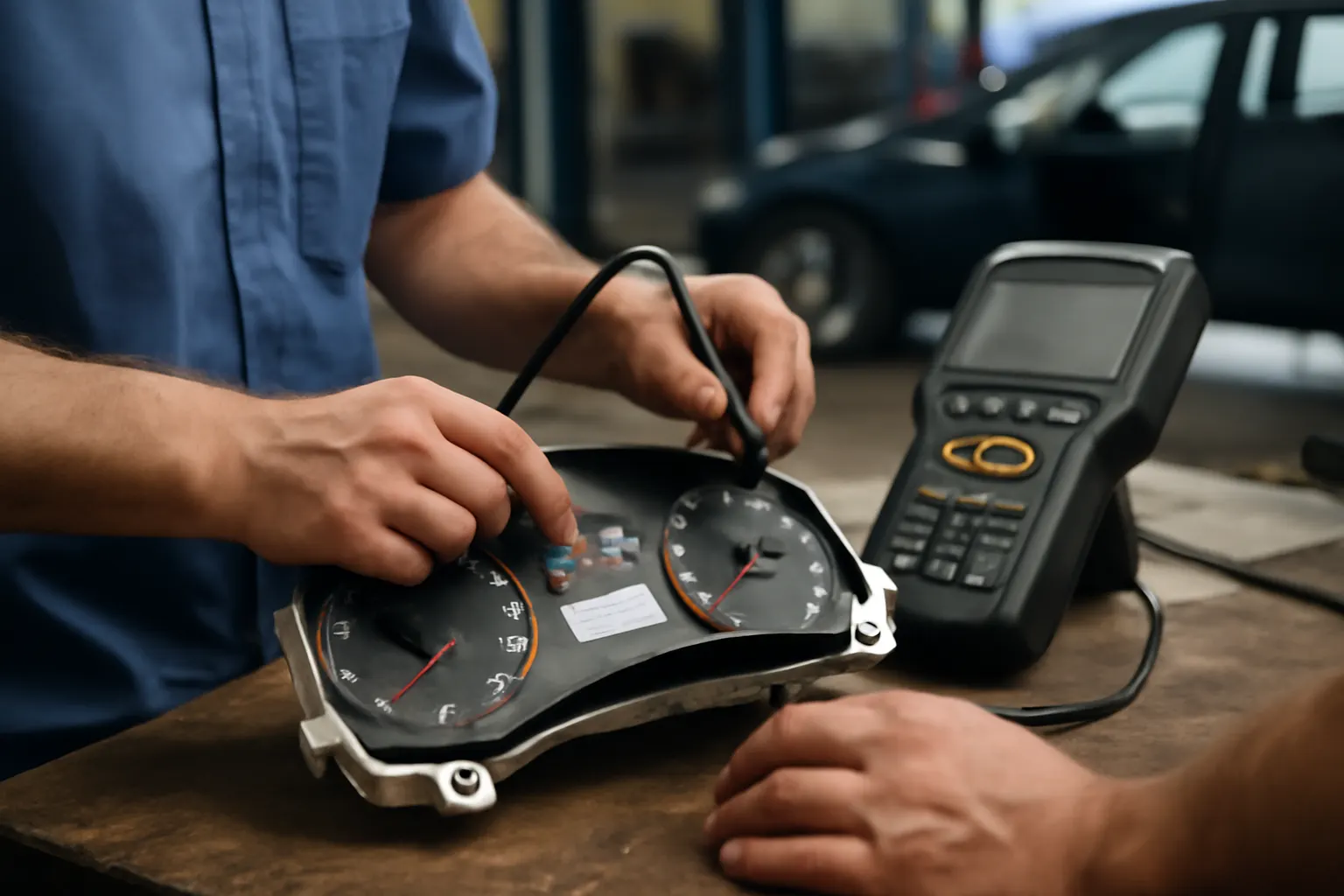
Repair Process: Repairs typically involve removing the cluster, disassembling it, and replacing or re-soldering components. For digital clusters, specialized tools and knowledge may be required to reprogram or recalibrate displays and sensors. Always disconnect the battery before starting work to avoid electrical shorts.
Advantages of Repair:
- Preserves vehicle originality (important for classic and high-value vehicles).
- Lower cost than full replacement.
- Shorter downtime if parts are readily available.
Limitations:
- May not address underlying vehicle network or sensor issues.
- Not always possible for heavily integrated or digital clusters.
- Repairs may be temporary if underlying causes (like water intrusion) aren’t resolved.
Replace: When Is a New Instrument Cluster Necessary?
Replacement is often required when:
- The cluster’s main circuit board is damaged beyond repair (e.g., water, fire, or severe electrical failure).
- The cluster is affected by a manufacturer recall or widespread defect.
- The cost of repair approaches or exceeds the cost of a new or refurbished cluster.
- Upgrading to a newer or more feature-rich cluster is desired (e.g., moving from analog to digital).
- Software corruption or incompatibility cannot be resolved by reprogramming.
Replacement Process:
- Identify the Correct Part: Match the cluster’s part number, model year, and vehicle trim to ensure compatibility. Many clusters are VIN-coded or require programming to work with your vehicle’s immobilizer and other systems.
- Source the Cluster: Choose between new OEM, used, or remanufactured units. Used clusters may require mileage correction and reprogramming.
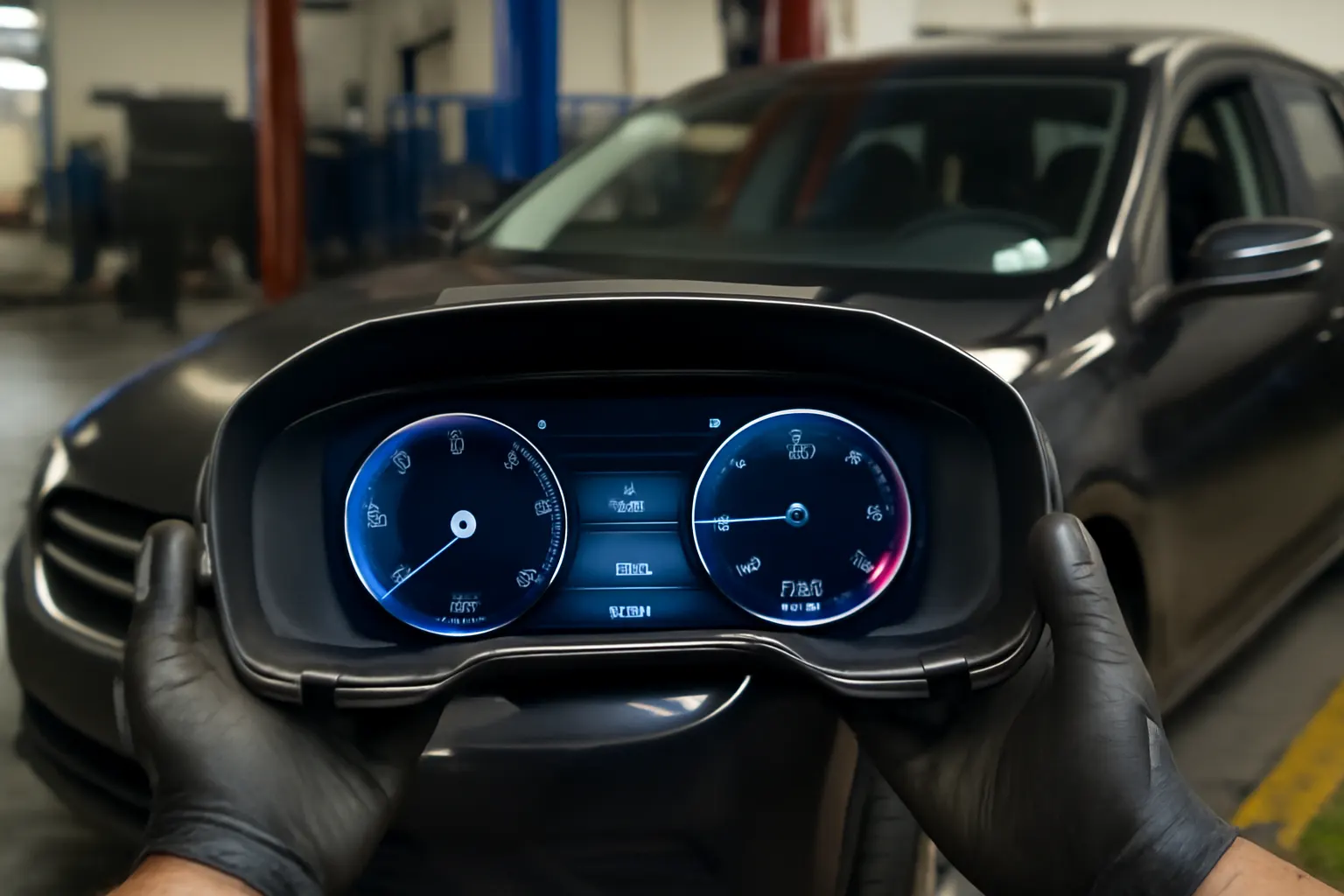
- Install and Program: Physical installation is typically straightforward, but digital clusters often require dealer-level programming to sync with your vehicle’s systems.
Advantages of Replacement:
- Restores full functionality and reliability.
- May allow for upgrades (e.g., higher-resolution displays, additional features).
- Addresses deep-seated electronic or software problems.
Limitations:
- Higher cost, especially for advanced digital clusters.
- May require professional installation and programming.
- Used or refurbished clusters may have unknown histories or hidden faults.
Upgrade: Is Now the Time to Modernize?
With the rapid evolution of vehicle electronics, some owners choose to upgrade their instrument clusters for improved aesthetics, functionality, or integration with modern systems.
Upgrade scenarios include:
- Retrofits to digital dashboards for better display clarity and additional data (navigation, diagnostics, infotainment).
- Integration with advanced driver assistance systems (ADAS).
- Enhanced fuel efficiency readouts or customizable displays.
Considerations before upgrading:
- Compatibility with the vehicle’s existing wiring, sensors, and network systems.
- Potential need for new sensors, wiring harnesses, or control modules.
- Software integration and potential impact on other vehicle systems.
- Compliance with safety and inspection standards.
For more on future trends and considerations, see Digital Dashboards: The Future of Instrument Clusters and Integrating Instrument Clusters with Modern Vehicle Systems.
Technical Deep Dive: How Instrument Clusters Impact Vehicle Safety and Performance
Instrument clusters are not isolated from the rest of the vehicle—they are critical for:
- Safety Compliance: NHTSA mandates that certain warning indicators (e.g., airbags, ABS, check engine) must function properly for the vehicle to be considered roadworthy [^1].
- Fuel Efficiency: Accurate speed, RPM, and fuel data are essential for both driver feedback and vehicle control modules that manage fuel economy strategies [^2].
- Diagnostics: Many vehicles use the cluster as a gateway for diagnostic trouble codes and system health checks.
- Driver Awareness: Malfunctioning clusters can hide or misrepresent critical data, leading to unsafe driving conditions.
A faulty cluster can result in missed warnings, inaccurate speed readings (risking speeding tickets or accidents), and even failed inspections.
Diagnosing Beyond the Obvious: Avoiding Misdiagnosis
One of the most common mistakes is assuming the cluster itself is always at fault. In reality, the problem may lie elsewhere:
- Sensor Failures: A faulty fuel sender, speed sensor, or temperature sensor can cause erratic gauge readings.
- Wiring Harness Issues: Broken, corroded, or loose wires can interrupt communication or power.
- Grounding Problems: Poor ground connections lead to intermittent or weak cluster operation.
- Module Communication: Faults in the vehicle’s body control module (BCM) or engine control module (ECM) can mimic cluster failure.
Diagnostic Steps:
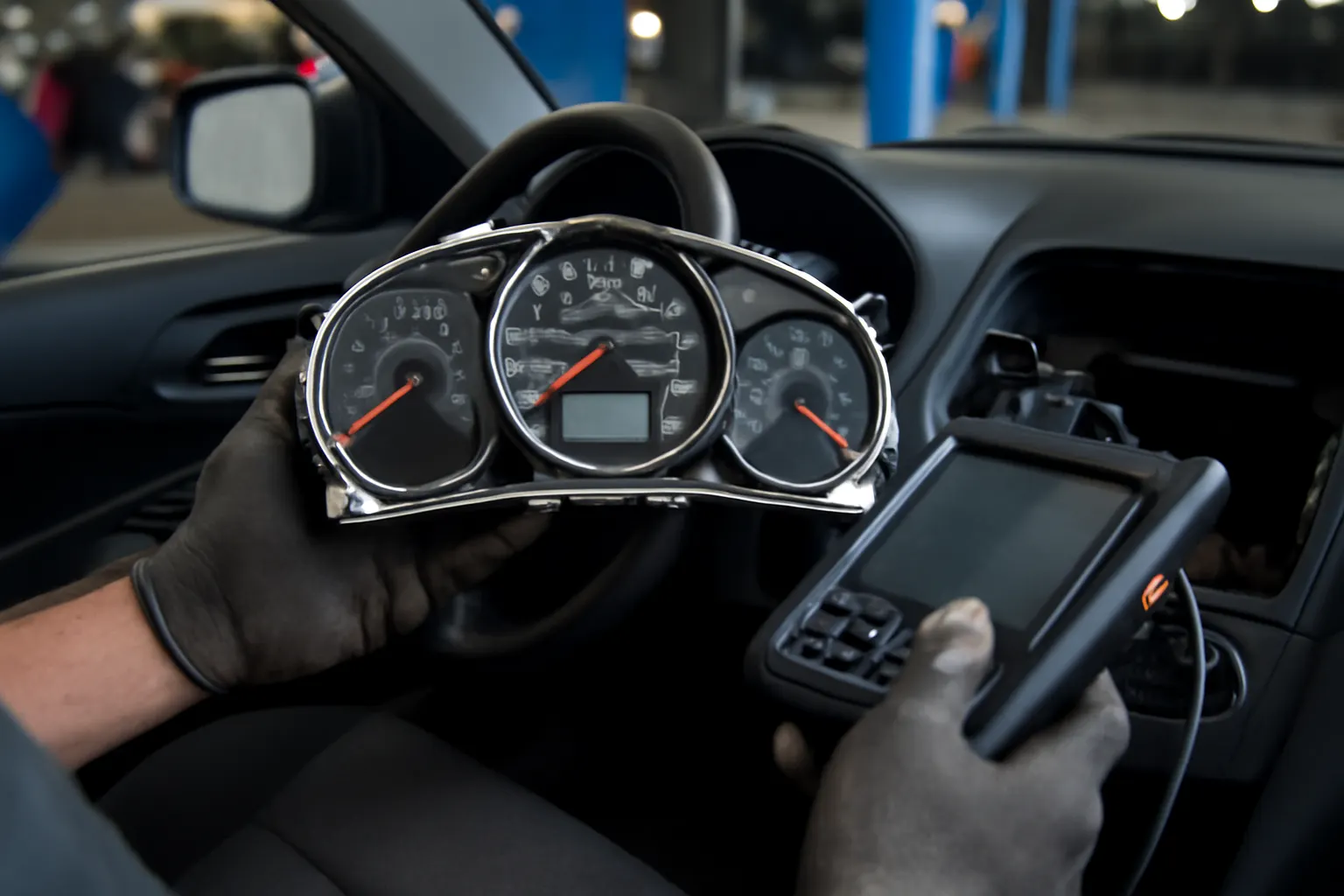
- Scan for Trouble Codes: Use an OBD-II scanner to check for cluster or network faults.
- Check Fuses and Relays: Inspect and test all fuses and relays associated with the dashboard.
- Inspect Wiring and Grounds: Visually and electrically check wiring harnesses and ground points.
- Test Sensors: Confirm that all input sensors are functioning within spec.
This comprehensive approach reduces the risk of unnecessary cluster replacement and ensures all related systems are functioning correctly.
Sourcing Instrument Clusters: New, Used, or Remanufactured?
When replacement is necessary, sourcing the right cluster is critical:
- New OEM Clusters: Offer guaranteed compatibility, reliability, and warranty support. Highest cost.
- Used Clusters: Cost-effective but may have unknown wear, incorrect mileage, or require reprogramming. Always match part numbers and VIN compatibility.
- Remanufactured/Refurbished Clusters: Professionally rebuilt with new components and tested for reliability. Middle ground in cost and reliability.
Checklist for Sourcing Clusters:
- Match part number, VIN, and model year.
- Confirm mileage correction and programming capability.
- Check warranty and return policy.
- Verify compatibility with vehicle options (e.g., transmission type, trim level).
- Ensure the supplier is reputable, with positive reviews and technical support.
Installation and Programming: What to Expect
Analog Clusters:
- Generally plug-and-play, though some may require basic calibration.
- Remove trim panels, disconnect battery, unbolt cluster, and swap units.
Digital Clusters:
- Often require dealer-level tools for programming and VIN synchronization.
- May need software updates or calibration of sensors.
- Some clusters are security-encoded and will not function without proper programming.
Professional vs. DIY:
- DIY installation is possible for many older vehicles with analog clusters.
- Modern digital clusters are best handled by qualified technicians with the appropriate tools.
Maintaining Your Instrument Cluster: Prevention and Longevity
Proactive maintenance can extend the life of your instrument cluster and prevent common failures:
- Keep Electrical Systems Healthy: Regularly check battery voltage and alternator output to avoid voltage spikes.
- Protect from Moisture: Ensure windshield seals and firewall grommets are intact to prevent water intrusion.
- Avoid Overloading Circuits: Do not tap into cluster wiring for aftermarket accessories without proper circuit protection.
- Gentle Cleaning: Dust clusters with a soft, dry cloth; avoid harsh chemicals that can damage plastic or coatings.
- Monitor for Early Warning Signs: Address flickering lights, intermittent operation, or warning lights promptly to prevent escalation.
Compliance and Safety: Meeting Regulatory Standards
Instrument cluster repairs and replacements must comply with federal safety and equipment standards. According to the NHTSA, all dashboard warning indicators and gauges must function as designed for a vehicle to pass safety inspections and remain street legal 1. Improper repairs, non-compliant aftermarket clusters, or tampered odometers can result in failed inspections and potential legal consequences.
For vehicles under manufacturer recall, consult the NHTSA Recalls Database to determine if your cluster or related components are covered for free repair or replacement.
The Impact of Instrument Clusters on Fuel Efficiency
Accurate instrument cluster readings are essential for maximizing fuel efficiency. The U.S. Department of Energy notes that real-time feedback on speed, RPM, and fuel consumption helps drivers optimize their driving habits and allows vehicle control modules to adjust engine performance for better fuel economy 2. Malfunctioning clusters can lead to excessive idling, improper gear selection, or missed maintenance intervals, all of which reduce efficiency and increase costs.
Material and Technological Advances in Instrument Clusters
Modern clusters benefit from advanced materials and technologies that improve durability, reduce weight, and enhance performance. According to the Department of Energy, lightweight materials and robust electronic components contribute to improved vehicle efficiency and reliability 3. When choosing a replacement or upgrade, consider clusters with enhanced materials, such as LED backlighting, solid-state displays, and corrosion-resistant connectors.
AutoPartEx: Your Partner in Instrument Cluster Solutions
AutoPartEx is committed to providing expert guidance, high-quality parts, and the latest technical resources for all your instrument cluster needs. Whether you’re seeking to repair a classic analog dash, replace a failed digital unit, or upgrade to the latest technology, our catalog and technical support team are here to help. Visit our Instrument Cluster: The Nerve Center of Vehicle Diagnostics and Driver Awareness page for more resources, or browse our selection of clusters, sensors, and related components for all major makes and models, from Acura to AMC.
Expert Action: What to Do Next
- Assess your symptoms: Use the checklist above to determine if your cluster needs attention.
- Diagnose thoroughly: Rule out sensor, wiring, and module faults before committing to repair or replacement.
- Consult resources: Use AutoPartEx guides or consult with a trusted technician for complex digital clusters.
- Source quality parts: Choose reputable suppliers for new, used, or remanufactured clusters.
- Ensure compliance: Make sure all repairs and replacements meet safety and regulatory standards.
A properly functioning instrument cluster is essential for safe, efficient, and enjoyable driving. Don’t ignore the warning signs—address issues promptly with the right solution for your vehicle and driving needs.
References
- Vehicle Safety and Equipment – National Highway Traffic Safety Administration
- Fuel Efficiency – United States Department of Energy
- Materials Technologies – United States Department of Energy