Advertisement
Tesla VIN Lookup: Ensuring Correct Part Selection
Selecting the correct replacement or upgrade part for your Tesla hinges on one critical step: using the Vehicle Identification Number (VIN) to verify exact fitment. The Tesla VIN is your master key for unlocking model-specific data, avoiding costly mismatches, and ensuring your investment in OEM or high-quality aftermarket parts is safe and effective. This guide provides a step-by-step approach to leveraging your Tesla’s VIN for precise part identification—whether you’re maintaining a Model S, upgrading a Model 3, or restoring a Roadster. For a broader look at Tesla part heritage and technical guidance, see our Tesla OEM & Replacement Parts category.
Why VIN Lookup Is Essential for Tesla Parts
The Tesla VIN is more than just a serial number—it encodes critical details about your vehicle’s build, including model year, production plant, trim, battery configuration, drive unit, and even some regional equipment variations. With Tesla’s rapid development cycles and frequent mid-year updates, visual identification alone is unreliable. Using the VIN ensures you avoid:
- Ordering incompatible parts due to subtle running changes in hardware
- Fitting components that compromise vehicle safety or efficiency
- Voiding warranties or failing inspections due to incorrect part installation
As Tesla’s lineup evolves, the only consistent method for pinpointing the right part is referencing the full VIN sequence.
The Hidden Problem: Tesla’s Rapid Hardware Evolution
Teslas are not built like traditional vehicles. The company’s “continuous improvement” manufacturing philosophy means hardware and software can change at any point in a production run—sometimes even within the same model year or trim. For example:
- Battery packs may change chemistry or architecture mid-year.
- Sensors and cameras for Autopilot can be updated without a new model release.
- Interior components like seats, screens, or trim may shift specification based on supply chain or production optimizations.
Traditional part lookup methods, based on model year or trim alone, often result in mismatches. This is especially problematic for safety-critical systems (e.g., airbags, brakes), structural components, and advanced driver-assistance sensors, which must meet strict NHTSA equipment standards.
Decoding the Tesla VIN: Anatomy and Key Digits
A Tesla VIN consists of 17 alphanumeric characters, following the global ISO 3779 standard, but Tesla uses several digits for proprietary information. Here’s how to break it down:
| VIN Position | Meaning | Example |
|---|---|---|
| 1–3 | World Manufacturer Identifier (WMI) | 5YJ (Tesla, USA) |
| 4 | Restraint System | A = Manual, B = Airbag |
| 5 | Line/Series | S = Model S, 3 = Model 3, X = Model X, Y = Model Y |
| 6 | Body Type | E.g., E = Sedan, F = SUV |
| 7 | Battery Type | E.g., E = Lithium-Ion |
| 8 | Motor/Drive Unit | E.g., A = Single, B = Dual Motor |
| 9 | Check Digit | Calculated for fraud prevention |
| 10 | Model Year | F = 2015, G = 2016, etc. |
| 11 | Plant Code | F = Fremont, C = China |
| 12–17 | Sequential Production Number | 000001+ |
Key takeaway: Digits 5–8 and 10–11 are crucial for part fitment. Always reference the complete VIN, not just the model or year.
How VIN Lookup Prevents Costly Mismatches
Tesla parts are engineered to tight tolerances and often integrate with vehicle software, sensors, and safety systems. Installing an incorrect part can lead to:
- Incompatibility errors: Software may reject unrecognized hardware, leading to warning lights or loss of function.
- Safety risks: Mismatched airbags, brakes, or restraint components can fail to deploy or operate as designed.
- Efficiency loss: Incorrect drivetrain or battery components may reduce range or performance (DOE Fuel Efficiency).
- Regulatory issues: Non-matching parts may fail state inspections or trigger recall notices (NHTSA Recalls).
A VIN-based lookup cross-references your vehicle’s build sheet, ensuring every replacement—whether a headlight, control arm, or touchscreen—matches Tesla’s original specification.
Step-by-Step: Using Your Tesla VIN for Parts Lookup
Here’s a practical process for leveraging your VIN to ensure correct part selection:
Advertisement
1. Locate Your Tesla’s VIN
- Windshield: Lower driver-side corner, visible from outside.
- Door jamb: Driver’s side B-pillar, label with barcode.
- Tesla app: Tap ‘Controls’ > ‘Software’ to view VIN.
2. Decode the VIN
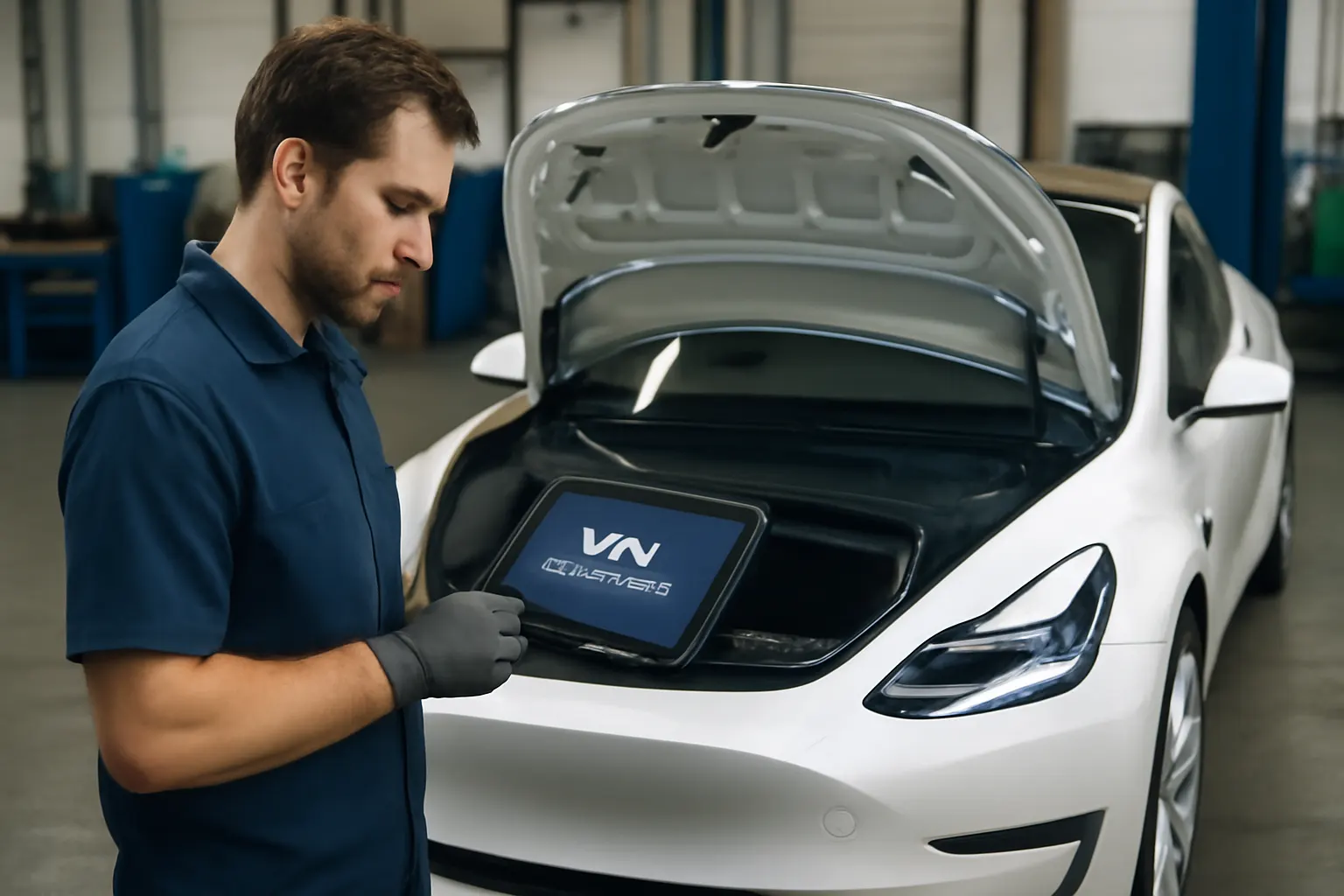
Use the breakdown above, or enter your VIN on Tesla’s official parts catalog or trusted third-party lookup tools. For advanced projects, refer to the Tesla OEM Parts Catalog.
3. Cross-Reference Part Numbers
- Input the VIN into the catalog or supplier’s lookup tool.
- Confirm the part number matches your build (especially for running changes).
- Double-check fitment notes for regional or trim-specific differences.
4. Verify with Supplier or Service Advisor
- For critical components (e.g., airbags, sensors), confirm with a Tesla Service Center or certified supplier.
- Ask for documentation or a screenshot of the VIN match.
5. Document Your Part Selection
- Save a copy of the VIN-based lookup or order confirmation for your records.
- This helps in case of future warranty or recall questions.
Common Tesla Parts Where VIN Lookup Is Critical
Some Tesla parts are more sensitive to VIN-specific differences than others. Always use VIN lookup for:
- Battery packs and modules: Chemistry, cooling, and mounting vary by build.
- Drive units and inverters: Differences in motor specs and software compatibility.
- Suspension components: Geometry and bushings change with refreshes.
- Body panels and glass: Subtle dimensional changes affect fit and sealing.
- Infotainment and screens: Hardware revisions may affect mounting and firmware.
- Sensors and cameras: Autopilot and FSD hardware iterations are VIN-dependent.
For a model-specific breakdown, see the Tesla Model S Parts Fitment & Upgrade Guide.
Checklist: VIN-Based Tesla Parts Sourcing
Before purchasing any Tesla part, run through this essential checklist:
- Obtain and verify the full 17-digit VIN.
- Use a reputable VIN decoding or parts lookup tool.
- Cross-check the decoded build details (model, year, trim, battery, drive unit).
- Compare OEM part numbers from the VIN lookup with supplier listings.
- Confirm notes on regional, software, or mid-year differences.
- For safety-critical parts, consult a Tesla-certified technician or supplier.
- Document your lookup and correspondence for future reference.
- Upon receiving the part, check packaging for VIN or part number confirmation before installation.
Diagnosing Fitment Issues: When VIN Lookup Goes Wrong
Even with VIN lookup, issues can arise due to:
- Database errors: Outdated or incomplete supplier catalogs.
- Grey market or imported Teslas: Some VINs may not decode fully in North American systems.
- Aftermarket modifications: Previous owners may have swapped parts, leading to mismatches.
- Software locks: Some components require Tesla’s proprietary activation even if hardware fits.
How to diagnose:
- Compare the delivered part’s physical attributes and part number to the original.
- Test-fit non-electronic components before full installation.
- For electronic modules, check for error messages or incompatibility warnings on the touchscreen or via Tesla’s diagnostic tools.
If a mismatch is detected, do not force installation—return the part and re-verify the VIN and lookup process.
The Role of VIN Lookup in Tesla Safety and Recalls
VIN-based parts sourcing isn’t just about convenience—it’s a safety imperative. The National Highway Traffic Safety Administration (NHTSA) mandates that replacement parts meet original equipment standards. Using the wrong airbag, seat belt, or sensor can:
- Compromise crashworthiness and passenger protection.
- Trigger recall notices if non-conforming parts are detected.
- Lead to failed safety inspections or denied insurance claims.
Always use the VIN to check for open recalls or service campaigns that may affect your replacement part. The NHTSA Recalls database allows you to search by VIN for active safety issues.
Technical Deep Dive: How Tesla VIN Impacts Advanced Components
Tesla’s integration of hardware and software means that many parts are “locked” to the car’s configuration. For example:
Advertisement
- Autopilot/FSD Hardware: Cameras, radar, and ECUs are tied to specific VINs and software versions. Installing the wrong camera or ECU can disable features or cause system faults.
- Battery and BMS Modules: Battery Management Systems are programmed per VIN. Swapping packs without proper VIN pairing can result in limited charging, range loss, or safety lockouts.
- Infotainment Upgrades: MCU (Media Control Unit) upgrades require VIN-verified firmware to function properly.
This tight integration is why Tesla Service Centers and certified suppliers always request your VIN before ordering or programming new components.
VIN Lookup and Tesla’s Materials Technologies
Tesla’s use of advanced materials—aluminum alloys, high-strength steel, and composites—means that structural parts are often model- and VIN-specific. For example:
- Crash structures and subframes: Material composition and mounting points can change, impacting crash performance and repairability (DOE Materials Technologies).
- Body panels: Even small differences in alloy or thickness may affect paint, corrosion resistance, or fit.
Never assume that “Model S front fender” fits all Model S vehicles—always match by VIN to ensure proper material spec and crashworthiness.
Buying Tesla Parts: OEM vs. Aftermarket and the Role of VIN
When sourcing Tesla parts, your VIN is your best defense against counterfeit or substandard components. How to Spot Counterfeit Tesla Parts provides a detailed guide, but the basics are:
- OEM parts: Always require VIN for order confirmation. Genuine suppliers will refuse to sell critical components without it.
- Aftermarket suppliers: Reputable vendors integrate VIN lookup into their catalog tools and disclose compatibility details.
- Suspicious sellers: Avoid suppliers who do not request or verify your VIN for safety-critical parts.
VIN-based ordering also streamlines warranty claims and future service, as your Tesla’s service history will match part installation records.
Maintenance, Upgrades, and VIN: What Owners Need to Know
Every Tesla owner, from DIYers to fleet managers, benefits from VIN-based part sourcing:
- Routine maintenance: Filters, wipers, and fluids may seem generic, but even these can change spec mid-year.
- Upgrades: Performance, suspension, or infotainment upgrades must be tailored to your build for full functionality.
- Restoration: For older Teslas or salvage vehicles, VIN lookup is essential to restoring original performance and safety.
For a cost overview and maintenance planning, see Tesla Maintenance Costs: What Owners Need to Know.
Best Practices for Tesla VIN Lookup and Part Sourcing
Follow these expert tips to make your VIN lookup process bulletproof:
- Always use the VIN, not just year/model/trim, for every part order.
- Leverage official Tesla catalogs and reputable third-party lookup tools.
- Save your VIN and part lookup history for future reference.
- For complex repairs, consult with Tesla-certified technicians or trusted suppliers.
- If unsure, request a parts diagram or build sheet based on your VIN.
- Stay current on recalls and service campaigns by regularly checking your VIN in the NHTSA database.
AutoPartEx: Your Partner in Tesla VIN-Based Parts Sourcing
At AutoPartEx, we’re committed to precision and safety in every Tesla parts transaction. Our catalog, technical guides, and customer support are built around VIN-based lookup, ensuring every component matches your Tesla’s unique build. Whether you’re sourcing OEM parts, exploring upgrades, or tackling a restoration, our team helps you avoid mismatches and maximize your investment.
Explore our Tesla OEM & Replacement Parts hub for comprehensive fitment guidance, technical resources, and expert support. For model-specific upgrades and diagnostics, our editorial guides and checklists provide practical, real-world advice.
Conclusion: VIN Lookup Is Non-Negotiable for Tesla Owners
The Tesla VIN is your most powerful tool for ensuring correct, safe, and efficient part selection. With Tesla’s rapid innovation and hardware variability, relying on visual cues or generic catalogs is a recipe for frustration and risk. By integrating VIN lookup into every step of your maintenance, upgrade, or repair workflow, you protect your Tesla’s safety, performance, and value.
For deeper technical breakdowns, sourcing strategies, and expert advice, AutoPartEx is your trusted partner on the road to precise Tesla ownership.
References
Advertisement