Advertisement
Turbocharging has revolutionized modern engine performance, but without intercoolers, much of the potential boost is lost to heat. Intercoolers are the unsung heroes that transform turbocharged air from a liability into a power-boosting asset—maximizing horsepower, improving fuel efficiency, and protecting your engine from damaging heat. Whether you drive a performance car, a diesel truck, or a daily commuter, understanding the science behind intercoolers reveals why charge air cooling is essential for both power and longevity. For a comprehensive overview of these systems and their impact, see Intercooler Systems: Maximizing Turbocharged Performance and Engine Longevity.
Why Every Turbocharged Engine Needs an Intercooler—Right Now
The immediate answer: Turbochargers compress air, which increases its temperature. Hotter air is less dense, contains less oxygen, and promotes engine knock. An intercooler cools this compressed air before it enters the engine, restoring oxygen density and enabling more fuel to be burned efficiently. The result? More power, better fuel efficiency, and reduced risk of engine damage. Without an intercooler, you’re leaving performance on the table and risking premature wear.
The Hidden Problem: Heat—Turbocharging’s Double-Edged Sword
While turbochargers are designed to boost power by forcing more air into the engine, the compression process dramatically raises intake air temperature. For every 10 psi of boost, intake air can easily exceed 300°F (150°C) without cooling. This heat robs engines of power and efficiency, and worse, it can trigger detonation (knock)—a destructive phenomenon that can quickly destroy pistons, rings, and valves.
The hidden problem is that many drivers underestimate just how much heat is generated and how severely it impacts performance. Even with factory-installed intercoolers, heat soak during aggressive driving or hot weather can reduce their effectiveness, leading to power loss and increased engine stress.
Expanding the Problem: Physics, Knock, and Engine Longevity
The Physics of Compressed Air
When air is compressed, its pressure and temperature both rise. The ideal gas law (PV=nRT) tells us that increasing pressure (boost) without removing heat will always result in higher temperatures. Hotter air is less dense, which means fewer oxygen molecules enter the combustion chamber. This directly reduces the amount of fuel that can be burned efficiently, lowering power output.
Engine Knock and Pre-Ignition
High intake temperatures also increase the risk of knock—uncontrolled, premature combustion of the air-fuel mixture. Knock is not just an annoyance; it is a primary cause of catastrophic engine failure in turbocharged engines. Modern engine management systems attempt to compensate by retarding ignition timing or reducing boost, but these safety measures also reduce power and responsiveness.
Impact on Fuel Efficiency and Emissions
Hot intake air doesn’t just hurt performance—it also hurts your wallet and the environment. Engines running hotter intake charges must inject more fuel to prevent knock, reducing fuel efficiency and increasing emissions. According to the U.S. Department of Energy, improving combustion efficiency is one of the keys to maximizing fuel economy in modern vehicles.
The Intercooler Solution: Turning Heat Into Horsepower
The solution is elegantly simple: cool the intake charge after it leaves the turbo but before it enters the engine. An intercooler acts as a heat exchanger, dissipating unwanted heat from the compressed air. Cooler air is denser, allowing more oxygen into the combustion chamber, which means more fuel can be burned and more power produced—without the risk of knock.
Types of Intercoolers
- Air-to-Air Intercoolers: Use ambient airflow to cool the charge air. Common in performance vehicles due to simplicity and reliability.
- Air-to-Water Intercoolers: Use coolant to absorb heat from the charge air, which is then cooled by a separate radiator. Preferred for tight engine bays or extreme performance applications.
- Front-Mount vs. Top-Mount: Front-mount intercoolers (FMIC) are exposed to maximum airflow, while top-mount intercoolers (TMIC) are compact but more prone to heat soak.
Advertisement
The right intercooler for your application depends on the vehicle’s layout, power goals, and driving environment. For a detailed breakdown, see Upgrading Your Turbo System: Intercooler Sizing and Placement.
How Intercoolers Unlock Hidden Power
Increasing Air Density
By cooling the intake charge, intercoolers increase its density. Denser air means more oxygen in each cylinder, so the engine can inject more fuel and generate more power with each combustion cycle. This is why a well-designed intercooler can yield 10–20% more power over a non-intercooled setup at the same boost level.
Enabling Higher Boost
With intake temperatures under control, you can safely run higher boost pressures without risking knock or detonation. This is the key to unlocking the full potential of your turbo system—more boost, more power, and more reliability.
Improving Fuel Efficiency
Cooler, denser air allows for more complete combustion, which means less unburned fuel and lower emissions. As the U.S. Department of Energy notes, boosting combustion efficiency directly translates into better fuel economy—a win-win for performance and efficiency.
The Intercooler in Action: Technical Deep Dive
Anatomy of an Intercooler
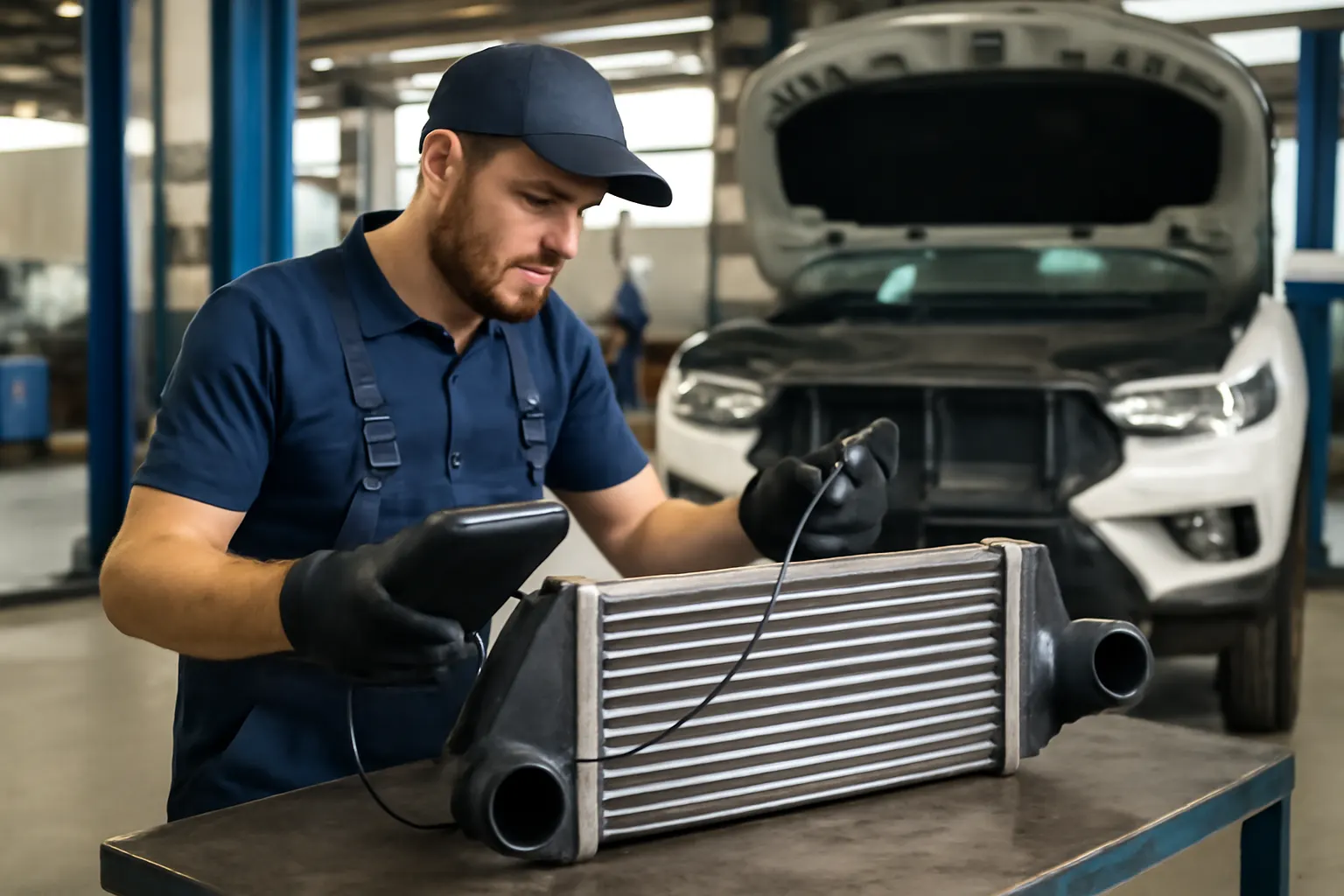
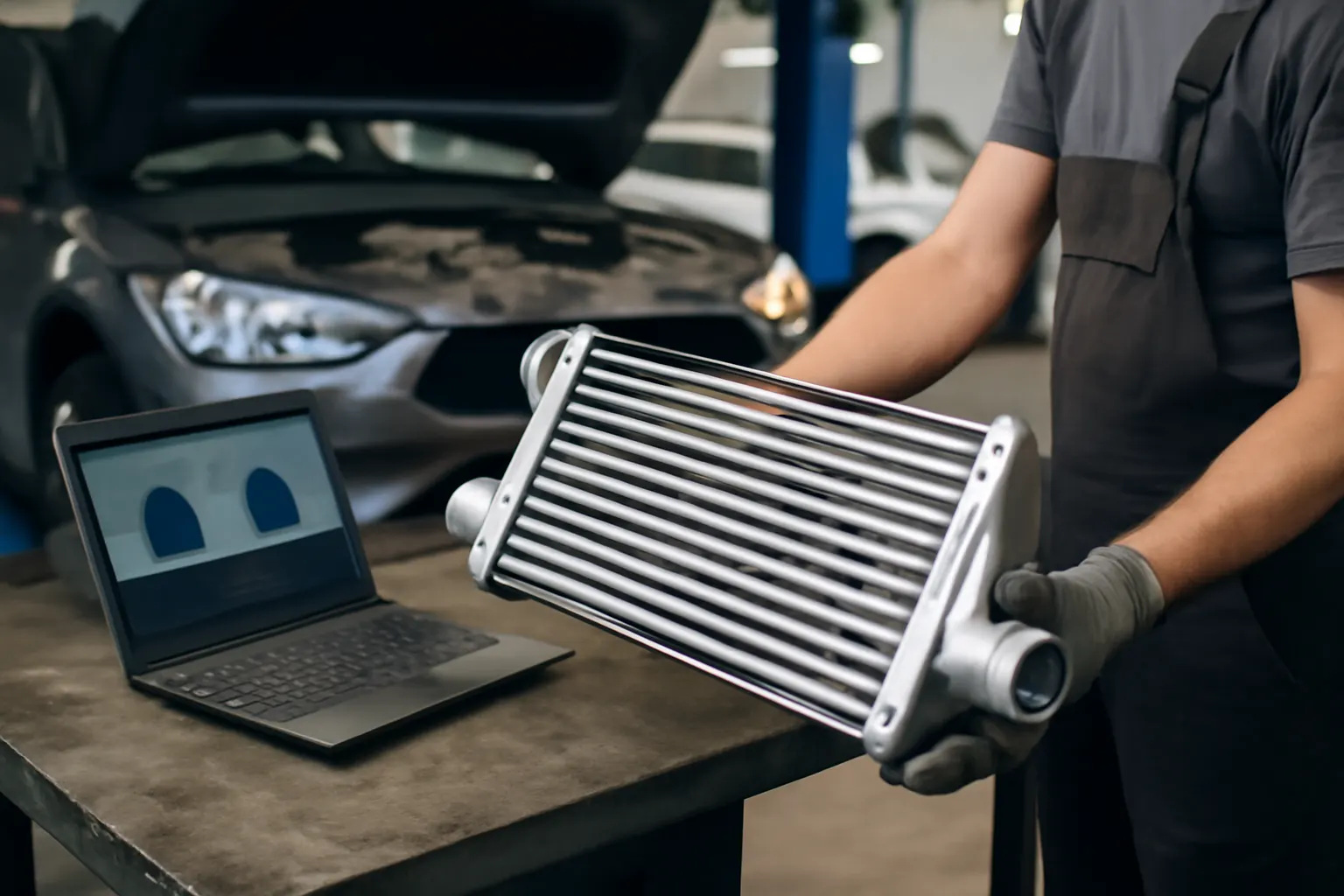
An intercooler consists of a core (typically made of aluminum for weight and thermal conductivity), end tanks, and inlet/outlet ports. The core is made up of a series of tubes and fins that maximize surface area, allowing heat to transfer from the compressed air to the cooling medium (air or water).
- Tubes: Carry the compressed air through the intercooler.
- Fins: Increase surface area for heat dissipation.
- End Tanks: Direct airflow smoothly through the core.
Heat Transfer Mechanisms
Intercoolers rely on conduction, convection, and in some cases, radiation. The compressed air flows through the tubes, transferring heat to the fins, which is then carried away by airflow (air-to-air) or coolant (air-to-water). The efficiency of this process is determined by core design, material, and placement.
Material Technologies
Modern intercoolers utilize advanced materials to optimize strength, weight, and thermal performance. According to the U.S. Department of Energy, lightweight aluminum alloys are favored for their excellent heat conductivity and corrosion resistance, critical for both performance and longevity.
Diagnosing Intercooler Issues: Symptoms and Solutions
Even the best intercooler is only effective if it’s working properly. Here’s how to spot and address common intercooler issues:
Common Symptoms
- Loss of Power: Reduced boost pressure or “heat soak” leads to sluggish acceleration.
- Increased Intake Temperatures: Measured via OBD-II or aftermarket sensors.
- Visible Oil or Coolant Leaks: Cracks or failed seals in the core or end tanks.
- Check Engine Light: Often related to intake air temperature or boost pressure sensors.
Diagnostic Checklist
| Symptom | Possible Cause | Diagnostic Action |
|---|---|---|
| Loss of Power | Heat soak, restriction | Inspect for debris, scan intake temps |
| Boost Leak | Cracked core, loose clamps | Pressure test system, inspect hoses |
| Oil in Intercooler | Turbo seal failure | Check turbo for shaft play, inspect pipes |
| High Intake Temps | Undersized intercooler | Monitor temps under load, compare to spec |
| Whistling Noise | Air leak at joint | Inspect clamps, hoses, and core welds |
For step-by-step guidance on troubleshooting and replacement, see How to Diagnose and Replace a Failing Intercooler.
Intercooler Installation: Best Practices
Proper installation is crucial to maximizing intercooler performance. Here’s what every installer should know:
Fitment and Mounting
- Location: Maximize exposure to cool air (front-mount is ideal for most applications).
- Piping: Use the shortest, smoothest path possible to reduce pressure drop and lag.
- Support: Secure mounting to prevent vibration and fatigue cracks.
Sealing and Connections
- Clamps: Use high-quality T-bolt or worm-gear clamps for all connections.
- Hoses: Opt for silicone hoses rated for high temperature and pressure.
- Pressure Testing: Always pressure test after installation to ensure leak-free operation.
Integration with Other Systems
- AC and Radiator Clearance: Ensure intercooler does not block airflow to other critical heat exchangers, such as the AC Condenser.
- Sensor Placement: Verify that intake air temperature and MAP sensors are properly located for accurate engine management.
Maintenance: Keeping Your Intercooler at Peak Efficiency
Routine maintenance is essential to prevent gradual power loss and protect engine health.
Advertisement
Maintenance Checklist
- Inspect for Debris: Leaves, bugs, and road grime can clog fins, reducing cooling efficiency.
- Check for Leaks: Look for oil residue or coolant leaks around end tanks and connections.
- Clean the Core: Use compressed air or a gentle rinse to clear blockages; avoid high-pressure sprayers that can bend fins.
- Monitor Intake Temperatures: Regularly scan intake air temperature under load to spot declining performance.
- Inspect Mounts and Hoses: Check for loose or worn connections that could cause boost leaks.
For more detailed tips, see Intercooler Maintenance: Preventing Power Loss and Engine Damage.
Upgrading Your Intercooler: What to Look For
If you’re planning a turbo upgrade or want to future-proof your build, upgrading the intercooler is a must. Here’s what to consider:
Sizing
- Core Volume: Larger cores can cool more air but may introduce more pressure drop if oversized.
- Flow Rate: Match the intercooler’s flow capacity to your engine’s projected horsepower and boost level.
Core Design
- Bar-and-Plate vs. Tube-and-Fin: Bar-and-plate offers better cooling and durability; tube-and-fin is lighter but less robust.
- Fin Density: Higher fin density improves heat transfer but can restrict airflow.
Placement
- Front-Mount: Best for maximum cooling, especially in high-boost or track environments.
- Top-Mount or Side-Mount: Suitable for compact vehicles or OEM-style upgrades.
For a comprehensive sizing and placement guide, visit Upgrading Your Turbo System: Intercooler Sizing and Placement.
Intercooler Safety and Compliance
Intercoolers are critical to both performance and safety. Failing or improperly installed intercoolers can cause boost leaks, engine overheating, or even catastrophic failure. The National Highway Traffic Safety Administration emphasizes the importance of using quality, properly fitted components in all safety-critical systems, including forced induction and cooling.
Key Safety Considerations
- Quality Materials: Choose intercoolers made from tested, corrosion-resistant materials.
- Proper Fitment: Ensure the intercooler is designed for your specific make and model.
- Certified Parts: Use components that meet or exceed SAE Standards for automotive systems.
The Intercooler’s Role in Modern Vehicle Technology
As automakers push for higher efficiency and lower emissions, turbocharging and intercooling have become standard in everything from compact cars to heavy-duty trucks. The integration of advanced materials and precise engineering (see Materials Technologies) means today’s intercoolers are lighter, more efficient, and more durable than ever before.
OEM vs. Aftermarket Solutions
- OEM Intercoolers: Designed for reliability and emissions compliance, but often undersized for performance enthusiasts.
- Aftermarket Intercoolers: Offer greater cooling capacity and reduced pressure drop, ideal for modified vehicles or higher boost levels.
Sourcing the Right Intercooler: Buying Guidance
Choosing the right intercooler is about matching your performance goals to your vehicle’s layout and intended use. Here’s how to make an informed decision:
Buying Checklist
- Vehicle Compatibility: Confirm fitment with your make, model, and year.
- Power Goals: Choose a core sized for your target horsepower and boost.
- Material Quality: Look for aluminum construction and TIG-welded seams.
- Brand Reputation: Select proven brands with positive reviews and verified test data.
- Warranty and Support: Consider suppliers who offer technical support and clear warranty terms.
AutoPartEx offers a curated range of intercoolers and components, ensuring you get the right fit and performance for your application. For more, browse our Intercooler Systems category or consult with our technical team.
AutoPartEx: Your Partner in Performance and Reliability
At AutoPartEx, we understand that every horsepower counts—and so does every degree of intake temperature. Whether you need a direct-replacement intercooler for your daily driver, a high-flow front-mount for your track build, or expert advice on system upgrades, our team of specialists is here to help. We offer only quality-tested, vehicle-specific intercoolers and accessories, supported by technical expertise and fast shipping.
Next Steps: Unlock Your Engine’s Hidden Power
Don’t let heat rob your turbocharged engine of its true potential. Invest in a quality intercooler, maintain it regularly, and monitor your intake temperatures. With the right system in place, you’ll enjoy more power, greater efficiency, and longer engine life—mile after mile.
Ready to take your boost to the next level? Explore our Intercooler Systems, check out our maintenance tips, or contact our technical team for personalized recommendations.
References
Advertisement