OEM vs. Aftermarket Inside Door Handles: What You Need to Know
Inside door handles are a small but essential component for any vehicle’s safety, comfort, and daily usability. When it’s time to replace a worn or broken handle, drivers face a crucial decision: do you go with an Original Equipment Manufacturer (OEM) part, or opt for an aftermarket alternative? This comprehensive guide cuts through the confusion, providing a detailed, automotive-specific comparison of OEM and aftermarket inside door handles in terms of fitment, durability, value, and safety. If you need a quick reference or deep technical insight, you’ll find it here.
For a broader look at the role of inside door handles in modern vehicles, see Inside Door Handle: Precision, Safety, and Ergonomics for Modern Vehicles.
The Immediate Answer: Which Is Better—OEM or Aftermarket Inside Door Handles?
If you’re facing a broken or malfunctioning inside door handle, the best immediate answer is: OEM handles offer guaranteed fit, finish, and safety compliance, while quality aftermarket handles can provide significant cost savings with comparable performance—if you choose carefully. For daily drivers, OEM is the safe bet for perfect integration, but well-vetted aftermarket handles may suit budget-conscious owners or those with older vehicles.
The Hidden Problem: Not All Handles Are Created Equal
Many vehicle owners assume that all inside door handles are essentially interchangeable, but this is a misconception. The market is flooded with options that vary widely in quality, fitment precision, and safety compliance. Poorly made aftermarket handles can lead to frustrating installation issues, premature wear, or even safety hazards if they fail in an emergency. Even some OEM parts can be subject to recalls or manufacturing defects, highlighting the importance of informed selection and installation.
Why the Right Inside Door Handle Matters: Safety, Ergonomics, and Vehicle Integrity
Inside door handles are more than mere levers—they’re a critical link in your vehicle’s safety system. The National Highway Traffic Safety Administration (NHTSA) sets stringent standards for door latch and handle performance, ensuring occupants can exit quickly in emergencies and that doors remain secure in collisions. An unreliable handle can compromise both convenience and safety, making the choice between OEM and aftermarket options a decision with real-world consequences.
Modern vehicles also integrate ergonomic and aesthetic considerations into handle design. The feel, grip, and even the sound of the handle operation are engineered for both comfort and perceived quality. Replacing a handle with a poorly matched part can degrade the interior experience and reduce resale value, particularly for newer or premium vehicles.
Technical Differences: OEM vs. Aftermarket Inside Door Handles
Let’s break down the technical distinctions between the two options:
OEM Inside Door Handles
- Exact Fitment: Manufactured to the precise specifications of your vehicle’s make, model, and trim. Installation is typically straightforward, with no modification required.
- Material Quality: Uses original-grade plastics, metals, and finishes to match the rest of your interior.
- Safety Compliance: Guaranteed to meet all NHTSA and manufacturer safety standards for durability, crash performance, and child safety.
- Aesthetic Consistency: Color, texture, and tactile feedback are identical to the original part.
Aftermarket Inside Door Handles
- Variable Fitment: Quality ranges from precise replicas to generic “universal” parts. Some require minor adjustments or do not include all necessary mounting hardware.
- Material Diversity: May use different grades of plastic or metal, sometimes resulting in less robust or mismatched components.
- Safety Assurance: Reputable brands often meet or exceed OEM standards, but unbranded or low-cost options may not be tested to the same degree.
- Customization: Some aftermarket handles offer different colors or styles, allowing for personalization or upgrades.
Fitment and Installation: What to Watch For
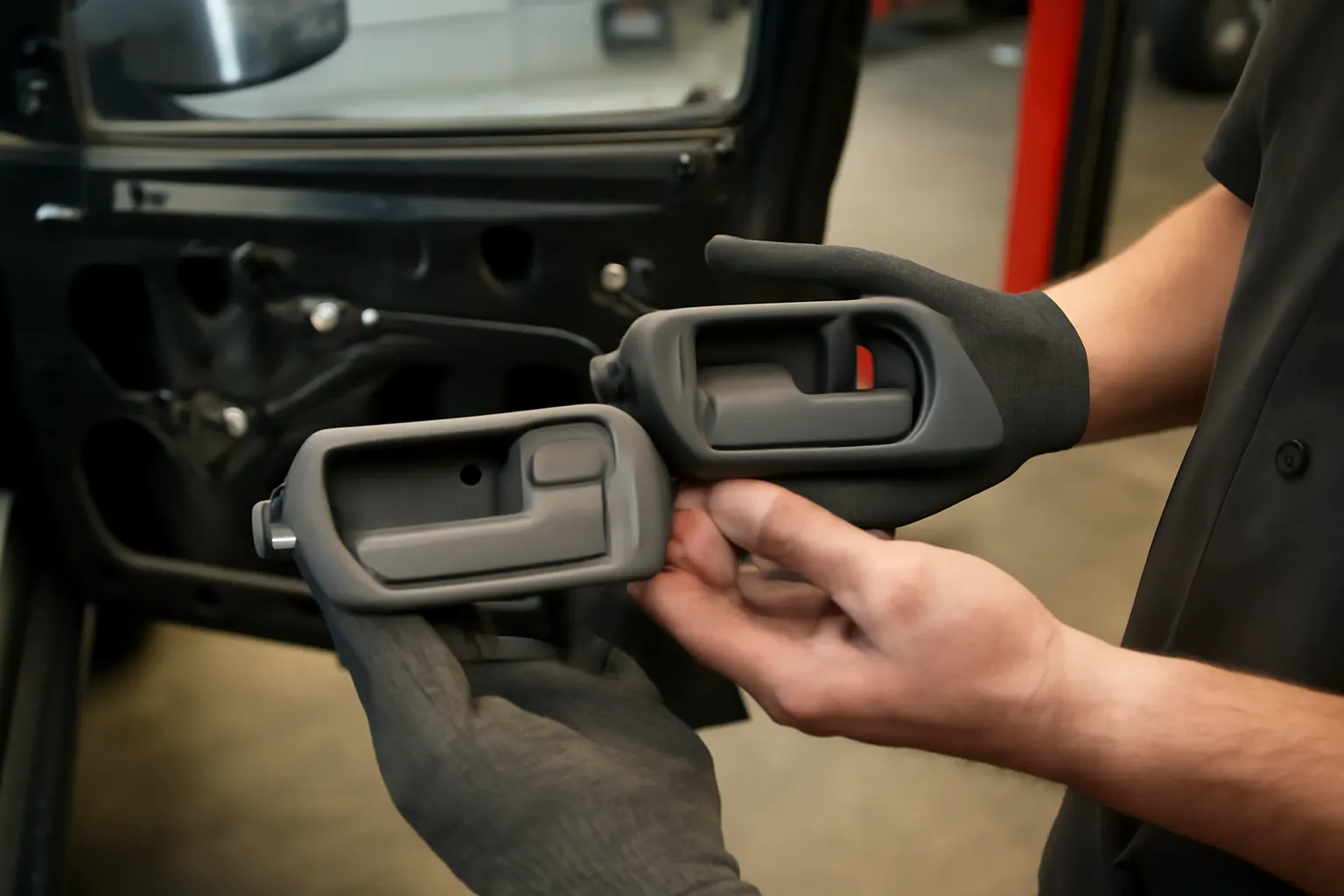
Proper fitment is crucial for both safety and usability. OEM handles are engineered for a perfect match—mounting points, linkage connections, and clearances are identical to the original. This minimizes installation time and risk of error.
Aftermarket handles, especially low-cost imports, may have subtle differences in mounting tabs, screw locations, or linkage length. These discrepancies can lead to:
- Loose or rattling handles
- Sticking or incomplete door opening
- Accelerated wear on door mechanisms
- Additional installation time and frustration
Checklist: Evaluating Inside Door Handle Fitment
| Fitment Factor | OEM Handle | Aftermarket Handle (Quality) | Aftermarket Handle (Low-End) |
|---|---|---|---|
| Mounting Points | Exact | Usually exact | Often slightly off |
| Linkage Compatibility | Perfect | Good, may need adjustment | May require modification |
| Color/Finish Match | Identical | Close to original | May be noticeably different |
| Installation Time | Minimal | Slightly longer | Can be significantly longer |
If you’re unsure about the installation process, check out our step-by-step guide: How to Replace an Inside Door Handle: Step-by-Step Guide.
Durability and Longevity: How Long Will Your Replacement Handle Last?
OEM handles are designed for the lifespan of the vehicle, undergoing rigorous lifecycle and stress testing according to manufacturer and SAE standards. They are built to withstand thousands of cycles, temperature fluctuations, and everyday abuse.
Aftermarket handles vary widely:
- Premium Aftermarket: Brands that advertise OEM-equivalent or “meets/exceeds OEM” durability often use similar materials and manufacturing processes as the original supplier.
- Budget Aftermarket: Cheaper options can use brittle plastics or inferior metals, making them susceptible to cracking, fading, or premature mechanical failure.
Warning: A broken inside door handle is more than an inconvenience—it can be a safety risk if it fails during an emergency. Always inspect the mechanical integrity and test operation after installation.
Safety and Regulatory Compliance: What the Law Requires
The NHTSA regulates the performance of inside door handles under Federal Motor Vehicle Safety Standards (FMVSS). Handles must allow doors to open with a reasonable force and remain operational after certain crash scenarios. OEM handles are always certified for compliance.
Aftermarket handles from reputable brands often claim compliance, but there is no universal third-party certification for every aftermarket part. Some low-quality handles may not meet these standards, creating a potential safety liability.
Key Safety Considerations:
- Crashworthiness: Will the handle function after a side impact or rollover?
- Child Safety: Does the handle work properly with child lock systems?
- Recall History: Both OEM and aftermarket handles have been subject to recalls. Check the NHTSA recalls database for your specific vehicle and part (NHTSA Recalls).
Value and Cost Comparison: Upfront Savings vs. Long-Term Investment
One of the biggest draws of aftermarket handles is their lower price—sometimes up to 50% less than OEM parts. However, the real value depends on several factors:
- Labor Costs: If a poorly fitting handle requires extra installation time, savings may disappear.
- Replacement Frequency: A low-quality handle may fail sooner, requiring additional purchases and labor.
- Resale Impact: Vehicles with mismatched or obviously aftermarket handles can lose value, especially in premium segments.
Cost Comparison Table
| Handle Type | Average Cost (USD) | Typical Lifespan | Installation Complexity |
|---|---|---|---|
| OEM | $45–$120 | 8–15 years | Low |
| Premium Aftermarket | $25–$80 | 5–12 years | Low–Moderate |
| Budget Aftermarket | $10–$35 | 1–4 years | Moderate–High |
Diagnosing Inside Door Handle Issues Before Replacement
Before purchasing a replacement, ensure the handle is the true source of your problem. Many symptoms—such as a door that won’t open from the inside—can be caused by broken linkages, latch problems, or door lock actuator failures.
Basic Diagnostic Checklist:
- Visual Inspection: Look for cracks, broken pivots, or loose mounting.
- Functional Test: Does the handle move freely? Does it return to its resting position?
- Linkage Check: Is the connecting rod or cable still attached and moving the latch?
- Latch Operation: Does the exterior handle work? If both fail, the latch may be at fault.
- Child Lock Status: Ensure the child lock is not engaged, especially on rear doors.
For detailed troubleshooting, visit Diagnosing Door Lock and Handle Issues.
Sourcing the Right Handle: OEM, Aftermarket, or Dealer?
When it’s time to buy, you have several sourcing options:
- OEM via Dealer: Guaranteed match, but highest price.
- OEM via Online Retailer: Same part, often at a lower cost.
- Aftermarket via Specialist Retailer: Look for brands with a reputation for quality and NHTSA compliance.
- Aftermarket via General Marketplace: Exercise caution—reviews and return policies matter.
Pro Tip: Always cross-reference the part number with your vehicle’s VIN or official parts catalog to avoid compatibility issues. For some brands (like Acura or AMC), OEM parts may be the only way to ensure correct fitment for unique trim or model-year variations.
Installation Guidance: Ensuring a Secure, Reliable Fit
Whether you choose OEM or aftermarket, following proper installation procedures is critical for safety and durability.
Key Installation Steps:
- Disconnect Battery: Prevents accidental airbag deployment if working near side airbags.
- Remove Door Panel: Use trim removal tools to avoid damaging clips or fasteners.
- Disconnect Linkages: Carefully unclip rods or cables from the old handle.
- Install New Handle: Ensure all mounting points are aligned and fasteners are torqued to spec.
- Reconnect Linkages: Test for smooth operation before reassembling the door.
- Test Function: Open and close the door several times from inside and outside.
For a step-by-step walkthrough, see How to Replace an Inside Door Handle: Step-by-Step Guide.
Maintenance and Longevity Tips
To maximize the lifespan of your new inside door handle:
- Keep Lubricated: Periodically lubricate pivot points and linkages with a light grease.
- Avoid Excessive Force: Teach all users not to yank or slam the handle.
- Monitor for Play: If the handle becomes loose, check mounting screws promptly.
- Protect from UV: Where possible, use sunshades or park in covered areas to prevent fading and plastic degradation.
Routine inspection during oil changes or annual service can catch early signs of wear.
When to Choose OEM vs. Aftermarket: Use Cases and Scenarios
Choose OEM If:
- Your vehicle is new, under warranty, or a premium model.
- You want guaranteed fit, finish, and long-term reliability.
- You are concerned about resale value or lease return inspections.
- The part is safety-critical or integrated with advanced systems (e.g., keyless entry, illuminated handles).
Consider Aftermarket If:
- The vehicle is older, out of warranty, or a daily driver with high mileage.
- You’re on a tight budget, but willing to carefully vet the brand and reviews.
- You want custom finishes or colors not offered by the OEM.
- OEM parts are discontinued or unavailable.
Common Pitfalls and How to Avoid Them
- Mismatched Colors/Finishes: Even “direct fit” aftermarket handles may not match faded or aged OEM interiors. Ask for detailed photos or color codes.
- Missing Hardware: Some kits don’t include necessary screws, clips, or linkage rods. Double-check the product listing.
- Poor Packaging: Cheap handles may arrive with shipping damage. Inspect upon arrival and report issues immediately.
- Ignoring Recalls: Always check for recall notices (NHTSA Recalls), as some defective handles have been recalled by both OEMs and aftermarket suppliers.
AutoPartEx Positioning: Your Partner in Precision Automotive Replacement
At AutoPartEx, we understand the importance of precision, safety, and value when choosing replacement parts for your vehicle. Our curated selection of inside door handles includes both OEM and quality-tested aftermarket options, ensuring you have access to parts that meet your standards for fitment, durability, and safety compliance. Our expert guides, diagnostic resources, and buyer checklists empower you to make confident, informed decisions—whether you’re tackling a DIY repair or working with a trusted technician.
Final Expert Action: Make the Right Choice for Your Vehicle
When it comes to replacing your inside door handle, don’t settle for “good enough.” Start by diagnosing the true cause of the problem, then select a handle that matches your needs for fit, finish, safety, and budget. Verify part numbers, check for recalls, and follow best practices for installation and maintenance. For peace of mind and long-term satisfaction, trust reputable sources and leverage the expertise available through AutoPartEx’s resources and product selection.
For additional insights into common failure points, read Common Causes of Inside Door Handle Failure.