How Intake Manifold Design Impacts Engine Performance
Intake manifold design is a crucial, often underestimated factor in determining your engine’s real-world performance. The geometry, material, and engineering of an intake manifold directly influence horsepower, torque, throttle response, and even fuel efficiency. Whether you’re seeking more power, smoother delivery, or better drivability, understanding intake manifold science is the first step to making informed upgrades or diagnosing performance issues. In this comprehensive guide, we’ll break down how manifold design shapes your engine’s character, what problems can arise from poor design or fitment, and how to choose, diagnose, and maintain the ideal intake manifold for your application. For foundational knowledge, see our Intake Manifold: The Heart of Engine Airflow and Performance category page.
Why Intake Manifold Design Matters—Immediate Answers for Drivers and Technicians
The intake manifold serves as the gateway for air (and sometimes fuel) entering your engine’s combustion chambers. Its design—shape, length, volume, and internal surface finish—determines how efficiently air is distributed to the engine’s cylinders. This directly impacts:
- Horsepower and Torque: Optimized manifolds maximize air charge for each cylinder, improving combustion and power output.
- Throttle Response: Well-designed manifolds deliver air with minimal delay, resulting in sharper acceleration and better drivability.
- Fuel Efficiency: Even air distribution and optimized flow reduce wasted fuel and improve mileage, as corroborated by the U.S. Department of Energy’s fuel efficiency initiatives.
- Emissions and Engine Longevity: Proper air/fuel mixing helps engines run cleaner and last longer.
In short, the intake manifold is not just a “pipe”—it is a tuned instrument that can make or break your engine’s performance profile. If you’re experiencing sluggish throttle, uneven idle, or disappointing power, the manifold could be the culprit.
The Hidden Problem: Manifold Design Is Often Overlooked
Many vehicle owners and even some technicians focus on bolt-on upgrades—air filters, exhausts, or ECU tuning—without considering the intake manifold. However, a mismatched or poorly designed manifold can bottleneck airflow, negate other upgrades, and introduce new issues:
- Reduced Power Gains: High-flow air boxes or performance exhausts are limited by the manifold’s ability to deliver air to each cylinder.
- Poor Throttle Response: Long or convoluted runners can dampen the engine’s responsiveness.
- Fuel Distribution Imbalance: In multi-point injection or carbureted engines, uneven runner lengths or shapes can cause lean/rich mixtures in individual cylinders.
- Heat Soak and Material Degradation: Unsuitable materials or poor insulation can cause heat soak, reducing air density and power.
Ignoring manifold design can lead to frustration, wasted upgrade dollars, and even engine damage in severe cases. Recognizing its role is the first step toward holistic engine performance.
How Intake Manifold Geometry Shapes Engine Output
Runner Length and Diameter
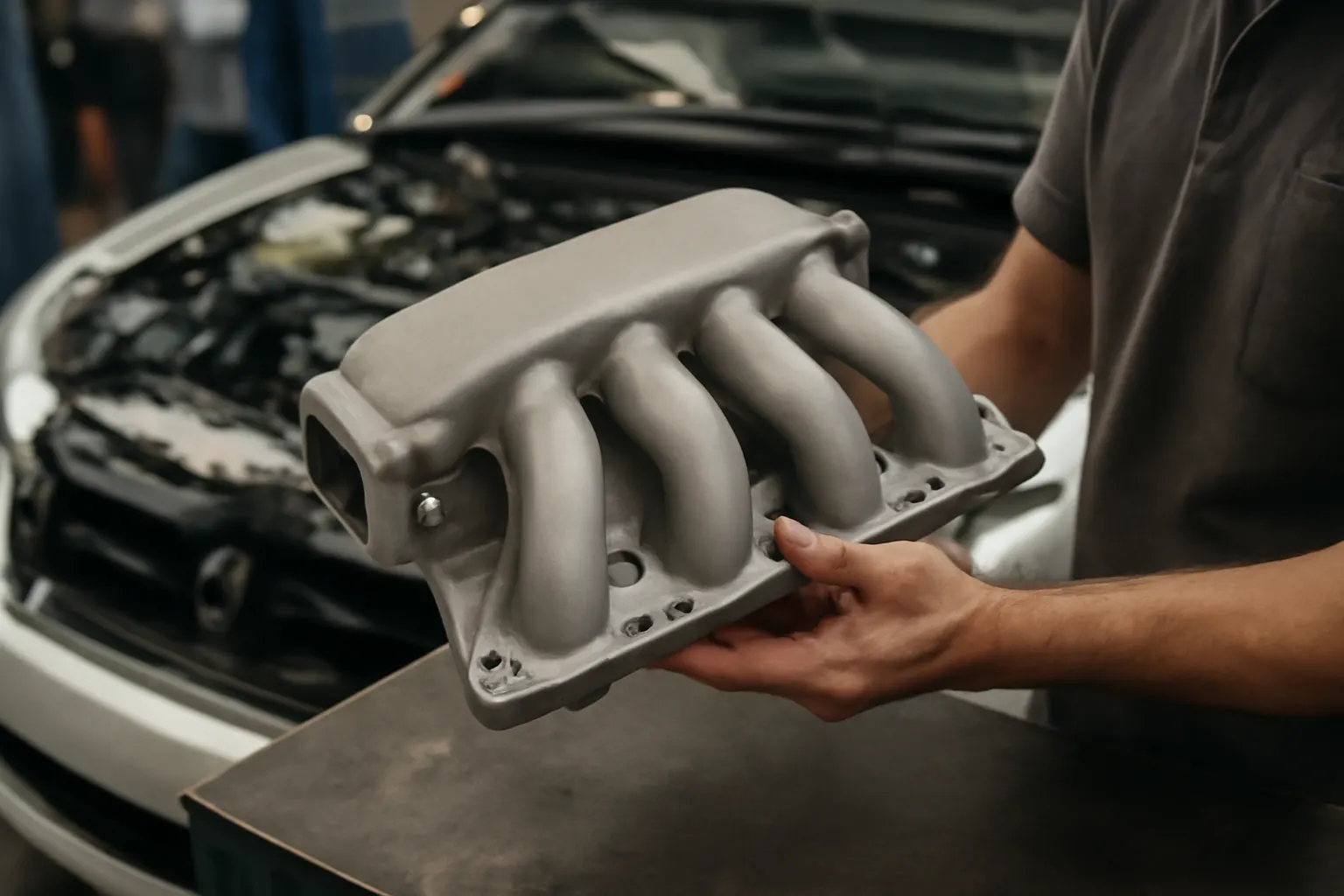
- Short Runners: Favor high-RPM horsepower. Shorter runners reduce resistance at high airflow rates, allowing the engine to breathe freely at elevated speeds.
- Long Runners: Favor low-end torque. Longer runners use the “ram effect” to pack more air into cylinders at lower RPMs, improving drivability and off-the-line response.
- Diameter: Larger diameters flow more air but may hurt air velocity at low RPM. Smaller diameters increase velocity, aiding low-speed torque but restricting peak flow.
Plenum Volume
- Large Plenums: Store more air, supporting high-RPM operation and peak power, but may reduce throttle response.
- Small Plenums: Improve response and torque at low to mid-range RPMs but may limit top-end power.
Runner Shape and Taper
- Tapered Runners: Smoothly accelerate air, reducing turbulence and improving cylinder filling.
- Curved vs. Straight Runners: Curved runners can be tuned for specific resonance effects; straight runners generally favor maximum peak flow.
Surface Finish
- Smooth Surfaces: Reduce boundary layer drag, maximizing flow.
- Textured Surfaces: In some cases, controlled roughness can promote better fuel atomization in carbureted or port-injected engines.
The right combination depends on your engine’s intended use—street, track, towing, or daily commuting.
Materials Matter: Aluminum, Plastic, and Composites
The choice of intake manifold material is not just about cost or weight—it directly affects performance, durability, and heat management:
- Aluminum: Traditional, robust, and easily machined. Aluminum’s high thermal conductivity can lead to heat soak, raising intake air temperatures and reducing density.
- Plastic/Composite: Lightweight and poor conductors of heat, these materials keep intake air cooler, improving power and efficiency. Modern composites can be molded into complex shapes for optimized flow.
- Cast Iron: Rare in modern vehicles, but sometimes found in heavy-duty or vintage applications. Very durable but heavy and prone to heat retention.
Material selection also impacts longevity and resistance to fuel/oil vapors, especially in direct-injection or turbocharged engines. For more on advanced materials, see the U.S. Department of Energy’s materials technologies overview.
Resonance Tuning: The Science of Air Pulses
Intake manifolds are not just passive pipes—they are engineered to harness the physics of air movement:
- Helmholtz Resonance: As intake valves open and close, pressure waves travel through the manifold. Properly tuned runner lengths use these waves to “ram” extra air into the cylinder just as the valve closes, increasing volumetric efficiency.
- Variable Intake Systems: Many modern engines use movable flaps or dual-path runners to switch between long and short runner paths, optimizing torque at low RPM and horsepower at high RPM.
This resonance tuning is why a “one-size-fits-all” manifold rarely delivers optimal results across the entire RPM range.
Common Problems Stemming from Poor Manifold Design or Fitment
A poorly designed, damaged, or mismatched intake manifold can cause a host of drivability and reliability issues:
- Uneven Airflow: Leads to cylinder-to-cylinder power imbalances, rough idle, and potential misfires.
- Vacuum Leaks: Result in lean mixtures, rough running, stalling, and illuminated check engine lights.
- Heat Soak: Raises intake air temperatures, causing power loss and potential engine knock.
- Material Failures: Cracks, warping, or gasket failures can cause air leaks and contamination.
For troubleshooting, see our Diagnosing Intake Manifold Leaks: Step-by-Step Guide.
Diagnosing Intake Manifold-Related Performance Issues
If you suspect your intake manifold is holding your engine back, use this step-by-step checklist to diagnose common issues:
Intake Manifold Diagnostic Checklist
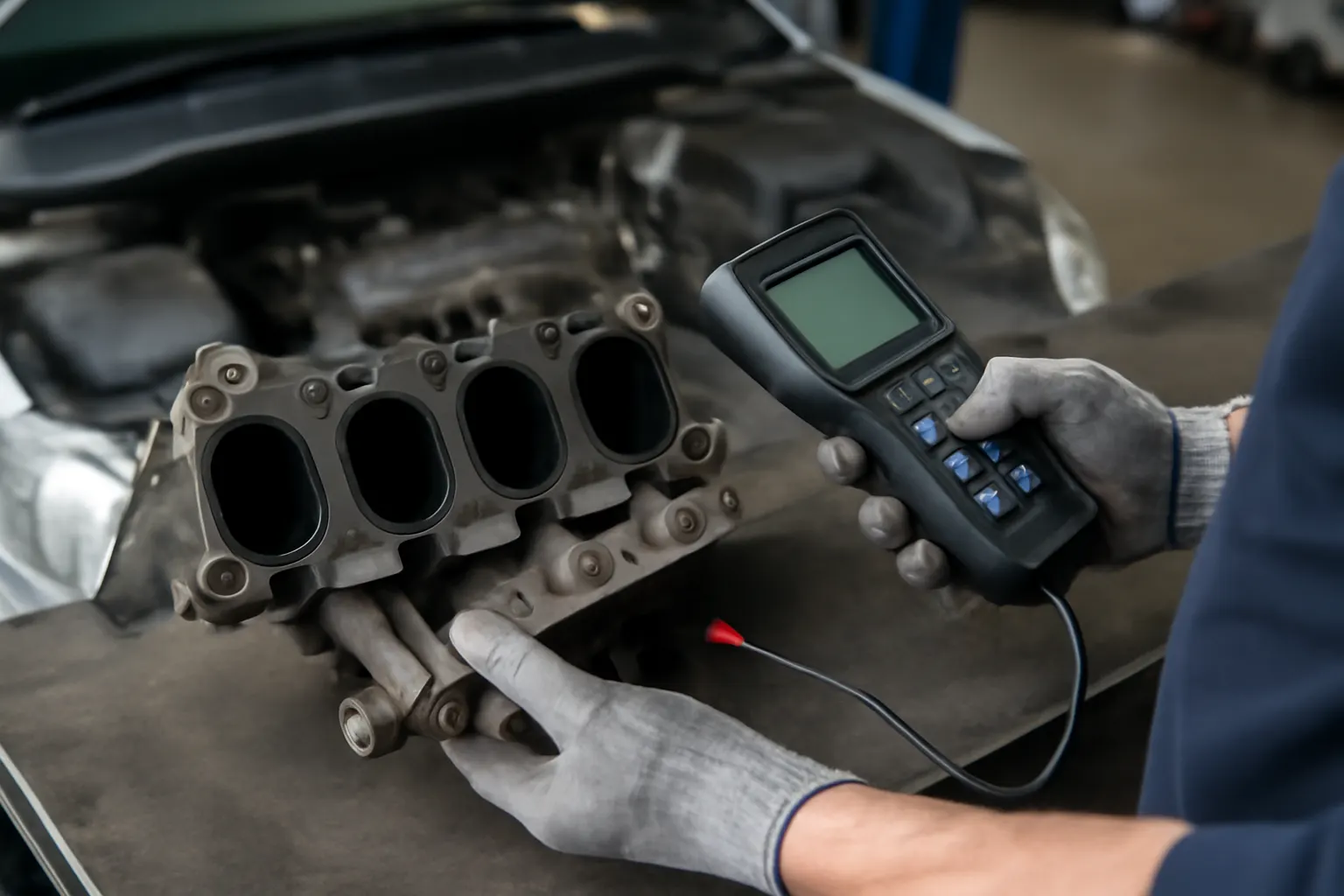
- Visual Inspection
- Check for visible cracks, warping, or broken mounting tabs.
- Inspect gaskets and sealing surfaces for signs of leaks.
- Vacuum Test
- Use a vacuum gauge to check for leaks at idle. Fluctuations or low readings indicate possible leaks.
- Smoke Test
- Introduce smoke into the intake system; observe for smoke escaping at seams or joints.
- Spray Test
- With the engine running, spray carb cleaner or soapy water around the manifold. Listen for RPM changes indicating a leak.
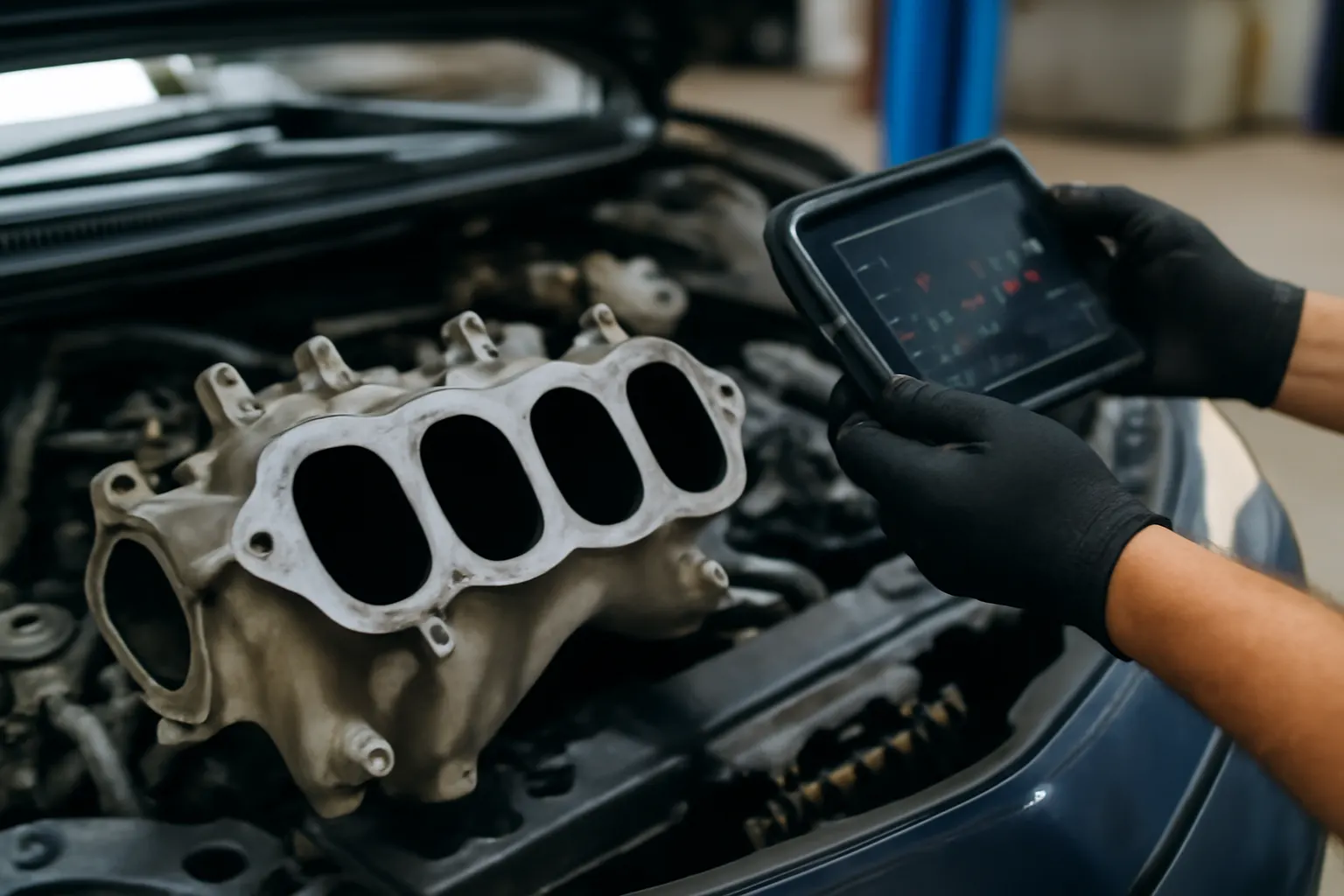
- OBD-II Scan
- Scan for codes related to lean conditions, misfires, or intake air temperature/pressure anomalies.
- Performance Evaluation
- Note symptoms: sluggish acceleration, rough idle, poor fuel economy, or knocking under load.
- Runner and Plenum Inspection
- If accessible, inspect internal surfaces for carbon build-up or obstructions.
- Material and Fitment Assessment
- Verify that the manifold material and design match the engine’s requirements and intended use.
- Compare with OEM Specs
- Ensure runner length, plenum volume, and port alignment match manufacturer recommendations.
If you identify leaks, cracks, or design mismatches, replacement or upgrade is usually required.
Choosing the Right Intake Manifold: Buying and Upgrade Guidance
Selecting a replacement or performance intake manifold requires a careful match to your engine’s needs and your driving goals. Consider the following factors:
1. Engine Type and Application
- Naturally Aspirated vs. Forced Induction: Turbocharged and supercharged engines benefit from larger plenums and shorter runners.
- Street vs. Track: Daily drivers often favor low-end torque (long runners), while race cars prioritize peak power (short runners, large plenum).
2. Compatibility
- Port Alignment: Ensure the manifold ports match the cylinder head shape and size.
- Sensor and Vacuum Port Placement: Check for required provisions for MAP sensors, PCV, EGR, and brake booster connections.
- Throttle Body Flange: Confirm compatibility with your throttle body’s size and bolt pattern.
3. Material and Construction
- Plastic/Composite: Preferred for modern EFI engines seeking cooler intake air and weight savings.
- Aluminum: Ideal for high-heat, high-stress environments or custom fabrication.
4. Aftermarket Features
- Tunable Runners: Some aftermarket manifolds offer adjustable runner lengths or interchangeable plenums.
- Nitrous or Boost Provisions: If planning for power adders, ensure the manifold supports safe integration.
5. Brand and Quality
- OEM vs. Aftermarket: OEM replacements ensure fit and reliability; performance brands may offer gains but require tuning.
- SAE and Industry Standards: Look for products meeting SAE engineering standards for quality assurance.
For detailed upgrade steps, see our guide on Upgrading to a Performance Intake Manifold.
Installation Best Practices for Intake Manifolds
Proper installation is key to realizing the benefits of a new or replacement intake manifold. Follow these best practices:
Preparation
- Clean all mating surfaces thoroughly.
- Inspect and replace gaskets and seals as needed.
- Verify all sensors, fittings, and hoses are present and compatible.
Installation Steps
- Torque Sequence: Tighten bolts in the manufacturer’s recommended sequence and to the specified torque.
- Sealant Application: Use only manufacturer-approved sealants; excessive use can cause blockages.
- Vacuum and Sensor Connections: Reconnect all vacuum lines and sensors, double-checking for proper routing.
- Coolant Passages: If the manifold contains coolant passages, ensure proper bleeding to avoid air pockets.
- Post-Installation Testing: Start the engine, check for leaks, and monitor sensors for abnormal readings.
Final Checks
- Inspect for vacuum leaks using the diagnostic checklist.
- Re-torque bolts after thermal cycling, as materials may settle.
Maintenance Tips for Long-Term Manifold Performance
Intake manifolds are generally low-maintenance, but periodic checks can prevent performance loss:
- Inspect for Leaks: Check for oil, coolant, or vacuum leaks every oil change.
- Clean Internal Surfaces: Carbon build-up can be removed with intake-safe cleaners during major services.
- Monitor Sensors: Faulty MAP or IAT sensors can mimic manifold issues.
- Check Fasteners: Vibration can loosen bolts over time—re-torque as needed.
Regular maintenance not only preserves performance but also prevents costly repairs down the line.
Recognizing When to Replace or Upgrade Your Intake Manifold
Not all performance issues require a new manifold, but certain symptoms indicate replacement is wise:
- Visible Cracks, Warping, or Deformation: Especially common in plastic/composite manifolds after heat cycles.
- Persistent Vacuum Leaks: Gasket failure or warped flanges may not seal even with new gaskets.
- Performance Upgrades: Major engine modifications (cams, forced induction, increased displacement) often require a manifold matched to new airflow needs.
- Recurring CEL or Diagnostic Codes: If manifold-related codes persist after sensor/gasket replacement, the manifold itself may be at fault.
For a deeper dive into failure modes and prevention, see Common Intake Manifold Failures and How to Prevent Them.
Intake Manifold Upgrades: Real-World Performance Gains
Upgrading to a performance intake manifold can yield measurable improvements when matched to your engine’s needs:
- Dyno-Proven Horsepower and Torque Gains: Especially on engines with other supporting modifications (intake, exhaust, camshafts).
- Improved Throttle Response: Quicker air delivery translates to sharper acceleration.
- Enhanced Fuel Efficiency: Optimized air/fuel distribution can reduce fuel consumption, as supported by DOE fuel efficiency research.
- Better Engine Sound: Some performance manifolds alter the engine’s intake note, adding character.
However, gains are only realized when the manifold is selected and installed correctly, with supporting tuning as needed.
Sourcing Quality Intake Manifolds: Fitment, Safety, and Standards
The aftermarket is flooded with manifold options, but not all meet the requirements for safety, durability, or fitment:
- Fitment: Always cross-check part numbers, port shapes, and mounting points with your vehicle’s make, model, and engine code.
- Safety: Poorly cast or finished manifolds can fail under pressure, risking engine damage or injury. Refer to NHTSA equipment guidelines for safety standards.
- Industry Standards: Look for manufacturers adhering to recognized SAE standards for material quality and engineering.
- Reputation: Choose brands with proven track records and positive reviews in your vehicle community.
AutoPartEx’s catalog includes only vetted, high-quality manifolds for all major manufacturers, from Acura to AMC, ensuring you get parts that fit, perform, and last.
AutoPartEx: Your Partner for Intake Manifold Solutions
At AutoPartEx, we recognize the intake manifold’s critical role in unlocking your engine’s potential. Our curated selection covers OEM replacements, performance upgrades, and everything in between. We back every product with technical support, fitment guarantees, and expert resources—including detailed guides on diagnosis, installation, and maintenance.
Explore our full range in the Intake Manifold: The Heart of Engine Airflow and Performance category. Whether you’re chasing horsepower, solving a drivability issue, or restoring a classic, our team is here to help you get the most from your intake system.
References
- Fuel Efficiency - United States Department of Energy
- Materials Technologies - United States Department of Energy
- Vehicle Safety and Equipment - National Highway Traffic Safety Administration