
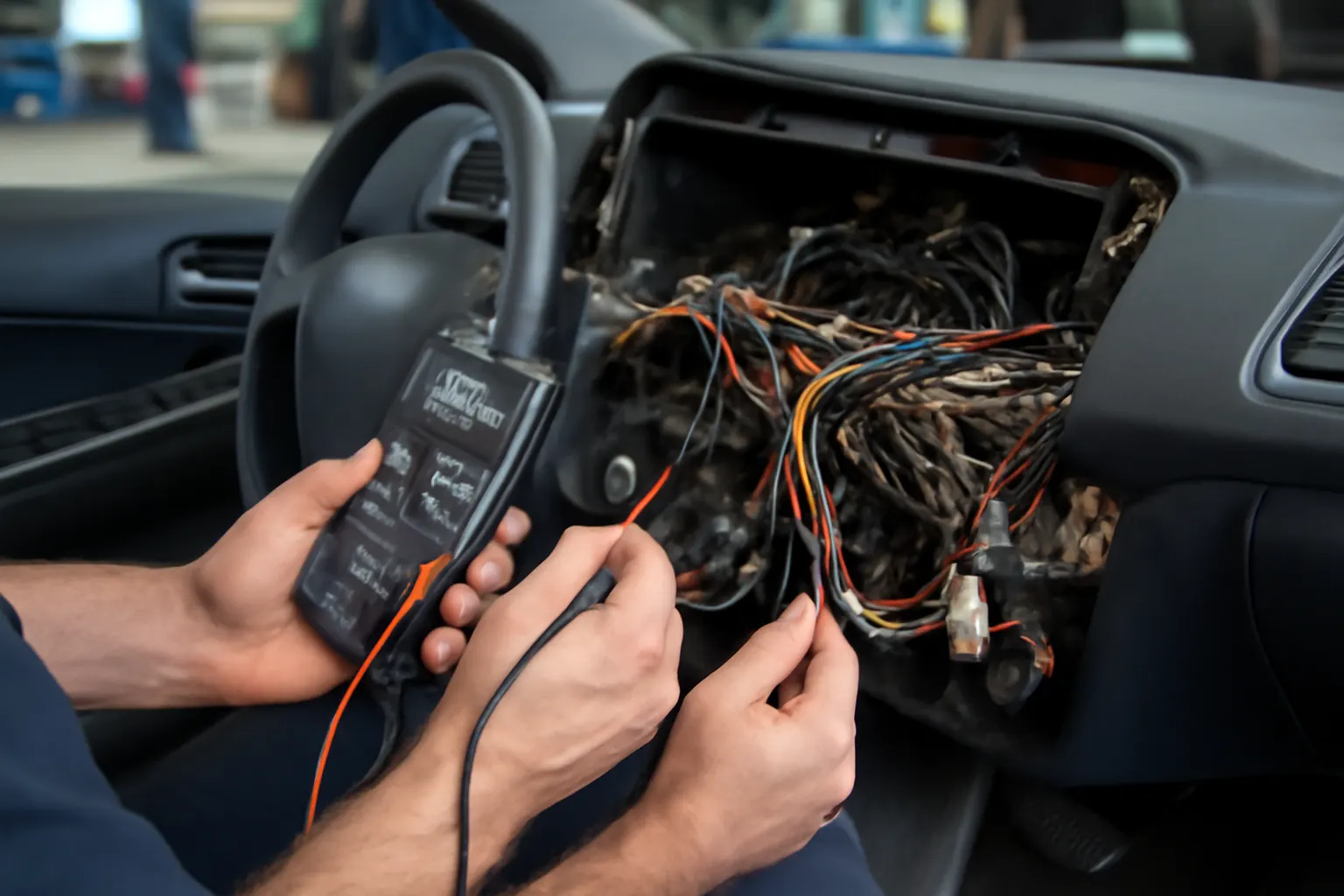
Diagnosing Hidden Electrical Faults in Dash Harnesses
Dash harnesses are the silent backbone of your vehicle’s electrical system, connecting critical controls, safety features, and instrumentation. When hidden faults develop behind the dashboard, they can trigger a cascade of problems—from intermittent warning lights to total system failures. Diagnosing these elusive wiring issues is essential for maintaining vehicle safety, reliability, and compliance with regulatory standards. This guide delivers the essential knowledge and step-by-step strategies you need to identify and resolve hidden electrical faults in dash harnesses—before they escalate into costly repairs or safety concerns.
For a comprehensive overview of dash harness diagnostics, fitment, and OEM-grade replacements, visit our Wiring Harness (Dash): Diagnostics, Fitment & OEM-Grade Replacements category page.
The Immediate Answer: Why Hidden Dash Harness Faults Matter
A hidden electrical fault in your dash harness can manifest as anything from flickering instrument clusters to non-functional airbags, climate controls, or infotainment systems. These issues are often intermittent and difficult to trace, yet they jeopardize both safety and vehicle performance. According to the National Highway Traffic Safety Administration (NHTSA), electrical system failures are a significant contributor to vehicle recalls and safety campaigns, highlighting the need for precise diagnostics and timely repairs.
The immediate solution: If you notice strange electrical behavior—such as dashboard warning lights that appear and disappear, unresponsive switches, or an unexplained battery drain—suspect a dash harness issue. Early diagnosis and targeted repair can prevent more extensive damage, keep your vehicle compliant with safety standards, and restore full functionality.
The Hidden Problem: Why Dash Harness Faults Are So Hard to Find
Unlike obvious mechanical failures, dash harness electrical faults are often concealed deep behind panels, insulation, and instrument clusters. Modern vehicles use increasingly complex wiring harnesses to support advanced electronics, making fault isolation more challenging than ever. Wires may chafe, connectors may corrode, or terminals may loosen—often with no visible signs until a critical function fails or a dashboard indicator lights up.
Moreover, many dash harness issues are intermittent. A wire may make contact only when the vehicle flexes, or a connector may lose continuity under vibration. These “ghost” faults can evade even experienced technicians using standard diagnostic tools.
Digging Deeper: The Anatomy of Dash Harness Electrical Issues
To master dash harness diagnostics, it’s essential to understand the types of faults that commonly occur and how they impact vehicle systems:
- Open Circuits: A break in a wire or poor connection leads to loss of power or signal, disabling the circuit.
- Short Circuits: Two wires or terminals inadvertently touch, causing blown fuses or erratic system behavior.
- High Resistance Connections: Corrosion or loose terminals increase resistance, leading to voltage drops, heat buildup, or sluggish system response.
- Intermittent Faults: Partial breaks, frayed conductors, or weak crimps cause faults that appear only under certain conditions—such as vibration, temperature changes, or movement.
These faults can affect critical systems including airbags (SRS), ABS, lighting, HVAC controls, and infotainment. For example, a high-resistance ground in the dash harness may cause airbag warning lights or disable restraint systems, posing a direct safety risk (NHTSA Equipment).
Recognizing the Warning Signs: Symptoms of Dash Harness Electrical Faults
Early detection is your best defense against dash harness failures. Watch for these warning signs:
- Flickering or dim dashboard lights
- Random warning lights (ABS, SRS, Check Engine)
- Intermittent operation of dashboard switches or controls
- Non-functional climate controls or infotainment
- Unexplained battery drain
- Burning smell or signs of melted insulation behind the dash
- Blown fuses without obvious cause
If you observe any of these symptoms, it’s time to launch a systematic diagnostic process.
Step-by-Step Diagnostic Process: Finding Hidden Dash Harness Faults
Thorough diagnostics require a methodical approach and proper tools. Follow this process to pinpoint hidden dash harness issues:
1. Visual Inspection
- Remove dash panels and inspect wiring harnesses for chafed insulation, pinched wires, or discolored connectors.
- Check for signs of water intrusion or corrosion, especially around connector pins and ground points.
2. Wiggle Testing
- With the ignition on, gently move harnesses and connectors while monitoring system behavior and warning lights.
- Intermittent faults often reveal themselves when wires are flexed or connectors are disturbed.
3. Connector and Pin Check
- Disconnect and inspect connectors for bent, pushed-out, or corroded pins.
- Ensure all connectors are fully seated and locking tabs are intact.
4. Fuse and Relay Check
- Identify and test all fuses and relays related to affected circuits.
- Replace any blown fuses and monitor if they blow again after system operation.
5. Voltage Drop and Continuity Testing
- Use a digital multimeter to check for voltage drops across suspect connections.
- Test continuity of wires end-to-end, especially if an open circuit is suspected.
6. Advanced Diagnostics
- For complex faults, use an automotive oscilloscope or scan tool to monitor live data and signal integrity.
- Check diagnostic trouble codes (DTCs) and freeze-frame data to identify affected circuits.
Diagnostic Checklist: Dash Harness Electrical Faults
A structured checklist ensures no step is missed during diagnostics:
| Step | Action | Tools Needed |
|---|---|---|
| Visual Inspection | Check for physical damage, corrosion | Flashlight, mirror |
| Wiggle Testing | Flex harnesses/connectors, observe dash | Hands, scan tool |
| Connector/Pin Check | Inspect/clean pins, reseat connectors | Pick, contact cleaner |
| Fuse/Relay Check | Test/replace fuses and relays | Multimeter, fuse puller |
| Voltage Drop/Continuity Test | Measure voltage, check wire continuity | Multimeter |
| Advanced Diagnostics | Scan for codes, monitor live data | Scan tool, oscilloscope |
Common Causes: What Typically Goes Wrong Behind the Dash
Understanding the root causes of dash harness faults can help prevent recurrence:
- Vibration and Movement: Over time, vehicle vibrations can wear through insulation or loosen connectors, especially in areas with minimal harness support.
- Moisture Intrusion: Water leaks from windshield seals or HVAC drains can corrode terminals and wires.
- Heat and Overload: Overloaded circuits or poor ventilation can cause insulation to degrade or wires to overheat.
- Aftermarket Modifications: Non-OEM installations (alarms, stereos, remote starts) often introduce splices or poor connections that become failure points.
- Rodent Damage: Mice or rats can chew through wiring, especially if the vehicle is parked for extended periods.
Technical Deep Dive: Electrical Standards and Safety Considerations
Dash harnesses must comply with stringent safety and performance standards. The Society of Automotive Engineers (SAE) publishes specifications for wire gauge, insulation materials, and connector performance (SAE Standards). These standards ensure that harnesses can withstand vibration, temperature extremes, and electromagnetic interference.
Modern vehicles often use multiplexed (CAN bus) wiring, reducing wire count but increasing diagnostic complexity—since a single fault can disrupt multiple systems. It’s crucial to use OEM-grade harnesses and connectors to maintain safety compliance and avoid triggering system errors or recalls. The NHTSA maintains a database of vehicle recalls, many of which are due to wiring harness defects (NHTSA Recalls).
Preventive Measures: How to Safeguard Your Dash Harness
Prevention is always better than repair. Here’s how to reduce the risk of hidden dash harness faults:
- Regular Inspections: During routine service, inspect behind the dash for moisture, corrosion, or loose connectors.
- Seal Leaks Promptly: Fix windshield or HVAC leaks to prevent water-related corrosion.
- Use Dielectric Grease: Apply to connector terminals to inhibit corrosion and improve contact.
- Secure Harnesses: Ensure wires are properly clipped and routed away from sharp edges or moving parts.
- Avoid Overloading Circuits: Don’t add aftermarket accessories to existing circuits without calculating load and using proper fusing.
- Choose OEM-Grade Parts: When replacing a harness or connector, use parts that meet or exceed original specifications.
When to Repair vs. Replace: Making the Right Decision
Not all dash harness faults can be economically repaired. Use this decision framework:
- Repair: If the fault is localized (e.g., a single broken wire or corroded connector) and the harness is otherwise in good condition, a professional repair with soldered joints and heat-shrink insulation is appropriate.
- Replace: If there is widespread damage (e.g., rodent infestation, water intrusion, or multiple brittle wires), or if safety systems are affected, a complete harness replacement is the safest option. Refer to our Complete Dash Harness Replacement Guide for detailed replacement procedures.
Sourcing Quality Dash Harnesses and Connectors
With the complexity of modern dash harnesses, sourcing high-quality replacements is critical. Look for:
- OEM or OEM-equivalent harnesses that match your vehicle’s year, make, and model.
- Proper fitment: Confirm pin count, connector style, and routing match your original harness.
- Documentation: Quality harnesses come with wiring diagrams and installation instructions.
- Tested components: Reputable suppliers test for continuity, resistance, and fit before shipping.
AutoPartEx specializes in OEM-grade and application-specific dash harness solutions. Explore our Wiring Harness (Dash): Diagnostics, Fitment & OEM-Grade Replacements category for trusted options.
Installation Best Practices: Ensuring Reliable Harness Replacement
Whether repairing or replacing a dash harness, follow these best practices:
- Disconnect the battery to prevent accidental shorts or airbag deployment.
- Label all connectors before disconnecting to ensure correct reassembly.
- Route wires as per OEM design to avoid pinching or abrasion.
- Use new terminal pins and seals where connectors are replaced.
- Test all functions (lights, HVAC, infotainment, safety systems) before reassembling dash panels.
- Document repairs for future reference and warranty compliance.
For a deep dive into dash electrical connectors and their correct handling, see Mastering Dash Electrical Connections.
Advanced Troubleshooting: Dealing with Intermittent and CAN Bus Faults
Some dash harness issues only appear under specific conditions—temperature fluctuations, vibration, or during vehicle motion. For these advanced cases:
- Data Logging: Use scan tools capable of recording live data and intermittent DTCs.
- Thermal Testing: Gently heat suspected areas with a heat gun (never open flame) to see if faults appear.
- Oscilloscope Analysis: Monitor CAN bus signals for noise, voltage spikes, or dropouts.
- Load Testing: Apply a controlled load to suspect circuits to reveal weak connections or high resistance.
If intermittent faults persist, consider consulting a specialist with advanced diagnostic equipment and experience in multiplexed systems.
Safety Implications: The Link Between Dash Harnesses and Vehicle Recalls
Electrical faults in dash harnesses can compromise critical safety systems, including airbags, ABS, and electronic stability control. The NHTSA regularly issues recalls for wiring harness defects that could result in system failures or increased crash risk (NHTSA Recalls). Unresolved dash harness issues can also lead to vehicle inspection failures and loss of insurance coverage.
Staying proactive with diagnostics and repairs is not just about convenience—it’s a safety imperative. Always check for open recalls related to electrical systems and address them promptly.
Fuel Efficiency and Performance: The Overlooked Impact of Electrical Faults
While dash harness faults are primarily a safety concern, they can also impact fuel efficiency and engine performance. Faulty sensors or disrupted CAN bus communication can cause the engine control unit (ECU) to default to fail-safe modes, alter fuel mapping, or disable efficiency features (DOE Fuel Efficiency). This can lead to increased fuel consumption, rough running, and even emissions compliance issues.
A healthy dash harness is essential not only for comfort and convenience but also for optimal vehicle performance and efficiency.
When to Seek Professional Help: Recognizing Your Limits
While many enthusiasts can handle basic dash harness diagnostics and repairs, some situations require expert intervention:
- Airbag or SRS wiring faults (risk of accidental deployment)
- Extensive water or rodent damage
- Persistent CAN bus errors or multiple system failures
- No improvement after standard troubleshooting
In these cases, seek a qualified automotive electrician or dealer service department with access to factory wiring diagrams and diagnostic tools. Document all symptoms and previous repairs to assist the technician.
The AutoPartEx Advantage: Trusted Solutions for Dash Harness Diagnostics
At AutoPartEx, we understand the complexity and critical nature of dash harness systems. Our curated selection of OEM-grade harnesses, connectors, and diagnostic tools is backed by technical expertise and industry-leading support. Whether you’re tackling a simple repair or a full dash harness replacement, our guides, like When to Replace Your Wiring Harness (Dash), deliver the clarity and confidence you need.
Explore our wiring harness main category for a complete lineup of vehicle-specific solutions and expert resources. Trust AutoPartEx to keep your vehicle’s electrical backbone strong, safe, and reliable—mile after mile.


