Advertisement
When it comes to the smooth operation of your vehicle’s back glass regulator, the choice between cable and scissor regulators is more than just a technicality—it directly impacts durability, ease of repair, performance, and long-term reliability. If you’re considering a replacement or an upgrade, understanding the fundamental differences and real-world implications of each system is crucial for making a well-informed decision. This comprehensive guide compares cable and scissor regulators, delving into their construction, operation, strengths, weaknesses, and suitability for different vehicle types and usage patterns.
Immediate Answer: Which Window Regulator Type Is Best for Your Needs?
If you value lightweight design, cost-effectiveness, and fast window operation, cable regulators are typically the go-to choice for modern vehicles. However, if long-term durability, mechanical simplicity, and ease of repair are your priorities—especially for heavy or frequently used back glass—scissor regulators may be the superior option. The right answer depends on your vehicle, usage habits, and expectations regarding maintenance and longevity.
The Hidden Problem: Why Regulator Type Matters More Than You Think
Many vehicle owners overlook the critical role of the back glass regulator until a failure leaves the window stuck, rattling, or off-track. The regulator type not only determines the failure mode but also affects repair costs, part availability, and even the long-term safety of your vehicle’s window system. A mismatched or low-quality regulator can accelerate wear on your back glass, strain the window motor, and undermine the security and weatherproofing of your back door.
Deeper Technical Explanation: How Cable and Scissor Regulators Work
Cable Regulators
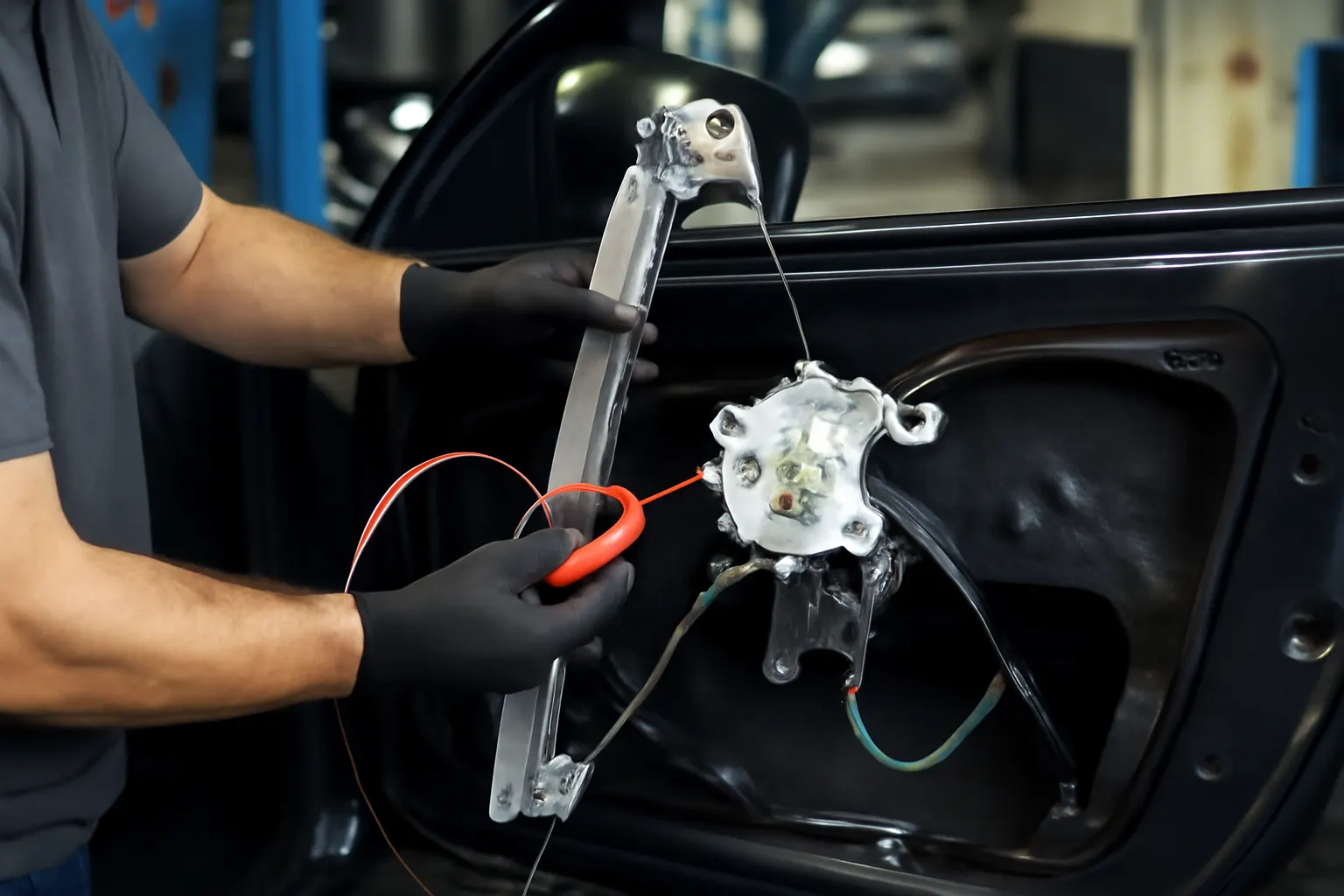
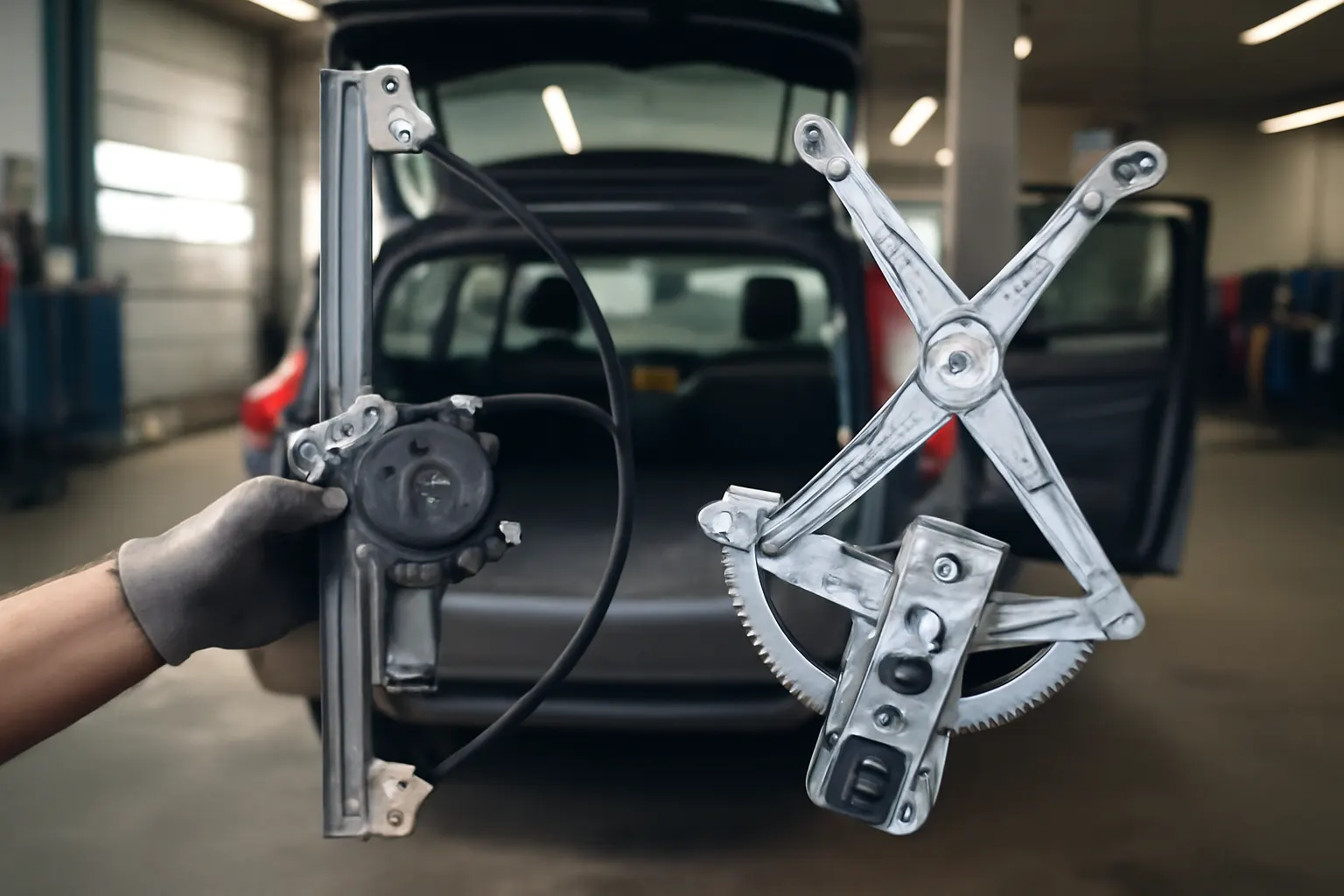
Cable regulators use a steel cable routed through a series of pulleys and guides, connected to a window carrier or slider. The cable is driven by a drum attached to a manual crank or, more commonly, an electric window motor. This design enables a compact, lightweight assembly that moves the glass smoothly up and down.
Advantages:
- Lightweight Construction: Reduces vehicle mass, supporting overall fuel efficiency and performance (DOE, Fuel Efficiency).
- Compact Size: Fits within thinner door or back glass panels.
- Fast Operation: Cable-driven mechanisms allow rapid window movement.
- Cost-Effective Manufacturing: Fewer heavy components mean lower production costs.
Disadvantages:
- Cable Wear and Fraying: Over time, cables can stretch, fray, or snap, leading to sudden failure.
- Plastic Components: Many cable regulators use plastic pulleys or sliders that are prone to cracking.
- Complex Routing: More moving parts and guides increase the risk of misalignment or jamming.
Scissor Regulators
Scissor regulators use a pair of metal arms connected in an “X” or scissor shape, pivoting at a central rivet. The arms are attached to the window glass and a toothed sector gear, which is turned by the window crank or motor. The scissor action lifts and lowers the glass in a stable, guided arc.
Advantages:
- Robust Metal Construction: All-steel arms and gears resist wear and deformation, increasing lifespan (DOE, Materials Technologies).
- Simple Mechanism: Fewer moving parts mean less that can go wrong.
- Stability: Provides even support for heavier or larger back glass panels.
- Predictable Failure Modes: Wear is gradual, with symptoms like stiffness or noise before total failure.
Disadvantages:
- Heavier Assembly: Adds weight, potentially impacting fuel efficiency.
- Bulkier Design: Requires more installation space within the door or tailgate.
- Slower Operation: Mechanical leverage provides smooth but slower window movement.
- Higher Manufacturing Cost: More metal parts and precision machining are required.
Real-World Implications: Durability, Safety, and Cost
Durability in Everyday Use
Cable regulators are engineered for modern vehicles prioritizing weight reduction and cost. However, their reliance on cables and plastic guides makes them more prone to wear—especially in climates with high humidity or temperature swings that can cause cable corrosion and plastic brittleness.
Scissor regulators, while heavier, offer a longer service life and can better withstand repeated heavy use, such as in work trucks, SUVs, or vehicles regularly exposed to harsh environments.
Advertisement
Safety Considerations
A malfunctioning window regulator can compromise both occupant safety and vehicle security. The National Highway Traffic Safety Administration (NHTSA) underscores the importance of reliable window mechanisms for emergency egress, theft prevention, and maintaining side-impact protection. Scissor regulators, due to their robust design, are less likely to fail suddenly and more likely to provide warning signs before complete breakdown.
Cost of Ownership
While cable regulators are less expensive upfront, their shorter lifespan may result in more frequent repairs or replacements. Scissor regulators, though costlier to purchase and install, can offer better value over the long term for vehicles that see heavy use or are kept for many years.
Diagnostic Checklist: Is Your Regulator Failing?
Before deciding on a replacement, use this diagnostic checklist to pinpoint the type and cause of regulator failure:
| Symptom | Likely Regulator Type | Probable Cause | Immediate Action |
|---|---|---|---|
| Window drops suddenly | Cable | Cable snapped or detached | Inspect cable and guides |
| Grinding or popping noises | Cable or Scissor | Frayed cable or worn gear teeth | Remove trim, inspect parts |
| Window moves unevenly | Cable | Cable off track or pulley broken | Check cable routing |
| Window stuck or slow | Scissor | Worn pivot, dry track, or bent arm | Lubricate or replace part |
| Window rattles when closed | Scissor | Loose arm rivet or worn bushings | Tighten or replace bushings |
If you’re unsure, consult our Diagnosing Window Regulator Problems guide for step-by-step troubleshooting.
Installation Differences: What to Expect
Cable Regulator Installation
- Preparation: Remove interior trim, disconnect the window motor, and carefully detach the glass from the carrier.
- Regulator Removal: Unbolt the cable regulator assembly and thread it out of the door or back glass cavity. Take care not to tangle or kink the new cable during installation.
- Alignment: Proper cable tension and guide alignment are critical—any slack or misrouting can cause immediate malfunction.
- Connection: Reattach the glass, motor, and test the window before reinstalling trim panels.
Scissor Regulator Installation
- Preparation: Remove trim and disconnect the window motor or crank.
- Regulator Removal: Unbolt the scissor arms and carefully pivot the assembly out of the cavity. Scissor regulators are heavier and bulkier, so extra clearance may be needed.
- Lubrication: Before installing a new scissor regulator, grease all pivot points and gear teeth.
- Connection: Attach the window glass, motor/crank, and test for smooth operation. Listen and feel for any binding or resistance.
Maintenance and Longevity: Keeping Your Regulator Working
Cable Regulator Maintenance
- Lubricate Pulleys: Use silicone spray on pulleys and cable guides annually.
- Inspect for Fraying: Check cables for signs of wear or corrosion, especially after harsh winters or exposure to road salt.
- Replace Plastic Guides: At the first sign of cracking or excessive play, replace worn plastic sliders or pulleys.
Scissor Regulator Maintenance
- Grease Pivot Points: Apply high-quality lithium or moly grease to all pivot joints and gear teeth every 1–2 years.
- Check for Play: Wiggle the window glass gently; excessive movement may indicate worn bushings or rivets.
- Tighten Fasteners: Ensure all mounting bolts and nuts remain tight, especially after heavy use or off-road driving.
For more tips, see our Preventing Window Regulator Failure: Maintenance Tips.
Sourcing the Right Replacement: Fitment, Quality, and Compatibility
Fitment Essentials
- Vehicle-Specific Design: Regulators are not universal—always match the part to your vehicle’s year, make, and model.
- Back Glass vs. Door: Back glass regulators often differ from front or rear door types in both size and mounting pattern.
- Manual vs. Power: Ensure compatibility with your window motor or crank mechanism.
Quality Considerations
- OEM vs. Aftermarket: Original Equipment Manufacturer (OEM) parts guarantee fit and performance but may cost more. High-quality aftermarket options can offer similar reliability at a better price.
- Material Quality: Look for steel arms (scissor) or reinforced cables and pulleys (cable). Avoid regulators with excessive plastic in load-bearing areas.
- Warranty and Support: Choose suppliers who back their parts with a clear warranty and technical support.
Performance Factors: Weight, Speed, and Smoothness
Weight and Fuel Efficiency
Cable regulators contribute less weight to the vehicle, which, according to the DOE’s Materials Technologies, can marginally improve fuel efficiency by reducing overall mass. This is particularly relevant in modern cars designed for optimal mileage.
Speed and Operation
Cable regulators typically offer faster window operation, which can be a convenience factor for drivers who frequently open and close windows. However, speed is less critical for back glass applications compared to front windows.
Advertisement
Smoothness and Noise
Scissor regulators are renowned for their smooth, controlled movement and minimal operational noise. Cable regulators may become noisy as cables or pulleys wear, especially if lubrication is neglected.
Compatibility with Modern Vehicle Systems
Many modern vehicles integrate window regulator operation with advanced safety and convenience features, including:
- Automatic Up/Down: Cable regulators often support rapid auto-up/auto-down cycles but require precise calibration.
- Pinch Protection: Both types can work with pinch protection sensors, but scissor regulators offer more predictable movement for sensor calibration.
- Central Locking Integration: Reliable window closure is essential for vehicles with automatic locking or remote window closure features.
Check your vehicle’s manual or consult with a specialist to ensure the replacement regulator supports all factory features.
Common Failure Modes: What to Watch For
Cable Regulator Failures
- Cable Snap: Often occurs without warning, resulting in a window that drops or becomes inoperable.
- Pulley Breakage: Plastic pulleys can crack, causing the cable to jump track.
- Cable Stretch: Leads to sluggish or uneven window movement.
Scissor Regulator Failures
- Worn Rivets or Bushings: Causes window play, rattling, or slow operation.
- Gear Tooth Wear: Results in grinding noises and loss of smooth movement.
- Bent Arms: Usually from forced operation or impact, causing binding.
Early detection and intervention can prevent more costly repairs. Refer to our Diagnosing Window Regulator Problems for detailed troubleshooting.
Upgrading: When and Why to Switch Regulator Types
While most vehicles are designed for a specific regulator type, some enthusiasts or fleet operators consider switching types during restoration or heavy-duty upgrades.
- From Cable to Scissor: Common in work trucks or off-road vehicles where long-term reliability and ruggedness are prioritized.
- From Scissor to Cable: Rare, but sometimes done to reduce weight in custom builds or race applications.
Important: Swapping regulator types usually requires custom mounting brackets, adjustments to the window glass, and sometimes modifications to the door or back glass opening. This is best left to experienced technicians or custom shops.
Advertisement
Professional vs. DIY: Making the Right Choice
DIY Considerations
- Skill Level: Cable regulators require careful routing and tensioning; scissor regulators require handling heavy, awkward assemblies.
- Tools Needed: Basic hand tools, trim removal tools, and sometimes rivet guns or specialty fasteners.
- Time Investment: Expect 1–3 hours for most installations, depending on experience and vehicle complexity.
For step-by-step instructions, see our DIY Back Glass Regulator Replacement Guide.
When to Call a Professional
- Integrated Electronics: Vehicles with advanced window sensors, anti-pinch, or central locking systems may require professional calibration.
- Custom Fitment: If changing regulator types or working on rare vehicles, professional expertise ensures proper fit and function.
- Warranty Concerns: Some part warranties require installation by certified technicians.
Summary Table: Cable vs. Scissor Regulators at a Glance
| Feature | Cable Regulator | Scissor Regulator |
|---|---|---|
| Weight | Light | Heavy |
| Durability | Moderate (prone to cable wear) | High (robust metal arms) |
| Cost | Low to moderate | Moderate to high |
| Repair Difficulty | Moderate (cable routing critical) | Easier (fewer moving parts) |
| Space Required | Minimal | More (bulky arms) |
| Window Speed | Fast | Slower, smoother |
| Failure Mode | Sudden (cable snap) | Gradual (wear, noise) |
| Best For | Modern cars, light use | Trucks, SUVs, heavy/frequent use |
AutoPartEx Positioning: Your Trusted Source for Regulator Solutions
At AutoPartEx, we understand that choosing the right back glass regulator is about more than just swapping a part—it’s about restoring your vehicle’s security, functionality, and peace of mind. We stock a wide range of OEM and high-quality aftermarket cable and scissor regulators, tailored to your vehicle’s exact specifications. Our technical guides, maintenance tips, and expert support help you diagnose, source, and install the perfect solution for your needs.
Whether you’re maintaining a modern sedan, restoring a classic SUV, or managing a fleet, AutoPartEx is your partner in reliable, long-lasting window regulator performance.
Next Steps and Additional Resources
- Diagnose Before You Buy: Use our Diagnosing Window Regulator Problems to confirm the issue.
- DIY or Pro: Review our DIY Back Glass Regulator Replacement Guide for hands-on installation advice.
- Maintenance Matters: Keep your window system in top shape with our Preventing Window Regulator Failure: Maintenance Tips.
- Shop with Confidence: Browse our full range of back glass regulator solutions, with fitment support and technical guidance.
References
Advertisement