
Amc Ambassador Audio/Visual Equipment Parts
AMC Ambassador Audio/Visual Equipment Parts & Upgrades | AutoPartEx
Discover model-specific audio and visual equipment parts for the AMC Ambassador at AutoPartEx. From factory radios and in-dash speakers to dash-mounted controls and antenna assemblies, our selection covers every generation and trim from the classic 1958 Ambassador through its final 1974 iteration. Whether you’re restoring a period-correct sound system, upgrading to modern capabilities, or resolving issues with original visual components, our inventory and technical resources are curated to meet the unique requirements of this American icon.
Audio and visual components for the AMC Ambassador are often overlooked during restoration or maintenance, yet they present distinct fitment and compatibility challenges. Model-year variations, especially between the 1965 platform redesign and the 1971-1974 final body style, affect not only the mounting dimensions of radios and speakers but also the wiring harness connections and dashboard integration. Scarcity of original OEM parts, particularly for luxury trims like the Ambassador DPL or Brougham, means that certain features (such as rear-seat audio controls or integrated dash clocks) are difficult to source and can be easily misidentified. Additionally, the installation of upgraded or reproduction units often demands custom brackets, wire adapters, or even minor dashboard modifications. Failing to identify these risks before purchase can result in costly returns, system incompatibility, or unintended damage to original interior finishes.
Owners and restorers frequently encounter failure patterns in AMC Ambassador audio/visual systems due to aging electronics, degraded speaker cones, brittle wiring insulation, and non-standard mounting schemes. Factory radios—especially pushbutton AM or AM/FM units—develop internal capacitor failures and issues with mechanical tuning mechanisms. Speaker housings may not accept modern replacements without custom adapters due to unique bolt patterns. Factory antenna assemblies are prone to corrosion and mechanical failure, particularly in convertible and wagon body styles. Diagnosing faults can be challenging as period-correct wiring diagrams are not always available, and several model-year mid-cycle changes (notably in the 1968 and 1972 electrical systems) affect harness pinouts. Compatibility constraints also extend to aftermarket upgrades, which may require line-level converters or custom bezels to maintain a stock appearance.
AutoPartEx provides a rigorous fitment verification process for AMC Ambassador audio/visual equipment, leveraging detailed OEM data, cross-references, and real-world installation feedback. Our catalog distinguishes between key model-year breaks (such as the introduction of the new dashboard in 1965 and the wiring updates in 1971) to help you select the right part for your vehicle. We source both genuine OEM components and high-quality reproduction units, ensuring options for concours restorations and modern upgrades alike. For more information on sourcing and installation, visit our AMC Ambassador Audio/Visual Fitment Guide and review our Upgrading AMC Ambassador Audio: Modern Solutions. Replacement strategies often include careful removal of existing components, use of period-correct mounting hardware, and, when upgrading, non-destructive integration to preserve value. Our service guidance covers step-by-step removal, troubleshooting, and testing procedures for common Ambassador audio/visual systems.
0 AMC Ambassador Audio/Visual Equipment Parts
Advertisement
No Products Found
We're currently updating our inventory for AMC Ambassador audio/visual equipment parts.
Please check back soon or contact us for specific part availability.
More Audio/Visual Equipment options for AMC Ambassador
Filtering for AMC Ambassador • Audio/Visual EquipmentBrowse nearby inventory for this model and category without leaving the page.
No Data Available
Please check back soon when more inventory is available for this part.
Advertisement
Expert AMC Ambassador Audio/Visual Equipment Solutions: Specs, Service, and AutoPartEx Advantage
AutoPartEx stands apart by providing not just high-quality parts, but also the technical documentation, cross-referenced fitment data, and real-world troubleshooting support you need for a successful project. Our resources—such as the Upgrading AMC Ambassador Audio: Modern Solutions—offer owner-driven case studies and actionable techniques for both period-correct restoration and discreet modernization.
For AMC Ambassador owners, the right audio/visual restoration strategy means combining OEM knowledge, careful sourcing, and expert installation to protect both usability and collector value. AutoPartEx’s curated catalog, expert guides, and hands-on support ensure your audio/visual equipment project is completed reliably and to exacting standards.
Antenna assemblies are another frequent failure point. Original telescoping units corrode internally and can seize, especially in models exposed to moisture or those equipped with roof racks. Aftermarket replacements may not correctly match the fender aperture or dash cable routing, necessitating careful measurement and, in some cases, minor bodywork adjustments. Retaining a period-correct look is often important in Ambassador restorations; thus, non-invasive installation methods such as harness adapters, bracket retrofits, and reversible mounting hardware are strongly recommended. Always test components before final installation, using a bench power supply and reference wiring diagrams.
Diagnostic challenges are compounded by mid-year running changes in the wiring harness and dash layouts. For example, in 1968 the Ambassador received updated under-dash wiring that altered radio plug pinouts, requiring different adapters or rewiring for modern or reproduction radios. In 1972, changes to the dash cluster and optional equipment added further complexity. Owners should always consult both factory documentation and experienced restoration guides when planning repairs or upgrades.
Service intervals for audio/visual components are not clearly defined by AMC, but best practices suggest inspecting wiring, speaker integrity, and radio function every 24–36 months, especially if the vehicle is regularly driven or stored in variable climates. Required tools include a multimeter for continuity checks, trim removal tools to prevent dash damage, soldering iron for secure wire splices, and a panel puller for extracting speakers and radios without marring original surfaces. When in doubt, document all disassembly steps and take photographs for reference during reassembly, as many parts are one-year-only and difficult to replace if broken.
Practical Info: AMC Ambassador Audio/Visual Equipment Replacement
Model-Year Breaks
Confirm your Ambassador’s exact model year and trim before ordering parts—major dash and wiring changes occurred in 1965, 1968, 1971, and 1972.
Required Tools
Multimeter, trim levers, panel pullers, soldering iron, wire crimpers, and AMC-specific wiring diagrams are essential for safe and effective installation.
Service Intervals
Inspect audio/visual wiring, speakers, and radio function every 24–36 months, especially before and after storage or if sound quality degrades.
Upgrade Strategy
Use harness adapters and reversible mounting brackets to preserve originality. Test all components prior to installation and document the process for future reference.
References
- Vehicle Safety and Equipment - National Highway Traffic Safety Administration, accessed 2024-06-10Referenced for equipment standards, parts diagnostics, and replacement best practices.
- Vehicle, Car Seat, Tire, and Equipment Recalls - National Highway Traffic Safety Administration, accessed 2024-06-10Referenced for recall patterns and original manufacturer equipment data.
- Fuel Efficiency - United States Department of Energy, accessed 2024-06-10Referenced for engine/platform evolution and implications for electrical system changes.
Related Guides & Articles

Amc Ambassador Audio Visual Fitment
Upgrading or restoring the audio and visual (A/V) equipment in your AMC Ambassador requires more than simply ordering parts that “look close.” With model-year breaks, trim distinctions, and evolving wiring harnesses, verifying fitment is non-negotiable for a professional, trouble-free installation. This guide delivers a comprehensive, step-by-step approach to ensure your chosen audio/visual components fit and function as intended—whether you’re aiming for a period-correct restoration or a modernized upgrade.
View Guide
Amc Ambassador Audio Restoration
Restoring the original audio system in your AMC Ambassador isn’t just about sound—it’s about preserving authenticity, enhancing your driving experience, and protecting the value of a classic American icon. Whether you’re aiming for concours-level originality or a discreetly upgraded sound, this comprehensive AutoPartEx guide delivers actionable steps, troubleshooting advice, and expert sourcing strategies.
Read More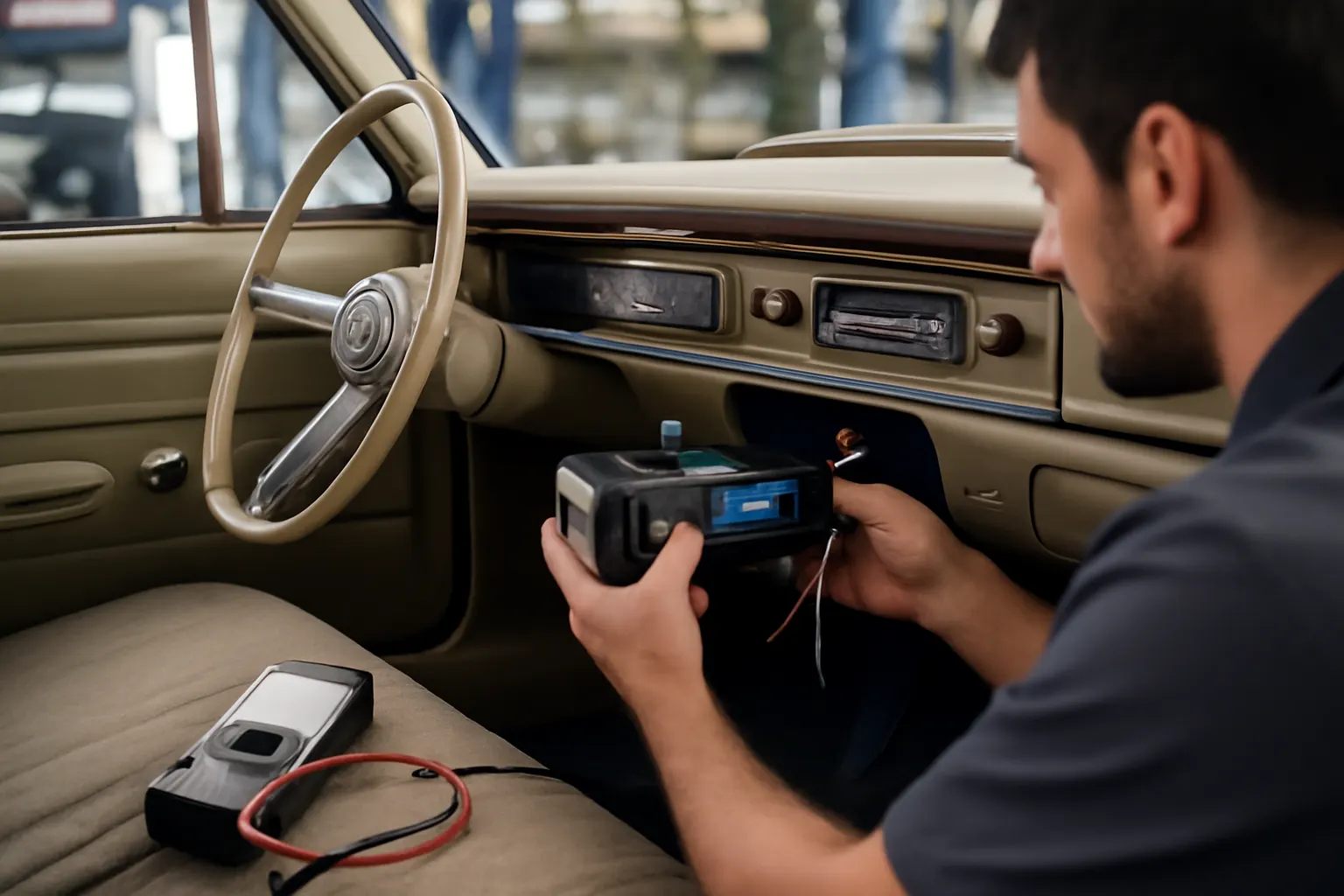
Ambassador Audio Retrofit
Upgrading your AMC Ambassador’s audio system is entirely achievable—without sacrificing the car’s classic character or market value. The right approach allows you to enjoy modern sound quality and features while preserving the period-correct appearance that makes your Ambassador stand out. Whether you drive a show-quality 1960s sedan or a daily-driven 1970s wagon, a smart retrofit can deliver Bluetooth, digital clarity, and reliable operation—all hidden behind factory trim or within original bezels.
Read More
Amc Classic Av Tools
Restoring or upgrading the audio/visual (A/V) systems in classic AMC models—especially the AMC Ambassador—requires a targeted set of tools and techniques. This comprehensive guide details the essential A/V tools, their correct use, and best practices for safely removing, installing, and testing components in vintage AMC vehicles. Whether you’re a first-time restorer or a seasoned AMC enthusiast, mastering these tools is vital for achieving professional results and preserving your vehicle’s authenticity.
View Guide