
Toyota Front Seat Belt Assembly
Toyota Front Seat Belt Assembly: Selection and Diagnostic Guide
When considering a replacement for your Toyota front seat belt assembly, it's easy to overlook the importance of precise fitment, safety compliance, and diagnostic steps. Many owners focus on visible wear, but underlying issues or recall status may go unnoticed. This guide explores what every Toyota owner should know before selecting or installing a new front seat belt assembly, with practical advice and evidence-based references.
Advertisement


Advertisement
More Toyota Front Seat Belt Assembly options
Filtering for Toyota • Front Seat Belt AssemblyScan nearby Toyota front seat belt assembly inventory without leaving this page.
No Data Available
Please check back soon when more inventory is available for this part.
Advertisement
Why Toyota Seat Belt Assembly Choices Deserve Closer Attention
Most Toyota owners recognize the seat belt as a basic safety feature, but few consider the complexities involved in selecting or replacing a front seat belt assembly. Beyond the obvious signs of wear, there are regulatory, technical, and compatibility factors that can significantly affect both safety and long-term value. Overlooking these considerations can lead to improper fitment, missed safety updates, or even legal complications if a recall is involved. This often-unseen layer of detail makes a closer look essential.
A common misconception is that all seat belt assemblies are interchangeable within a manufacturer’s lineup. In reality, Toyota designs seat belt assemblies with specific anchor points, pretensioner systems, and sensor integrations that vary by model, year, and even trim level. Choosing the wrong assembly can compromise the effectiveness of your restraint system and potentially void related safety features. This complexity means that even experienced DIYers or independent shops must take extra care when sourcing and installing these parts.
Another overlooked aspect is the potential for active recalls or safety campaigns affecting Toyota front seat belt assemblies. Many drivers are unaware of how to check recall status or interpret manufacturer communications, leaving them exposed to unresolved safety risks. Understanding the recall process, as well as how to verify the status of your particular vehicle, is a crucial step that should precede any replacement or repair decision. This guide will help you navigate these issues with confidence.

Understanding the Risks: Seat Belt Assembly Issues in Toyota Vehicles
The primary function of the front seat belt assembly is to secure occupants during sudden stops or collisions, reducing the risk of injury. However, seat belt assemblies can be subject to wear, mechanical failure, or manufacturing defects. In Toyota vehicles, issues may arise from frayed webbing, faulty retractors, malfunctioning pretensioners, or sensor integration failures. These problems may not always be visible, and their impact on occupant safety can be profound.
A significant risk lies in the assumption that a seat belt is functioning properly simply because it extends and retracts. Modern Toyota seat belt assemblies often include pretensioners and sensors linked to the airbag system. If these components fail, the restraint system may not perform as designed in a crash. This risk is heightened in vehicles with advanced safety packages, where seat belt assemblies are integral to the overall safety architecture.
Another issue is the prevalence of counterfeit or incompatible replacement parts in the aftermarket. Some assemblies may appear to fit but lack the correct internal mechanisms or sensor compatibility required for Toyota’s safety systems. Using such parts can lead to warning lights, diagnostic trouble codes, or even non-deployment of airbags in an accident. Owners and technicians must be vigilant in verifying part numbers and sourcing assemblies from reputable suppliers.
The recall process adds another layer of complexity. According to the National Highway Traffic Safety Administration (NHTSA), recalls are initiated when a manufacturer or NHTSA determines a vehicle or equipment creates an unreasonable safety risk or fails to meet minimum standards. For Toyota front seat belt assemblies, this could include issues like defective webbing, faulty latches, or malfunctioning pretensioners. However, not all vehicles or assemblies are subject to the same recalls, and recall status can change as new information emerges NHTSA: Vehicle Recalls.
Owners may not realize that recall notifications are sent by mail and that recall databases are updated continuously. If a Toyota vehicle has an unrepaired recall, the owner is entitled to a free remedy. However, recalls more than 15 years old may not appear in the database, and international vehicles may not be included. This means that relying solely on general recall lists or word-of-mouth can leave gaps in safety coverage. Regular VIN checks and direct communication with Toyota or authorized dealers are necessary.
Finally, the diagnostic process for seat belt issues in Toyota vehicles is not always straightforward. Symptoms such as warning lights, seat belt tension loss, or unusual noises may indicate underlying problems, but a thorough inspection is required to pinpoint the cause. This often involves checking for stored diagnostic trouble codes, inspecting the assembly for physical damage, and verifying sensor operation. Skipping these steps can result in incomplete repairs or missed safety defects, underscoring the need for a methodical approach.
Practical Steps for Diagnosing and Selecting a Toyota Front Seat Belt Assembly
The first step in addressing front seat belt assembly concerns is to conduct a thorough inspection. Begin by visually examining the webbing for frays, cuts, or excessive wear. Check the retractor mechanism for smooth operation and listen for any unusual noises during extension or retraction. Ensure the buckle latches securely and releases without sticking. If your Toyota is equipped with seat belt pretensioners or sensors, look for warning lights on the dashboard that may indicate a fault.
Next, consult your vehicle’s owner manual for specific diagnostic procedures related to the seat belt system. Many Toyota models include seat belt system diagnostics accessible through the onboard computer. If a warning light is present, use an appropriate scan tool to retrieve any stored trouble codes. These codes can indicate faults in the pretensioner circuit, buckle switch, or sensor wiring. Document any codes and refer to Toyota’s technical service bulletins for further troubleshooting guidance.
Before purchasing a replacement assembly, verify the exact part number required for your Toyota model, year, and trim. Toyota’s front seat belt assemblies are not universally interchangeable; differences in mounting hardware, electrical connectors, and pretensioner designs can affect compatibility. Use the VIN to cross-reference the correct part in Toyota’s official parts catalog or consult with a knowledgeable supplier. Avoid generic listings that do not specify compatibility with your exact vehicle.
If a recall is suspected, visit the NHTSA website and enter your Toyota’s VIN to check for open recalls related to the seat belt assembly. This step ensures that you are not purchasing or installing a part that may be subject to a safety campaign. If a recall is present, contact your local Toyota dealer for a free remedy as mandated by federal law. Do not attempt to repair or replace a recalled assembly independently, as this may void the recall remedy or compromise safety NHTSA: Vehicle Recalls.
When selecting a replacement, consider the source of the part. New OEM assemblies from Toyota or authorized dealers offer the highest assurance of compatibility and performance. Remanufactured or salvage assemblies may be acceptable if sourced from reputable suppliers and verified for correct function and fitment. The Federal Trade Commission (FTC) advises consumers to distinguish between new, remanufactured, and salvage parts, and to obtain a written estimate and repair order for any work performed FTC: Auto Repair Basics.
Installation of a Toyota front seat belt assembly should follow manufacturer guidelines precisely. If you are not experienced with restraint system repairs, consider professional installation. Improper installation can result in ineffective restraint function or trigger diagnostic trouble codes. After installation, perform a functional check of the assembly, including webbing retraction, buckle operation, and any electrical connections. Clear any stored trouble codes and verify that no warning lights remain on the dashboard.
Document all diagnostic steps, part numbers, and installation procedures for future reference. This documentation is essential if warranty claims or further repairs are needed. It also provides a clear service history for future owners or technicians. If you encounter persistent issues after replacement, recheck all connections and consult Toyota’s technical resources or a certified technician for advanced diagnostics.
Finally, stay informed about ongoing safety updates and recall campaigns affecting Toyota seat belt assemblies. Regularly check your VIN with the NHTSA database and subscribe to recall alerts if available. Keeping your vehicle’s safety systems up to date is a proactive step that can prevent future issues and ensure compliance with federal safety standards. For more detailed diagnostic and installation guidance, refer to resources such as the Toyota Seat Belt Diagnostic Guide and Guide Seat Belt Installation.
Evidence and References: What the Published Guidance Establishes
The National Highway Traffic Safety Administration (NHTSA) provides the authoritative process for identifying and remedying safety-related defects in vehicle components, including Toyota front seat belt assemblies. According to NHTSA, a recall is initiated when a safety risk or non-compliance with federal standards is identified. Owners are notified by mail and are entitled to a free remedy for unrepaired recalls. The NHTSA database allows consumers to check recall status by VIN, providing up-to-date information on whether a specific Toyota vehicle is affected NHTSA: Vehicle Recalls.
NHTSA’s recall lookup tool is a critical resource for Toyota owners concerned about seat belt assembly safety. The tool displays open recalls associated with a specific VIN, but it does not show recalls that have already been repaired or those more than 15 years old, except where extended coverage is offered. This means that owners must check regularly and not rely solely on past notifications or general recall lists. The NHTSA process also clarifies that international vehicles and some specialty applications may not appear in the database, underscoring the importance of VIN-specific checks.
The NHTSA recall process involves several stages, including complaint collection, investigation, analysis, and recall management. Complaints from vehicle owners are reviewed and may lead to formal investigations if a pattern of safety defects emerges. If a recall is issued, manufacturers must notify owners and provide a remedy, which may include repair, replacement, or refund. For Toyota seat belt assemblies, this process ensures that documented defects are addressed at no cost to the owner, provided the recall is active and unrepaired NHTSA: Vehicle Recalls.
The Federal Trade Commission (FTC) offers general consumer guidance on auto repairs, emphasizing the importance of written repair estimates, clear documentation, and understanding the distinction between new, remanufactured, and salvage parts. The FTC advises consumers to request a written estimate that details the condition to be repaired, the parts needed, and anticipated labor charges. This guidance is especially relevant when sourcing Toyota front seat belt assemblies, as the choice between new OEM, remanufactured, or salvage parts can affect both safety and warranty coverage FTC: Auto Repair Basics.
The FTC also highlights the importance of verifying technician experience with the specific make and model, which is crucial for Toyota seat belt assembly repairs. Given the integration of seat belt assemblies with airbag and sensor systems in modern Toyotas, specialized knowledge is often required to ensure proper installation and function. The FTC’s recommendation to obtain a completed repair order listing all work performed provides a safeguard for consumers and establishes a clear service history.
Neither NHTSA nor FTC sources provide specific diagnostic procedures or failure rates for Toyota front seat belt assemblies. Instead, they establish the regulatory framework and consumer rights related to recalls, repairs, and part selection. This means that Toyota owners must supplement this guidance with model-specific diagnostic steps and technical resources, such as those found in Toyota’s service manuals or through authorized dealers. The absence of published failure rates or technical bulletins in the supplied sources highlights the need for careful, evidence-based decision-making rather than assumptions about common problems.
In summary, the published evidence establishes that Toyota front seat belt assemblies are subject to rigorous safety oversight and consumer protection regulations. The NHTSA process ensures that safety-related defects are identified and remedied, while the FTC provides guidance on repair documentation and part selection. However, neither source provides detailed technical specifications or guarantees of fitment for specific Toyota models. Owners must use VIN-specific checks, consult official Toyota resources, and document all repairs to ensure safety and compliance.
Take the Next Step: Ensure Your Toyota’s Safety
Before purchasing or installing a Toyota front seat belt assembly, take the time to verify recall status, confirm part compatibility using your VIN, and consult trusted technical resources. Use the NHTSA recall lookup and follow FTC guidance for repair documentation and part selection. For further diagnostic and installation support, explore our Toyota Front Seat Belt Assembly catalog and related guides. Prioritize safety and accuracy at every step to protect yourself and your passengers.
References
- NHTSA: Vehicle Recalls
- FTC: Auto Repair Basics
References
- NHTSA: Vehicle Recalls - NHTSA, accessed 2026-11-02
- FTC: Auto Repair Basics - FTC, accessed 2026-11-02
Related Guides & Articles

Toyota Seat Belt Diagnostic Guide
When your Toyota’s seat belt warning light stays illuminated, or you notice the seat belt is slow to retract or fails to lock properly, it’s time for a thorough diagnostic. This guide delivers a step-by-step process for identifying, troubleshooting, and replacing Toyota seat belt assemblies—covering common diagnostic trouble codes (DTCs), trim removal, and sensor recalibration, so you can restore safety and compliance to your vehicle.
View Guide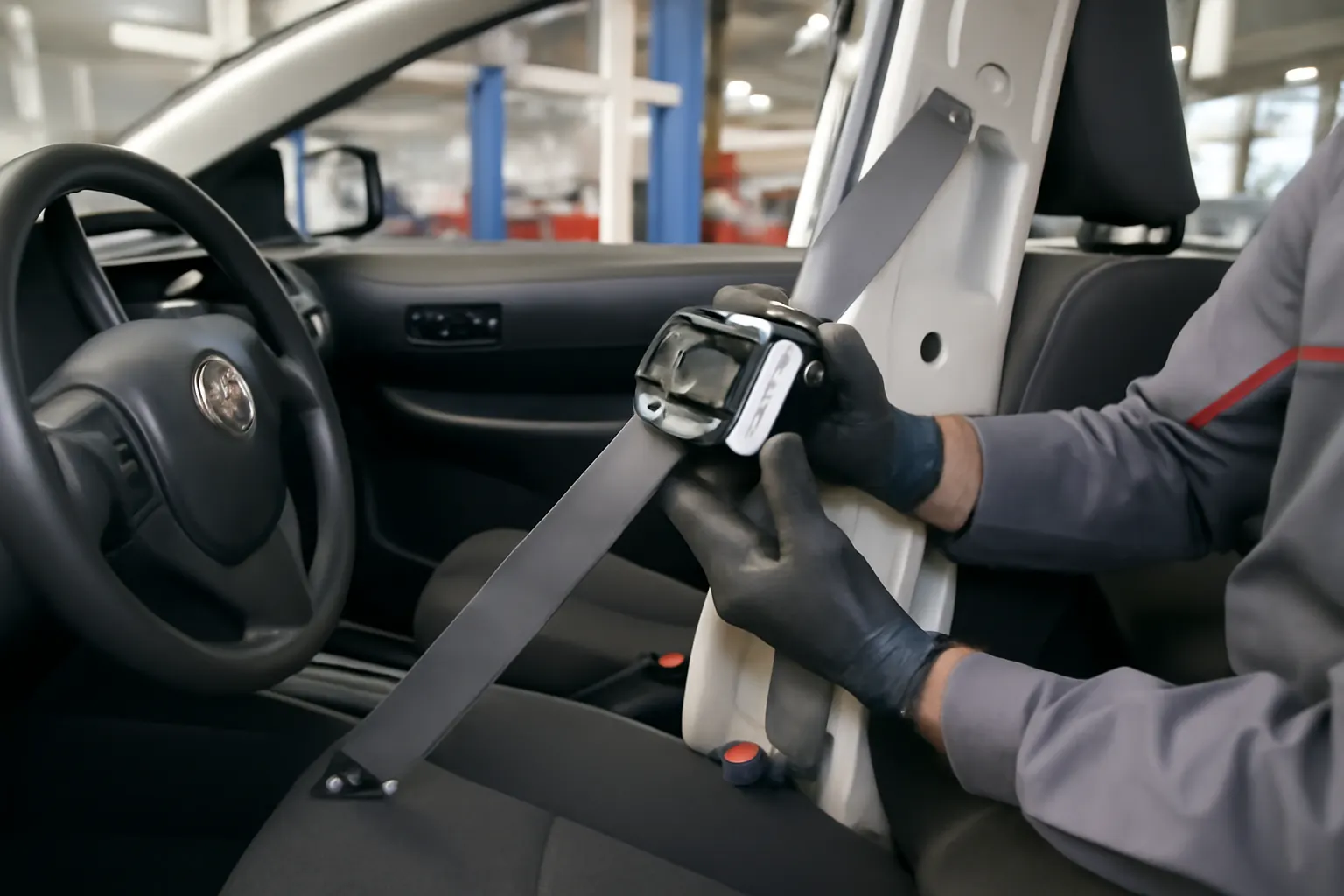
Toyota Safety Restraint Updates
Staying current with Toyota safety restraint system updates is essential for every vehicle owner, technician, and parts buyer. Updated information on recalls, technical service bulletins (TSBs), and evolving seat belt assembly standards can directly impact your vehicle’s safety and compliance. This guide delivers the latest verified updates, actionable diagnostic advice, and expert sourcing tips for Toyota front seat belt assemblies and related restraint components.
Read More
Guide Seat Belt Installation
Seat belts are the primary restraint system in any vehicle and are directly linked to occupant safety. According to the National Highway Traffic Safety Administration (NHTSA), properly installed and functioning seat belts save thousands of lives annually and are a key factor in reducing injury severity during crashes . For Toyota vehicles, correct installation preserves the engineered energy management characteristics of the restraint system, ensuring compliance with federal safety standards and vehicle-specific safety design.
View Guide
Toyota Seat Belt Materials Explained
Toyota’s commitment to occupant safety is reflected in every aspect of its vehicle design, but nowhere is it more evident than in the advanced materials and engineering behind its seat belt assemblies. Modern Toyota seat belts are crafted from high-strength, technologically advanced fibers and hardware that not only meet but often exceed regulatory and performance standards. Understanding what goes into a Toyota seat belt can help owners, technicians, and parts buyers make informed decisions about diagnostics, replacement, and upgrades.
Read More