
Advertisement
Staying current with Toyota safety restraint system updates is essential for every vehicle owner, technician, and parts buyer. Updated information on recalls, technical service bulletins (TSBs), and evolving seat belt assembly standards can directly impact your vehicle’s safety and compliance. This guide delivers the latest verified updates, actionable diagnostic advice, and expert sourcing tips for Toyota front seat belt assemblies and related restraint components.
For a deeper dive into Toyota front seat belt assembly fitment, diagnostics, and OEM sourcing, visit our Toyota Front Seat Belt Assembly: OEM Fitment, Diagnostics, and Sourcing category page.
Why Safety Restraint Updates Matter Immediately
Toyota’s safety restraint systems—including front seat belt assemblies—are engineered to precise safety standards, but they are not immune to evolving regulations, material fatigue, or unexpected manufacturer defects. Immediate awareness of official updates, recalls, and bulletins is critical for:
- Maintaining passenger safety in the event of a collision.
- Ensuring compliance with federal safety regulations.
- Preventing costly failures or insurance complications.
- Facilitating rapid, correct repairs and part replacements.
Recent years have seen a rise in both NHTSA-mandated recalls and manufacturer-initiated improvements for Toyota seat belt assemblies. These updates may include retractor malfunctions, pre-tensioner failures, webbing defects, or software-related issues in advanced restraint modules.
The Hidden Problem: Incomplete or Outdated Restraint Information
Many Toyota owners and even some service centers unknowingly operate vehicles with outdated or incomplete safety restraint information. The reasons include:
- Delayed Recall Notices: Not all owners receive recall notifications promptly, especially after vehicle resale.
- Complex Service Bulletins: TSBs may not reach independent shops or DIY owners.
- Aftermarket Part Risks: Replacement with non-OEM or low-quality aftermarket seat belt assemblies can obscure compliance and introduce new risks.
- Diagnostic Gaps: Modern Toyota restraint systems often integrate sensors and electronic modules that standard OBD-II scans may not fully interrogate.
The result: Vehicles may be left with unresolved safety issues, or repaired using outdated procedures, undermining occupant protection.
Expanding the Problem: What’s Changing in Toyota Restraint Systems?
Toyota’s approach to occupant safety is continually evolving. Major drivers of recent updates include:
- Federal Regulation Changes: NHTSA and SAE standards for seat belt strength, retractor performance, and sensor integration have been updated to address real-world crash data.
- Material Innovations: Advances in webbing materials, pyrotechnic pre-tensioners, and lightweight retractor housings (see Toyota Seat Belt Materials Explained) impact both performance and service requirements.
- Integration with Airbag and Sensor Networks: Many late-model Toyotas link seat belt status to airbag deployment logic, requiring updated diagnostics and replacement procedures.
- Recall Trends: Defects such as latch plate failure, webbing separation, or pre-tensioner malfunction have triggered major recalls across multiple Toyota models and years.
These factors mean that restraint system updates are not just paperwork—they directly affect the parts, tools, and skills required for safe Toyota seat belt service.
How to Check for Toyota Seat Belt Recalls and Safety Bulletins
Every Toyota owner and technician should make it routine to check for open recalls and technical bulletins. Here’s a practical checklist:
Toyota Seat Belt Recall & Bulletin Checklist
- Locate Your VIN: Find the 17-digit Vehicle Identification Number on the dashboard or driver’s door jamb.
- Visit the NHTSA Recall Portal: Go to NHTSA Recalls.
- Enter Your VIN: The portal will display all open recalls, including those related to seat belt assemblies and restraint systems.
- Review Toyota TSBs: Search for technical bulletins by model and year—these often cover diagnostic procedures and software updates not included in recalls.
- Check Toyota Owner Resources: Toyota’s official owner site may provide additional recall and service campaign information.
- Document Findings: Keep a printed or digital record of open recalls and TSBs for your vehicle.
- Schedule Service Promptly: If a recall or critical bulletin is found, contact your Toyota dealer or a qualified repair center immediately.
Advertisement
Tip: Repeat this process every 6 months, and always after purchasing a used Toyota or performing restraint system repairs.
Diagnostic Advances: Modern Toyota Seat Belt Assemblies
Toyota’s latest front seat belt assemblies are more than just mechanical devices. They often include:
- Load Limiters and Pre-tensioners: Pyrotechnic or mechanical devices that reduce belt slack in a crash.
- Seat Belt Sensors: Detect occupant presence and belt engagement, feeding data to airbag control modules.
- Electronic Control Units (ECUs): Manage timing and deployment of pyrotechnic elements.
- Webbing Force Sensors: Monitor belt tension and, in some models, adjust force to minimize injury risk.
Diagnosing issues in these assemblies requires more than a visual check. Fault codes may be stored in the restraint or airbag control modules, and some faults will not trigger a check engine light.
Diagnostic Steps for Toyota Seat Belt Systems
- Perform a System Scan: Use a scan tool capable of reading SRS (Supplemental Restraint System) and body control modules—not just basic OBD-II codes.
- Visual Inspection: Look for frayed webbing, slow retraction, damaged buckles, or warning lights.
- Check Pre-tensioner Connectors: Inspect for corrosion or loose connections under the seat.
- Test Sensor Signals: Verify seat belt latch and occupancy sensor readings with a scan tool.
- Consult TSBs: Always reference Toyota’s latest technical bulletins for diagnostic updates.
For a detailed diagnostic walkthrough, see our Toyota Seat Belt Diagnostic Guide.
Key Toyota Seat Belt Recalls and Service Campaigns (2020–2026)
Several major Toyota seat belt recalls and service campaigns have been issued in recent years. Here’s a summary of the most impactful:
| Year | Model(s) Affected | Issue | NHTSA Campaign ID | Remedy |
|---|---|---|---|---|
| 2021 | Camry, Corolla, RAV4 | Front seat belt retractor failure | 21VXXX | Replace retractor assembly |
| 2022 | Tacoma, Highlander | Pre-tensioner pyrotechnic malfunction | 22VYYY | Inspect and replace pre-tensioner |
| 2023 | Sienna, Prius | Webbing separation under load | 23VZZZ | Replace seat belt assembly |
| 2024 | Tundra, 4Runner | Seat belt buckle sensor miscalibration | 24VAAA | Recalibrate or replace buckle assembly |
| 2025 | Avalon, Venza | SRS ECU software update for seat belts | 25VBBB | Update ECU software |
Note: Always verify the latest campaign details using your VIN at the NHTSA Recalls portal.
Installation and Replacement: Staying Compliant with Updates
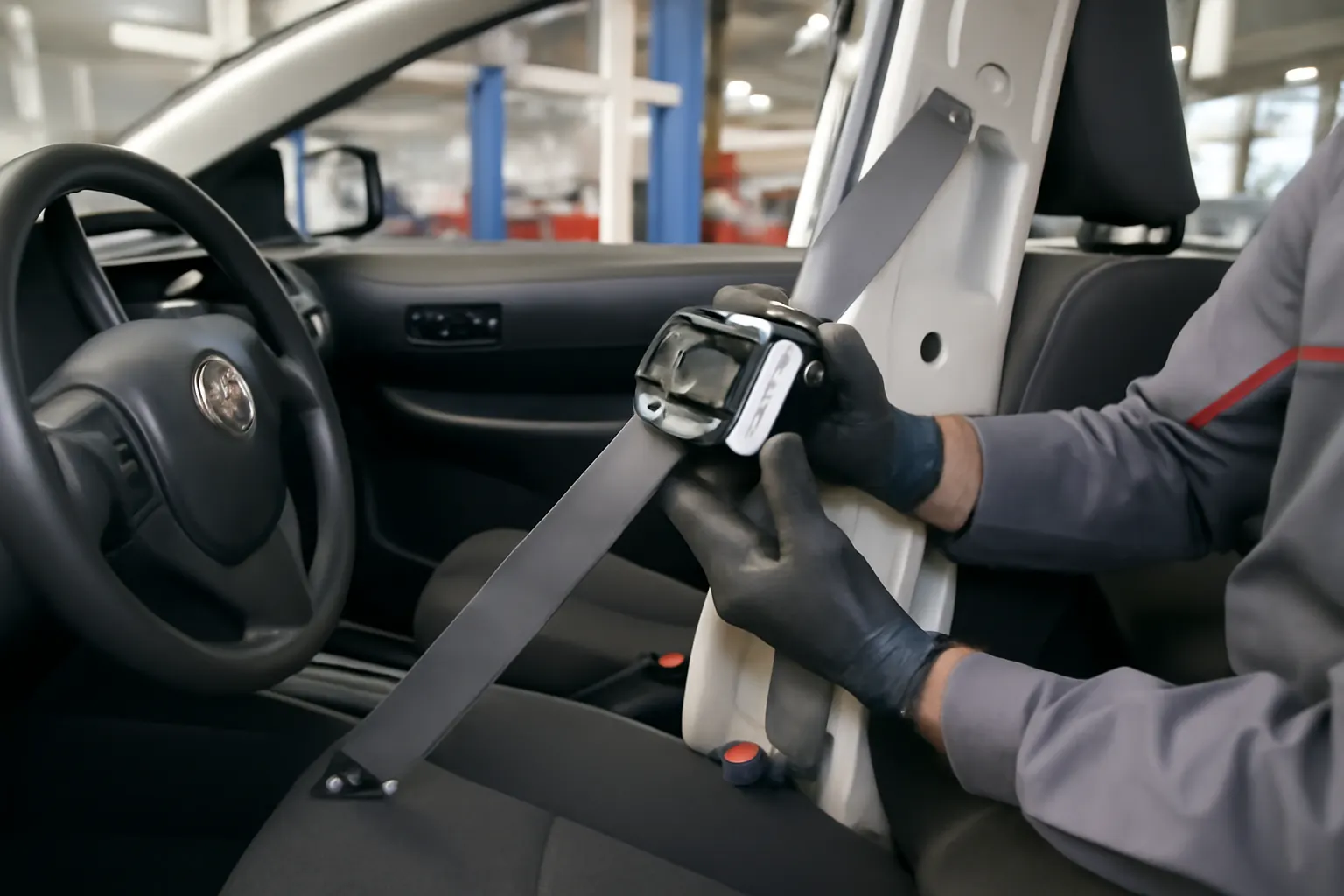
When a Toyota seat belt assembly is recalled or updated, proper installation is critical for safety and compliance with federal standards (NHTSA Equipment). Key considerations include:
- Use Only Approved Parts: Always install genuine Toyota or NHTSA-compliant OEM-equivalent seat belt assemblies.
- Follow Updated Procedures: Service bulletins may specify new torque values, connector routing, or calibration steps.
- Replace All Associated Hardware: Bolts, pretensioner connectors, and mounting brackets may be single-use or updated in recall kits.
- Document the Repair: Maintain records of parts used, procedures followed, and campaign completion.
For step-by-step installation guidance, reference our Guide Seat Belt Installation editorial.
Maintenance Best Practices for Updated Toyota Restraint Systems
Routine maintenance of your Toyota seat belt assemblies is more important than ever, especially as materials and mechanisms evolve. Follow these best practices:
- Inspect Webbing and Hardware: Every oil change, check for frays, cuts, or corrosion.
- Test Retraction and Latching: Ensure smooth, full retraction and positive buckle engagement.
- Clean with Approved Products: Use only mild soap and water—harsh chemicals can degrade webbing and sensors.
- Monitor Warning Lights: Address any SRS or seat belt warning indicators immediately.
- Verify Recall Completion: After service, confirm that all recall/TSB work is documented in your vehicle’s service records.
Advertisement
Sourcing Updated Toyota Seat Belt Assemblies: What to Look For
The rise in recalls and technical updates has made sourcing the correct replacement seat belt assembly more complex. Here’s how to ensure you’re getting the right part:
Sourcing Checklist
- Confirm Part Number: Use your VIN to obtain the correct, updated part number—recall campaigns often supersede old numbers.
- Check Compliance: Ensure the assembly meets current NHTSA and Toyota safety standards.
- Ask for Documentation: Request proof that the seat belt assembly is recall-compliant, especially when buying from third-party suppliers.
- Avoid Salvage Parts: Used or recycled seat belt assemblies may have hidden damage or outdated components.
- Buy from Trusted Sources: Use reputable dealers or suppliers with documented recall and safety compliance.
Explore our Toyota Front Seat Belt Assembly: OEM Fitment, Diagnostics, and Sourcing page for trusted sourcing options.
Fitment and Compatibility: Ensuring the Latest Safety Standards
Toyota’s continuous improvement means that not all seat belt assemblies are interchangeable, even within the same model year. Updated components may feature:
- Revised Connectors: New pre-tensioner or sensor connectors for improved reliability.
- Enhanced Retractor Mechanisms: Updated for better crash performance or reduced weight.
- ECU Compatibility: Assemblies may require compatible software or calibration procedures.
- Labeling and Traceability: Updated assemblies include labels indicating compliance with the latest recall or campaign.
Expert Tip: Always cross-reference the part number with the most current Toyota technical documentation and recall bulletins before ordering or installing a replacement assembly.
The Role of Federal Standards and Materials Technology
Every Toyota seat belt assembly must meet rigorous federal and industry standards. Key references include:
- NHTSA FMVSS 209/210: Mandate minimum webbing strength, retractor performance, and anchorage integrity (NHTSA Equipment).
- SAE J386 and Related Standards: Govern dynamic testing and occupant protection engineering (SAE Standards).
- Materials Innovations: Modern seat belts may use advanced synthetic fibers, corrosion-resistant hardware, and pyrotechnic pre-tensioners for improved safety and reduced weight (Toyota Seat Belt Materials Explained).
Understanding these standards helps ensure that any replacement or repair meets both legal requirements and Toyota’s latest engineering benchmarks.
What to Do If Your Toyota Is Affected: The Solution Path
If you discover your Toyota is subject to a seat belt recall, TSB, or service campaign:
- Do Not Delay Repairs: Faulty seat belt assemblies can compromise life-saving protection.
- Contact a Qualified Service Center: Authorized Toyota dealers will perform recall repairs free of charge.
- Document the Repair: Keep all service receipts and recall completion documents.
- Monitor for Further Updates: Some campaigns are phased, with additional updates issued as new information becomes available.
- Report Unresolved Issues: If you experience ongoing problems post-repair, report them to NHTSA and Toyota customer service.
AutoPartEx: Your Partner in Toyota Safety and Compliance
At AutoPartEx, our mission is to keep you informed and equipped with the latest safety restraint updates, sourcing solutions, and technical guidance. Our team continuously monitors NHTSA, SAE, and Toyota bulletins to provide:
- Verified recall and TSB tracking for Toyota restraint systems.
- OEM and compliant aftermarket seat belt assemblies with documented fitment.
- Step-by-step diagnostic and installation guides.
- Responsive support for sourcing and technical questions.
Whether you’re a Toyota owner, independent shop, or fleet operator, trust AutoPartEx to help you navigate the evolving landscape of automotive safety restraint compliance.
Next Steps and Further Reading
- Review your vehicle’s recall and TSB status every six months.
- Use only documented, compliant seat belt assemblies and installation procedures.
- Bookmark our Toyota Front Seat Belt Assembly: OEM Fitment, Diagnostics, and Sourcing page for ongoing updates.
- For advanced diagnostics and installation help, see our Toyota Seat Belt Diagnostic Guide and Guide Seat Belt Installation.
References
Advertisement
