Advertisement
Toyota seat belt recalls have become a critical safety topic for owners and technicians alike. This field report covers the most common Toyota seat belt recalls, what every owner needs to know, and how to check your vehicle identification number (VIN) for open safety campaigns. Whether you’re a Toyota owner, a technician, or a parts buyer, understanding the recall process and technical issues behind these campaigns is essential. For detailed technical background, see our Toyota Front Seat Belt Assembly: OEM Fitment, Technical Challenges, and Sourcing Guidance category page.
Immediate Answer: What Toyota Owners Need to Know About Seat Belt Recalls
If you own a Toyota, you need to be aware that seat belt assemblies—especially front seat belt assemblies—have been subject to multiple recalls over the past decade. These recalls address critical safety defects, ranging from faulty pretensioners and webbing failures to improper installation or assembly.
Here’s what you should do immediately:
-
Check your Toyota’s VIN on the NHTSA Recalls Portal to see if your vehicle is affected by an open seat belt recall.
-
If your vehicle is listed, schedule a recall repair with your local Toyota dealer as soon as possible. Recall repairs are performed at no cost to you.
-
Understand that seat belt recalls are a safety priority and should never be postponed.
The Hidden Problem: Why Seat Belt Recalls Matter More Than You Think
Many Toyota owners underestimate the seriousness of seat belt recalls. A faulty seat belt assembly can fail to restrain occupants properly during a crash, leading to increased risk of injury or even death. Moreover, some recall issues may not be apparent during normal vehicle use—meaning you may not notice a problem until it’s too late.
Common misconceptions include:
- Believing that a seat belt “clicking” or functioning normally means it is safe (some failures are internal or only occur during a crash).
- Assuming that only older vehicles are subject to recalls (recent models may also be affected).
- Thinking that aftermarket repairs or parts can substitute for recall work (only OEM recall repairs address the specific defect).
Problem Expansion: Technical Challenges Behind Toyota Seat Belt Recalls
Toyota seat belt assemblies are engineered to strict safety standards, but several technical challenges have triggered recalls:
1. Pretensioner Failures
Some Toyota models have had issues with seat belt pretensioners—devices designed to tighten the belt instantly during a crash. Defective pretensioners may fail to deploy or could deploy with excessive force, both of which compromise occupant safety.
2. Webbing Defects
The seat belt webbing (the belt itself) must pass rigorous strength and abrasion tests. Certain recalls have addressed webbing that may tear, fray, or detach from anchor points, particularly in high-stress areas like the front seats.
3. Retractor and Buckle Malfunctions
Retractors (which spool and lock the belt) and buckles (which secure the latch) are complex components. Manufacturing defects, improper assembly, or substandard materials can lead to failures that prevent the belt from locking or releasing correctly.
4. Installation and Assembly Errors
Some recalls stem from assembly line errors: bolts not torqued to specification, incorrect routing of webbing, or missing components. These issues can escape detection during initial inspections but become critical in a crash scenario.
How to Check Your Toyota VIN for Open Seat Belt Recalls
Every Toyota has a unique 17-character VIN, typically found on the driver’s side dashboard and inside the driver’s door jamb. Here’s a step-by-step guide to checking your recall status:
Advertisement
- Locate Your VIN: Find your VIN on your registration, insurance card, or vehicle itself.
- Go to the NHTSA Recalls Website: Visit https://www.nhtsa.gov/recalls.
- Enter Your VIN: Type your VIN into the search bar and click “Search.”
- Review Results: The site will list any open recalls, including those for seat belt assemblies.
- Contact Your Dealer: If an open recall is present, schedule service with an authorized Toyota dealer.
Tip: Check your recall status at least twice a year, as new recalls can be issued long after a vehicle’s original purchase.
Common Toyota Seat Belt Recall Campaigns: Field Report Highlights
Below is a summary of notable Toyota seat belt recall campaigns from recent years, based on data from the National Highway Traffic Safety Administration:
| Recall ID | Affected Models | Defect Description | Remedy |
|---|---|---|---|
| 20V012 | Corolla, Camry, RAV4 | Front seat belt webbing separation | Replace seat belt assembly |
| 19V741 | Prius, Prius V | Retractor may fail to lock | Replace retractor unit |
| 17V657 | Highlander, Sienna | Pretensioner gas generator defect | Replace pretensioner |
| 15V689 | Tacoma, Tundra | Buckle may not latch securely | Replace buckle assembly |
Note: This table is not exhaustive. Always check with NHTSA or your dealer for the latest campaigns.
Diagnostic Checklist: Signs Your Toyota Seat Belt Assembly May Be Faulty
While some recall issues are invisible, others may present warning signs. Use this checklist to identify potential seat belt problems:
- Belt does not retract smoothly or gets stuck
- Buckle does not latch with a firm “click”
- Belt webbing is frayed, cut, or shows unusual wear
- Warning light for seat belt system is illuminated
- Belt fails to lock during sudden stops
- Visible damage to retractor or pretensioner housing
- Belt feels loose even when fully fastened
- Unusual noises (rattling, clicking) from seat belt assembly
If you notice any of these symptoms, schedule a diagnostic or recall inspection immediately. For a more detailed troubleshooting approach, review our Toyota Seat Belt Diagnostics Guide.
Technical Deep Dive: How Toyota Seat Belt Assemblies Are Designed and Tested
Toyota seat belt assemblies are engineered to meet or exceed SAE standards and federal safety requirements. Key technical features include:
Pretensioners
Pretensioners use pyrotechnic charges or mechanical springs to instantly retract slack in the belt during a collision. Toyota’s designs are tested for:
-
Deployment timing (milliseconds matter)
-
Strength under crash loads
-
Resistance to accidental deployment
Retractors
Retractors contain a spool and locking mechanism. In an impact, the inertial locking system must activate reliably, preventing the belt from extending further.
Webbing
Seat belt webbing is typically made from high-strength polyester. It must withstand:
-
Tensile loads exceeding 6,000 lbs
-
Abrasion from repeated use
-
UV and chemical exposure
Buckles and Latches
Buckles are engineered for both secure latching and quick release under emergency conditions. Recalls have targeted both mechanical and electronic buckle designs.
Why Do Seat Belt Recalls Happen? Manufacturing and Materials Analysis
Even with rigorous quality control, defects can slip through due to:
- Supplier Issues: Subcontractors may provide substandard components or materials.
- Process Variation: Changes in manufacturing processes (e.g., automated vs. manual assembly) can introduce variation.
- Design Evolution: Newer designs may have unforeseen weaknesses under real-world conditions.
- Material Fatigue: Over time, even compliant materials can degrade, especially if exposed to heat, sunlight, or chemicals.
Toyota and regulatory bodies like NHTSA monitor warranty claims, crash reports, and routine inspections to identify emerging issues.
The Recall Process: From Discovery to Remedy
Understanding the recall process helps owners and technicians know what to expect:
1. Problem Identification
Defects may be discovered through:
-
Crash investigations
-
Customer complaints
-
Routine quality audits
2. Regulatory Reporting
Manufacturers are required by law to report safety-related defects to NHTSA. An investigation may follow.
3. Recall Campaign Launch
If a defect is confirmed, Toyota issues a recall campaign, notifying affected owners by mail and posting details online.
Advertisement
4. Remedy and Repair
Toyota dealers perform the recall repair—typically replacing the affected seat belt assembly with an improved or tested part.
5. Follow-Up
NHTSA and Toyota monitor repair completion rates and may issue follow-up communications if necessary.
Sourcing Genuine Toyota Seat Belt Assemblies: What to Know
Recall repairs must use OEM (original equipment manufacturer) parts to ensure compliance and safety. Here’s what you need to know about sourcing:
- Recall Repairs: Always performed with OEM parts supplied by Toyota.
- Aftermarket Parts: Not approved for recall repairs; may not address the specific defect.
- Used Parts: Never use recycled or used seat belt assemblies for recall or safety repairs.
- Verification: Genuine Toyota parts have traceable part numbers and quality control markings.
For non-recall replacements, see our Autopartex Parts Sourcing Guide for tips on sourcing authentic components.
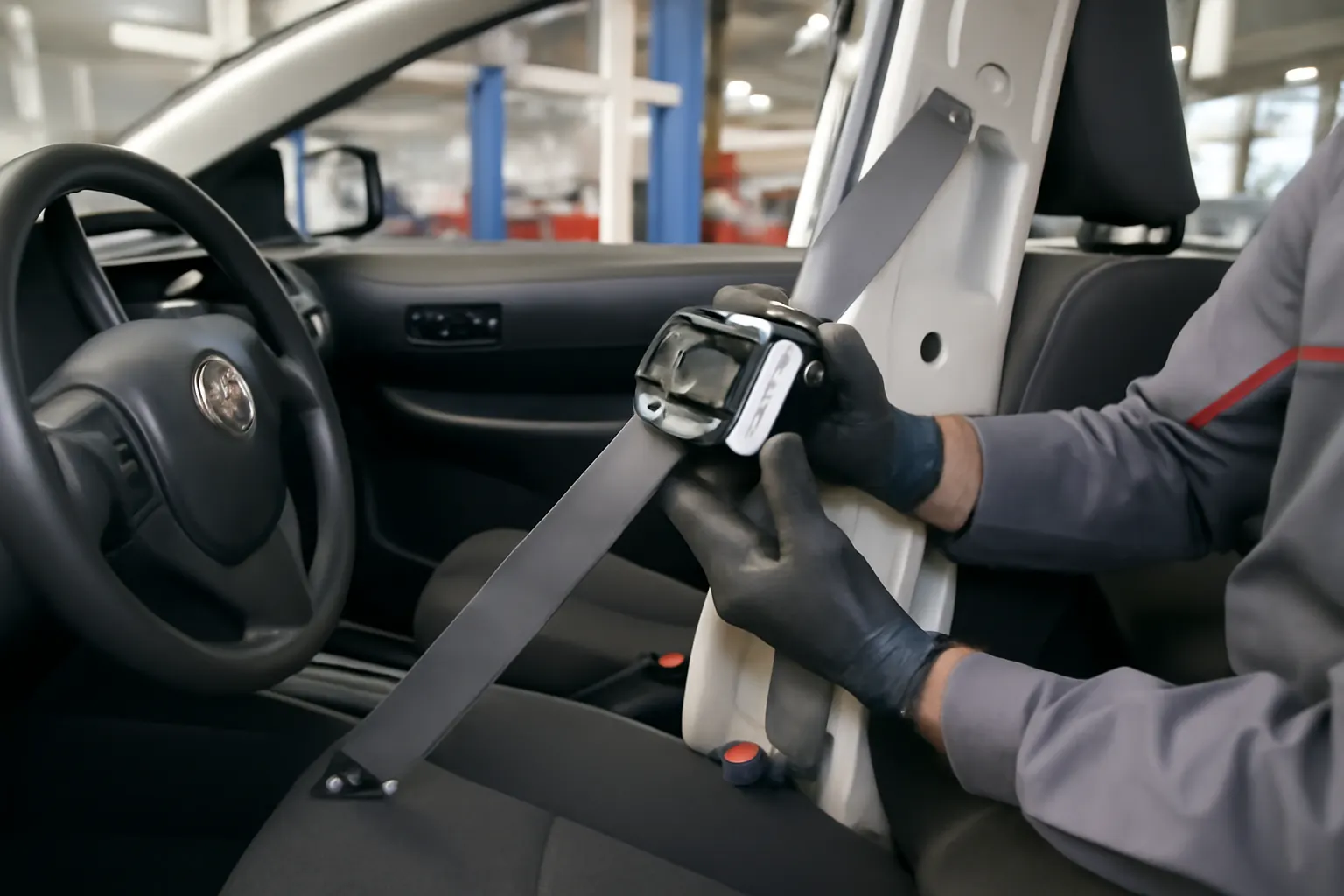
Installation and Inspection: What to Expect at the Dealer
When you bring your Toyota in for a seat belt recall, here’s what typically happens:
- Inspection: The technician verifies the recall and inspects the affected seat belt assembly.
- Removal: The old assembly is carefully removed, with attention to airbag and trim components.
- Installation: The new assembly is installed using factory torque specs and routing guides.
- Testing: Functionality is tested—belt retraction, locking, buckle engagement, and warning light reset.
- Documentation: The dealer logs the repair with Toyota and NHTSA.
For a technical overview of installation procedures, see our Toyota Seat Belt Installation Article.
Preventive Maintenance: Keeping Your Toyota Seat Belt Assembly Safe
Even outside of recalls, regular inspection and maintenance of your seat belt assemblies is vital:
- Visual Inspection: Check webbing, buckles, and retractors every 6 months.
- Function Test: Ensure smooth retraction, positive latching, and emergency locking.
- Cleaning: Wipe webbing with mild soap and water; avoid harsh chemicals.
- Avoid Modifications: Never alter seat belt assemblies or routing.
- Professional Service: If you suspect a problem, have it diagnosed by a Toyota-certified technician.
The Role of Industry Standards and Regulatory Oversight
Seat belt assemblies are subject to strict federal and industry standards:
- FMVSS 209/210: Federal safety standards for seat belt assemblies and anchorages.
- SAE Standards: Define test methods, performance criteria, and durability requirements.
- NHTSA Oversight: The National Highway Traffic Safety Administration enforces compliance and manages recall processes.
Toyota’s compliance with these standards is critical, but even compliant assemblies can be subject to recall if real-world performance falls short.
Owner Action Plan: What To Do If Your Toyota Is Affected
If your Toyota is subject to a seat belt recall, follow this action plan:
- Do Not Delay: Schedule the recall repair immediately.
- Use Only Authorized Dealers: Recall work is free and must be performed by Toyota-certified technicians.
- Keep Records: Retain repair documentation for your records and future resale value.
- Monitor for Updates: Occasionally, additional recalls are issued for related components.
- Educate Passengers: Ensure everyone in your vehicle uses seat belts properly at all times.
The AutoPartEx Advantage: Technical Guidance and Sourcing Support
At AutoPartEx, we’re committed to providing Toyota owners, technicians, and buyers with authoritative guidance on safety-critical systems like seat belt assemblies. Our technical articles, diagnostic guides, and sourcing resources help you:
- Understand recall and safety processes in detail
- Diagnose seat belt issues accurately
- Source genuine Toyota seat belt assemblies and components
- Perform or coordinate safe, compliant repairs
Explore our Toyota Front Seat Belt Assembly: OEM Fitment, Technical Challenges, and Sourcing Guidance page for more in-depth technical and sourcing information.
Conclusion: Safety First—Stay Informed, Stay Protected
Toyota seat belt recalls are not just paperwork—they are vital safety campaigns that protect you and your passengers from preventable harm. By staying informed, checking your VIN regularly, and acting promptly on recall notices, you uphold the safety integrity of your vehicle. For technical, diagnostic, and sourcing support, trust AutoPartEx as your expert resource.
References
Advertisement