
AMC AC Condenser
AMC AC Condenser Replacement & Fitment Guide
AMC vehicles, renowned for their unique blend of American engineering and practicality, depend on a properly functioning AC system for occupant comfort and vehicle efficiency. The AC condenser is a critical part of this system, transforming refrigerant gas into a cool liquid and dissipating heat from the vehicle cabin. As AMC models age, sourcing the correct AC condenser and ensuring optimal fitment can present significant challenges. This page delivers a comprehensive overview of AMC AC condenser selection, fitment, common technical problems, and expert guidance for owners and technicians.
Many AMC owners and technicians are unaware of the subtle yet impactful challenges associated with AC condenser replacement. With original AMC parts long out of production and aftermarket offerings varying widely in quality and compatibility, unsuspecting buyers risk poor fitment, inefficient cooling, and even premature system failure. Superseded part numbers, limited stock, and the lack of standardized technical documentation for older AMC platforms further complicate the selection process. Without careful cross-referencing and attention to core differences in mounting, dimensions, and line connections, even a visually similar condenser can lead to installation setbacks or compromised AC performance.
AMC AC condensers exhibit several manufacturer-specific failure patterns. Corrosion from environmental exposure, debris-induced fin damage, and internal clogging due to age-related refrigerant breakdown are common. Many AMC models, especially those produced in the 1970s and early 1980s, used condenser designs with unique mounting brackets and line routing. These design idiosyncrasies can lead to fitment mismatches when attempting to use universal or poorly-documented replacements. Installers often encounter compatibility risks, such as misaligned fittings, inadequate core thickness, or mounting points that differ even within the same model family. Diagnostic oversights—such as not checking for debris or proper refrigerant flushing—can further reduce the lifespan of a new condenser.
To ensure reliable AMC AC condenser replacement, a rigorous OEM fitment strategy is essential. Begin by identifying the exact year, model, engine, and AC system variant. Cross-reference original AMC part numbers with current aftermarket catalogues, and verify mounting measurements and line locations before ordering. Use trusted resources for supersession data and check for any technical service bulletins relevant to your model. During installation, flush the system thoroughly, inspect for debris, and use new O-rings and seals. For rare and discontinued AMC condensers, consider professional reconditioning or custom fabrication as a last resort. Always prioritize parts with verified fitment records to minimize returns and ensure optimal system performance.
Advertisement
Advertisement
More AMC AC Condenser options
Filtering for AMC • AC CondenserScan nearby AMC ac condenser inventory without leaving this page.
No Data Available
Please check back soon when more inventory is available for this part.
Advertisement
Expert Specs, Action Plan, and AutoPartEx Advantage
For AMC AC Condenser, long-term reliability depends on verified fitment, periodic inspection of wear components, and disciplined preventive maintenance. Confirm part numbers by VIN, check supersession notes, and compare mounting points before installation. Review service bulletins and historical failure patterns to prioritize high-risk systems, especially electrical connectors, seals, cooling components, and drivetrain interfaces.
AMC AC Condenser: Fast Facts & Pro Tips
Verify Model-Specific Fitment
Always confirm year, model, and engine. Small differences in mounting or core size can cause major installation headaches.
Flush and Pressure-Test the System
Never install a new condenser without thoroughly flushing the AC system and pressure-testing for leaks. Old debris can quickly ruin a new part.
Replace Seals and Drier
Always install new O-rings, seals, and a receiver/drier during condenser service to prevent leaks and moisture contamination.
Consult Technical Resources
Use trusted fitment guides, TSBs, and recall databases such as NHTSA to ensure safe, accurate, and reliable repairs.
References
- Vehicle, Car Seat, Tire, and Equipment Recalls - National Highway Traffic Safety Administration, accessed 2024-06-01Resource for checking AMC equipment recalls and technical service bulletins.
- Fuel Efficiency - United States Department of Energy, accessed 2024-06-01Provided technical context on AC system effects on vehicle fuel economy.
- Materials Technologies - United States Department of Energy, accessed 2024-06-01Referenced for information on materials and corrosion affecting condenser longevity.
Related Guides & Articles

Amc Climate Control Troubleshooting
If your AMC’s climate control system is blowing warm air, producing inconsistent airflow, or failing to activate, begin with these rapid checks: Verify blower motor operation: Listen for fan noise at all speed settings. Check for cold air at max AC: If only ambient or warm air is delivered, the refrigerant circuit may be compromised. Test mode selector and temperature controls: Confirm that vent, floor, and defrost positions function correctly.
View Guide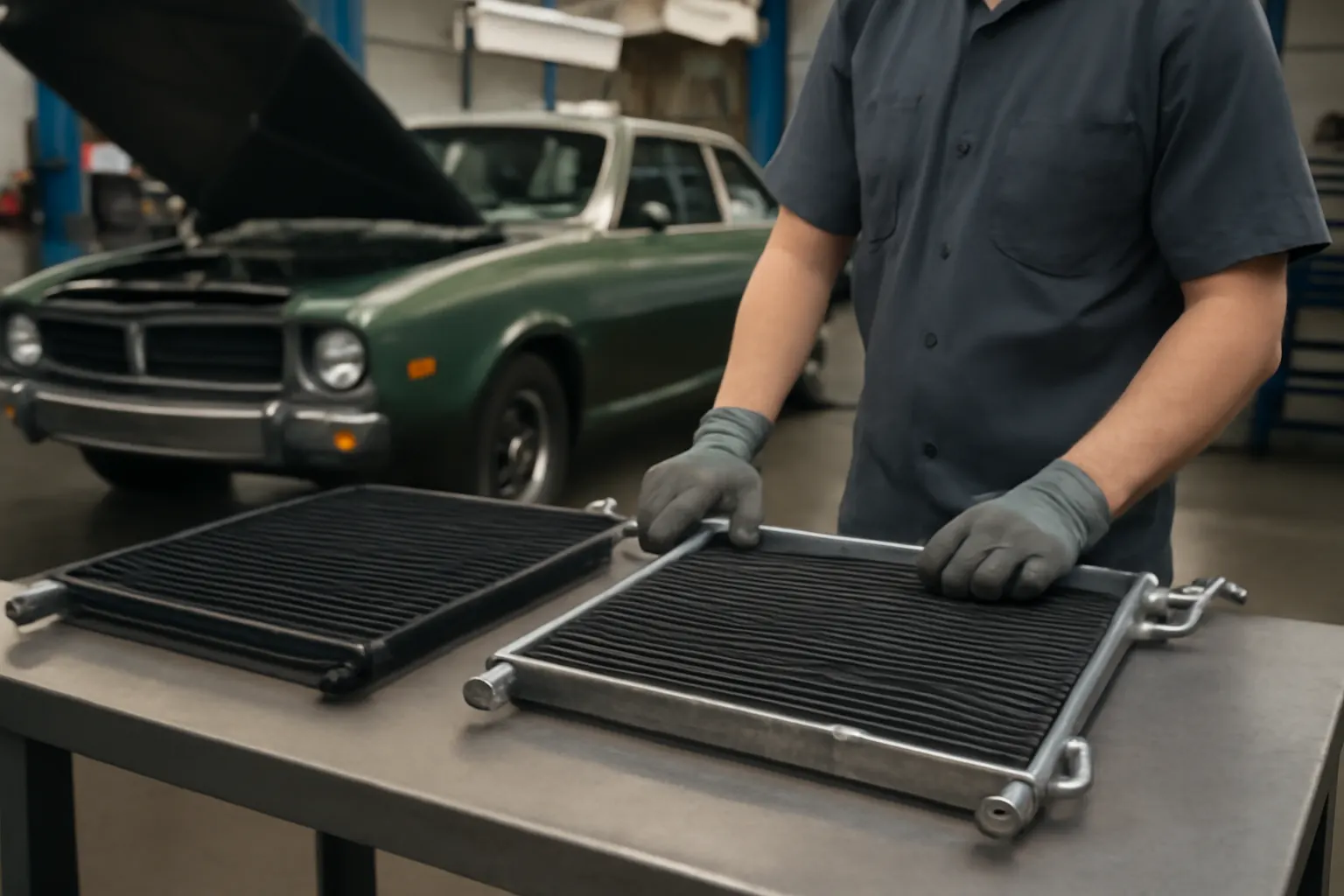
Amc Ac Condenser Aftermarket Vs Reconditioned
When restoring or maintaining a vintage AMC vehicle, few decisions are as vital to comfort and reliability as choosing the right AC condenser. The big question facing AMC owners is whether to opt for an aftermarket replacement or a reconditioned original condenser. The answer: for most AMC enthusiasts seeking long-term reliability, aftermarket AC condensers offer consistent performance and modern materials, while reconditioned originals may suit those prioritizing authenticity and period-correct restoration. However, the choice isn’t as simple as “new vs.
Read More
Amc Air Conditioning Evolution
If you’re tackling an AMC AC condenser replacement or diagnosing climate control issues, the most critical fact is that AMC’s air conditioning systems have evolved through several distinct phases. Each era brought changes in component design, refrigerant type, and system integration. This means that not all AMC AC parts are interchangeable, and modern repair success hinges on understanding the specific system generation in your vehicle. Pre-1970s: Simple, add-on AC systems, often dealer-installed, using R12 refrigerant and basic control mechanisms.
Read More
Amc Part Number Cross Reference
Selecting the correct AC condenser for your AMC vehicle depends on more than just the year and model—it hinges on understanding AMC part numbers, supersession logic, and cross-reference data. If you need to replace your condenser or confirm compatibility, the quickest route to an accurate fit is decoding the AMC part number and verifying any supersessions or aftermarket equivalents.
View Guide