
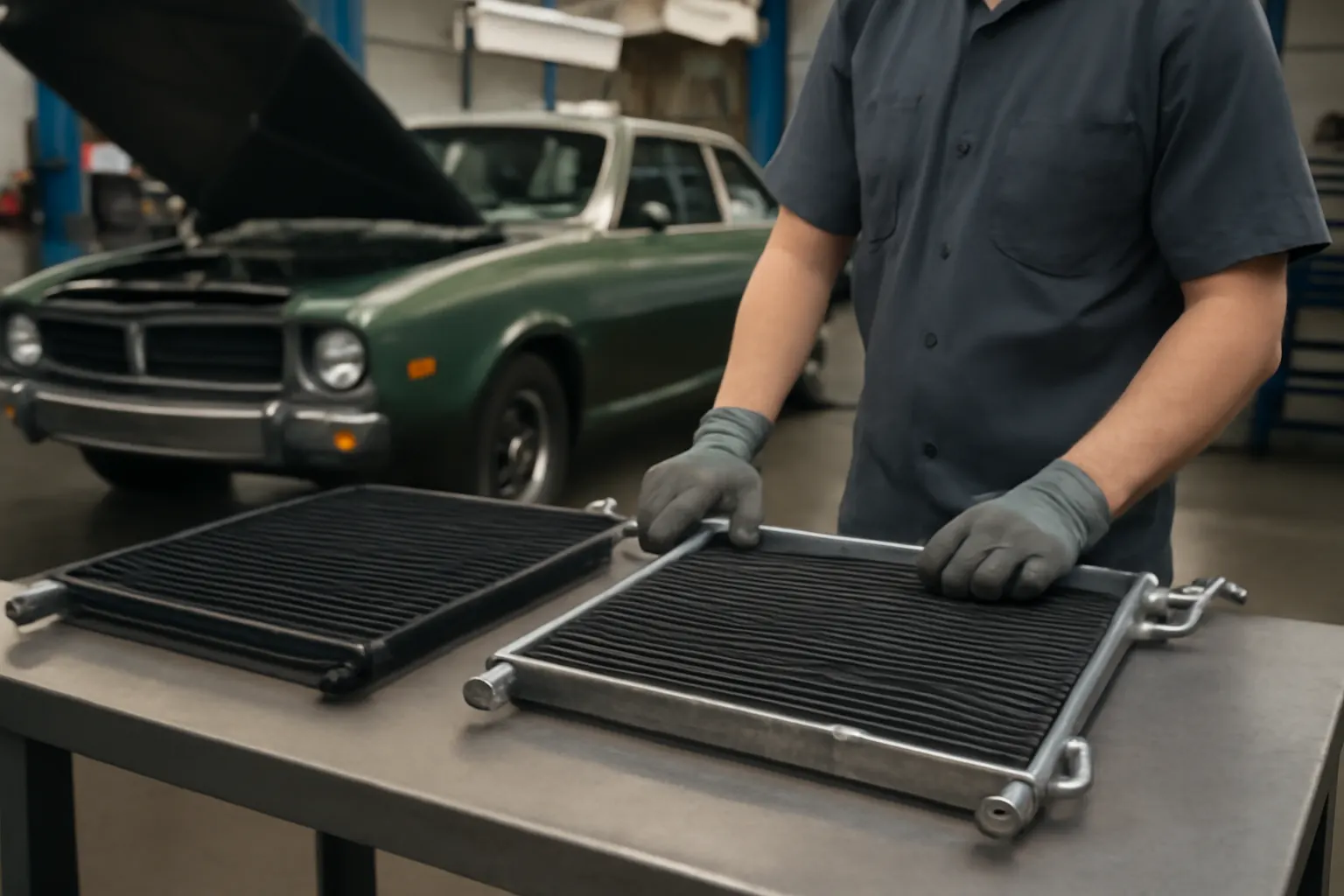
Amc Ac Condenser Aftermarket Vs Reconditioned
When restoring or maintaining a vintage AMC vehicle, few decisions are as vital to comfort and reliability as choosing the right AC condenser. The big question facing AMC owners is whether to opt for an aftermarket replacement or a reconditioned original condenser. The answer: for most AMC enthusiasts seeking long-term reliability, aftermarket AC condensers offer consistent performance and modern materials, while reconditioned originals may suit those prioritizing authenticity and period-correct restoration. However, the choice isn’t as simple as “new vs. old.” Understanding the real-world differences, risks, and technical nuances behind each option is essential to making a decision that fits your goals, budget, and the unique demands of vintage AMC air conditioning systems.
For a broader overview of fitment and replacement, see our AMC AC Condenser Replacement & Fitment Guide.
The Immediate Decision: Aftermarket or Reconditioned?
At first glance, the choice between an aftermarket and reconditioned AMC AC condenser seems straightforward: aftermarket units are new, while reconditioned ones are restored from original cores. Aftermarket condensers are typically manufactured using modern processes, often with improved materials for better heat transfer and corrosion resistance. Reconditioned condensers, on the other hand, are original AMC components that have been cleaned, leak-tested, and repaired as needed.
Key Considerations:
- Aftermarket condensers deliver predictable performance, easy sourcing, and often come with some form of limited warranty. They are engineered to meet or exceed OE specifications, but may not be visually identical to original AMC units.
- Reconditioned condensers preserve the original appearance and fitment, which can be crucial for concours-level restorations or owners who demand period-correct authenticity. However, their long-term reliability depends heavily on the quality of the reconditioning process and the condition of the original core.
The Hidden Problem: Challenges Unique to Vintage AMC AC Systems
The AMC brand, while beloved for its unique models and engineering quirks, presents a particular challenge for AC system repairs. AMC vehicles from the 1960s through the 1980s often used model-specific or even year-specific AC components. As a result, replacement parts—especially condensers—can be difficult to source, and quality varies widely.
What’s often overlooked:
- Aftermarket options may not always match the original mounting points or hose connections, requiring modification.
- Reconditioned units may have unseen internal corrosion or fatigue, even after restoration.
- The performance of either option can be compromised if the rest of the AC system (compressor, hoses, drier) is not addressed at the same time.
This complexity is amplified by the fact that AMC, unlike the Big Three, did not always standardize components across its product lines. The result: choosing the wrong condenser can lead to fitment headaches, diminished cooling, or even system damage.
Digging Deeper: Technical Differences and Implications
1. Construction and Material Advancements
Modern aftermarket condensers are often made with improved aluminum alloys and advanced tube-and-fin or parallel flow designs. According to the United States Department of Energy, these materials and designs offer:
- Superior corrosion resistance (crucial for longevity)
- Enhanced heat transfer (for more efficient cooling)
- Reduced weight (potential, though minimal, fuel efficiency impact)
Reconditioned condensers, in contrast, retain the original design—often copper/brass or early aluminum. While authentic, these older materials are more susceptible to corrosion and may not perform as efficiently in modern traffic conditions or with updated refrigerants.
2. Fitment and Compatibility
- Aftermarket condensers: May require minor bracket or hose modifications, especially if the original AMC part is NLA (No Longer Available). Some suppliers offer “bolt-in” units for popular models, but double-checking mounting points is essential.
- Reconditioned condensers: Should fit exactly as the original, provided the core is correct for your model/year. However, reconditioned units may have subtle warping or compromised threads from decades of use.
3. Performance with Modern Refrigerants
Most vintage AMC AC systems were designed for R12 refrigerant, now phased out in favor of R134a and other eco-friendlier alternatives. Aftermarket condensers are generally optimized for R134a’s different thermal properties, while reconditioned originals may not shed heat as efficiently with modern refrigerants.
Bottom line: If you’ve converted your AMC to R134a, an aftermarket condenser is almost always the better technical choice.
Evaluating the Options: Pros and Cons Table
| Feature/Factor | Aftermarket Condenser | Reconditioned Condenser |
|---|---|---|
| Fit & Appearance | May differ from OE; possible mods | OE-correct; exact fit |
| Material/Design | Modern alloys; improved efficiency | Original metals/design |
| Compatibility | May need bracket/hose tweaks | Direct fit if core is correct |
| Performance (R134a) | Optimized for new refrigerants | May underperform with R134a |
| Longevity | Generally higher, new construction | Dependent on reconditioning quality |
| Availability | Widely available for common models | Limited; core exchange needed |
| Cost | Moderate to high | Variable; often lower if DIY |
| Authenticity | Lower, but “resto-mod” friendly | Highest, for purists |
Diagnosing Your AMC’s AC Condenser Needs
Before you even choose a replacement, it’s crucial to diagnose whether your AMC’s condenser is the true source of cooling woes. Common signs of a failing or compromised condenser include:
- Weak or no cooling at idle
- Visible leaks (oily residue on condenser fins)
- Physical damage (bent fins, corrosion)
- High-side pressure spikes during AC operation
- Repeated compressor cycling or clutch failure
If you’re unsure, review our Amc Climate Control Troubleshooting guide to isolate condenser-specific issues from compressor, expansion valve, or electrical faults.
Checklist: Assessing Your AMC Condenser
Use this checklist before committing to a replacement:
- Check for visible leaks or oil stains on the condenser
- Inspect fins for corrosion, bent areas, or blocked airflow
- Test AC system pressures (high-side and low-side)
- Confirm refrigerant type in use (R12, R134a, or retrofit)
- Review system performance at idle vs. highway speeds
- Check for unusual noises or vibrations from the AC system
- Assess mounting points and available space for replacement
- Determine your restoration goals (authenticity vs. performance)
Sourcing Aftermarket AMC AC Condensers
Aftermarket suppliers cater to the most popular AMC models (Javelin, AMX, Gremlin, Hornet, Ambassador, etc.), but options for rare or low-volume models may be limited. When shopping aftermarket, keep these tips in mind:
- Verify fitment using part numbers and vehicle application charts. Cross-reference with our Amc Part Number Cross Reference for accuracy.
- Ask about refrigerant compatibility. Ensure the condenser is designed for R134a if you’ve converted.
- Request detailed photos and dimensions. Some “universal” units may not clear AMC’s unique radiator supports or grille structures.
- Check return policies and warranty coverage. Reputable vendors typically offer at least a 12-month warranty.
Installation tip: Be prepared for minor bracket fabrication or hose adaptation, especially if your AMC has been previously modified or if the aftermarket condenser is not a direct OE replica.
Assessing Reconditioned AMC AC Condensers
Reconditioned condensers are available from specialist rebuilders or through core exchange programs. The process typically involves:
- Disassembly and thorough cleaning (removal of old oil, debris, and corrosion)
- Leak testing under pressure (to identify pinholes or weak seams)
- Repair or replacement of damaged tubes/fins
- Reassembly and pressure testing with dry nitrogen or air
- Repainting or coating for corrosion resistance
Buyer beware: Not all reconditioning services are equal. Ask for details about the testing process, warranty, and whether the shop uses modern coatings or leaves the metal bare. Some rebuilders offer only a 30-day guarantee, while others stand behind their work for a year or more.
Installation Considerations: Avoiding Common Pitfalls
Aftermarket Installation Tips
- Test-fit the condenser before final installation. Ensure all mounting holes align and that there is adequate clearance for the radiator, hood, and grille.
- Use new O-rings and seals rated for your chosen refrigerant. R134a systems require different materials than R12.
- Flush the entire AC system to remove debris and old oil before installing a new condenser.
- Check for proper airflow: aftermarket condensers may have slightly different fin density or tube placement, which can impact cooling if airflow is restricted.
Reconditioned Installation Tips
- Inspect threads and mounting tabs for damage or wear before installation.
- Confirm that all repairs have been performed to OE standards.
- Pressure test the condenser one final time before installation, especially if it has been sitting on the shelf for months.
- Use original-style hardware for a factory appearance and secure fit.
Maintenance and Longevity: Maximizing Your Investment
Regardless of which route you choose, proper maintenance is key to maximizing condenser life:
- Keep the condenser clean: Periodically spray the fins with low-pressure water to remove bugs and debris.
- Check for bent fins: Use a fin comb to straighten as needed, which ensures optimal airflow.
- Monitor system pressures and performance at the start of every driving season.
- Replace receiver/drier or accumulator whenever you open the system, as moisture is the enemy of AC longevity.
- Store your AMC in a dry environment to minimize corrosion risk, especially if using a reconditioned or original condenser.
The Impact on Cooling Performance and Fuel Efficiency
A properly functioning condenser is critical not just for comfort but for overall system efficiency. According to the United States Department of Energy, inefficient AC systems can increase engine load and reduce fuel economy—an important consideration for vintage vehicles already challenged by modern traffic conditions.
- Aftermarket units with enhanced tube-and-fin designs can reduce compressor cycling and lower engine load, potentially improving fuel economy by a small but measurable margin.
- A compromised or undersized reconditioned unit can force the compressor to run longer, raising under-hood temperatures and increasing wear.
Authenticity vs. Modernization: Making the Right Choice for Your AMC
When to choose aftermarket:
- You prioritize reliability and performance over originality.
- Your AMC is a daily driver or sees frequent summer use.
- You’ve converted to R134a or plan to do so.
- Your original condenser is missing or beyond repair.
When to choose reconditioned:
- You are restoring an AMC for show, concours, or resale to a purist.
- You have an intact, restorable original condenser.
- You want to retain factory appearance and mounting without modification.
- You’re comfortable with potential future repairs or shorter lifespan.
Hybrid approach: Some AMC enthusiasts install an aftermarket condenser for driving, and keep the original on hand for show or resale—especially for rare models where originality adds significant value.
Safety and Regulatory Considerations
Any AC system repair or replacement must adhere to basic safety and environmental standards. The National Highway Traffic Safety Administration emphasizes the importance of using components that meet or exceed OE standards for safety and fitment. Additionally, when handling refrigerants, always follow EPA guidelines for recovery and disposal.
- Avoid “off-brand” or untested condensers with no verifiable standards compliance.
- Ensure all replacement parts are compatible with your AMC’s electrical and mechanical systems.
The AutoPartEx Approach: Expertise, Fitment, and Support
At AutoPartEx, we understand the unique challenges facing AMC owners—whether you’re chasing concours points or building a reliable summer cruiser. Our curated catalog of AMC AC condensers includes both high-quality aftermarket options and select reconditioned units for popular models. We provide:
- Comprehensive fitment data for each condenser, including bracket and hose compatibility.
- Live technical support to guide you through diagnosis, selection, and installation.
- Access to related resources like our AMC AC Condenser Replacement & Fitment Guide and Amc Air Conditioning Evolution editorial for deeper background.
Our mission: to help you make an informed, confident choice—backed by real-world technical expertise and a commitment to your AMC’s long-term comfort and value.
Next Steps: Choosing Your AMC AC Condenser
- Assess your goals: Restoration authenticity or modern reliability?
- Diagnose your current system: Use the checklist above and consult our troubleshooting guide.
- Research fitment: Cross-reference part numbers and vehicle specs.
- Source from reputable suppliers: Demand transparency on materials, fitment, and warranty.
- Plan for installation: Factor in potential bracket or hose modifications.
- Maintain your investment: Regular cleaning and system checks extend condenser life.
Ready to find the right condenser for your AMC? Explore our catalog or contact the AutoPartEx technical team for personalized guidance.