Advertisement
When your Toyota’s front door window motor fails, you’re faced with a critical sourcing decision: opt for a genuine Toyota window motor or select an aftermarket alternative. The right choice impacts not just fitment and reliability, but also long-term safety, cost, and even your vehicle’s resale value. In this comprehensive AutoPartEx guide, we’ll show you exactly how to distinguish genuine Toyota window motors from aftermarket options, outline the key pitfalls when sourcing replacements, and provide actionable steps for making the best purchase for your needs.
For an in-depth guide to part numbers, diagnostics, and installation, see our Toyota Front Door Window Motor: Genuine Fitment, Diagnostics & Sourcing Guide.
Immediate Answer: Genuine vs Aftermarket Toyota Window Motors
The fastest way to ensure correct fitment and long-term reliability for your Toyota’s front door window is to use a genuine Toyota window motor. Genuine motors are manufactured to Toyota’s exacting standards, ensuring precise compatibility, tested durability, and compliance with all relevant safety regulations. Aftermarket window motors, while often less expensive, can vary widely in quality, fit, and longevity.
Key Points:
- Genuine Toyota window motors: Engineered specifically for each Toyota model, carrying OEM part numbers, and tested for regulatory compliance.
- Aftermarket window motors: Produced by third-party manufacturers, may offer cost savings but can present challenges in fitment, performance, and warranty support.
The Hidden Problem: Misidentification and Quality Gaps
While it’s tempting to choose a less expensive aftermarket motor, many Toyota owners unknowingly purchase substandard or incompatible parts. Misidentifying a window motor can result in:
- Improper fitment, leading to installation issues or window misalignment.
- Premature failure, electrical faults, or excessive noise.
- Voided warranties or regulatory non-compliance, potentially affecting vehicle safety and resale value.
The aftermarket parts landscape is broad, with some brands closely matching OEM specs and others cutting corners on materials, tolerances, or electrical design. Without careful sourcing and verification, you risk trading short-term savings for long-term headaches.
Digging Deeper: What Sets Genuine Toyota Window Motors Apart?
Manufacturing and Testing Standards
Genuine Toyota window motors are produced under strict quality control, adhering to Toyota’s engineering specifications and tested according to industry standards such as those outlined by SAE International [SAE Standards]. These motors undergo:
- Rigorous durability and cycle testing.
- Environmental resistance checks (moisture, temperature, vibration).
- Compatibility and fitment validation for each specific Toyota model and trim.
Material Quality and Longevity
Toyota’s OEM motors utilize high-grade materials, including advanced composites and corrosion-resistant metals, as recognized by the Department of Energy’s Materials Technologies program. This results in:
- Smoother operation and quieter performance.
- Longer service life, often matching or exceeding the original part’s lifespan.
- Reduced risk of premature wear, electrical shorts, or gear failure.
Regulatory Compliance and Safety
According to the National Highway Traffic Safety Administration (NHTSA), replacement vehicle equipment must meet stringent safety and performance standards. Genuine Toyota motors are:
- Certified for compliance with all applicable federal safety regulations.
- Less likely to be subject to recalls or safety advisories (NHTSA Recalls).
- Designed to work seamlessly with Toyota’s power window safety features (e.g., anti-pinch, auto-reverse).
Aftermarket Window Motors: The Range of Quality and Risks
Variety in Manufacturing Standards
Aftermarket motors are built by a variety of manufacturers, ranging from reputable OE suppliers to low-cost offshore factories. This leads to:
- Wide variability in quality: Some aftermarket motors are nearly indistinguishable from OEM, while others use substandard materials or lack proper testing.
- Potential for fitment issues: Even small deviations in mounting points, gear ratios, or electrical connectors can cause installation headaches or unreliable operation.
Cost Savings vs. Long-Term Value
While aftermarket motors can be 20–60% less expensive than genuine Toyota parts, these savings may be offset by:
Advertisement
- Increased risk of early failure or malfunction.
- Additional labor costs if reinstallation or modification is required.
- Shorter warranty periods and less robust customer support.
Safety and Regulatory Concerns
Not all aftermarket window motors are tested to the same safety and performance standards as OEM parts. Risks include:
- Failure to meet NHTSA equipment standards, potentially affecting vehicle safety (NHTSA Equipment).
- Higher likelihood of being subject to recalls or safety notices.
- Possible incompatibility with Toyota’s safety electronics (e.g., window auto-reverse).
How to Identify a Genuine Toyota Window Motor
Correct identification is crucial for ensuring fitment, safety, and durability. Here’s how to tell a genuine Toyota window motor from an aftermarket alternative:
1. Part Number Verification
- Genuine Toyota motors always have an official Toyota part number (typically a 10-digit code, e.g., 85720-#####).
- Check the part number on the motor housing or packaging against Toyota’s official parts catalog or a trusted Toyota Front Door Window Motor Fitment Guide.
2. Branding and Packaging
- Genuine parts are packaged in Toyota-branded boxes, with manufacturer logos and anti-counterfeit markings.
- Aftermarket motors may use generic packaging or display the logo of a third-party supplier.
3. Visual Inspection
- OEM units typically have cleaner casting, higher-quality fasteners, and precise electrical connectors.
- Look for Toyota’s logo and part number stamped or engraved on the motor body.
4. Supplier Reputation
- Purchase from authorized Toyota dealers or reputable automotive parts distributors.
- Be cautious of online marketplaces with vague descriptions, missing part numbers, or prices that seem “too good to be true.”
Common Pitfalls When Sourcing Window Motors
Buying the wrong window motor can lead to a cascade of problems. Avoid these frequent mistakes:
1. Overlooking Model-Specific Fitment
- Toyota window motors are often unique to specific model years, trim levels, or door positions (driver/passenger, front/rear).
- Using a generic or “universal fit” aftermarket motor can result in poor alignment or non-functional power windows.
2. Ignoring Electrical Compatibility
- Some Toyota models feature advanced window controls (auto-up/down, anti-pinch sensors) requiring precise voltage and feedback signals.
- Mismatched motors can cause erratic window operation or damage the window switch module.
3. Falling for Counterfeit Parts
- Counterfeiters often repackage low-quality motors as “OEM” or “genuine.”
- Always verify part numbers and buy from trusted sources.
4. Skipping Diagnostic Steps
- A malfunctioning window may be due to a faulty switch, wiring issue, or regulator—not just the motor.
- Refer to our Toyota Power Window Motor Diagnostics Article before purchasing a replacement.
Technical Comparison: Genuine vs Aftermarket – A Feature Checklist
Use this checklist to compare genuine Toyota window motors with aftermarket options:
| Feature | Genuine Toyota Motor | Aftermarket Motor |
|---|---|---|
| OEM part number | Yes | Sometimes/No |
| Toyota logo/branding | Yes | No |
| Fitment (model/year/door specific) | Guaranteed | Variable |
| Material quality | High | Ranges (low to high) |
| Electrical connector match | Exact | May require splicing |
| Cycle/life testing | Extensive | Variable |
| Regulatory compliance (NHTSA/SAE) | Yes | Variable |
| Warranty/support | Toyota-backed | Brand-dependent |
| Price | Higher | Lower |
| Recalls/safety notices | Rare | More frequent |
Diagnosing Window Motor Issues Before Replacing
Before sourcing a replacement window motor, confirm that the motor is truly at fault. Many window problems are caused by switches, wiring, or regulator failures. Here’s a stepwise approach:
Step 1: Listen for Motor Operation
- If you hear the motor running but the window doesn’t move, the regulator may be at fault.
- No sound at all? Proceed to electrical checks.
Step 2: Test Switch and Fuses
- Swap window switches (if possible) to rule out a faulty switch.
- Check fuses and relays associated with the power window circuit.
Step 3: Voltage Check at the Motor
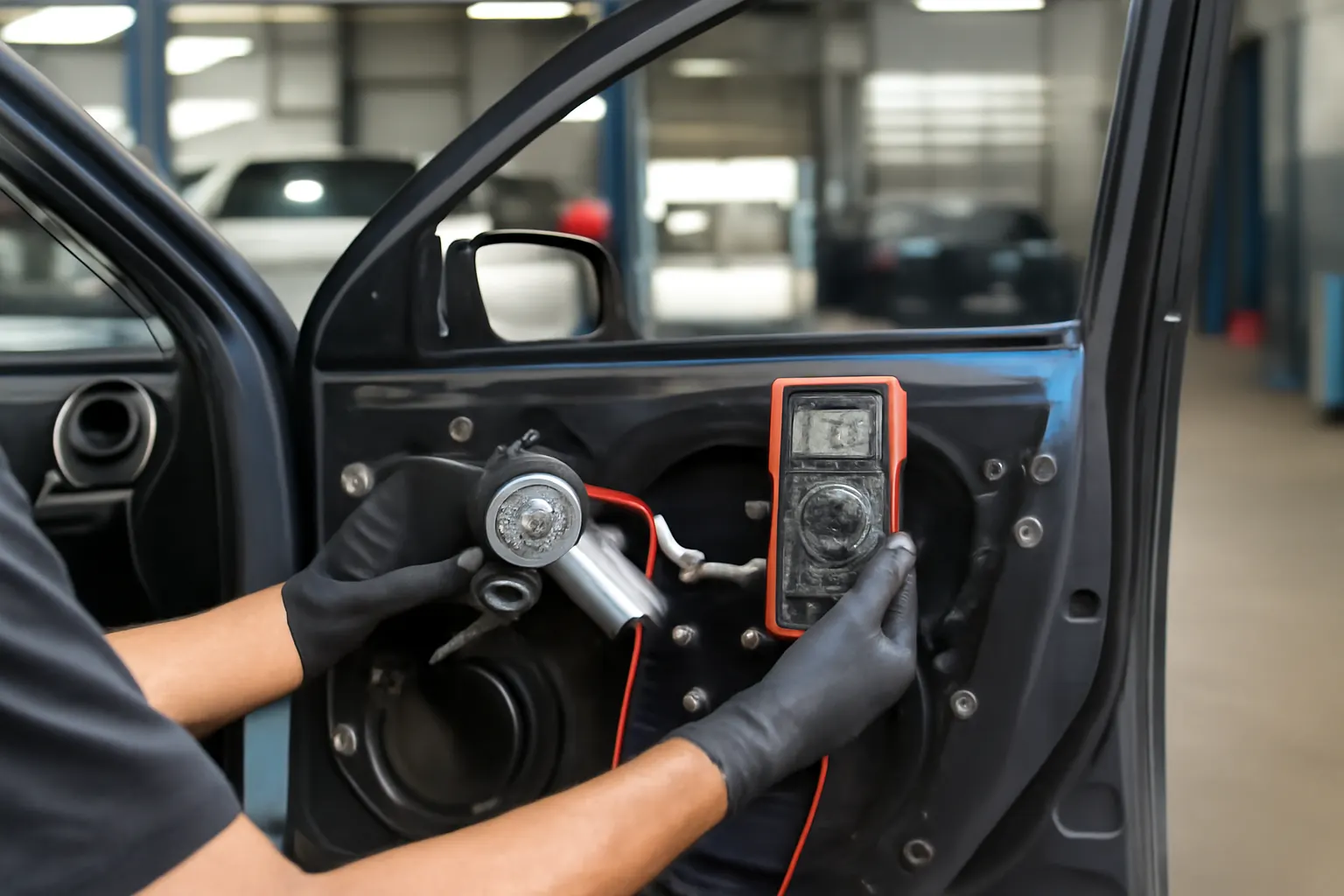
- Use a multimeter to confirm voltage is reaching the motor when the switch is engaged.
- If voltage is present but the motor doesn’t run, the motor is likely faulty.
Advertisement
Step 4: Inspect for Physical Obstruction
- Binding tracks or debris can overload and “stall” the motor, causing premature failure.
For a full diagnostic walkthrough, consult our Toyota Power Window Motor Diagnostics Article.
Installation Considerations: Genuine vs Aftermarket
Genuine Toyota Motors
- Plug-and-play installation: Direct fit, no modification required.
- Factory electrical connectors: No splicing or rewiring.
- Guaranteed mounting alignment: Bolts directly to existing regulator assembly.
Aftermarket Motors
- May require adaptation: Some units need bracket modification or shimming.
- Electrical connectors may differ: Splicing or adapter harnesses may be necessary.
- Risk of misalignment: Can cause window binding, noise, or premature wear.
For step-by-step installation instructions, see our Toyota Front Door Window Motor Installation Guide.
Maintenance and Longevity: Maximizing Motor Life
Regardless of whether you choose a genuine or aftermarket window motor, proper installation and maintenance are key to long service life.
Maintenance Tips
- Keep window tracks clean and lubricated: Reduces load on the motor and regulator.
- Avoid forcing the window: If the glass sticks, diagnose and repair the underlying issue.
- Inspect weather seals: Prevents water ingress that can corrode the motor or electrical connectors.
- Operate windows regularly: Prevents sticking and motor “freezing” from lack of use.
Signs of Impending Failure
- Sluggish window movement.
- Intermittent operation.
- Unusual noises (grinding, clicking) from the door.
- Window stops or reverses unexpectedly.
Safety and Regulatory Compliance: Why It Matters
The NHTSA requires all replacement vehicle equipment to meet minimum safety standards. Using non-compliant or poor-quality window motors can result in:
- Window entrapment risk: Motors lacking proper torque or auto-reverse features may not prevent injury.
- Electrical hazards: Poor wiring or insulation can cause shorts, fires, or system failures.
- Inspection or resale issues: Non-compliant parts may be flagged during safety inspections or reduce vehicle value.
Genuine Toyota motors are engineered and tested to comply with all relevant standards. With aftermarket motors, always request compliance documentation or certifications from the manufacturer.
Sourcing Best Practices: Buying With Confidence
Step 1: Confirm the Correct Part Number
- Reference your vehicle’s VIN and consult Toyota’s official parts catalog or a trusted fitment guide.
Step 2: Choose a Trusted Supplier
- Authorized Toyota dealerships or reputable parts distributors are your safest bet.
- Review customer ratings and return policies for aftermarket suppliers.
Step 3: Inspect the Part on Arrival
- Verify branding, part numbers, and packaging.
- Test-fit connectors and mounting points before full installation.
Step 4: Retain Documentation
- Keep purchase receipts, warranty cards, and any compliance certificates.
- This is vital for warranty claims or if issues arise later.
The AutoPartEx Approach: Your Trusted Toyota Window Motor Resource
At AutoPartEx, we understand the importance of sourcing the right part the first time. Our technical guides, fitment databases, and expert support help you navigate the genuine vs aftermarket decision with confidence. We provide:
- Detailed model-specific fitment guides for Toyota window motors.
- Step-by-step diagnostic and installation articles.
- Curated sourcing recommendations to avoid counterfeit or incompatible parts.
For more resources, visit our Toyota Front Door Window Motor: Genuine Fitment, Diagnostics & Sourcing Guide.
Making the Right Choice: Expert Recommendations
In summary, while aftermarket window motors can offer upfront savings, genuine Toyota motors deliver peace of mind through guaranteed fitment, verified quality, and regulatory compliance. If you opt for an aftermarket motor, choose a reputable brand and verify all specifications before purchase. Always follow proper diagnostic procedures to confirm the root cause of window issues, and don’t hesitate to consult trusted sources or professional installers when in doubt.
For the best results:
- Use genuine Toyota window motors whenever possible, especially for newer vehicles or those under warranty.
- If choosing aftermarket, prioritize high-quality brands with documented compliance and proven fitment for your specific model and year.
- Leverage AutoPartEx’s guides and resources for every step—from diagnosis to installation and ongoing maintenance.
References
Advertisement