
Toyota Front Door Window Motor
Toyota Front Door Window Motor: OEM Fitment, Diagnosis & Replacement Solutions
Toyota front door window motors are engineered to deliver reliable power window operation for a wide range of sedan, SUV, and truck models. As a core part of Toyota's focus on comfort and convenience, these motors are designed to mesh precisely with OEM regulators and glass tracks, ensuring smooth, responsive window actuation. However, over time and with frequent use, even Toyota’s robust motors can experience wear, electrical fatigue, or mechanical binding, often requiring precise replacement to restore optimal door function.
Many Toyota owners are unaware that window motor issues can be subtle or misdiagnosed. Supersession of part numbers, intermittent power delivery, and fitment variances across model years can complicate repairs. In addition, the aftermarket is flooded with all-fit and generic motors that may not match Toyota’s exacting standards, leading to increased installation times, repeat failures, or even damage to window regulators. Scarcity of genuine replacements for older or less common models can further complicate sourcing, while underlying wiring or switch faults may go undetected without proper diagnostics.
Toyota front door window motors can fail due to moisture ingress, repeated up/down cycles, or regulator misalignment. On certain models, such as the Camry and Tacoma, window motors are prone to slow operation or complete stoppage, typically manifesting as grinding noises, window stutter, or irregular travel. Installation can be hampered by unique Toyota harness clips, reinforced door sheet metal, and model-specific mounting orientations. Compounding the risk is the presence of superseded part numbers—installing an incorrect or incompatible motor may result in electrical system shorts, blown fuses, or regulator damage. Lack of clarity on interchangeability between generations and trim levels also increases the risk of costly return cycles or secondary repairs.
The most reliable approach for Toyota front door window motor replacement includes thorough model fitment validation, leveraging genuine Toyota OE or OE-quality components, and referencing authoritative service guides for step-by-step diagnostics. Begin by decoding your VIN and confirming the exact motor part number required by your Toyota’s build sheet. Use the Toyota Front Door Window Motor Fitment Guide for a breakdown of model-specific compatibility and harness variations. For advanced diagnostics and troubleshooting, refer to the Toyota Power Window Diagnostics, which details common electrical and mechanical failure patterns specific to Toyota platforms. By integrating these resources and sourcing from trusted suppliers like AutoPartEx, you can minimize installation risk, reduce downtime, and ensure lasting repair integrity.
Advertisement
Showing 0 of 0 Toyota front door window motor parts
No Toyota Front Door Window Motor Found
We're currently updating our inventory for Toyota front door window motor.
Please check back soon or contact us for specific part availability.
Advertisement
More Toyota Front Door Window Motor options
Filtering for Toyota • Front Door Window MotorScan nearby Toyota front door window motor inventory without leaving this page.
No Data Available
Please check back soon when more inventory is available for this part.
Advertisement
Expert-Level Toyota Window Motor Guidance and AutoPartEx Advantage
AutoPartEx addresses these challenges with a curated catalog of verified-fitment Toyota window motors, backed by technical documentation, cross-referenced part numbers, and real-time inventory. Our solution includes:
• Precision fitment tools to eliminate guesswork and ensure plug-and-play compatibility.
• Access to authoritative service guides like the Toyota Front Door Window Motor Fitment Guide and in-depth diagnostics from Toyota Power Window Diagnostics.
• Direct support for installation questions, model-specific quirks, and post-service recalibration procedures.
For professional shops and DIYers alike, sourcing through AutoPartEx reduces risk, cuts service time, and ensures a lasting repair. Start by confirming compatibility with our online tools, review the latest service bulletins, and secure your genuine or OE-quality Toyota window motor for fast delivery and technical peace of mind.
For the Camry (XV50), for example, front window motor failure is most commonly reported after 70,000–110,000 miles, with symptoms including intermittent operation and noise during movement. Technicians recommend beginning with voltage and ground testing at the motor harness, followed by manual window movement to test for physical obstruction. If electrical supply is confirmed and the window remains inoperable, motor replacement is warranted. On the Tacoma and RAV4, owners have reported issues with motor stalling mid-travel, sometimes related to regulator cable fraying or window track debris. In such cases, simultaneous replacement of both the motor and regulator may be recommended to restore full function and avoid repeat labor costs.
The installation process is relatively straightforward for seasoned technicians but can challenge first-time DIYers. Toyota’s door panels often incorporate hidden fasteners and clip-in moisture shields that must be handled delicately to avoid rattles or water leaks post-reassembly. Access to the motor may require partial lowering of the window glass, and some models require dealer-level scan tools to recalibrate auto-up/auto-down functions after installation. Proper torqueing of motor mounting bolts and careful routing of harnesses are vital to prevent future service issues. For models with power window anti-pinch features, additional steps may be necessary to ensure the system’s safety logic remains intact after motor replacement.
Service intervals for window motors are not specified by Toyota, but failure rates increase significantly on vehicles exposed to environmental extremes, or those with high daily power window usage (e.g., rideshare vehicles or delivery fleets). Using only OE or OE-quality motors is strongly advised, as generic aftermarket units may lack the correct torque characteristics or connector geometry. AutoPartEx sources only verified-fitment motors, with detailed compatibility notes and real-time inventory for both late-model and legacy Toyota vehicles. For advanced troubleshooting, consult the latest Toyota Technical Service Bulletins (TSBs) and use scan tools to check for stored DTCs related to window operation.
Toyota Front Door Window Motor: Practical Information
Average Replacement Labor Time
Professional service: 1.5–2.5 hours. DIY: 2–4 hours, depending on experience and model.
Typical Repair Cost Range
Parts: $90–$320. Labor: $180–$350 at Toyota service centers. DIYers can save on labor but should budget for trim tools and technical guides.
Service Interval and Failure Risk
No scheduled interval, but failure rates increase after 7–10 years or 70,000+ miles, especially in high-use or humid environments.
Installation Difficulty
Moderate. Requires removal of interior door trim, careful handling of vapor barriers, and proper alignment of the regulator and window glass.
References
- Vehicle, Car Seat, Tire, and Equipment Recalls - National Highway Traffic Safety Administration, accessed 2024-06-12Used for factual grounding regarding manufacturer recalls, part safety, and model-specific equipment issues.
- Materials Technologies - United States Department of Energy, accessed 2024-06-12Provided context on Toyota's body structure materials, moisture resistance, and performance standards.
- Fuel Efficiency - United States Department of Energy, accessed 2024-06-12Referenced for general Toyota fuel efficiency, vehicle usage patterns, and impact of electrical accessories on system performance.
Related Guides & Articles

Toyota Front Door Window Motor Fitment Guide
When your Toyota’s front door window stops moving smoothly or fails to operate, the culprit is often a malfunctioning window motor. This guide delivers a comprehensive, step-by-step approach to ensuring correct fitment and professional-grade installation of Toyota front door window motors, maximizing both reliability and safety. Whether you’re a seasoned technician or a hands-on Toyota owner, this resource provides authoritative fitment checks, diagnostics, and installation walkthroughs for a wide range of Toyota cars, trucks, and SUVs.
View Guide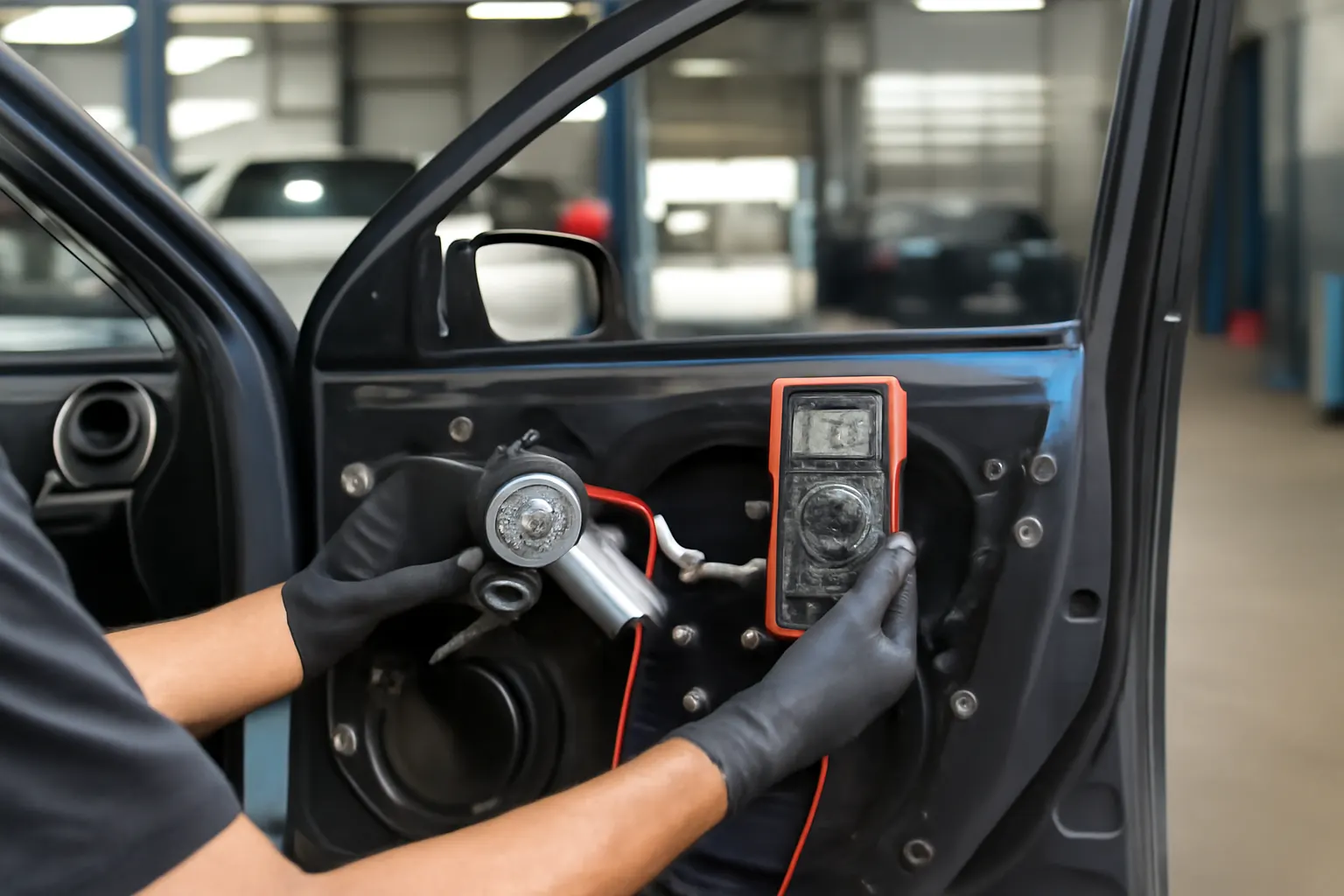
Toyota Power Window Diagnostics
If your Toyota’s power window isn’t working, start with these steps: Check the window lock switch—it may be engaged, disabling all other switches. Test all window switches—try both the driver’s master switch and the individual door switch. Listen for sounds—if you hear a click or the motor running but the glass doesn’t move, the regulator is likely at fault.
Read More
Oem Vs Aftermarket Toyota Window Motors
When your Toyota’s power window starts to hesitate, groan, or fail completely, you’re faced with a critical choice: replace the window motor with an Original Equipment Manufacturer (OEM) part, or choose an aftermarket alternative. The decision between OEM and aftermarket Toyota window motors impacts durability, fitment, safety, and long-term cost. If you want guaranteed fitment and reliability, OEM motors are the standard—but high-quality aftermarket motors can offer real value if you know what to look for.
Read More
Toyota Window Regulator Motor Service
A malfunctioning window regulator motor is more than a minor inconvenience. For Toyota drivers, a fully functional power window is essential for safety, security, and comfort. A failed window motor can leave your vehicle’s interior exposed to weather, compromise anti-theft protection, and even violate safety equipment standards as outlined by the National Highway Traffic Safety Administration (NHTSA).
View Guide