Advertisement
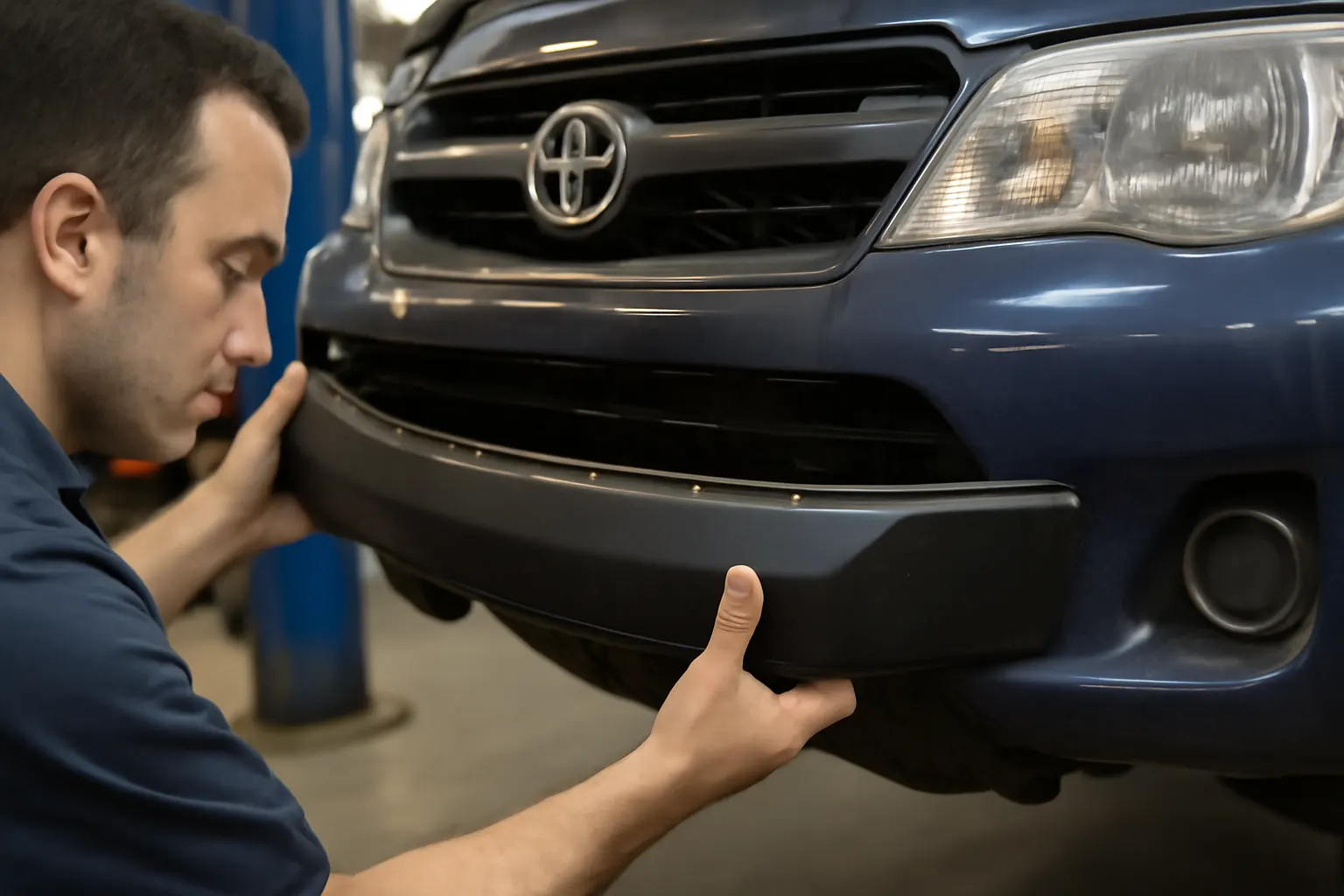
The Toyota front valance is one of the most vulnerable and misunderstood exterior body components. In Toyota service bays across the country, technicians routinely encounter front valance damage caused by curb impacts, road debris, and even minor collisions. This article delivers hands-on repair stories and actionable insights, sharing proven diagnostic tips and installation best practices for Toyota front valance repairs. Whether you’re a DIYer, collision tech, or parts manager, these real-world scenarios will help you address front valance issues with confidence and precision. For more background on fitment, model coverage, and OE quality, visit our Toyota Front Valance: OEM Fitment, Model Coverage & Quality Insights category page.
The Immediate Answer: What To Do When Your Toyota Front Valance Is Damaged
If your Toyota’s front valance is cracked, scraped, or hanging loose, immediate attention is essential. The front valance is not just cosmetic—it plays a key role in underbody airflow, protecting critical components, and maintaining vehicle aerodynamics. Technicians agree: Ignoring valance damage can lead to worsening structural issues and even compromise safety equipment. The first step is always a thorough visual inspection, followed by a decision: repair, reinforce, or replace.
Key Actions:
- Inspect for cracks, missing fasteners, and structural deformation.
- Evaluate the valance’s attachment points and surrounding body panels.
- Check for underlying damage to radiators, bumper beams, and sensor mounts.
- Determine if the valance can be repaired (plastic welding, reinforcement) or if an OE replacement is required.
The Hidden Problem: Why Toyota Front Valance Damage Is Often Overlooked
Many owners and even some repair shops underestimate the consequences of a damaged front valance. Unlike major bumper or fender impacts, valance issues may not trigger warning lights or obvious driveability problems. However, hidden problems can arise:
- Compromised Aerodynamics: The valance directs airflow under the car, influencing cooling and fuel efficiency. Even minor warping can disrupt this balance, leading to increased drag and lower MPG.
- Sensor Malfunction: On newer Toyotas, front valances may house radar, parking sensors, or adaptive cruise components. Misalignment can cause false readings or system shutdowns.
- Structural Weakness: A loose or cracked valance can allow water and debris to reach sensitive components, accelerating corrosion and wear.
Ignoring these issues can result in more expensive repairs down the line and may affect your vehicle’s safety rating. The National Highway Traffic Safety Administration (NHTSA) emphasizes the importance of maintaining all exterior equipment in accordance with manufacturer standards to ensure proper crash performance and equipment function NHTSA Vehicle Safety and Equipment.
Real-World Story #1: Diagnosing a 2021 Toyota Camry Valance Crack
In a busy dealership service bay, a 2021 Toyota Camry arrived with a customer complaint: “Front end looks off after hitting a parking block.” The technician’s inspection checklist included:
- Visual Check: Noted a 4-inch crack along the lower edge of the front valance, with adjacent plastic tabs broken.
- Attachment Points: Two out of five fasteners missing; one mounting hole on the bumper cover slightly elongated.
- Sensor Mounts: The radar sensor bracket was intact but slightly shifted.
Diagnosis: The valance itself was not repairable due to the crack’s location and loss of structural integrity. The bumper cover’s minor damage was addressed with a reinforcement kit. The technician recommended OE valance replacement and realignment of the radar sensor bracket, followed by a system calibration.
Takeaway: Even a minor incident can affect multiple components. Always check sensor alignment and perform post-repair calibrations as needed.
Real-World Story #2: Salvaging a 2018 Toyota RAV4 With Minor Valance Deformation
A 2018 RAV4 entered an independent collision shop after a curb strike. The owner hoped to avoid full replacement. The technician’s approach:
- Deformation Assessment: The valance was bowed inward but not cracked.
- Material Check: Confirmed the part was made of polypropylene (PP), common for Toyota body panels due to its impact resistance DOE Materials Technologies.
- Repair Method: Used a heat gun to gradually reform the plastic, followed by reinforcement with an epoxy mesh on the inside surface.
- Fastener Replacement: Installed new OE-style push clips to restore secure attachment.
Advertisement
Result: The repair restored the valance’s shape and function without replacement, saving the owner over $200. However, the technician advised monitoring for future warping, as heat repairs can weaken plastic over time.
The Anatomy of a Toyota Front Valance: Materials and Mounting
A deeper understanding of the Toyota front valance’s construction helps technicians choose the right repair method. Most Toyota front valances from the past decade are produced using advanced thermoplastics, primarily polypropylene (PP) or ABS blends, for their combination of flexibility, impact absorption, and light weight DOE Materials Technologies.
Key Construction Features:
- Material: Polypropylene (PP) or ABS for flexibility and durability.
- Mounting: Typically attached via a combination of push clips, screws, and integrated tabs to the bumper cover and lower radiator support.
- Integration: May include ducts, fog lamp bezels, or radar sensor brackets on higher trims.
- Finish: Textured or painted, depending on model and trim.
Understanding these details is crucial for selecting adhesives, fasteners, and repair techniques. For more on Toyota’s body panel materials and why they matter, see Toyota Body Panel Materials.
Diagnostic Checklist: Evaluating Front Valance Damage on Toyota Vehicles
A systematic diagnostic approach ensures no hidden issues are missed. Use the following checklist during every Toyota front valance inspection:
Toyota Front Valance Diagnostic Checklist
- Visual Inspection:
- Look for cracks, gouges, or missing chunks.
- Check for paint damage or exposed substrate.
- Attachment Points:
- Confirm all fasteners are present and secure.
- Inspect mounting tabs for deformation or breakage.
- Alignment:
- Ensure the valance sits flush with adjoining panels.
- Look for gaps or sagging at the corners.
- Functional Components:
- Inspect fog lights, sensors, and air ducts for secure mounting.
- Test parking sensors or radar (if equipped) for error codes.
- Underlying Damage:
- Check lower radiator support and bumper beam for bends or cracks.
- Inspect splash shields and undertray for displacement.
- Material Integrity:
- Flex the valance gently to check for brittleness or hidden cracks.
- Identify the material to select compatible repair adhesives.
Following this checklist reduces the risk of comebacks and ensures all secondary issues are addressed during the repair process.
Installation Best Practices: OE vs Aftermarket Toyota Front Valance
Technicians often face a critical decision: install an OE (Original Equipment) Toyota front valance or opt for an aftermarket equivalent. Real-world experience and industry standards (such as those set by SAE International SAE Standards) point to several best practices:
- OE Valance: Guaranteed fitment, finish, and compatibility with sensors and air ducts. Usually comes with all necessary mounting hardware.
- Aftermarket Valance: Cost savings, but may require minor trimming or adjustment. Sensor brackets and mounting holes may not align perfectly.
- Fitment Test: Always dry-fit the new valance before final installation. Check all attachment points and confirm alignment with bumper cover and splash shields.
- Fastener Reuse: Replace any damaged or missing fasteners with OE-style clips or screws to avoid future rattles or separation.
- Sensor Calibration: If the valance houses radar or parking sensors, perform a post-installation calibration per Toyota service manual procedures.
For a comprehensive fitment guide, refer to Toyota Front Valance Fitment.
Common Diagnostic Pitfalls and How to Avoid Them
Several recurring diagnostic pitfalls can complicate Toyota front valance repairs:
- Missing Hidden Damage: Focusing only on visible cracks while missing underlying bumper or radiator support deformation.
- Ignoring Sensor Mounts: Failing to check sensor brackets can lead to ADAS (Advanced Driver-Assistance Systems) faults after repair.
- Improper Fastener Selection: Using generic fasteners instead of OE-style clips can result in rattling or premature detachment.
- Material Mismatch: Attempting to repair PP or ABS valances with incompatible adhesives causes poor bonding and early failure.
Prevention Tips:
- Always remove the valance for a thorough inspection when significant impact is suspected.
- Cross-check sensor function and recalibrate as needed.
- Order fasteners by Toyota part number for correct fit and long-term durability.
Case Study: 2022 Toyota Tacoma—Sensor Alignment Nightmare
A collision center received a 2022 Tacoma with a misaligned front valance after a parking lot scrape. The initial repair attempt by another shop used an aftermarket valance and universal clips. The result: The truck’s adaptive cruise and collision warning systems threw persistent errors.
Advertisement
Root Cause Analysis:
- The aftermarket valance’s radar sensor bracket was positioned 5mm lower than OE spec.
- Universal clips allowed minor movement, causing intermittent sensor misalignment.
Resolution:
- Replaced with an OE Toyota valance.
- Used all OE fasteners and performed a sensor recalibration per Toyota’s service bulletin.
- Cleared all error codes and verified correct ADAS operation.
Lesson Learned: For sensor-equipped models, OE parts and precise mounting are non-negotiable. Even minor misalignment can compromise safety systems and trigger trouble codes, as highlighted by NHTSA’s emphasis on equipment integrity NHTSA Vehicle Safety and Equipment.
Sourcing the Right Toyota Front Valance: OE, Aftermarket, and Supersession
Parts managers and technicians must navigate the complex world of Toyota part numbers, supersessions, and aftermarket options. Here’s how experienced shops approach sourcing:
- OE Toyota Valance: Sourced from authorized Toyota dealers or certified OE suppliers. Always check for supersession—Toyota frequently updates part numbers and compatibility.
- Aftermarket Valance: Useful for older models or cost-conscious repairs. Confirm that the part meets SAE fitment standards and includes all necessary mounting points.
- Supersession Awareness: Toyota may discontinue older part numbers in favor of updated designs. Double-check with the latest EPC (Electronic Parts Catalog) or use the Toyota Supersession Body Panels guide for cross-references.
- Hardware Kits: Many front valances require unique push clips or screws. Always order matching hardware to avoid compatibility issues.
Pro Tip: If in doubt, consult the Toyota EPC or a trusted parts distributor to verify fitment and supersession. Document all part numbers for future reference.
Maintenance and Longevity: Keeping Your Toyota Front Valance in Top Shape
Preventive maintenance can extend the life of your Toyota’s front valance and reduce repair frequency:
- Regular Cleaning: Remove road salt, debris, and mud buildup to prevent corrosion of mounting hardware and brackets.
- Fastener Inspection: Periodically check all push clips and screws for tightness, especially after off-road driving or curb impacts.
- Winter Precautions: In snowy climates, avoid plowing through deep snowbanks, which can rip off or crack the valance.
- Touch-Up Paint: For painted valances, use OE touch-up paint to seal chips and prevent plastic degradation.
Technicians recommend a routine inspection at every oil change, especially for vehicles used in harsh environments or with low ride heights.
The Impact of Materials and Design on Fuel Efficiency
It’s easy to overlook the aerodynamic and efficiency benefits provided by a properly installed front valance. According to the U.S. Department of Energy, underbody airflow management is a significant factor in modern vehicle fuel efficiency DOE Fuel Efficiency. Toyota engineers design front valances to:
- Reduce drag by smoothing airflow under the vehicle.
- Channel cooling air to radiators and brakes.
- Minimize fuel consumption at highway speeds.
A loose or missing valance can increase aerodynamic drag, reducing highway MPG by up to 2-3%. For hybrid and fuel-efficient Toyota models, maintaining valance integrity is even more critical.
Advanced Diagnostics: ADAS, Sensors, and Calibration After Valance Repair
With the proliferation of advanced driver-assistance systems (ADAS) in late-model Toyotas, front valance repairs have become more complex. Many models now integrate:
- Radar Sensors for adaptive cruise and collision avoidance.
- Ultrasonic Sensors for parking assist.
- Airflow Ducts for battery and brake cooling.
Best Practices:
- Always check for sensor mounts on the new or repaired valance.
- Perform a complete ADAS calibration after reinstallation, following Toyota or SAE procedures SAE Standards.
- Test all related systems (cruise, park assist, collision warning) before returning the vehicle to the customer.
Failure to perform these steps can result in system malfunctions, false alarms, or even reduced crash safety performance.
Expert Action: Positioning AutoPartEx for Toyota Front Valance Solutions
At AutoPartEx, our technical editorial team collaborates with certified Toyota technicians and collision specialists to deliver the most up-to-date repair stories, diagnostic guides, and fitment data. Our commitment is to equip both professionals and DIYers with the resources needed for safe, accurate, and cost-effective Toyota front valance repairs.
Whether you’re searching for an OE replacement, troubleshooting a diagnostic issue, or seeking tips on sensor calibration, AutoPartEx’s Toyota Front Valance: OEM Fitment, Model Coverage & Quality Insights hub and related guides are your trusted resources. We recommend bookmarking our Toyota Front Valance Fitment and Toyota Supersession Body Panels pages for fast reference during any repair or parts sourcing task.
References
Advertisement